Shipment on Hold for Refundable Insurance Fees? How to Spot This Delivery Scam
A message saying your shipment is on hold until you pay a “refundable insurance fee” is a strong warning sign of a delivery scam. Do not pay or use the message’s link to investigate. Look up the order and tracking number through the store or carrier using a website or app you open yourself, then ask the seller or carrier to explain any charge through an official support channel.
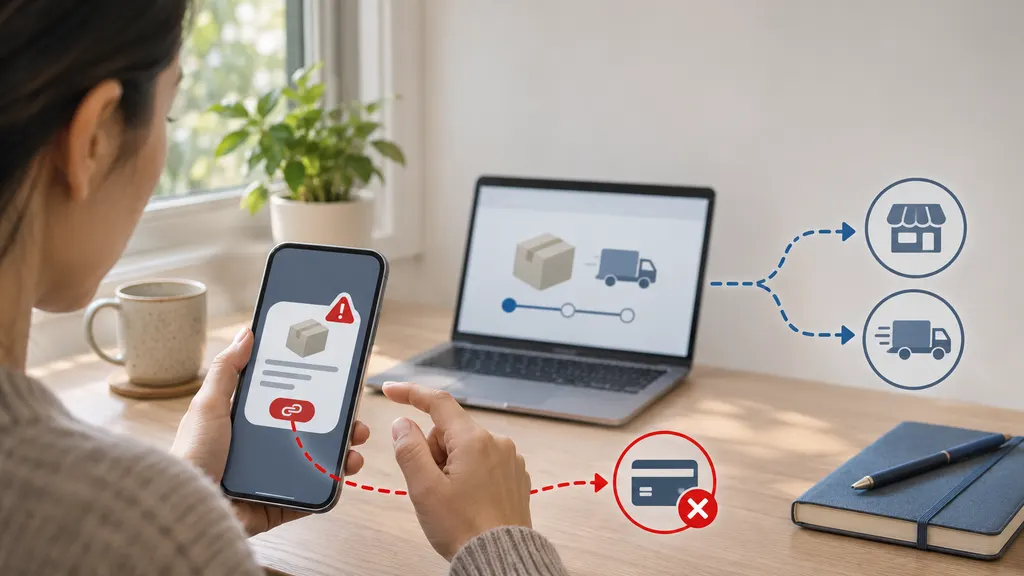
A genuine delivery can be delayed, and a legitimate shipment may occasionally require a payment or additional information. The suspicious part is the combination of an unexpected insurance charge, a promise that the money will be returned, and pressure to pay through a link supplied in a text, email, or chat message. Treat the claim as unverified until the people responsible for your order confirm it independently.
Why the “refundable insurance fee” story is suspicious
The message is designed to make a payment feel temporary and low-risk: pay now, release the parcel, and get your money back later. It may also claim that the package contains something valuable or that a delivery attempt will fail unless you act immediately. Those details do not establish that a parcel exists or that a fee is legitimate.
Delivery scams often work by sending people to a lookalike page that collects card details, passwords, or other personal information. The U.S. Federal Trade Commission (FTC) advises people who receive unexpected messages about a package to avoid clicking links and instead contact the company using a website or phone number they know is real. The U.S. Postal Inspection Service also warns that package-related text messages can be used to lure recipients to fraudulent links.
The word “insurance” does not change who should verify the charge. Shipping insurance or declared-value coverage may be arranged as part of a shipment, but an unsolicited message demanding a separate, supposedly refundable payment from the recipient is not proof of such an arrangement. Ask what the charge is for, who is collecting it, and where it appears in the original order or the carrier’s official process. If those questions cannot be answered through independently located contact details, do not pay.
Check the claim without using the message
- Pause before interacting. Do not open the payment link, call the number in the message, reply with personal information, or send a one-time verification code. A short deadline is not a reason to skip verification.
- Find the original order. Open the retailer’s website or app independently and check your purchase history, shipping confirmation, expected carrier, and tracking number. If you did not place an order or are not expecting a parcel, that makes the message more suspicious.
- Check tracking through a trusted route. Use the tracking link in your original order confirmation if you trust the sender, or type the carrier’s official website address yourself. If you are unsure which carrier has the parcel, a tracking service such as 17TRACK can help you look up shipment updates using a tracking number. A tracking result can help identify a shipment’s reported status; it does not authenticate a payment request or establish that an insurance fee is owed.
- Contact the seller or carrier independently. Use contact details from the retailer’s order page or the carrier’s official site, not from the alarming message. Provide the tracking number and ask whether the parcel is actually held, why, and whether any payment is required from you.
- Confirm any genuine charge before paying. Ask for the charge’s official name, the party collecting it, the amount, and the payment method specified through the seller’s or carrier’s verified channel. If a third party is named, verify that party’s role with the seller or carrier rather than relying on the third party’s own message.
A real tracking number is not enough by itself. A scammer may refer to an existing order, or a message may arrive at the same time as an unrelated delivery. Likewise, a tracking status such as “on hold” describes a shipment state; it does not, on its own, tell you the cause or authorize a payment to the person who contacted you.
Signs that deserve closer scrutiny
- The payment is unexpected. You were not told about the charge when you bought the item, and the seller cannot confirm it through your order.
- The refund promise is vague. The message says the insurance fee will be returned after delivery but does not identify a verifiable payer, policy, or refund process.
- The sender pushes a particular link or payment channel. They discourage you from checking with the retailer or carrier, or insist that payment must be made through a page they sent you.
- The message asks for sensitive information. Card details, account passwords, one-time codes, or identity documents should not be supplied merely because an unsolicited delivery notice requests them.
- The explanation changes when questioned. The supposed insurance fee becomes a customs charge, storage charge, or “release” deposit without a clear account of who imposed it and why.
- The pressure escalates. Threats of immediate loss, repeated demands, or a sudden offer to refund you after you pay are reasons to stop engaging and verify independently.
No single wording proves fraud. Conversely, a polished page, correct spelling, or accurate order detail does not prove legitimacy. The decisive check is whether the claimed hold and charge can be confirmed through a channel you found independently and whether the request matches your actual order.
What if the carrier really says the parcel is on hold?
Ask the carrier to explain the hold in its own support channel. The next step depends on the reason: an address issue may require a correction; a shipment awaiting clearance may require documentation or a legitimate charge; another delay may require no payment at all. Do not assume that a payment request in a separate text is connected to the carrier’s recorded status.
If the seller arranged shipping, bring the seller into the conversation. They can clarify what was included in the purchase and whether they, rather than you, should address a shipping problem. For an international shipment, ask who is responsible for any import-related charges under your order terms. Do not relabel an unexplained “refundable insurance fee” as a customs fee merely because the parcel crossed a border.
If a charge is confirmed, pay only through the route the verified seller or carrier identifies. Keep the order confirmation, the explanation of the charge, and your receipt. If the seller and carrier give conflicting answers, wait for clarification rather than paying the sender of the original message.
If you already clicked or paid
What to do next depends on what you shared. Clicking a link without entering anything is different from submitting card details or a password, but it is still wise to close the page and avoid downloading anything from it.
- If you entered payment details or paid: Contact your card issuer, bank, or payment provider through its official app or the number on your card. Explain that you may have paid a fraudulent delivery fee, ask about blocking further charges, and discuss dispute or recovery options. The FTC recommends contacting the company you used to send money as soon as possible.
- If you entered a password: Change it through the real account website or app. Change it anywhere else you reused it, and enable additional account protection where available. Review recent account activity.
- If you shared a one-time code: Contact the affected account provider immediately. A code can allow someone to complete a sign-in or account change even if you did not disclose your password.
- If you downloaded a file or app: Stop using it and follow your device provider’s security guidance. Consider seeking qualified technical help if you cannot determine what was installed.
- If you shared identity information: Monitor relevant accounts and use the identity-theft reporting and recovery resources available where you live. In the United States, IdentityTheft.gov offers recovery steps.
Save the message, link, receipts, and transaction details for your bank and any report you make. In the United States, you can report a suspected scam to the FTC at ReportFraud.ftc.gov. You can also notify the retailer and the carrier whose names were used. Be wary of anyone who later offers to recover your payment in exchange for another fee.
A practical rule for future delivery notices
Treat a delivery message as a prompt to check your order, not as a payment instruction. Start with the purchase record, confirm the tracking status separately, and resolve questions through the seller or carrier you reach independently. If the fee exists only in the unsolicited message, do not pay it. If an official channel confirms a real issue, follow that channel’s documented instructions rather than returning to the message’s link.
FAQ
Can a real delivery require a payment before it arrives?
Sometimes a shipment involves a legitimate charge or an issue that needs attention. That possibility does not validate an unexpected request for a “refundable insurance fee.” Confirm the specific charge, who owes it, and how to pay through the retailer or carrier’s official channel.
Does an “on hold” tracking status mean I owe insurance money?
No. A status alone does not explain the reason for a hold or identify who, if anyone, must pay. Ask the carrier to explain the status using a contact method you found independently.
What if the message includes my name or tracking number?
Those details can help you investigate, but they do not authenticate the sender or its payment link. Compare them with your original order and check the claimed fee with the seller or carrier.
Should I reply to ask whether the fee is refundable?
It is safer to avoid replying and contact the seller or carrier yourself. The sender can repeat the same claim, but only an independent check can establish whether the shipment and charge are genuine.
Can a tracking website confirm that a payment request is safe?
No. Tracking information may help you follow a parcel, but it is not an invoice or a verification of a link, collector, or refund promise. Confirm payment instructions directly with the responsible seller or carrier.