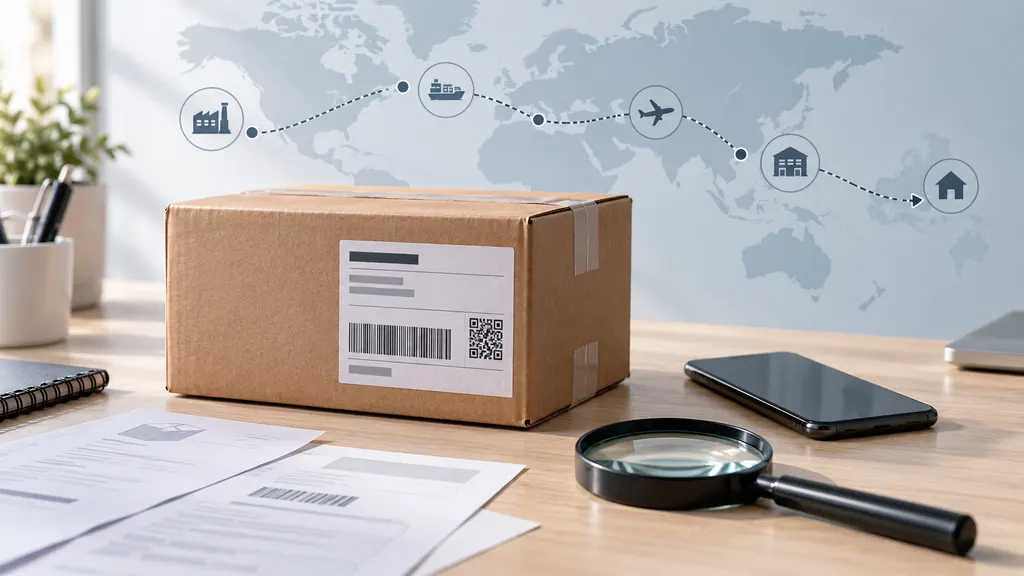
Airfreight Forwarding Agent
What Is an Airfreight Forwarding Agent?
An airfreight forwarding agent is a logistics intermediary that arranges the movement of cargo by air for a shipper or another customer. The agent coordinates services such as airline bookings, shipment documentation, cargo consolidation, and connections with road transport, customs representatives, and destination handling providers. In international trade and cross-border ecommerce, this role connects the business sending the goods with the organizations that physically transport and process them.
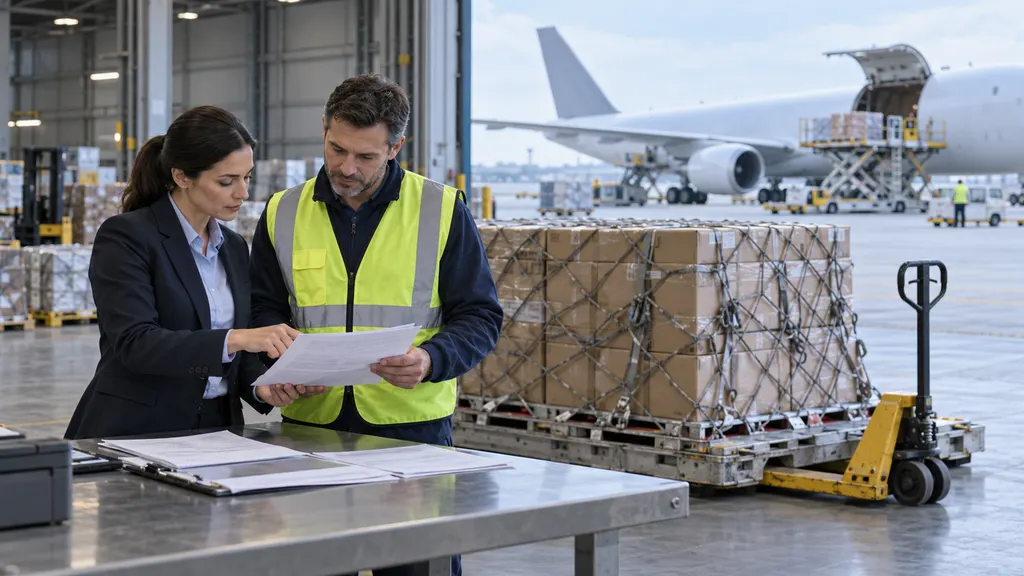
The term is also written as air freight forwarding agent or shortened to air freight forwarder. It may describe a forwarding business or a person acting for that business. An airfreight forwarder does not necessarily operate aircraft. Its central function is to organize transportation, although its contractual responsibilities can extend beyond those of an intermediary when it contracts to provide carriage in its own name.
Role in the Supply Chain
An airfreight forwarding agent operates between the cargo owner and the transport and handling network. A manufacturer, importer, retailer, or ecommerce seller may appoint the agent to arrange an airport-to-airport movement or a broader service that includes collection and delivery. The service boundary depends on the agreed scope, not simply on the use of the word forwarding.
The agent translates commercial shipping requirements into a workable transport arrangement. This includes checking the cargo description, dimensions, weight, readiness date, destination, and any special handling requirements before seeking a suitable routing. Available capacity, cargo acceptance conditions, documentation, and connecting transport all affect whether an arrangement is feasible.
In cross-border ecommerce, airfreight forwarding can support bulk inventory replenishment to an overseas warehouse or fulfillment center. It can also support consolidated shipments that later enter a parcel delivery network. An ecommerce order and an air cargo shipment are not equivalent units: one air shipment may contain inventory for many future orders, while a single customer order may be fulfilled through several transport movements.
Main Responsibilities
The precise responsibilities of an airfreight forwarding agent are established by its agreement with the customer and the rules applicable to the shipment. Common activities include:
- Transport planning: arranging a routing that accounts for the cargo, service scope, available capacity, and origin and destination requirements.
- Booking: reserving cargo space with an airline or arranging access to capacity through another forwarding organization.
- Consolidation: combining separate consignments into a larger shipment where the arrangement permits, with corresponding documentation and destination separation.
- Documentation coordination: preparing or coordinating air waybill information and checking that commercial shipment details are available.
- Collection and handling coordination: arranging pickup, cargo terminal delivery, or other handling services included in the contract.
- Customs coordination: passing information to the party responsible for declarations and communicating clearance requirements, without necessarily acting as the customs broker.
- Shipment monitoring: obtaining movement updates and communicating exceptions, such as missing documents, cargo acceptance issues, or changes to the transport arrangement.
- Destination coordination: arranging the agreed handover, deconsolidation, or onward delivery through destination service providers.
These activities do not mean that every forwarding agent supplies every service. Cargo insurance, customs brokerage, storage, and final delivery should be treated as separate scope questions rather than assumed inclusions.
How an Airfreight Shipment Is Arranged
1. Shipment information and service scope
The shipper supplies information about the goods, packaging, number of pieces, weight, dimensions, and delivery requirements. The forwarder uses this information to assess routing and handling needs. An accurate cargo description matters because an ordinary commercial product may contain batteries, chemicals, or other components that affect its acceptance for air transport.
The parties also establish where the forwarder's responsibility begins and ends. Airport-to-airport service does not automatically include collection from the seller or delivery to the buyer. Incoterms may help determine the seller's and buyer's obligations under their sales contract, but they do not replace the separate service agreement with the forwarder.
2. Quotation and booking
The forwarder obtains or constructs a quotation based on the shipment details and proposed services. Airfreight charges can involve chargeable weight, under which physical weight and volumetric weight are considered according to applicable rating rules. A quotation may also contain handling and other charges. There is no single universal all-inclusive price structure for every airfreight movement.
Before accepting a quotation, the customer should distinguish the proposed flight movement from the full collection-to-delivery service. A booking or proposed schedule should not be interpreted as an unconditional delivery guarantee unless the contract expressly provides one.
3. Documentation and cargo acceptance
The forwarder coordinates the transport information and supporting documents required for the shipment. Depending on the goods and route, these may include a commercial invoice, packing list, customs information, permits, or special cargo documents. The shipper remains an essential source of accurate product and transaction information.
The cargo must satisfy applicable acceptance, packaging, security, and regulatory requirements before carriage. Dangerous goods require particular attention. A forwarder's involvement does not remove the responsibilities assigned to shippers and other participants under applicable dangerous goods rules.
4. Air transport and destination handover
After acceptance, cargo moves through the booked transport network. The forwarding agent coordinates information between the parties and responds to operational exceptions within its service scope. At destination, the shipment may require cargo release, customs clearance, separation from a consolidation, and onward road transport before it reaches the consignee.
For example, a retailer may appoint a forwarder to collect packaged merchandise from a supplier, arrange air carriage, and coordinate delivery to an overseas fulfillment warehouse. The airline performs the air transport, while a customs broker and a local transport provider may perform other parts of the movement. This is an illustrative workflow, not a service package that every forwarder offers.
Air Waybills and Shipment Visibility
An air waybill, or AWB, documents an air cargo transport arrangement and serves as evidence of the contract of carriage. It is non-negotiable and should not be treated as a transferable document of title. Electronic air waybill arrangements allow relevant transport information to be handled electronically under the applicable framework.
In a forwarding consolidation, the documentation may include a master air waybill covering the airline-level shipment and house air waybills covering individual consignments handled by the forwarder. The documents describe different contractual relationships; they are not simply duplicate tracking labels.
This distinction also affects visibility. An airline-level movement update may describe the consolidated cargo rather than confirm that an individual consignment has cleared customs or reached its final recipient. Customers should establish which reference identifies their shipment, what milestones the forwarder can report, and whether final delivery confirmation is included.
Related Roles and Important Distinctions
| Role | Primary function | Distinction from an airfreight forwarding agent |
|---|---|---|
| Airline or air carrier | Provides air carriage under the applicable transport contract. | The forwarder arranges transport; the airline performs the air movement. A forwarder may nevertheless assume contractual carrier responsibilities. |
| Customs broker | Performs customs business for clients where authorized under local rules. | Forwarding and customs brokerage are different functions, even when one business offers both. |
| Cargo handling agent | Handles cargo at an airport or terminal within its assigned scope. | Physical terminal handling is different from organizing the overall shipment. |
| Express parcel operator | Provides a parcel transport service that may integrate several delivery stages. | Airfreight forwarding is not automatically a parcel service or a single integrated delivery product. |
| Shipper | Tenders goods for transport in the relevant contractual context. | The shipper supplies cargo and shipment information; the forwarder organizes the agreed logistics services. |
These roles can overlap within one organization. Their legal meaning also depends on the applicable contract and jurisdiction. In particular, describing a business as an agent does not, by itself, establish all of its duties or liability.
Service Boundaries and Practical Checks
Several checks help determine what an airfreight forwarding arrangement actually covers:
- Contracting party: identify the business accepting the booking and whether it contracts as an agent or assumes responsibility for carriage.
- Transport scope: confirm the collection point, destination handover point, and responsibility for each connecting movement.
- Charge scope: distinguish freight charges from handling, brokerage, storage, duties, taxes, and other amounts that may apply.
- Document responsibility: establish who supplies commercial information, who prepares transport documents, and who submits customs declarations.
- Cargo suitability: disclose the actual contents and special handling needs before booking rather than relying on a general product label.
- Exception handling: confirm who will respond to customs queries, cargo refusal, delayed connections, or failed delivery arrangements.
- Liability and insurance: review the applicable conditions and any separate cargo insurance arrangement. A forwarder's liability is not the same as insurance covering the full value of the goods.
Accreditation and authorization should also be interpreted carefully. IATA operates cargo agency and intermediary programs, but participation in such a program should not be confused with a universal government license for all forwarding activities. Customs representation, aviation security, and other regulated activities can have separate requirements in the relevant jurisdiction.
QA
Is an airfreight forwarding agent the same as an airline?
No. A forwarding agent organizes the movement and related services, while an airline performs air carriage. The forwarder may take on additional contractual responsibilities, but that does not mean it operates the aircraft.
Does an airfreight forwarder automatically handle customs clearance?
No. Customs clearance may be included, separately arranged, or left to the customer. The party performing customs representation must satisfy the applicable local requirements.
Can an airfreight forwarding agent arrange door-to-door delivery?
Yes, if that service is included in the agreement and the necessary transport and clearance arrangements are made. The term itself does not guarantee door-to-door coverage.
What is the difference between a house and a master air waybill?
In a consolidation, a house air waybill covers an individual consignment under the forwarder's arrangement, while the master air waybill covers the airline-level shipment. Their references relate to different documentation and contractual layers.
Sources
- FIATA — International Federation of Freight Forwarders Associations: professional framework for freight forwarding, logistics services, and the forwarder's role.
- IATA — Cargo Agency Program: air cargo intermediary programs and the relationship between forwarders and airlines.
- IATA — e-AWB: the air waybill's contractual function and electronic air waybill framework.
- IATA — Dangerous Goods Regulations: dangerous goods requirements and responsibilities in air cargo transport.
- U.S. Customs and Border Protection — Customs Brokers: a jurisdiction-specific example of customs brokerage as a separately regulated function.