About Latam
Latam is the name displayed by the supplied official website at https://latamyou.com/. The cited public pages contain only the Latam name and do not describe a legal entity, transport network, service catalogue, operating region, tracking tool, or customer-support channel. This page therefore avoids attributing specific carrier operations or delivery commitments to Latam without supporting official documentation.
Latam Overview
| Field | Verified information |
|---|
| Official display name | Latam |
| Official website | https://latamyou.com/ |
| Public website content | The cited homepage displays the Latam name without a service, tracking, contact, or company description. |
Carrier Entity Relationships
| Entity | Entity type |
|---|
| Latam | Website display name |
View all details for Latam
| Relationship to Latam | The supplied website identifies itself with the name Latam. |
|---|
| Why it matters to tracking | A matching name alone does not establish who accepted, transported, cleared, or delivered a shipment. |
|---|
| Official evidence | Latam official website |
|---|
|
| 17TRACK | Independent multi-carrier tracking platform |
View all details for 17TRACK
| Relationship to Latam | 17TRACK is independent from Latam and can display shipment events made available through supported carrier data sources. |
|---|
| Why it matters to tracking | 17TRACK presents tracking information but does not possess the parcel or control transportation, customs, delivery, claims, or refunds. |
|---|
| Official evidence | 17TRACK API documentation |
|---|
|
Quick Answer
To check a shipment associated with Latam, copy the shipment identifier exactly from the merchant’s dispatch confirmation, shipping label, or sender receipt and submit it to 17TRACK. If no result appears, first remove accidental spaces, distinguish the shipment identifier from the order number, and ask the sender which carrier physically received the parcel. The cited Latam website does not expose a public tracking form.
Pro Tip: A merchant status such as “shipped” may mean that shipment data was created. It does not prove that Latam or another physical carrier has received the parcel.
17TRACK is an independent tracking platform. It cannot change an address, arrange redelivery, release a customs hold, approve a claim, or issue a merchant refund.
How to Track Latam Packages
Use the identifier supplied by the sender and verify the actual operating carrier before treating a result as a Latam shipment.
- Open the order’s dispatch email, marketplace shipment page, sender receipt, or shipping-label record.
- Copy the shipment identifier rather than the merchant order number or payment reference.
- Submit the identifier to 17TRACK and review the detected carrier, latest event, event location, and event time.
- If automatic carrier detection is inconclusive, ask the sender for the carrier name and any separate last-mile number.
- For delivery changes, customs documents, investigations, or claims, contact the merchant or the carrier identified in the tracking result.
Identifier Checklist
| Identifier | How to use it |
|---|
| Tracking number | Use this first in a carrier or multi-carrier tracking tool. |
| Order number | Use it with the merchant; it may not be recognized by a carrier. |
| Reference number | Use it only where the sender or carrier explicitly supports reference-based lookup. |
| Last-mile number | Use it with the destination delivery carrier after a documented handoff. |
Tracking Statuses and Meanings
Interpret the exact event together with its timestamp, location, and named carrier. The labels below are lifecycle categories rather than Latam-specific official wording.
Status Quick Lookup
| Status | Lifecycle stage |
|---|
| Shipment information received | Pre-shipment |
View all details for shipment information received| What it means | A label or electronic record may exist, but physical acceptance is not established. |
|---|
| Current responsible party | The sender remains responsible for tendering the parcel. |
|---|
| What happens next | The accepting carrier records a receipt or processing scan. |
|---|
| What you should do | Ask the sender when and where the parcel was handed over if the status persists. |
|---|
|
| Accepted or collected | Accepted |
View all details for accepted or collected| What it means | A carrier has recorded possession or collection. |
|---|
| Current responsible party | The carrier named in the event. |
|---|
| What happens next | Origin sorting and dispatch normally follow. |
|---|
| What you should do | Monitor the next processing event. |
|---|
|
| In transit | Transport and sorting |
View all details for in transit| What it means | The shipment is moving through or between facilities. |
|---|
| Current responsible party | The carrier or transport partner named in the latest event. |
|---|
| What happens next | A transfer, arrival, customs, or destination scan may follow. |
|---|
| What you should do | Compare the scan gap with the service commitment supplied by the sender. |
|---|
|
| Customs processing | Customs or handoff |
View all details for customs processing| What it means | The shipment is subject to border, security, document, or tax processing; arrival does not equal release. |
|---|
| Current responsible party | Customs, a broker, postal operator, or carrier may control the next action. |
|---|
| What happens next | Release, a document request, duty collection, inspection, or return may follow. |
|---|
| What you should do | Respond only through verified customs, broker, merchant, or carrier channels. |
|---|
|
| Out for delivery | Last mile |
View all details for out for delivery| What it means | The destination carrier has assigned the shipment to a delivery route. |
|---|
| Current responsible party | The named last-mile carrier. |
|---|
| What happens next | Delivery, an attempted delivery, pickup routing, or an exception scan may follow. |
|---|
| What you should do | Keep the delivery location accessible and follow verified delivery instructions. |
|---|
|
| Delivered | Delivery completed |
View all details for delivered| What it means | A delivery scan was recorded at the address, reception point, locker, pickup point, or another stated location. |
|---|
| Current responsible party | The last-mile carrier can investigate the scan; the sender may need to open a formal case. |
|---|
| What happens next | No further movement is normally expected unless the scan is corrected or a dispute is opened. |
|---|
| What you should do | Check safe places, household members, reception, neighbors, and proof of delivery before escalating. |
|---|
|
| Available for pickup | Pickup |
View all details for available for pickup| What it means | The shipment is being held at the location identified by the delivery carrier. |
|---|
| Current responsible party | The named pickup facility or last-mile carrier. |
|---|
| What happens next | Collection or return after the carrier’s holding period. |
|---|
| What you should do | Check identification, authorization, notice, and collection requirements with the facility. |
|---|
|
| Delivery exception | Exception |
View all details for a delivery exception| What it means | Delivery was interrupted by an address, access, weather, operational, customs, or recipient issue. |
|---|
| Current responsible party | The event text should identify whether action belongs to the carrier, sender, recipient, or customs authority. |
|---|
| What happens next | Reattempt, correction, pickup, investigation, or return may follow. |
|---|
| What you should do | Follow the named carrier’s verified instructions and avoid unverified payment links. |
|---|
|
| Returned to sender | Return |
View all details for returned to sender| What it means | The carrier has started or completed return transport. |
|---|
| Current responsible party | The carrier handling the return and the sender for replacement or refund decisions. |
|---|
| What happens next | The parcel moves back to the return address or sender. |
|---|
| What you should do | Contact the seller about reshipment or refund; do not assume an in-transit return can be stopped. |
|---|
|
Services and Delivery Times
No service names, coverage maps, size limits, delivery standards, destination schedules, or guarantees appear on the cited Latam pages. Use the service name and delivery commitment shown on the seller’s shipping record, and identify the operating carrier before estimating arrival.
Service Comparison
| Service | Service type |
|---|
| Service shown on the shipping record | Confirm with the merchant or named operating carrier. |
View all details for the selected shipping service
| Best for | Use the purpose stated in the merchant’s or carrier’s service description. |
|---|
| Coverage | Verify origin, destination, postcode, and remote-area eligibility before shipment. |
|---|
| Tracking level | Check whether the purchased service includes end-to-end scans or only selected milestones. |
|---|
| Key size/weight condition | Use the booking confirmation or applicable carrier tariff. |
|---|
| Included protection/extra service | Check the sender’s contract and proof of postage. |
|---|
| Main limitation | The Latam pages cited here do not define a public service catalogue. |
|---|
|
Delivery Time
| Service | Published delivery standard |
|---|
| Shipment associated with Latam | Use the commitment in the sender’s booking or the operating carrier’s current service terms. |
View all delivery-time conditions
| Business or calendar days | Confirm how the purchased service defines working days, weekends, and holidays. |
|---|
| Guarantee status | An estimate is not a guarantee; rely only on an explicit written guarantee for the purchased service. |
|---|
| Starts counting from | Confirm whether counting starts at booking, physical acceptance, dispatch, or customs release. |
|---|
| Main delay factors | Late tender, missed cutoffs, handoffs, customs, address problems, remote delivery, weather, holidays, and operational disruption. |
|---|
| Official source date/validity | Use the current terms attached to the actual booking. |
|---|
|
Destination Country Delivery Times
| Destination Country / Region | Primary Service Type |
|---|
| Destination shown on the shipment record | Use the booked service and named operating carriers. |
View all destination delivery-time guidance
| Estimated Delivery Time Range | Use the current estimate attached to the specific shipment; the cited Latam pages do not publish country-level ranges. |
|---|
| Average Delivery Days | Calculate from comparable shipments using the same origin, destination, service, and season rather than combining unrelated routes. |
|---|
| Last-Mile Partner / Handoff Carrier | Identify the destination carrier from the tracking events or ask the sender for the partner number. |
|---|
| Customs & Clearance Tips | Check destination import rules, recipient tax identifiers, value evidence, product restrictions, and duty-payment instructions. |
|---|
|
Country estimates should not be fabricated from the brand name. A useful estimate requires the origin, destination postcode, service, physical acceptance time, customs requirements, and destination carrier.
Common Tracking Problems and Solutions
Start with the sender when the carrier or identifier is unclear. Contact the carrier named in the latest physical scan when possession and responsibility are clear.
Problem & Solution
| Problem/status shown | Likely cause |
|---|
| Invalid number or no result | Wrong identifier, transcription error, unrecognized carrier, or data not yet activated. |
View solutions for an invalid number| Check first | Compare every character with the dispatch record and distinguish the order number from the tracking number. |
|---|
| Immediate action | Retry without accidental spaces and ask the sender for the carrier name. |
|---|
| When to escalate | When the sender states the parcel was physically tendered but cannot provide an acceptance record. |
|---|
| Who to contact | Sender or merchant first. |
|---|
|
| Label created with no movement | Electronic shipment data exists, but physical tender or acceptance may still be pending. |
View solutions for label created| Check first | Look for a later acceptance or facility scan. |
|---|
| Immediate action | Ask the sender for the handover date and receipt. |
|---|
| When to escalate | Use the purchased service’s written support threshold. |
|---|
| Who to contact | Sender before the carrier has a possession scan. |
|---|
|
| Long gap or stuck in transit | Transport between scan points, missed scan, backlog, customs, disruption, or partner handoff. |
View solutions for a long tracking gap| Check first | Latest physical location, service commitment, handoff carrier, and customs messages. |
|---|
| Immediate action | Check both the origin and destination identifiers where a handoff is documented. |
|---|
| When to escalate | After the applicable carrier’s inquiry threshold or missed committed date. |
|---|
| Who to contact | The carrier named in the latest physical scan; ask the sender to open a contractual investigation if required. |
|---|
|
| Shipping partner awaiting handoff | A downstream carrier may have electronic data but not the parcel. |
View solutions for a pending partner handoff| Check first | The event’s named partner and whether any receiving scan follows. |
|---|
| Immediate action | Track with the upstream carrier or ask the sender for handoff evidence. |
|---|
| When to escalate | When the handoff exceeds the booked service commitment. |
|---|
| Who to contact | Sender or upstream physical custodian. |
|---|
|
| Address problem or delivery failure | Incomplete address, access issue, unavailable recipient, or route exception. |
View solutions for an address or delivery problem| Check first | Exact exception text and the carrier currently holding the parcel. |
|---|
| Immediate action | Use only the carrier’s verified redelivery, pickup, or correction channel. |
|---|
| When to escalate | Before the stated return or holding deadline. |
|---|
| Who to contact | Destination carrier; the sender may need to authorize an address change. |
|---|
|
| Customs hold | Documents, valuation, tax payment, inspection, product controls, or broker action may be pending. |
View solutions for a customs hold| Check first | Verified request, authority, broker reference, declaration, invoice, and recipient details. |
|---|
| Immediate action | Provide requested documents through a verified official channel. |
|---|
| When to escalate | When the broker or authority requests action or the carrier’s customs-support process permits an inquiry. |
|---|
| Who to contact | Broker, customs authority, named carrier, and sender as appropriate. |
|---|
|
| Delivered but not received | Safe-place delivery, reception, neighbor, locker, premature scan, wrong location, or theft. |
View solutions for delivered but not received| Check first | Delivery location, household members, reception, neighbors, mailroom, locker, photo, signature, and proof of delivery. |
|---|
| Immediate action | Contact the last-mile depot and notify the seller. |
|---|
| When to escalate | Promptly under the last-mile carrier’s dispute process and marketplace buyer-protection rules. |
|---|
| Who to contact | Last-mile carrier and sender or marketplace. |
|---|
|
| Lost, damaged, or returned | Operational loss, handling damage, prohibited contents, failed delivery, customs refusal, or address issue. |
View solutions for loss, damage, or return| Check first | Packaging, contents, photos, invoice, tracking history, postage receipt, and return reason. |
|---|
| Immediate action | Preserve the item and all packaging; notify the sender. |
|---|
| When to escalate | Within the applicable carrier, insurance, payment, and marketplace deadlines. |
|---|
| Who to contact | The contracting sender usually files the carrier claim; the buyer requests a remedy from the merchant. |
|---|
|
International Shipping, Customs and Carrier Handoffs
The cited Latam pages do not describe an international network. When a shipment crosses borders, use the tracking record to identify each actual custodian rather than assuming Latam operates every stage.
International Flow
| Stage | Physical custodian/responsible entity |
|---|
| Shipment data and origin acceptance | Sender until physical acceptance; then the accepting carrier. |
View origin acceptance details| Typical tracking event | Information received, collected, or accepted. |
|---|
| What is happening | Shipment data is created and the parcel is tendered to the first physical carrier. |
|---|
| Can the tracking number change? | A partner number may be added during booking or consolidation. |
|---|
| Normal visibility gap | Between label creation and the first physical scan. |
|---|
| What the customer should do | Ask the sender for acceptance evidence if movement does not begin. |
|---|
|
| Export processing and line-haul | Origin carrier, consolidator, security authority, customs, or line-haul operator. |
View export and line-haul details| Typical tracking event | Processed at origin facility, export clearance, departed origin, or handed to airline. |
|---|
| What is happening | The parcel is sorted, screened, consolidated, cleared for export, and transported internationally. |
|---|
| Can the tracking number change? | Master transport references may coexist with the customer-facing shipment number. |
|---|
| Normal visibility gap | Between export departure and destination receipt. |
|---|
| What the customer should do | Monitor both the original identifier and any documented partner identifier. |
|---|
|
| Import customs | Destination customs authority, broker, postal operator, or carrier. |
View import customs details| Typical tracking event | Arrival at destination, submitted to customs, clearance processing, held, or released. |
|---|
| What is happening | Authorities assess admissibility, documents, value, duties, taxes, and controls. |
|---|
| Can the tracking number change? | A broker or local carrier may add a reference while retaining the original number. |
|---|
| Normal visibility gap | Timing depends on authority action and document completeness; no clearance duration should be assumed. |
|---|
| What the customer should do | Respond to verified requests and keep invoices and product descriptions ready. |
|---|
|
| Partner handoff and last mile | Destination carrier after physical receipt. |
View partner handoff and last-mile details| Typical tracking event | Pre-advice received, awaiting item, received by local carrier, sorted, or out for delivery. |
|---|
| What is happening | Electronic data may arrive before the parcel; responsibility transfers only after physical receipt under the shipment arrangement. |
|---|
| Can the tracking number change? | The original number may continue, or a separate local identifier may appear. |
|---|
| Normal visibility gap | Between electronic pre-advice, physical transfer, and the local carrier’s first scan. |
|---|
| What the customer should do | Use the local identifier after the destination carrier records receipt. |
|---|
|
Delivery Management and Post-shipment Options
Use only options offered by the carrier currently holding the parcel. The cited Latam pages do not describe interception, redelivery, address correction, pickup, signature, notification, or proof-of-delivery tools.
Delivery Management
| Option | Who can request |
|---|
| Change, pickup, redelivery, or delivery evidence | The sender or recipient, subject to the current carrier’s rules. |
View delivery-management conditions
| Eligibility | Depends on service, sender restrictions, parcel status, address, customs status, and destination carrier. |
|---|
| Deadline/available stage | Act before the carrier’s stated delivery, holding, or return cutoff. |
|---|
| Fee | Check the verified carrier channel before authorizing payment. |
|---|
| Guaranteed? | A request does not guarantee operational success. |
|---|
| Official action link | Use the official channel of the carrier named in the latest physical scan. |
|---|
|
Lost, Damaged, Claims, Insurance and Refunds
A tracking inquiry, carrier investigation, insurance claim, postage refund, and merchant refund are separate processes. Preserve all packaging and evidence, and use the rules of the carrier or seller that accepted the relevant contract.
Claims and Refunds
| Process | Use when |
|---|
| Tracking inquiry or transport investigation | Movement is overdue, scans conflict, or possession is unclear. |
View investigation requirements| Who files | The contracting sender may need to file; recipients can often request local delivery checks. |
|---|
| Earliest/latest filing time | Use the booked carrier’s current service-specific window. |
|---|
| Required evidence | Tracking number, sender receipt, service, dates, addresses, contents, and latest event. |
|---|
| Possible outcome | Location update, investigation, delivery correction, return confirmation, or claim direction. |
|---|
| Official link | Use the operating carrier’s verified support channel. |
|---|
|
| Loss, damage, or insurance claim | The parcel is declared lost, arrives damaged, or has missing contents. |
View claim requirements| Who files | Usually the sender or insured party, subject to assignment and service terms. |
|---|
| Earliest/latest filing time | Use the applicable carrier and insurance policy deadlines. |
|---|
| Required evidence | Postage receipt, value proof, invoice, photographs, contents description, packaging, and tracking history. |
|---|
| Possible outcome | Payment, repair assessment, denial, recovery, or request for further evidence. |
|---|
| Official link | Use the contracting carrier or insurer’s verified claims portal. |
|---|
|
| Merchant refund or replacement | The buyer did not receive the purchased goods or received damaged goods. |
View merchant remedy requirements| Who files | The buyer requests the remedy from the seller or marketplace. |
|---|
| Earliest/latest filing time | Use seller, marketplace, payment-provider, and consumer-law deadlines. |
|---|
| Required evidence | Order record, tracking, photographs, communications, and delivery evidence. |
|---|
| Possible outcome | Replacement, refund, rejection, or further investigation. |
|---|
| Official link | Use the merchant or marketplace order-support page. |
|---|
|
17TRACK cannot approve a carrier claim, insurance payment, postage refund, chargeback, or merchant refund.
Shipping Restrictions and Special Handling
Check the booked carrier’s current rules and every origin, transit, airline, customs, and destination restriction before shipping. The cited Latam pages do not provide a prohibited-goods or dangerous-goods guide.
Shipping Restrictions
| Category | Prohibited or restricted |
|---|
| Dangerous goods, batteries, liquids, perishables, medicines, valuables, weapons, and controlled goods | Treatment depends on the operating carrier, transport mode, route, quantity, packaging, and applicable law. |
View restriction and handling considerations
| Typical examples | Lithium cells, aerosols, alcohol, perfume, dry ice, food, biological material, prescription products, cash, firearms, and dual-use items. |
|---|
| Key condition/packaging | Classification, declaration, quantity limits, tested packaging, labels, documents, and trained handling may apply. |
|---|
| Transport limitation | Air, road, postal, customs, origin, transit, and destination rules can differ. |
|---|
| Possible tracking/delivery impact | Screening, document requests, refusal, surface rerouting, customs hold, seizure, or return. |
|---|
| Official rules | Use the current rules of the booked carrier and relevant authorities before tendering the item. |
|---|
|
Customer Service
The official Latam website is the only verified Latam channel in the cited material. It does not display a tracking form, phone number, email address, chat, office locator, hours, or language-specific support route.
Customer Service
| Channel | Verified contact/link |
|---|
| Official website | https://latamyou.com/ |
View all official website details
| Best for | Verifying the supplied Latam web domain. |
|---|
| Region/language | The cited page displays only the Latam name. |
|---|
| Hours and time zone | No staffed support schedule appears on the cited page. |
|---|
| Information to prepare | Tracking number, sender, booking date, service, addresses, latest scan, contents, value evidence, and photographs where relevant. |
|---|
| Important limitation | The cited page does not expose a shipment-support channel. |
|---|
|
| Sender, merchant, or marketplace | Use the support link on the order or dispatch record. |
View sender escalation details
| Best for | Identifying the carrier, correcting an order-level issue, starting a contractual investigation, replacement, or refund request. |
|---|
| Region/language | Depends on the seller or marketplace. |
|---|
| Hours and time zone | Use the support schedule on the order platform. |
|---|
| Information to prepare | Order number, tracking number, purchase date, delivery address, latest scan, and requested resolution. |
|---|
| Important limitation | The merchant does not control customs or carrier operations but may hold the shipping contract. |
|---|
|
Efficient escalation order: verify the identifier, identify the current physical carrier, contact the destination depot for a local delivery issue, ask the sender to start a contractual investigation, and then use the applicable marketplace, payment, or insurance process.
Ecommerce and Business Tracking
Merchants should retain the original carrier identifier, any partner identifiers, service, acceptance evidence, order reference, and normalized shipment status. This preserves responsibility boundaries in multi-carrier and cross-border flows.
Developer/API Comparison
| Option | Provider |
|---|
| Official carrier tracking API | Latam |
View Latam API details
| Carrier coverage | Use only coverage documented by Latam. |
|---|
| Primary use | Direct carrier integration where a current developer agreement exists. |
|---|
| Authentication | The cited Latam pages do not specify an authentication method. |
|---|
| Tracking/batch/webhook capability | The cited Latam pages do not describe these capabilities. |
|---|
| Current developer documentation | No developer link appears on the cited Latam pages. |
|---|
| Migration/deprecation note | Do not implement an endpoint without current Latam documentation. |
|---|
|
| Multi-carrier Tracking API | 17TRACK |
View 17TRACK API details
| Carrier coverage | Multi-carrier tracking through supported 17TRACK integrations. |
|---|
| Primary use | Registration, centralized tracking, status normalization, and multi-carrier shipment visibility. |
|---|
| Authentication | The registration example uses the 17token request header. |
|---|
| Tracking/batch/webhook capability | Consult the current 17TRACK API documentation for endpoint limits and available notification workflows. |
|---|
| Current developer documentation | 17TRACK API documentation |
|---|
| Migration/deprecation note | Implement against the documented current API version and monitor version notices. |
|---|
|
FAQ
1. How do I track my Latam package?Enter the shipment identifier supplied by the sender into 17TRACK, then verify the detected carrier and latest event. The cited Latam website does not display a public tracking form.
2. Where can I find my Latam tracking number?Check the merchant’s dispatch email, marketplace shipment page, shipping label, or sender receipt. Do not assume the order number is also a carrier tracking number.
3. What does a Latam tracking number look like?The cited Latam pages do not state a public number format. Copy the value exactly and ask the sender to identify its issuer instead of inferring a service from its prefix.
4. When should the first Latam tracking event appear?The first physical event should follow carrier acceptance, but label creation may occur earlier. Ask the sender for a handover receipt when only electronic shipment data appears.
5. Why is my Latam tracking not updating?A scan gap can occur during transport, consolidation, customs processing, or a partner handoff. Identify the carrier named in the latest physical scan and compare the delay with the booked service terms.
6. How long does Latam delivery take?Use the delivery standard attached to the actual booking because the cited Latam pages do not publish service or destination schedules. Check whether the stated date is an estimate, window, or explicit guarantee.
7. What should I do after a failed Latam delivery attempt?Read the exception text and contact the destination carrier shown in tracking before its pickup or return deadline. The sender may need to approve an address correction.
8. What should I do if Latam tracking says delivered but I cannot find the parcel?Check safe places, household members, reception, neighbors, mailroom, locker, photo, signature, and proof of delivery first. Then contact the last-mile depot and notify the sender or marketplace promptly.
9. How do I report a lost or damaged Latam shipment?Preserve the parcel, contents, and all packaging, then notify the sender and the operating carrier. The contracting sender commonly handles the carrier claim while the buyer requests a refund or replacement from the merchant.
10. How do I contact Latam customer service?The verified Latam web address is https://latamyou.com/, but the cited page does not display a support channel. Use the merchant’s order support or contact the carrier identified by the latest physical scan.
11. Does a label-created event mean Latam has the parcel?No; a label-created event normally establishes electronic shipment data, not physical possession. Look for an acceptance, collection, or facility event identifying the carrier that received the parcel.
12. Can a partner tracking number be used for a Latam shipment?A multi-carrier shipment may have original, line-haul, customs, and last-mile identifiers. A number being trackable does not establish that Latam issued it, so preserve the issuer and scope of every identifier.
13. Does arrival in the destination country mean customs released the Latam shipment?No; destination arrival and customs release are separate events. Wait for an explicit release or destination-carrier receipt event and respond to verified document or duty requests.
14. Who is responsible during a carrier handoff involving Latam?Responsibility depends on the physical custody and contract at that stage. Electronic pre-advice does not prove handoff; the receiving carrier’s first physical scan is stronger evidence of possession.
15. Can businesses track Latam shipments through an API?Businesses can use 17TRACK’s documented multi-carrier API where the shipment and carrier are supported. A current public Latam tracking API is not described on the cited Latam pages, so no Latam endpoint should be inferred.
Tracking API
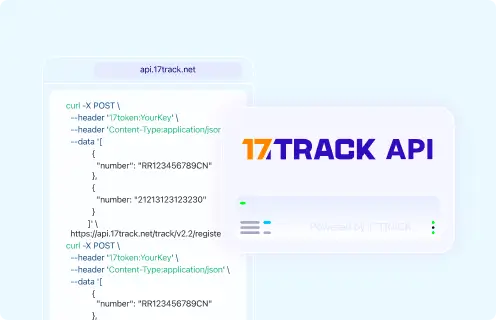
The cited Latam pages do not provide current public developer documentation for an official tracking API. The example below therefore includes no invented Latam endpoint. For 17TRACK registration, replace the placeholder tracking number and use a carrier code only after confirming it in current 17TRACK documentation or account tooling.
# 1. Latam official tracking API
# Current public official tracking API not confirmed from the cited Latam pages.
# Do not invent an endpoint, method, credentials, or request body.

# 2. 17TRACK API: register a tracking number
curl --request POST \
  --url https://api.17track.net/track/v2.4/register \
  --header '17token: YourKey' \
  --header 'Content-Type: application/json' \
  --data '[
    {
      "number": "TRACKING_NUMBER",
      "carrier": "CARRIER_CODE"
    }
  ]'

# Confirm CARRIER_CODE with current 17TRACK documentation:
# https://api.17track.net/en/doc
Sources & References
17TRACK is an independent tracking platform and is not affiliated with Latam.