APG Global

APG Global Tracking

Please enter the APG Global tracking number to check the latest shipping status.

To extract possible tracking number complying with all tracking number rules.Clear text from input field.Track the entered order number.

About APG Global

APG Global is a cross-border ecommerce logistics provider focused on international parcel delivery, returns and tracking for online retailers, marketplaces and consumers. In the tracking lifecycle, APG Global may appear as the ecommerce logistics operator that receives shipment data, arranges export or line-haul movement, coordinates customs and hands Parcels to postal or commercial last-mile partners in the destination country.

APG Global overview

Field Verified information
Official nameAPG Global
Official websitehttps://apg-global.com/
Carrier typeCross-border ecommerce logistics provider, parcel consolidator, international delivery coordinator and returns solution provider.
Primary regionInternational ecommerce routes between origin markets, export gateways and destination-country last-mile networks.
Tracking pageUse the official APG Global website tracking entry where available: APG Global official website.
Parent organizationNot publicly confirmed on the cited official pages used for this guide.
FoundedNot publicly confirmed on the cited official pages used for this guide.
HeadquartersNot publicly confirmed on the cited official pages used for this guide.

Carrier Entity Relationships

Entity Entity type
APG GlobalCanonical carrier brand
View all details for APG Global
Relationship to APG GlobalAPG Global is the carrier brand used for cross-border ecommerce delivery and tracking services.
Why it matters to trackingConsumers should track APG Global shipments with the carrier tracking number from the merchant rather than a marketplace order number.
Official evidenceThe official APG Global website identifies APG Global as the logistics brand and service entry point.
Ecommerce parcel delivery and returnsOperated services
View all details for APG Global services
Relationship to APG GlobalEcommerce delivery and return flows are coordinated by APG Global for business shippers and online buyers.
Why it matters to trackingEvents can include merchant data, APG Global processing, export movement and partner delivery events rather than scans from one single vehicle network.
Official evidenceAPG Global describes ecommerce logistics and parcel services on its official website.
APG Global tracking toolsTracking products
View all details for APG Global tracking tools
Relationship to APG GlobalAPG Global tracking tools display shipment events available to APG Global and its delivery partners.
Why it matters to trackingA blank result usually means the number is not yet activated, the merchant has not transmitted data, or the parcel is being tracked under a partner identifier.
Official evidenceThe APG Global website provides the official route for APG Global shipment support and tracking access.
Export gateways, customs and destination delivery networksNetwork and facility entities
View all details for APG Global network entities
Relationship to APG GlobalAPG Global shipments can move through export processing, airline or line-haul transport, customs authorities and destination last-mile carriers.
Why it matters to trackingThe party physically holding the parcel changes by stage, so a delay at customs or at a last-mile partner is not the same as a delay inside APG Global processing.
Official evidenceAPG Global describes international ecommerce logistics that depend on cross-border transport and delivery partners.
Postal and commercial last-mile partnersInternational or last-mile partners
View all details for APG Global partner handoffs
Relationship to APG GlobalDestination-country postal or commercial carriers may complete final delivery after APG Global has coordinated international movement.
Why it matters to trackingThe destination carrier may show additional scans, request duties, hold the parcel for pickup or handle the final delivery attempt.
Official evidenceCross-border parcel services inherently require destination-country delivery and import processes; specific partners can vary by route and service.
17TRACKIndependent tracking platform
View all details for 17TRACK and APG Global
Relationship to APG Global17TRACK aggregates available tracking events for APG Global and many Other carriers but does not transport APG Global Parcels.
Why it matters to tracking17TRACK can help identify carrier events across handoffs, but address changes, refunds, claims and delivery instructions must be handled by the merchant, APG Global or the responsible last-mile carrier.
Official evidence17TRACK publishes tracking and API documentation for multi-carrier tracking use cases.

Quick Answer

To track an APG Global package, enter the carrier tracking number from your shipping email, merchant account or parcel label on the official APG Global website or on 17TRACK. 17TRACK is an independent multi-carrier tracking platform that can display available APG Global and partner events, but 17TRACK does not carry Parcels, change addresses, approve claims, collect duties, issue refunds or control delivery attempts.

If you seeCheck firstBest next step
No resultSpaces, dashes, wrong order number, or data not yet transmitted.Wait for the first physical acceptance scan or ask the seller for the carrier tracking number.
Only shipment information receivedThe merchant has created a label or pre-advice record.Do not assume APG Global has physically received the parcel until an acceptance or processing event appears.
Destination-country eventA postal or commercial partner may now hold the parcel.Use APG Global and 17TRACK together; if a local tracking number is shown, also check the destination carrier.

How to Track APG Global Packages

Use either the official APG Global tracking route or 17TRACK. The key is to enter a carrier tracking identifier, not the store order number unless the merchant explicitly says the reference is trackable.

Tracking pathSteps
Official APG Global tracking1. Open the APG Global official website. 2. Find the tracking entry. 3. Paste the tracking number exactly as supplied. 4. Review the latest event, location and responsible stage.
17TRACK tracking1. Paste the APG Global number into 17TRACK. 2. Let carrier auto-detection run or choose APG Global if available. 3. Compare origin, transit and last-mile events. 4. Use the shown carrier name to decide who to contact.
Merchant or marketplace tracking1. Open the order page. 2. Look for the shipment section, not the payment receipt. 3. Copy the carrier tracking number. 4. Ask the seller for the APG Global or partner number if only an order ID is shown.
IdentifierWhere users find itCan it track?
Tracking numberShipping email, merchant order page, parcel label or APG Global shipment notification.Yes, if the shipment has been registered and the number belongs to APG Global or a linked partner.
Order numberStore receipt, marketplace account or payment confirmation.Usually no; it identifies the purchase, not the transport record.
Reference numberBusiness shipping system, merchant dashboard or customer support case.Only when the shipper has enabled reference lookup; otherwise ask for the carrier tracking number.
Last-mile numberDestination carrier tracking page or late-stage event details.Yes on the destination carrier website if a partner number has been assigned.

Tracking Number Formats and Examples

APG Global tracking numbers can include APG Global-issued parcel IDs, merchant references and partner or postal numbers. Being searchable on an APG Global-related tracking page does not prove that APG Global issued the number; cross-border shipments often keep an origin, consolidated or last-mile identifier throughout different stages.

Tracking Number Format

Identifier familyNormalized pattern
APG Global parcel tracking IDAlphanumeric carrier ID; example format: APG #### #### ####
View all details for APG Global parcel tracking ID
Length/structureAPG Global does not publish one universal consumer-facing pattern for all services; remove spaces and hyphens before searching.
Issued byAPG Global or a connected shipping platform acting for the merchant.
Typical service/useCross-border ecommerce parcel tracking and merchant shipment visibility.
Who sees it and whereOnline buyers see it in a shipping email or order page; merchants see it in shipment exports or logistics dashboards.
Tracking scopeUsually covers pre-advice, APG Global processing, international movement and partner events available to APG Global.
Important caveatDo not infer service speed or final carrier from the prefix alone because formats can vary by shipper integration and route.
Merchant order or shipment referenceStore-defined letters and digits; example format: ORDER ###### or REF ######
View all details for merchant references
Length/structureDefined by the seller or marketplace and may not follow a transport standard.
Issued byMerchant, marketplace or order management system.
Typical service/useCustomer service lookup, invoice matching and warehouse fulfilment.
Who sees it and whereBuyers see it on the checkout receipt; sellers see it in order management systems.
Tracking scopeNot a carrier tracking number unless APG Global or the merchant explicitly supports reference lookup.
Important caveatIf 17TRACK or the official page returns no result, ask the seller for the APG Global tracking number.
UPU S10 postal identifierTwo letters, nine digits, two country letters; example format: LX ######### CN
View all details for UPU S10 postal identifiers
Length/structureThirteen characters: service indicator letters, serial digits including check digit, and origin country code.
Issued byUsually the origin postal operator, not APG Global, when a postal product is used.
Typical service/useInternational postal Parcels, registered items, packet services and postal partner handoffs.
Who sees it and whereCross-border buyers may see it in marketplace tracking or on the parcel label.
Tracking scopeMay be visible through origin post, destination post, APG Global-related tracking and 17TRACK depending on data sharing.
Important caveatAn S10 number ending in a country code indicates the issuing postal administration, not necessarily the current physical custodian.
Last-mile carrier numberDestination-carrier format; examples: 92## #### #### #### #### ## or alphanumeric local ID
View all details for last-mile carrier numbers
Length/structureVaries by the destination postal or courier operator.
Issued byDestination-country postal or commercial delivery partner.
Typical service/useFinal-mile delivery, pickup notice, redelivery, duty payment or local depot handling.
Who sees it and whereRecipients may see it after import arrival, in destination carrier scans or in local delivery notices.
Tracking scopeUsually strongest after the destination partner physically receives or scans the parcel.
Important caveatThe last-mile number may not appear at shipment creation and may not replace the original APG Global number in all systems.
Consolidation or bag referenceOperational batch identifier; example format: BAG ###### or MANIFEST ######
View all details for consolidation references
Length/structureInternal operational reference; structure depends on facility and manifest system.
Issued byAPG Global, a warehouse, a freight forwarder or a line-haul partner.
Typical service/useBulk export, airline handover, customs manifesting and container or mailbag reconciliation.
Who sees it and whereMostly business shippers and logistics operators; consumers rarely use it directly.
Tracking scopeMay explain a route event but normally is not the consumer parcel tracking number.
Important caveatIf a support agent gives a manifest reference, still keep the parcel tracking number for consumer inquiries.
Pro Tip: Normalize APG Global tracking numbers by removing spaces, dashes and copy-paste line breaks, but do not remove letters. If two numbers are shown, track both because one may be the APG Global record and the Other may be the destination last-mile number.

Tracking Statuses and Meanings

APG Global tracking statuses should be read as a lifecycle: data created, parcel received, export processed, transported internationally, imported, handed to a destination carrier, delivered, held, excepted or returned. The responsible party changes as the parcel moves.

Status Quick Lookup

StatusLifecycle stage
Shipment information receivedPre-shipment
View all details for shipment information received
What it meansThe seller or platform has sent electronic shipment data.
Current responsible partyMerchant or fulfilment warehouse until physical acceptance is scanned.
What happens nextThe parcel is packed, collected or handed to APG Global or an origin partner.
What you should doWait for a physical scan; contact the seller if no movement appears after dispatch confirmation.
Accepted or received by carrierAccepted
View all details for accepted or received by carrier
What it meansA carrier, warehouse or APG Global network point has recorded physical receipt.
Current responsible partyAPG Global or the origin logistics partner shown in the event.
What happens nextSorting, export consolidation and route assignment.
What you should doMonitor normally; no action is needed unless the item misses the expected route window.
In transitIn transit
View all details for in transit
What it meansThe shipment is moving between facilities, gateways or partner networks.
Current responsible partyThe carrier or partner physically transporting the parcel at that segment.
What happens nextArrival scan at the next processing location, export gateway or import entry point.
What you should doAllow for scan gaps during line-haul movement, weekends and cross-border transport.
Departed export facilityCustoms/Handover
View all details for departed export facility
What it meansThe parcel has left an origin processing or export location for international transport.
Current responsible partyLine-haul carrier, airline, consolidator or export partner.
What happens nextInternational transport and arrival at a destination gateway or exchange office.
What you should doExpect limited scans until the destination country receives or processes the item.
Arrived in destination countryCustoms/Handover
View all details for arrived in destination country
What it meansThe parcel or its manifest has reached the destination country or import gateway.
Current responsible partyImport gateway, customs authority, broker or destination carrier depending on scan wording.
What happens nextImport clearance, duty assessment or handover to final delivery.
What you should doDo not treat arrival as customs release; watch for clearance, duty payment or carrier receipt events.
Customs clearance in progressCustoms/Handover
View all details for customs clearance in progress
What it meansCustoms, a broker or the destination operator is reviewing import data, duties or admissibility.
Current responsible partyCustoms authority, broker or destination carrier.
What happens nextRelease, request for information, tax collection, inspection or return.
What you should doPrepare invoice, ID, tax number or purchase proof if the destination carrier requests it.
Out for deliveryOut for delivery
View all details for out for delivery
What it meansThe destination carrier has assigned the parcel to a delivery route.
Current responsible partyLocal last-mile carrier.
What happens nextDelivery attempt, pickup notice, address exception or rescheduled delivery.
What you should doMonitor local carrier instructions and make sure someone can receive the parcel if signature is required.
DeliveredDelivered
View all details for delivered
What it meansThe responsible last-mile carrier recorded final delivery or pickup completion.
Current responsible partyRecipient location, pickup point or last-mile carrier for proof details.
What happens nextNo further movement unless a correction, pickup or return event is added.
What you should doCheck mailbox, parcel locker, reception, family members and neighbors before escalating.
Held for pickupPickup
View all details for held for pickup
What it meansThe local carrier is holding the parcel at a depot, post office, Shop or locker.
Current responsible partyDestination carrier or pickup point operator.
What happens nextRecipient pickup, redelivery request if offered, or return after the local holding period.
What you should doBring ID, tracking number and delivery notice; follow the local carrier pickup deadline.
Delivery exceptionException
View all details for delivery exception
What it meansA delivery issue occurred, such as address problem, access restriction, unpaid charges or failed attempt.
Current responsible partyUsually the destination carrier or recipient, depending on the reason.
What happens nextRedelivery, pickup, information request, return or disposal according to local rules.
What you should doAct quickly through the destination carrier or seller because holding periods vary by country and service.
Return to senderReturn
View all details for return to sender
What it meansThe parcel is being returned because of failed delivery, refusal, customs issue, address problem or expired pickup hold.
Current responsible partyDestination carrier, return carrier, APG Global or merchant depending on stage.
What happens nextReturn transport and eventual seller receipt or return processing.
What you should doContact the seller immediately; rerouting after return starts may not be possible.

Services and Delivery Times

APG Global services are generally used for cross-border ecommerce Parcels and returns. Published transit commitments can vary by origin, destination, merchant contract, customs process and last-mile partner, so delivery estimates should not be treated as money-back guarantees unless APG Global or the seller explicitly provides a guarantee for that shipment.

Service Comparison

ServiceService type
Cross-border ecommerce parcel deliveryInternational parcel
View all details for cross-border ecommerce parcel delivery
Best forMarketplace and online retail Parcels moving from seller fulfilment to international buyers.
CoverageRoute-dependent international coverage through APG Global and destination delivery partners.
Tracking levelEvent visibility can include pre-advice, export processing, line-haul, import and last-mile scans.
Key size/weight conditionContract and route dependent; merchants should use current APG Global service rules.
Included protection/extra serviceProtection, compensation and signature options depend on merchant contract and service selected.
Main limitationDelivery time depends heavily on customs, partner handoff and local delivery capacity.
Economy tracked ecommerce deliveryEconomy cross-border
View all details for economy tracked ecommerce delivery
Best forLower-value ecommerce goods where full express speed is not required.
CoverageSelected international lanes and destination partners.
Tracking levelMilestone tracking is common; scan frequency may be lower during consolidation and line-haul.
Key size/weight conditionUsually small parcel and packet profiles; exact limits are contract-specific.
Included protection/extra serviceDepends on shipper agreement; recipients should rely on seller policy for refunds.
Main limitationLonger scan gaps and broader delivery windows than premium or express services.
International returnsReverse logistics
View all details for international returns
Best forRetailers that need customer returns, consolidation and return visibility across borders.
CoverageRoute and merchant-program dependent.
Tracking levelMay show return label creation, local drop-off, consolidation, export and merchant receipt.
Key size/weight conditionReturn eligibility depends on merchant policy and APG Global return instructions.
Included protection/extra serviceRefund rules are controlled by the seller unless a carrier claim is available to the shipper.
Main limitationConsumers must follow the seller’s return process; APG Global cannot independently approve store refunds.

Delivery Time

ServicePublished delivery standard
Cross-border ecommerce parcel deliveryVaries by origin, destination, customs and contracted service.
View all details for cross-border ecommerce parcel delivery time
Business or calendar daysWhere a delivery window is shown by the merchant, verify whether it means business days or calendar days.
Guarantee statusNot treated as guaranteed unless stated in the applicable APG Global contract or seller shipping promise.
Starts counting fromUsually physical acceptance or dispatch, not the moment the order is placed.
Main delay factorsLate warehouse handoff, export cutoff, flight capacity, customs inspection, tax collection, remote area routing and last-mile backlog.
Official source date/validityUse the current APG Global service and support pages for route-specific standards because this information is variable.
Economy tracked ecommerce deliveryTypically broader than premium tracked services; exact standard is route-specific.
View all details for economy tracked ecommerce delivery time
Business or calendar daysMerchant promises may use business days; destination carrier notices may use calendar dates.
Guarantee statusUsually an estimate unless a contract says otherwise.
Starts counting fromFrom carrier receipt or warehouse dispatch rather than label creation.
Main delay factorsConsolidation, fewer milestone scans, customs, public holidays and last-mile capacity.
Official source date/validityCheck the current APG Global service pages and seller shipping policy for the exact lane.
International returnsVaries by drop-off country, return consolidation and merchant processing policy.
View all details for international returns delivery time
Business or calendar daysReturn transit and seller refund processing can be separate timelines.
Guarantee statusRefund timing is governed by the merchant, not by 17TRACK.
Starts counting fromFrom return label activation or local drop-off scan, depending on the merchant process.
Main delay factorsCustomer drop-off delay, consolidation, export/import handling and seller warehouse receipt.
Official source date/validityUse the seller’s return instruction and APG Global return tracking where provided.

Destination Country Delivery Times

Destination Country / RegionEstimated Delivery Time Range
United States7–20 business days; Average ~12 days
View all details for United States delivery
Primary Service TypeTracked ecommerce parcel or postal-commercial hybrid.
Last-Mile Partner / Handoff CarrierCommonly a local postal or commercial delivery partner such as USPS or a parcel courier, depending on route.
Customs & Clearance TipsImport visibility can pause between airport arrival and local carrier induction; duty and address issues are handled by the destination operator or broker.
Canada8–24 business days; Average ~15 days
View all details for Canada delivery
Primary Service TypeTracked ecommerce parcel.
Last-Mile Partner / Handoff CarrierCanada Post or a commercial courier may deliver according to service selection.
Customs & Clearance TipsTaxes and broker requests can delay release; remote provinces can add final-mile time.
Mexico10–30 business days; Average ~19 days
View all details for Mexico delivery
Primary Service TypeTracked packet or parcel delivery.
Last-Mile Partner / Handoff CarrierLocal postal or courier partner.
Customs & Clearance TipsCustoms review and address normalization are common reasons for scan gaps.
United Kingdom6–18 business days; Average ~11 days
View all details for United Kingdom delivery
Primary Service TypeTracked ecommerce parcel.
Last-Mile Partner / Handoff CarrierRoyal Mail or a UK parcel courier, depending on the route.
Customs & Clearance TipsVAT and import data accuracy affect clearance; local tracking may begin after handoff.
Germany7–20 business days; Average ~13 days
View all details for Germany delivery
Primary Service TypeTracked ecommerce parcel.
Last-Mile Partner / Handoff CarrierDeutsche Post DHL group or a commercial parcel partner may appear.
Customs & Clearance TipsEU VAT/IOSS data, product description and value accuracy reduce clearance delays.
France7–21 business days; Average ~14 days
View all details for France delivery
Primary Service TypeTracked ecommerce parcel.
Last-Mile Partner / Handoff CarrierLa Poste, Colissimo or a parcel courier may handle the last mile.
Customs & Clearance TipsEU import VAT and pickup-point routing can add visible or silent days.
Spain8–24 business days; Average ~15 days
View all details for Spain delivery
Primary Service TypeTracked parcel or postal packet.
Last-Mile Partner / Handoff CarrierCorreos or a local parcel network depending on product.
Customs & Clearance TipsCanary Islands and remote territories may follow different import and transit patterns.
Italy8–25 business days; Average ~16 days
View all details for Italy delivery
Primary Service TypeTracked ecommerce parcel.
Last-Mile Partner / Handoff CarrierPoste Italiane or a commercial courier may deliver.
Customs & Clearance TipsLocal depot handling and tax collection can create extra scans after import.
Netherlands6–18 business days; Average ~11 days
View all details for Netherlands delivery
Primary Service TypeTracked ecommerce parcel.
Last-Mile Partner / Handoff CarrierPostNL or a commercial partner.
Customs & Clearance TipsEU import data and parcel locker routing can affect the last-mile event sequence.
Poland8–24 business days; Average ~15 days
View all details for Poland delivery
Primary Service TypeTracked parcel or postal packet.
Last-Mile Partner / Handoff CarrierPoczta Polska or parcel locker/courier network.
Customs & Clearance TipsPickup-point and locker delivery may show local-language exception events.
Sweden8–22 business days; Average ~14 days
View all details for Sweden delivery
Primary Service TypeTracked ecommerce parcel.
Last-Mile Partner / Handoff CarrierPostNord or a local parcel partner.
Customs & Clearance TipsVAT payment notifications and pickup-point routing are common action points.
Belgium7–21 business days; Average ~13 days
View all details for Belgium delivery
Primary Service TypeTracked ecommerce parcel.
Last-Mile Partner / Handoff Carrierbpost or courier partner.
Customs & Clearance TipsEU VAT data and delivery preference changes can affect final scans.
Austria7–21 business days; Average ~13 days
View all details for Austria delivery
Primary Service TypeTracked parcel or postal packet.
Last-Mile Partner / Handoff CarrierÖsterreichische Post or parcel courier.
Customs & Clearance TipsImport data completeness and pickup notifications are important for smooth delivery.
Switzerland8–23 business days; Average ~15 days
View all details for Switzerland delivery
Primary Service TypeTracked ecommerce parcel.
Last-Mile Partner / Handoff CarrierSwiss Post or parcel courier.
Customs & Clearance TipsNon-EU customs procedures and duty collection can add delay after arrival.
Japan6–18 business days; Average ~11 days
View all details for Japan delivery
Primary Service TypeTracked ecommerce parcel.
Last-Mile Partner / Handoff CarrierJapan Post or commercial courier.
Customs & Clearance TipsAccurate recipient phone and address formatting help local delivery.
South Korea6–18 business days; Average ~11 days
View all details for South Korea delivery
Primary Service TypeTracked ecommerce parcel.
Last-Mile Partner / Handoff CarrierKorea Post or local courier.
Customs & Clearance TipsPersonal customs code or recipient data may be required for some imports.
Australia7–22 business days; Average ~14 days
View all details for Australia delivery
Primary Service TypeTracked parcel or postal-commercial hybrid.
Last-Mile Partner / Handoff CarrierAustralia Post or courier partner.
Customs & Clearance TipsGST and biosecurity review can affect some categories; remote areas add final-mile time.
New Zealand8–24 business days; Average ~15 days
View all details for New Zealand delivery
Primary Service TypeTracked ecommerce parcel.
Last-Mile Partner / Handoff CarrierNZ Post or local courier.
Customs & Clearance TipsBiosecurity and remote island routing can cause additional processing time.
Singapore5–15 business days; Average ~9 days
View all details for Singapore delivery
Primary Service TypeTracked parcel.
Last-Mile Partner / Handoff CarrierSingapore Post or local courier.
Customs & Clearance TipsCompact geography usually shortens last mile, but duty or GST collection can still pause delivery.
Malaysia7–22 business days; Average ~14 days
View all details for Malaysia delivery
Primary Service TypeTracked parcel or packet.
Last-Mile Partner / Handoff CarrierPos Malaysia or courier partner.
Customs & Clearance TipsTax review and regional routing can create scan gaps outside major metro areas.
Thailand8–24 business days; Average ~15 days
View all details for Thailand delivery
Primary Service TypeTracked parcel or postal packet.
Last-Mile Partner / Handoff CarrierThailand Post or courier partner.
Customs & Clearance TipsPhone number accuracy helps tax collection and delivery appointment contact.
India10–30 business days; Average ~20 days
View all details for India delivery
Primary Service TypeTracked ecommerce parcel.
Last-Mile Partner / Handoff CarrierIndia Post or commercial courier depending on route.
Customs & Clearance TipsKYC, invoice validation and regional delivery distance are common delay factors.
Philippines10–30 business days; Average ~20 days
View all details for Philippines delivery
Primary Service TypeTracked packet or parcel.
Last-Mile Partner / Handoff CarrierPhilippine Postal Corporation or courier partner.
Customs & Clearance TipsIsland routing and customs release can create long gaps after destination arrival.
Indonesia10–32 business days; Average ~21 days
View all details for Indonesia delivery
Primary Service TypeTracked ecommerce parcel.
Last-Mile Partner / Handoff CarrierPos Indonesia or courier partner.
Customs & Clearance TipsTax payment and archipelago distribution add variability outside major cities.
Brazil15–45 business days; Average ~28 days
View all details for Brazil delivery
Primary Service TypeTracked parcel or postal packet.
Last-Mile Partner / Handoff CarrierCorreios or local delivery partner.
Customs & Clearance TipsCPF/tax data, import charges and customs backlog are major drivers of delay.
Chile12–35 business days; Average ~23 days
View all details for Chile delivery
Primary Service TypeTracked parcel or packet.
Last-Mile Partner / Handoff CarrierCorreosChile or courier partner.
Customs & Clearance TipsRemote regions and import review can extend final delivery after clearance.
United Arab Emirates7–20 business days; Average ~13 days
View all details for United Arab Emirates delivery
Primary Service TypeTracked ecommerce parcel.
Last-Mile Partner / Handoff CarrierEmirates Post or courier partner.
Customs & Clearance TipsRecipient phone, address detail and duty collection influence successful delivery.
Saudi Arabia8–24 business days; Average ~16 days
View all details for Saudi Arabia delivery
Primary Service TypeTracked parcel or courier handoff.
Last-Mile Partner / Handoff CarrierSaudi Post SPL or courier partner.
Customs & Clearance TipsAddress code, phone number and tax collection affect final-mile speed.
South Africa12–40 business days; Average ~25 days
View all details for South Africa delivery
Primary Service TypeTracked ecommerce parcel.
Last-Mile Partner / Handoff CarrierSouth African Post Office or courier partner depending on service.
Customs & Clearance TipsCustoms release, depot capacity and regional routing are common variability points.

The country ranges above are practical planning estimates based on cross-border ecommerce tracking patterns and common customs/last-mile behavior, not an official APG Global guarantee. Actual delivery may move faster or slower because of export cutoffs, customs inspection, tax collection, public holidays, remote delivery areas and partner handoff timing.

Common Tracking Problems and Solutions

Most APG Global tracking problems come from four boundaries: the seller has created data but not shipped, APG Global or an origin partner is processing the parcel, customs or line-haul is creating a scan gap, or the destination last-mile carrier now controls delivery.

Problem & Solution

Problem/status shownLikely cause
Invalid numberWrong identifier, missing letters, copied order number or carrier not recognized.
View all details for invalid number
Check firstRemove spaces and dashes; compare with the merchant shipping email.
Immediate actionTry APG Global and 17TRACK carrier auto-detection.
When to escalateEscalate when the seller confirms dispatch but cannot provide a carrier tracking number.
Who to contactSeller or marketplace first.
No tracking updatesPre-advice only, delayed pickup or scan gap during consolidation.
View all details for no tracking updates
Check firstLook for the first physical acceptance scan and the seller’s dispatch date.
Immediate actionAllow time for data synchronization and cross-border processing.
When to escalateEscalate when the parcel is beyond the seller’s stated delivery window or APG Global support asks for an inquiry.
Who to contactSeller for pre-shipment; APG Global or destination carrier after carrier receipt.
Label created or information receivedData exists but physical handoff may not have occurred.
View all details for label created
Check firstConfirm whether the seller says the order has actually shipped or only that a label was generated.
Immediate actionWait for an acceptance or processing scan.
When to escalateEscalate to the merchant if the warehouse has not handed over the parcel.
Who to contactMerchant or fulfilment provider.
Stuck in transitLine-haul movement, missed scans, export backlog or import queue.
View all details for stuck in transit
Check firstIdentify the last location and whether it was export, transport or destination arrival.
Immediate actionWait through normal international scan gaps before opening duplicate cases.
When to escalateEscalate after the estimated delivery window is exceeded or when APG Global requests a formal investigation.
Who to contactSeller if you bought online; APG Global or the shipper account holder for carrier inquiries.
Shipping partner handoffA partner has data or possession before APG Global or final carrier induction.
View all details for shipping partner handoff
Check firstRead whether the event says awaiting item, received by partner or handed to carrier.
Immediate actionDo not assume the final carrier has the parcel until its receipt scan appears.
When to escalateEscalate if the handoff stage exceeds the seller’s promised dispatch timeline.
Who to contactSeller or the party named in the event.
Customs holdImport data review, duty collection, prohibited goods check or inspection.
View all details for customs hold
Check firstLook for a tax payment, document request or destination carrier notice.
Immediate actionProvide invoice, ID, tax number or payment only through official destination carrier or customs channels.
When to escalateEscalate when documents have been provided but no release or request follows for an unusual period.
Who to contactDestination carrier, customs broker, seller or APG Global support depending on notice.
Address errorIncomplete, invalid or locally unrecognized delivery address.
View all details for address error
Check firstCompare the address on the order with local postal format, apartment number and phone number.
Immediate actionContact the seller and the local carrier if the parcel is already in destination delivery.
When to escalateEscalate immediately because return may start quickly after failed address validation.
Who to contactSeller before handoff; destination carrier after local induction.
Delivery failedRecipient unavailable, access issue, unpaid charges or delivery restriction.
View all details for delivery failed
Check firstFind the local carrier notice, pickup location or redelivery option.
Immediate actionArrange pickup or redelivery through the destination carrier where offered.
When to escalateEscalate before the local holding period expires.
Who to contactDestination carrier or pickup point.
Delivered but not receivedSafe place delivery, neighbor/reception receipt, wrong address scan or premature scan.
View all details for delivered but not received
Check firstMailbox, porch, locker, building reception, family members, neighbors and delivery photo or proof if available.
Immediate actionContact the destination carrier quickly and ask the seller to start a delivery investigation if needed.
When to escalateEscalate as soon as local checks fail because delivery proof can be time-sensitive.
Who to contactDestination carrier for delivery proof; seller for replacement or refund policy.
Lost or damagedNetwork loss, damaged packaging, missing contents or delivery dispute.
View all details for lost or damaged Parcels
Check firstTracking history, photos, packaging, invoice, product value and seller policy.
Immediate actionKeep packaging and contents; notify the seller with photos and tracking number.
When to escalateEscalate when APG Global, the seller or destination carrier confirms an investigation or claim path.
Who to contactSeller or shipper account holder; 17TRACK cannot approve compensation.

International Shipping, Customs and Carrier Handoffs

APG Global cross-border tracking can involve several responsible entities. Electronic pre-advice, physical handoff, customs release and last-mile receipt are separate events, and a tracking gap between them does not automatically mean the parcel is lost.

International Flow

StagePhysical custodian/responsible entity
Merchant pre-adviceSeller or fulfilment warehouse
View all details for merchant pre-advice
Typical tracking eventShipment information received.
What is happeningShipping data has been transmitted before physical collection.
Can the tracking number change?Yes, a partner or last-mile number may be added later.
Normal visibility gapUntil warehouse dispatch or carrier receipt.
What the customer should doAsk the seller if there is no physical scan after dispatch confirmation.
Origin collection and processingAPG Global, origin partner or warehouse carrier
View all details for origin collection and processing
Typical tracking eventAccepted, processed at facility, received by carrier.
What is happeningThe parcel is sorted, labeled, manifested and prepared for export movement.
Can the tracking number change?Sometimes; operational IDs may be linked without replacing the consumer number.
Normal visibility gapOne or more days depending on cutoffs, consolidation and export schedule.
What the customer should doMonitor route progress and confirm address accuracy with the seller.
Export customs and securityExport authority, broker or gateway operator
View all details for export customs and security
Typical tracking eventExport processing, departed export facility, customs/security check.
What is happeningThe shipment is cleared or screened for international departure.
Can the tracking number change?Usually no for the consumer record, but manifests and bag IDs can be used internally.
Normal visibility gapUntil line-haul departure or destination arrival.
What the customer should doWait unless APG Global or the seller asks for product information.
International line-haulAirline, freight forwarder or transport partner
View all details for international line-haul
Typical tracking eventDeparted origin, in transit to destination, airline handoff.
What is happeningThe parcel or consolidated container is moving across borders.
Can the tracking number change?The parcel number usually remains, but airline or bag references may not be consumer visible.
Normal visibility gapSeveral days are common because Parcels may not scan while in a container.
What the customer should doTrack again after the destination import scan appears.
Import customsDestination customs, broker or destination operator
View all details for import customs
Typical tracking eventArrived in destination country, customs clearance in progress, released from customs.
What is happeningAuthorities or brokers review import data, tax, restrictions and documentation.
Can the tracking number change?A destination-carrier number may be assigned around this stage.
Normal visibility gapVaries by destination and cannot be guaranteed.
What the customer should doRespond to official duty, ID or invoice requests through the destination carrier or customs channel.
Partner handoff and last mileDestination postal or commercial carrier
View all details for partner handoff and last mile
Typical tracking eventHanded to local carrier, arrived at delivery office, out for delivery.
What is happeningThe destination carrier has received or is preparing to receive the parcel for delivery.
Can the tracking number change?Yes, a local tracking number may appear and become the best number for delivery management.
Normal visibility gapUntil the destination carrier performs the first induction or depot scan.
What the customer should doUse the local carrier for redelivery, pickup, proof of delivery and duty payment where available.

Delivery Management and Post-shipment Options

Post-shipment changes for APG Global Parcels depend on the current stage. Before physical handoff, the seller usually controls changes. After the destination carrier has the parcel, the local carrier usually controls pickup, redelivery, delivery instructions and proof of delivery.

Delivery Management

OptionWho can request
Address correction before dispatchBuyer through seller; seller through shipping account.
View all details for address correction before dispatch
EligibilityMost realistic before the parcel is physically handed to APG Global or a partner.
Deadline/available stageBefore dispatch or carrier acceptance.
FeeNot publicly confirmed; depends on seller and contract.
Guaranteed?No; warehouse cutoffs can prevent changes.
Official action linkUse seller support or APG Global contact routes when the shipper instructs you to do so.
Redelivery or pickupRecipient through destination carrier where offered.
View all details for redelivery or pickup
EligibilityAvailable only after the destination carrier has attempted delivery or assigned a pickup point.
Deadline/available stageDuring the local holding period set by the destination carrier.
FeeDepends on the local carrier and country.
Guaranteed?No; Parcels can be returned after missed deadlines.
Official action linkUse the destination carrier website or notice shown in tracking.
Proof of delivery requestRecipient, seller or shipper account holder depending on local carrier rules.
View all details for proof of delivery request
EligibilityOnly after a delivered scan or delivery dispute.
Deadline/available stageAfter delivery; proof retention varies by local carrier.
FeeNot publicly confirmed for all routes.
Guaranteed?No; proof type depends on service and destination carrier.
Official action linkAsk the destination carrier or seller to provide available delivery proof.

Lost, Damaged, Claims, Insurance and Refunds

A tracking inquiry, a carrier investigation, an insurance claim and a store refund are different processes. For ecommerce buyers, the seller normally controls refunds and replacements; the shipper account holder normally controls carrier claims with APG Global.

Claims and Refunds

ProcessUse when
Tracking inquiryTracking has stopped, shows unclear handoff, or exceeds the expected window.
View all details for tracking inquiry
Who filesBuyer through seller, or shipper through APG Global support.
Earliest/latest filing timeNo universal public APG Global deadline confirmed; follow seller or APG Global instructions.
Required evidenceTracking number, order number, dispatch date, latest event and delivery address.
Possible outcomeUpdated tracking, partner inquiry, request to wait, or escalation to claim.
Official linkAPG Global official website
Damage or missing contents reportParcel arrives damaged, wet, opened or missing items.
View all details for damage or missing contents report
Who filesRecipient reports to seller; shipper may file carrier claim if eligible.
Earliest/latest filing timeReport immediately; exact filing deadline depends on service and merchant contract.
Required evidencePhotos of outer packaging, inner packaging, label, damaged item, invoice and all contents.
Possible outcomeReplacement, refund, carrier investigation, claim settlement or denial.
Official linkUse seller support and APG Global contact route if the shipper instructs.
Seller refund or replacementYou purchased from an online store or marketplace and need a commercial remedy.
View all details for seller refund or replacement
Who filesBuyer files with seller or marketplace.
Earliest/latest filing timeAccording to marketplace buyer protection or store return policy.
Required evidenceOrder number, tracking number, screenshots, photos and correspondence.
Possible outcomeRefund, replacement, store credit, return authorization or denial under seller policy.
Official linkUse the merchant or marketplace dispute channel.

Shipping Restrictions and Special Handling

APG Global cross-border Parcels must comply with APG Global service rules, aviation security rules, export law, destination-country customs rules and last-mile carrier restrictions. The summary below is not a complete legal checklist.

Shipping Restrictions

CategoryProhibited or restricted
Dangerous goodsRestricted or prohibited depending on item, route and packaging.
View all details for dangerous goods
Typical examplesFlammable liquids, aerosols, compressed gases, corrosives and regulated chemicals.
Key condition/packagingRequires route-specific acceptance and compliant packaging where allowed.
Transport limitationMay be refused for air transport or returned at screening.
Possible tracking/delivery impactSecurity hold, rejection, disposal or return to sender.
Official rulesCheck current APG Global and destination carrier rules before shipping.
Batteries and electronicsRestricted by battery type, watt-hour rating and packaging.
View all details for batteries and electronics
Typical examplesLithium batteries, power banks, phones, tablets and battery-powered devices.
Key condition/packagingMay require installed-in-equipment packaging, labeling and quantity limits.
Transport limitationStandalone lithium batteries are often more restricted than batteries contained in equipment.
Possible tracking/delivery impactExport screening delay or rejection if incorrectly declared.
Official rulesUse APG Global shipper instructions and aviation safety rules for the lane.
Food, liquids and perishablesOften restricted or destination-dependent.
View all details for food liquids and perishables
Typical examplesCosmetics, oils, sauces, supplements, plants and temperature-sensitive goods.
Key condition/packagingLeak-proof packaging and import permits may be required where allowed.
Transport limitationMay fail customs or biosecurity inspection.
Possible tracking/delivery impactInspection hold, destruction, return or delivery delay.
Official rulesCheck APG Global, customs and destination postal rules.
High-value, counterfeit or regulated goodsRestricted or subject to additional documents.
View all details for regulated goods
Typical examplesLuxury goods, branded goods, medical items, cosmetics and controlled products.
Key condition/packagingAccurate invoice, HS code, value and permits where required.
Transport limitationMay require broker review or be prohibited by destination law.
Possible tracking/delivery impactCustoms query, seizure, return or delayed duty assessment.
Official rulesFollow APG Global shipper guidance and destination customs requirements.

Customer Service

For APG Global tracking support, start with the seller if you are an online buyer, because the seller holds the shipment contract and can confirm the exact service. Contact APG Global or the destination carrier when tracking shows carrier receipt, customs action, delivery attempt or a local delivery issue.

Customer Service

ChannelVerified contact/link
Official APG Global websitehttps://apg-global.com/
View all details for official APG Global website
Best forOfficial service information, support entry points and APG Global brand verification.
Region/languageInternational; language options depend on the official site.
Hours and time zoneNot publicly confirmed for all regions on the cited pages.
Information to prepareTracking number, order number, ship date, origin, destination, latest scan and seller name.
Important limitationThe official website can guide APG Global inquiries but may still require the shipper or seller to open a contracted-service investigation.
Seller or marketplace supportUse the store or marketplace order page.
View all details for seller or marketplace support
Best forWrong item, refund, replacement, cancellation, missing tracking number or pre-shipment delay.
Region/languageDepends on seller or marketplace.
Hours and time zoneDepends on seller policy.
Information to prepareOrder number, APG Global tracking number, purchase date, delivery promise and screenshots.
Important limitationThe seller can approve commercial remedies; APG Global and 17TRACK cannot approve marketplace refunds.
Destination last-mile carrierUse the local tracking link or carrier named in the latest event.
View all details for destination last-mile carrier
Best forOut for delivery, pickup, redelivery, duty payment, proof of delivery and local delivery disputes.
Region/languageDestination country and local language.
Hours and time zoneDepends on local carrier.
Information to prepareAPG Global number, local tracking number if shown, ID, address, phone and delivery notice.
Important limitationThe local carrier may not discuss sender-contract claims with the recipient.
17TRACKhttps://www.17track.net/
View all details for 17TRACK
Best forMulti-carrier tracking, carrier detection and event normalization.
Region/languageGlobal multi-language tracking platform.
Hours and time zoneOnline tracking platform availability; carrier response times are separate.
Information to prepareTracking number and carrier name if auto-detection is ambiguous.
Important limitation17TRACK is not APG Global and cannot change delivery, collect duties, investigate loss or issue refunds.

Ecommerce and Business Tracking

Businesses use APG Global tracking to reduce WISMO inquiries, monitor cross-border exceptions and reconcile handoffs across multiple destination carriers. Consumer tracking, APG Global business integrations and 17TRACK multi-carrier APIs serve different purposes.

Developer/API Comparison

OptionProvider
Official APG Global business tracking or integrationAPG Global
View all details for official APG Global business integration
Carrier coverageAPG Global shipments and partner events available through APG Global systems.
Primary useContracted shipper visibility, shipment creation, tracking support and returns where enabled.
AuthenticationCurrent public authentication details were not confirmed in the official public pages used for this guide.
Tracking/batch/webhook capabilityBusiness capabilities may depend on contract and integration access; public endpoint details are not confirmed here.
Current developer documentationCurrent public official tracking API documentation not confirmed.
Migration/deprecation noteNo public migration or retirement notice was confirmed from the cited sources.
17TRACK Tracking API17TRACK
View all details for 17TRACK Tracking API
Carrier coverageMulti-carrier tracking, including supported APG Global tracking where carrier code availability is configured.
Primary useBatch tracking, carrier detection, standardized events and notification workflows for stores and platforms.
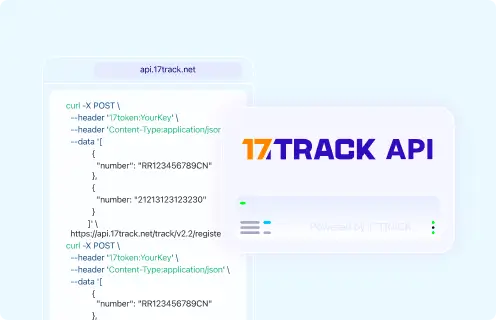
AuthenticationUses the 17token header with a 17TRACK API key.
Tracking/batch/webhook capabilityRegister tracking numbers and retrieve multi-carrier tracking data according to 17TRACK API documentation.
Current developer documentation17TRACK API documentation
Migration/deprecation noteUse current 17TRACK v2.4 examples and your account documentation; do not rely on old unpublished carrier endpoints.
Marketplace or ecommerce platform trackingMarketplace, order management system or shipping app
View all details for marketplace tracking
Carrier coverageDepends on platform integrations and merchant-selected carriers.
Primary useBuyer notifications, order status, fulfilment reconciliation and support tickets.
AuthenticationPlatform account, app token or merchant dashboard login.
Tracking/batch/webhook capabilityVaries by platform; may not expose full carrier events.
Current developer documentationUse the relevant marketplace or platform documentation.
Migration/deprecation noteMap APG Global events to standardized statuses carefully because marketplace status names can be simplified.

FAQ

1. How do I track my APG Global package?

Enter the APG Global tracking number on the official APG Global website or track it with 17TRACK to view available shipment events across APG Global and partner stages.

2. Where can I find my APG Global tracking number?

You can usually find the APG Global tracking number in the seller’s shipping email, marketplace order page, dispatch notification or parcel label, while the store order number is usually not enough for carrier tracking.

3. What does an APG Global tracking number look like?

APG Global numbers can be alphanumeric carrier IDs, merchant-linked shipment references, UPU S10 postal identifiers or destination last-mile numbers, so you should not infer the service from the prefix alone.

4. When will the first APG Global tracking update appear?

The first meaningful APG Global update usually appears after shipment data is transmitted or the parcel is physically accepted, and label creation does not prove that APG Global has already received the parcel.

5. Why is my APG Global tracking not updating?

APG Global tracking may stop updating during warehouse handoff, export consolidation, international line-haul, customs review or destination-carrier induction because not every stage creates a public scan.

6. How long does APG Global delivery take?

APG Global delivery time varies by origin, destination, customs, service level and last-mile partner; treat merchant delivery windows as estimates unless a specific guarantee applies to your shipment.

7. What should I do if APG Global shows a delivery failure?

If APG Global tracking shows a delivery failure, check the destination carrier notice for pickup, redelivery, address correction or duty payment instructions and act before the local holding period expires.

8. What if APG Global says delivered but I did not receive the parcel?

If APG Global says delivered but the parcel is missing, check your mailbox, parcel locker, reception, neighbors and household members, then contact the destination carrier for proof details and the seller for a delivery investigation.

9. Who handles APG Global lost or damaged package claims?

The seller or shipper account holder usually handles APG Global carrier claims, while buyers should report loss or damage to the seller with photos, tracking number, order number and packaging evidence.

10. How do I contact APG Global customer service?

Use the official APG Global website for official support routes, but contact the seller first for ecommerce refunds, missing tracking numbers and pre-shipment delays.

11. Why can an APG Global parcel show a postal tracking number?

An APG Global parcel can show a postal tracking number when a postal operator participates in origin or destination delivery, and that number may be issued by the postal operator rather than APG Global.

12. What happens when APG Global hands a parcel to a last-mile carrier?

When APG Global hands a parcel to a last-mile carrier, the destination carrier becomes responsible for local delivery scans, pickup notices, redelivery options and proof of delivery where available.

13. Does arrival in the destination country mean APG Global customs clearance is complete?

Arrival in the destination country does not mean customs clearance is complete; import review, duty assessment and destination-carrier induction can happen after the arrival scan.

14. Can APG Global tracking numbers change during international shipping?

APG Global tracking numbers may be linked to partner or last-mile numbers during international shipping, so track both identifiers if your tracking page shows more than one number.

15. Can businesses track APG Global shipments through an API?

Businesses can use 17TRACK API for multi-carrier tracking, while a current public APG Global official tracking API endpoint was not confirmed from the official public pages used for this guide.

16. Is 17TRACK affiliated with APG Global?

17TRACK is not affiliated with APG Global; 17TRACK independently aggregates available tracking events and cannot transport Parcels, alter delivery, approve claims or issue refunds.

Tracking API

// 1. APG Global official tracking API
// Current public official tracking API not confirmed from the official public APG Global pages used for this guide.
// Do not implement an APG Global endpoint unless APG Global provides current endpoint, method,
// authentication, headers, request body and account approval for your shipper contract.

// 2. 17TRACK API
// Register an APG Global tracking number with 17TRACK.
// CARRIER_CODE is left as a placeholder because the current 17TRACK carrier code must be confirmed
// in your 17TRACK account or carrier list before production use.

POST https://api.17track.net/track/v2.4/register
Headers:
  17token: YourKey
  Content-Type: application/json

Body:
[
  {
    "number": "TRACKING_NUMBER",
    "carrier": "CARRIER_CODE"
  }
]

Sources & References

Disclaimer: 17TRACK is an independent tracking platform and is not affiliated with APG Global.
A professional and stable global package tracking platform.

17TRACK