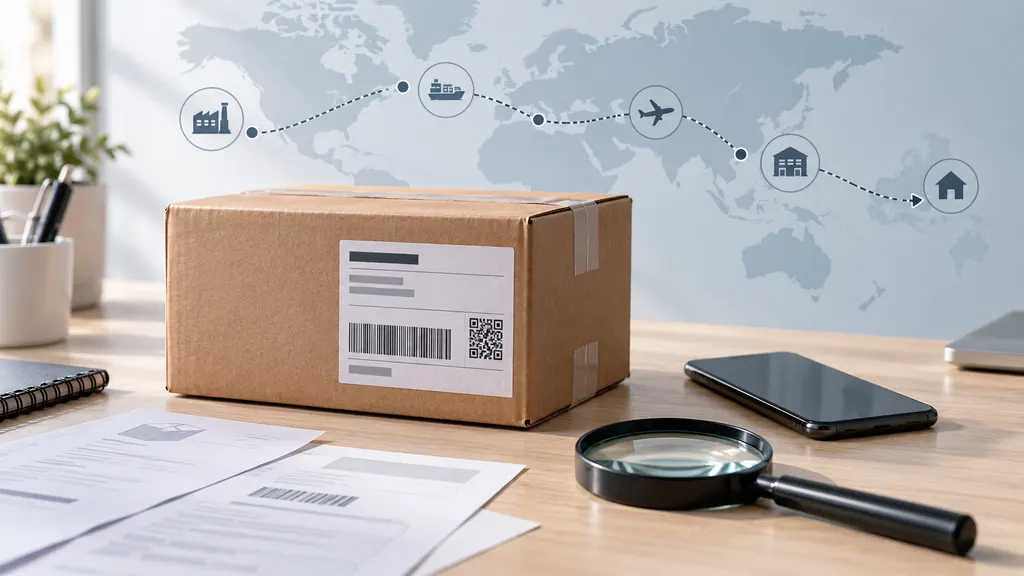
What Is Last-Mile Carrier Tracking? How Ecommerce Brands Track Orders after Carrier Handoff?
Last-mile carrier tracking is the process of following a parcel through the delivery company responsible for its final journey to the recipient. For ecommerce brands, tracking after carrier handoff means connecting the original shipment record to the final delivery carrier, preserving any linked tracking numbers, and using that carrier’s updates to monitor delivery progress and resolve exceptions.
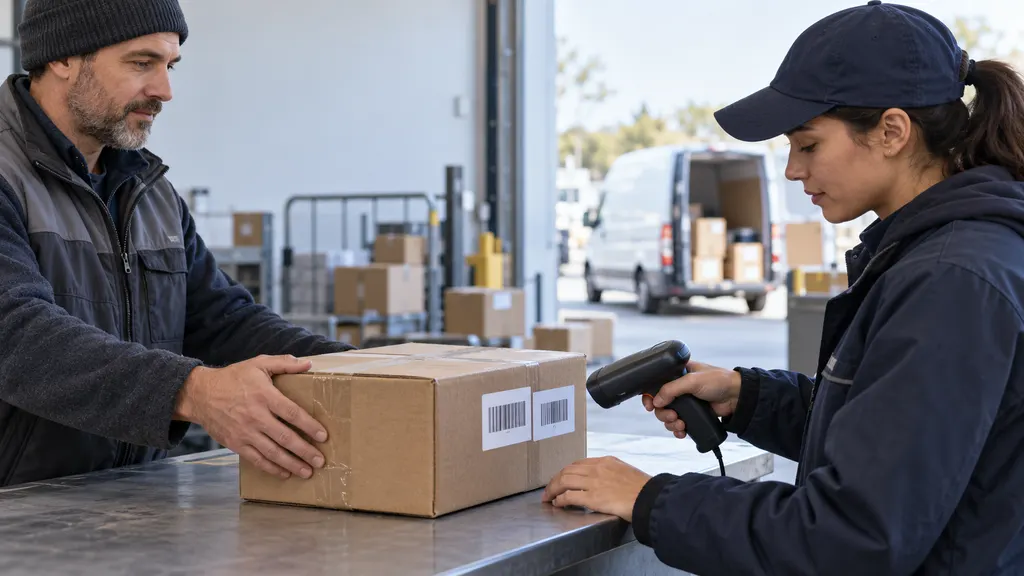
A handoff does not necessarily mean a package is out for delivery. It may mean a shipping partner has transferred it to a local delivery network, or that shipment information has been shared before physical receipt. The practical challenge is knowing who has the parcel, which tracking record is authoritative, and who should act when progress stops.
What last-mile tracking actually tells you
The last mile is the final delivery leg, not a literal measurement of distance. A parcel may travel through a local sorting facility, delivery depot, and delivery route before reaching a home, business, locker, or collection point.
Last mile tracking gives merchants and customers visibility into that stage through carrier events. Depending on the service, these may include acceptance by the delivery carrier, arrival at a local facility, an out-for-delivery scan, an unsuccessful delivery attempt, availability for pickup, or delivery confirmation.
Those events describe recorded activity. They are not necessarily continuous GPS locations. A tracking page may show the last scan rather than where the parcel is at the moment someone checks it. Likewise, an estimated delivery date is not the same as a confirmed appointment or a guaranteed service commitment.
For an ecommerce operations team, useful tracking should answer three questions:
- Identity: Which parcel and customer order does this record belong to?
- Custody: Which organization is handling it, and has physical receipt been confirmed?
- Next action: Is the shipment progressing normally, or does someone need to intervene?
Why visibility can break after carrier handoff
A straightforward domestic shipment may remain with one carrier throughout its journey. Other shipments involve a fulfillment provider, consolidator, international transport partner, postal operator, or local courier. Each organization may use different identifiers and event descriptions.
The original tracking number may continue working after the transfer. Alternatively, a destination carrier may use another number, with the relationship visible only in a partner’s tracking details or shipment data. Do not assume that every handoff creates a new number, or that every tracking service can retrieve one automatically.
Another source of confusion is the difference between an electronic pre-advice event and a physical acceptance scan. A carrier may know a parcel is expected before it receives it. Customer-facing wording should preserve that distinction rather than converting every information-received event into “the local carrier has your package.”
| Tracking situation | What it establishes | Merchant response |
|---|---|---|
| Shipment information received | A shipment record exists; physical possession may not be confirmed. | Check dispatch and pickup records before saying the carrier has the parcel. |
| Transferred to a delivery partner | A transfer-related event has been reported; its exact meaning depends on the carrier. | Look for the partner name, linked number, and receiving carrier’s acceptance event. |
| Out for delivery | The carrier has reported a delivery-stage event. | Use the carrier’s delivery guidance without promising a specific arrival time. |
| Delivery attempted or available for pickup | Delivery requires a further step or collection. | Share the carrier’s instructions and any verified collection deadline. |
| Delivered | The carrier has recorded delivery. | If disputed, check available delivery evidence rather than treating the scan as a complete investigation. |
How ecommerce brands track orders after handoff
1. Connect the order to each physical parcel
Start with a reliable order-to-parcel relationship. An order can contain multiple packages, and a replacement shipment should not overwrite the original shipment’s history. Store the order reference, fulfillment reference, original tracking number, carrier or service, and dispatch information for each parcel.
When a final-mile partner or additional tracking number becomes available, attach it to the same parcel record. Keep the original identifier searchable so support agents can find the shipment using either number.
The operating rule is simple: one customer order may have several parcels, and one parcel may have several linked transport identifiers. A system that assumes one order always equals one tracking number will struggle with split shipments and carrier transfers.
2. Confirm the delivery carrier instead of guessing
Check the original carrier’s tracking details, the fulfillment provider’s shipment record, and any partner-carrier fields available through your integration. A tracking-number format can be a clue, but it is not sufficient proof of the carrier.
If a multi-carrier service suggests more than one carrier, compare the returned events with the shipment’s route and dispatch details. An unrelated record or an incorrectly selected carrier can produce a convincing but wrong timeline.
Once the destination carrier is identified, check its official tracking page when the transfer is unclear or the outcome is disputed. If no linked number is available, ask the shipping partner for it rather than inventing an explanation for the missing visibility.
3. Collect updates without losing the original event details
There are three practical approaches: manual checks on carrier websites, an ecommerce tracking application, or an integration connecting tracking data to an order management or support system. The right choice depends on shipment volume, carrier mix, and how much manual work your team can sustain.
17TRACK is relevant to this workflow through its package tracking service, Shopify order-tracking app, and Tracking API. These represent different implementation routes: checking individual parcels, evaluating a store-level tracking workflow, or building tracking into an existing system. Before choosing a route, test the actual carrier combinations and handoff records your business uses.
No tracking interface can guarantee visibility into an event the underlying carrier has not supplied. Separate the carrier event time from the time your system received the update. Preserve the raw status text alongside any simplified status so an agent can investigate ambiguous translations or mappings.
4. Turn carrier events into customer messages carefully
Customers usually need understandable progress, not a stream of sorting codes. A useful order page can show a simplified status, the latest carrier event, the carrier name, and a tracking link. Where available, it can also display a clearly labeled delivery estimate.
Keep the message narrower than the evidence. “Your parcel is awaiting an acceptance scan from the local carrier” is more accurate than “Your parcel is almost there” when physical receipt has not been confirmed.
Notification rules also need protection against duplicate or delayed events. If a delivery update arrives before an older sorting event, the customer should not receive a message suggesting the parcel has moved backward. Use event timestamps and status-transition rules rather than treating every incoming update as a new milestone.
5. Assign an owner to exceptions
Tracking becomes operationally useful when an exception creates a task with an owner. A missing handoff scan might belong to the logistics team. An address problem may require customer support. A possible integration failure belongs with the technical team.
Set review thresholds using the service purchased, the route, the carrier’s published guidance, and your own shipment history. There is no universal number of hours after which every handoff gap means a package is lost.
For each exception, record the latest confirmed event, the source checked, the next action, and the next customer update. This prevents multiple agents from repeating the same checks without moving the case forward.
What to do when tracking stops updating
A quiet tracking record is a reason to investigate, not proof of loss. First distinguish a shipment problem from a data problem.
- Check the carrier directly. If its official page has newer events than your store page, investigate the integration, update timing, or carrier selection.
- Check the handoff evidence. Identify whether the last event confirms physical acceptance or only an expected transfer.
- Check linked identifiers. Look for a destination-carrier number in shipment details or request it from the shipping partner.
- Check the service context. Compare the elapsed time with the applicable delivery guidance and any relevant service alerts.
- Escalate through the appropriate shipping relationship. The party that purchased the label or holds the carrier account may need to open the inquiry or claim.
Keep customer communication specific. Explain the last confirmed event, what you are checking, and when you will provide another update. Do not label the parcel lost, promise a refund from the carrier, or guarantee delivery tomorrow without a basis for doing so.
If tracking says delivered but the customer cannot find the parcel, use a different workflow. Review available delivery location details, photographs, signatures, or pickup information. Ask the customer to check relevant household, reception, or designated safe-place locations, then follow the carrier’s investigation process and your store’s resolution policy. Legal obligations and claim eligibility vary, so a delivery scan should not automatically close every complaint.
Choosing a tracking setup that survives carrier transfers
The strongest setup is not necessarily the one with the longest feature list. It is the one that preserves parcel identity across your actual shipping routes and makes exceptions actionable.
Before adopting a tracking app or API, test representative shipments, including a normal handoff, a delayed acceptance scan, a split order, an unsuccessful delivery attempt, and a delivered-but-disputed parcel. Use historical records where available, while recognizing that a single successful lookup does not establish consistent performance.
- Carrier identification: Does the workflow select the correct carrier, and can an agent correct it?
- Identifier continuity: Can the team retain and search the original and destination-carrier numbers?
- Event transparency: Can agents see raw descriptions, timestamps, and the source of each update?
- Order integration: Are separate parcels and replacement shipments represented correctly?
- Notification control: Can messages avoid duplicates, unsupported promises, and backward status changes?
- Exception ownership: Can a stalled shipment reach the right team with enough context to act?
- Commercial fit: Are shipment allowances, billing rules, integration work, and required features acceptable for the intended use?
Manual carrier checks can be sufficient for a small operation with limited exceptions. A store-level app is worth evaluating when repeated customer inquiries and parcel lookups consume support time. An API-based approach fits businesses that need tracking inside existing operational systems and have the resources to maintain that integration. None of these approaches transfers responsibility for delivery investigations to the tracking interface itself.
FAQ
Is the last-mile carrier the same as the original shipping company?
Sometimes. A carrier may handle the full shipment, or the original shipping company may transfer it to another delivery operator. Check the shipment details and receiving carrier’s events rather than assuming the company named at checkout will make the final delivery.
Does a carrier handoff always create a new tracking number?
No. Some shipments remain traceable under the original number, while others have an additional destination-carrier number. Preserve both when they are provided, and do not assume a second number exists simply because a transfer occurred.
Does “handed over to the local carrier” mean delivery will happen today?
No. The parcel may still need acceptance, sorting, or routing before delivery. Use the final carrier’s delivery estimate and later events for guidance. A handoff message alone does not establish a delivery date.
Can a tracking platform make the carrier update faster?
It can organize and retrieve available tracking information, but it cannot create a missing physical scan. When the carrier’s own record is also unchanged, the next step is usually an operational check rather than repeatedly refreshing another tracking page.
Who should contact the carrier when a parcel is stuck?
The merchant should identify who owns the shipping account and who is eligible to open an inquiry. That may be the merchant, fulfillment provider, or shipping partner. Customers may be able to arrange certain delivery actions directly, but they should receive clear instructions rather than being passed between organizations without an owner.
Sources
- USPS: USPS Tracking — The Basics — official guidance on tracking information and its use.
- UPS: Tracking Support — carrier guidance for tracking questions and delivery issues.
- 17TRACK: Package Tracking — the parcel-lookup route discussed in the tracking workflow.
- Shopify App Store: 17TRACK — the official app listing for evaluating the store-level implementation.
- 17TRACK: Tracking API and API Documentation — resources for evaluating a developer-led tracking integration.