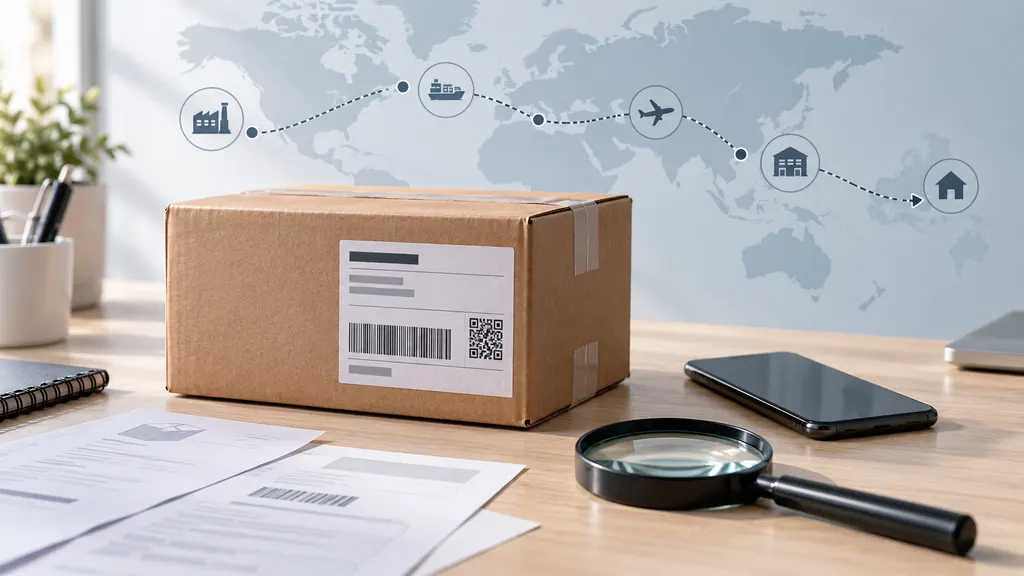
What Does "Export Customs Clearance Completed" Mean? Next Steps and Delays?
“Export customs clearance completed” generally means your shipment has passed the customs clearance stage for export from the origin country. It does not, by itself, confirm that the parcel has left that country, cleared customs at its destination, or reached the delivery carrier. Next, it may wait for transport, move through an international hub, and undergo import clearance. If tracking pauses, check the carrier’s delivery estimate and any requests for action before assuming the package is stuck.
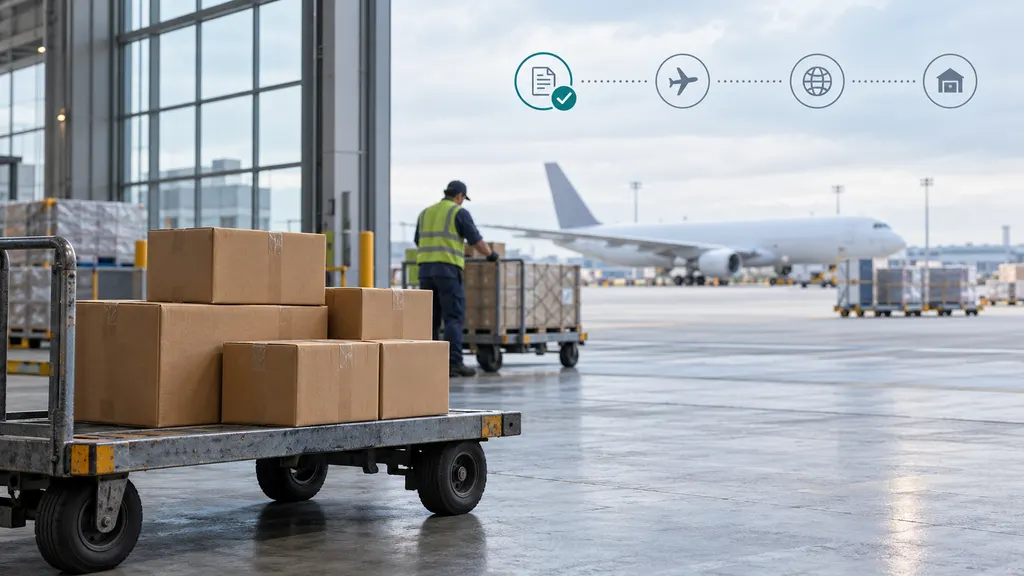
For most recipients, this is a progress update rather than a request to submit paperwork or pay a fee. The useful distinction is between permission to export and physical departure: they are separate milestones, and tracking does not always display both.
What this status confirms—and what it does not
Export clearance concerns the shipment’s departure from its origin country or customs territory. Import clearance concerns its admission into the destination country or customs territory. A shipment can complete the first process while still having the second ahead of it.
The exact wording is not a universal customs code. A carrier or tracking service may translate or summarize an underlying logistics event as “export customs clearance completed.” Read it alongside the event location, timestamp, and surrounding updates rather than treating the phrase as a complete account of the shipment’s movements.
| Question | What the status tells you |
|---|---|
| Has the export clearance stage finished? | That is what the tracking message generally indicates. |
| Has the parcel left the origin country? | Not necessarily. Look for a separate departure or transport event. |
| Has destination customs released it? | No. Export clearance does not establish import clearance. |
| Are all taxes and duties settled? | This status alone does not establish whether destination charges apply or have been paid. |
| Is delivery imminent? | There is not enough information in this event to make that prediction. |
Official export guidance also distinguishes customs processing from transport and exit requirements. For example, the UK government’s export guide describes arranging transport, making customs declarations, and moving goods out of the country as related parts of the export process. A clearance message should therefore not be read as proof that every subsequent transport step has happened.
What usually happens next?
The next visible event depends on the shipping service and route. Some tracking histories show detailed handovers; others jump from an origin-country event to arrival in the destination country.
- Preparation for international transport. The shipment may move to an outbound facility, await consolidation with other shipments, or wait for its scheduled transport.
- Departure from the origin country. A later event may report departure from an airport, an outward exchange office, or another export gateway. The wording varies by carrier.
- Transit through another hub, if applicable. Not every route is direct. An intermediate location does not automatically mean the parcel has been misrouted.
- Arrival and destination import clearance. Destination authorities may require declarations, supporting information, inspection, or applicable payments before release.
- Transfer to the delivery network. After the relevant arrival and clearance steps, the parcel proceeds through local sorting and delivery operations.
This is a general sequence, not a checklist that every tracking history will display. Customs information can be processed electronically, and some events may appear late or out of order. An “arrived at destination” update also does not necessarily mean the shipment has completed import clearance.
How long after export clearance will delivery take?
There is no reliable universal delivery countdown from this status. The remaining journey depends on the service purchased, transport schedule, route, destination procedures, and local delivery arrangements. A timeframe for an express shipment should not be applied to an economy postal shipment.
Use the carrier’s shipment-specific estimate or the seller’s promised delivery window as your reference. If tracking provides only a clearance timestamp, it does not contain enough information to calculate a dependable arrival date.
When judging whether the wait is unusual, check:
- The service level: express, standard, and economy services can have different transport and update patterns.
- The latest event’s actual timestamp: distinguish when the event occurred from when you first saw it.
- The delivery estimate: note whether it is still active, has changed, or has already passed.
- Any exception message: a document request or delivery exception deserves more attention than a simple gap between scans.
- Your purchase-protection deadline: keep track of the retailer’s or marketplace’s process separately from the carrier’s estimate.
A quiet tracking history is not proof of loss. Equally, a completed export milestone is not a reason to ignore a missed delivery commitment or an approaching deadline for reporting a problem.
Why tracking can stop updating after export clearance
The shipment is waiting for onward transport
Customs release does not guarantee immediate loading. The shipment may still need a transfer to the departure gateway, space on a scheduled service, or consolidation into an outbound load. Transport disruption or capacity constraints can extend that wait.
What to check: look for a departure event and any carrier service notice relevant to the route. If the delivery window has passed, ask whether the parcel is still at the origin facility or has been handed over for international transport.
There is a gap between visible scans
A parcel can move between facilities without every movement appearing in the customer-facing history. Handoffs between logistics providers can also leave a period with no new public event. The absence of a scan cannot establish the parcel’s precise physical location.
What to check: compare the detailed history on the responsible carrier’s website. If another carrier or a secondary tracking number is listed, check that record too. “Information received” or a similar pre-advice message does not, by itself, prove that the receiving carrier has physical possession.
A later customs or operational issue has arisen
Completing export clearance does not prevent a later issue. Destination customs may need more information, and transport operators may encounter routing, handling, or security-related exceptions. Treat an explicit new hold or information request as the more actionable update.
What to check: identify who issued the request, what is required, and any stated deadline. Verify the request through the carrier’s official website or a known contact channel before sharing documents or making a payment.
What you should do now
If the shipment is still within its delivery window
Review the full tracking history and monitor for the next transport or arrival event. If there is no exception and no request for information, the export-clearance message alone normally does not call for action from the recipient.
You can check international shipment updates through 17TRACK as well as the carrier’s own tracking page. Tracking visibility is not the same as operational control: a tracking service cannot release goods from customs or make a carrier dispatch a shipment sooner.
If the delivery estimate has passed
Contact the seller or shipper and, where appropriate, the carrier. The seller may need to initiate an inquiry because it purchased the shipping service; the carrier can explain its inquiry requirements. Do not assume the recipient is always able to open a formal investigation directly.
Provide enough information to avoid a generic response:
- The tracking number and order number.
- The latest event wording, location, and timestamp.
- The promised or estimated delivery window.
- Any secondary tracking number or named delivery partner.
- Any document, payment, or exception notice you received.
A useful message is: “My shipment shows ‘export customs clearance completed’ at [location] on [date], with no later update. The estimated delivery window has passed. Can you confirm the latest recorded handover, whether there is an exception, and whether the sender needs to open an inquiry?”
If someone requests documents or payment
Do not pay simply because an unsolicited message mentions customs. Open the official carrier website independently or contact the carrier using established contact details. Confirm that the request matches your shipment and ask what the charge or document requirement relates to.
Export clearance does not tell you whether destination import duties, taxes, or handling charges are payable. Those questions depend on the destination’s rules, the goods, and the purchase or shipping arrangement. For example, U.S. Customs and Border Protection’s guidance for internet purchases explains that imported purchases can involve customs requirements and charges; it should not be treated as guidance for every other country.
Who can actually resolve a delay?
The carrier or freight operator is the contact for movement records, handovers, and transport exceptions. It may need to investigate through its network rather than provide an immediate location.
The seller or shipper is the contact for missing shipment information, order-resolution options, and inquiries that must be initiated by the shipping account holder.
The customs broker or clearance team, where one is involved, can explain a specific clearance request and the information needed to address it.
The recipient should respond to verified requests, keep order records, and preserve any applicable purchase-protection rights. Contacting customs merely because tracking has paused after export clearance is usually less useful than first establishing whether there is an actual customs hold.
FAQ
Does this mean my package is on a plane?
No. Export clearance is not a loading or flight-departure confirmation. Look for a separate departure event, while remembering that some services do not display detailed transport scans.
Can my parcel still be inspected after export clearance?
Yes. The destination import process is separate, and further checks may occur where required. A completed export event does not exempt a shipment from later customs or security controls.
Why does tracking show the same clearance update twice?
Repeated wording can reflect separate records, translated events, or updates passed between systems. Compare the timestamps and locations. Repetition alone does not establish that customs cleared the parcel twice or that a problem has occurred.
Should I request a refund if tracking stops here?
Not on the status alone. Check the delivery promise and the seller’s policy, then request an inquiry if the shipment is overdue. If a purchase-protection deadline is approaching, follow the applicable process rather than waiting indefinitely for another scan.
Does export clearance mean there will be no import tax?
No. This update does not determine destination tax liability or confirm payment. Check the order terms and verified destination-clearance notices to establish whether anything is due and who is responsible.
Sources
- GOV.UK: Export goods from the UK — official guidance on the export process, including transport and customs steps. Its procedural details are UK-specific.
- U.S. Customs and Border Protection: Internet Purchases — destination-specific guidance on customs considerations for purchases imported into the United States.
- 17TRACK: Package Tracking — shipment-tracking lookup referenced in the practical checking steps.