Top Courier Services in Miami: Compare Same-Day Delivery, Coverage and Tracking
For Miami businesses comparing same-day courier services, Dropoff, Roadie, and Uber Direct are useful starting points for different delivery workflows: business courier work, delivery through a driver network, and delivery dispatched from a merchant’s own sales channels. None should be treated as the automatic winner. Confirm that the service accepts your exact pickup and destination, can meet your deadline, and provides the tracking and delivery evidence your shipment requires before booking.
This is a practical shortlist, not a ranking by delivery speed, market share, or customer satisfaction. The services are included because their delivery models address common business needs. Their general service descriptions do not establish availability for every Miami address, item, or pickup time.
Miami courier services at a glance
The most useful comparison is not simply which company advertises same-day delivery. It is which service can perform your particular job, with an acceptable delivery window and a clear process if something goes wrong.
| Service | Delivery model | Scenario worth evaluating | Confirm before booking |
|---|---|---|---|
| Dropoff | Business-focused same-day courier service | Shipments needing a defined business handoff and shipment visibility | Miami route acceptance, pickup arrangements, item requirements, and proof of delivery |
| Roadie | Delivery platform connecting shipments with drivers | Local deliveries where shipment dimensions and the available vehicle matter | Driver availability, vehicle fit, delivery window, and handling restrictions |
| Uber Direct | Delivery fulfillment for orders placed through a business’s own channels | Merchant orders that need local delivery without moving the sale to a marketplace | Address eligibility, supported goods, dispatch method, and recipient notifications |
For all three, compare a quote for the same shipment rather than assuming that a headline service description guarantees a particular delivery time. Prices, route eligibility, and service conditions must be checked for the actual booking.
Which service should you evaluate first?
Dropoff: a starting point for business courier requirements
Dropoff presents its offering as same-day delivery for businesses and describes real-time tracking as part of its service. That makes it relevant when your procurement discussion starts with operational requirements rather than simply moving an item from one address to another.
Consider this model when a delivery needs clear pickup instructions, an identified receiving location, and a record of completion. Examples include moving business supplies between locations or sending an order to a customer whose building has specific receiving procedures. These are evaluation scenarios, not a statement that every shipment category is accepted.
Ask before committing: Can the service accommodate your pickup schedule? What happens if the recipient is unavailable? Which delivery records are included, and can your staff retrieve them afterward? For regulated, temperature-sensitive, or high-value goods, obtain written confirmation of the required handling arrangements.
Not ideal without further verification: Any shipment where you are relying on specialized handling merely because the provider serves business customers. General courier capability does not establish suitability for a particular medical, legal, or controlled shipment.
Roadie: a starting point when matching the shipment to a driver matters
Roadie describes a delivery platform that connects senders with drivers and supports same-day delivery use cases. Its model is worth evaluating when the item’s size, the pickup location, and the available delivery capacity are central to the booking decision.
For a Miami retailer, the practical question is whether a driver with suitable capacity can collect the item and complete the delivery within the required window. Enter accurate dimensions and weight rather than treating the shipment as a generic parcel. A boxed product, an awkwardly shaped item, and several separate packages can create different loading requirements.
Ask before committing: What does the quoted window represent? How is a driver assigned? What loading assistance is expected from your staff? Can the recipient receive the item at the stated location, or does the job require stairs, assembly, or inside placement?
Not ideal without further verification: Deliveries that require an exact appointment, multiple-person handling, installation, or other services beyond the agreed transport scope. Do not assume those services are included because an item fits in a vehicle.
Uber Direct: a starting point for merchant-controlled orders
Uber Direct is positioned as delivery fulfillment for businesses taking orders through their own channels. The distinction matters: selecting a delivery provider is different from listing products on a marketplace. A merchant may want to retain its existing checkout while arranging local transportation after the sale.
This makes Uber Direct relevant to an ecommerce business evaluating local delivery as part of its order workflow. The operational questions are how orders reach dispatch, when an item must be ready, and what the customer sees between checkout and delivery.
Ask before committing: Is your pickup address eligible? Which dispatch options are available for your business? What notifications does the recipient receive? How are unsuccessful deliveries handled? Confirm that your product category, packaging, and delivery instructions meet the applicable requirements.
Not ideal without further verification: Businesses expecting a delivery service to provide customer acquisition, product storage, or order preparation. Treat those as separate requirements unless your agreement explicitly includes them.
Compare Miami coverage at the address level
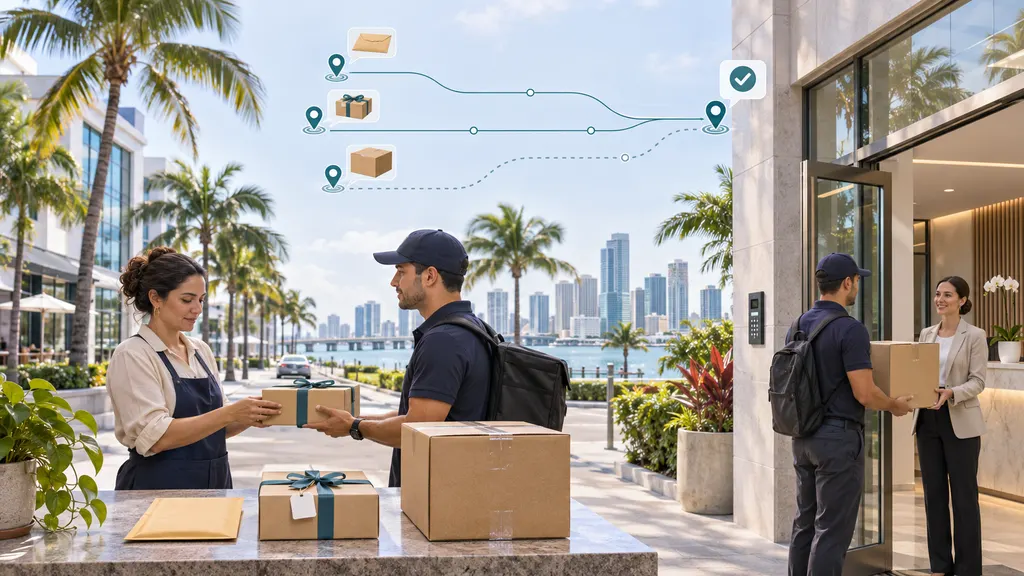
“Miami coverage” is not precise enough to approve a courier. A provider may describe a metropolitan service area while applying different eligibility rules to individual routes. A pickup in Doral, a delivery in Brickell, and a destination in Miami Beach should be checked as actual address pairs rather than assumed to be interchangeable.
Also separate geographic coverage from building access. A courier reaching the street does not necessarily mean it can complete a handoff at a loading dock, hotel reception, condominium unit, or restricted facility.
- Pickup access: Specify the entrance, parking or loading instructions, contact person, and when the package will be ready.
- Destination access: Record unit numbers, gate instructions, reception hours, and whether the recipient must meet the driver.
- Delivery scope: Confirm whether the agreement ends at curbside, a reception desk, a doorstep, or a named recipient.
- Operating hours: Ask about your required day and time rather than assuming weekday availability extends to evenings or weekends.
- Return arrangements: Establish where the item goes if access fails or the recipient refuses it.
For airport-related or restricted-site deliveries, verify access requirements separately. An ordinary address-based delivery quote should not be interpreted as permission to enter a secure area.
Same-day delivery is not a single service promise
A delivery completed before the end of the day may satisfy one customer and miss another customer’s deadline. State the latest acceptable arrival time before requesting a quote. Then ask whether that time is a commitment, a target, or an estimate.
Separate the timeline into package readiness, pickup, and delivery. If an order is booked at noon but is not packed until later, the booking time alone tells you little about the achievable arrival time. Driver assignment and pickup confirmation are also different events.
For a time-critical shipment, provide the delivery consequence. A document needed before an office closes requires a different decision from a retail purchase that can arrive later that evening. If the deadline cannot move, request explicit confirmation of the service commitment and the procedure for escalation.
Compare tracking by what it lets you do
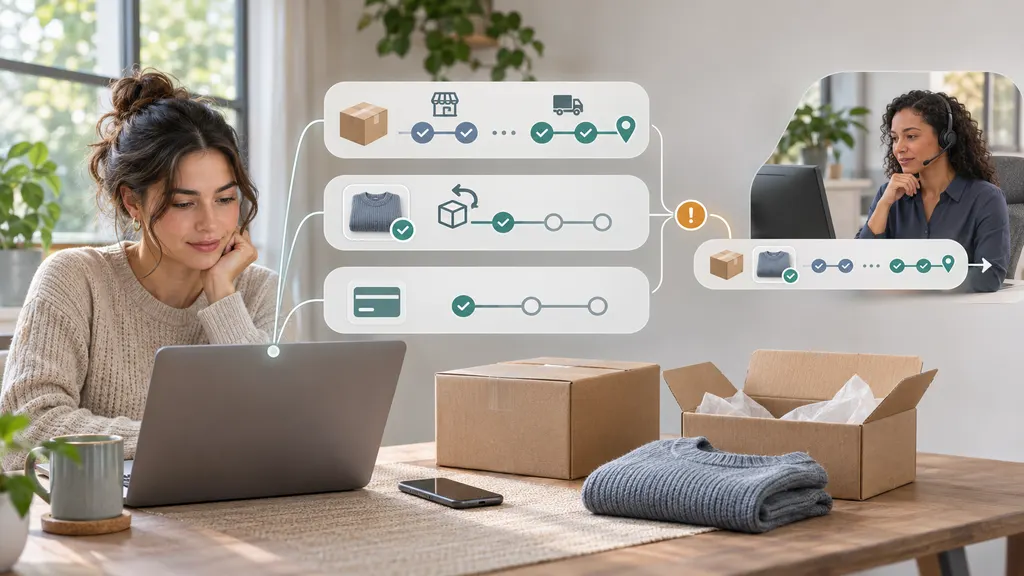
Carrier tracking should help the sender manage exceptions and help the recipient prepare for arrival. A moving map is useful, but it does not replace clear status definitions or proof that the shipment reached the right person.
- Before pickup: Can staff distinguish an order being submitted from a driver being assigned?
- At collection: Is there a record that the courier actually received the shipment?
- In transit: Does the recipient receive a tracking link, status updates, or an arrival estimate? Ask which features apply to your booking.
- At delivery: What evidence is captured, such as a photograph, signature, timestamp, or recipient name?
- During an exception: Who is notified, and who can authorize a return, retry, or alternative handoff?
For ecommerce logistics, check whether your customer-support team can connect the delivery record to the original order. A tracking experience that works for the dispatcher but is inaccessible to support staff can still produce unnecessary customer enquiries.
Third-party tracking tools are not substitutes for the courier’s dispatch controls. If you use an additional tracking platform, verify support for the specific delivery service and identifier. Do not assume that every local delivery generates a conventional parcel tracking number.
Get comparable quotes and run a practical test
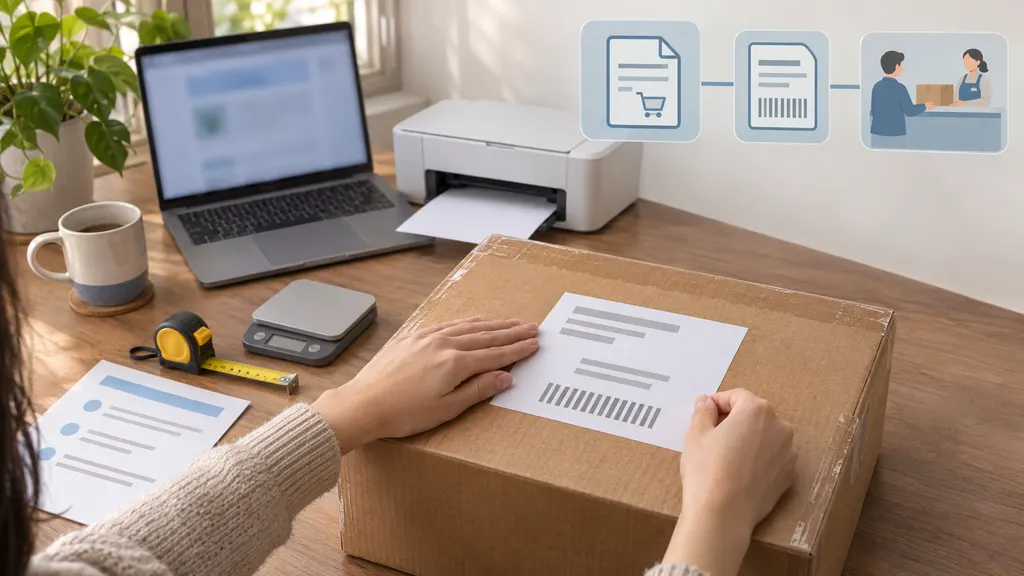
Send each provider the same shipment specification: complete addresses, pickup readiness time, delivery deadline, dimensions, weight, item description, declared value where relevant, and handoff requirements. Without a common brief, the cheapest quote may simply describe a different service.
Request the total charge and the conditions that could change it. Ask specifically about waiting, cancellation, additional stops, unsuccessful delivery, and returning the shipment. These are questions to verify, not charges presumed to apply to every provider. Review liability and claims terms separately from the transport price.
Before assigning recurring volume, test representative jobs. Include a routine delivery, a building with access instructions, and a shipment where the recipient must be contacted. Record pickup punctuality, delivery-window performance, status accuracy, proof of delivery, and the effort required to resolve problems.
Practical recommendation: Evaluate Dropoff first when business handoff requirements lead the decision, Roadie when matching the item to delivery capacity is central, and Uber Direct when delivery must fit an existing merchant order workflow. Award the work only after the provider passes your route, timing, item, and exception-handling checks. These are scenario-based starting points, not claims that one provider outperforms the others.
FAQ
Can I book a courier in Miami for delivery today?
Potentially, but acceptance depends on the pickup and destination, booking time, item, and available capacity. Submit the complete shipment details and obtain confirmation before promising same-day arrival to your customer.
Which Miami courier is cheapest?
There is no reliable universal answer without comparable quotes. Price the same route, package, delivery window, and handoff requirements with each provider. Include potential exception costs rather than comparing only the initial transport charge.
Does delivery tracking include a signature?
Not necessarily. Shipment status, live location, photographs, and signatures are different features. Confirm which delivery evidence is available and whether it must be requested before dispatch.
Can a courier deliver medical or temperature-sensitive items?
Only use a service after confirming that it accepts the specific goods and can meet the relevant handling, packaging, documentation, and transport requirements. General same-day delivery advertising is not sufficient confirmation.
Who should resolve a failed delivery?
The business arranging delivery should establish the escalation process with the provider before pickup. Give the courier a reachable contact and agreed instructions for an unavailable recipient. Customers should normally contact the merchant about their order rather than being expected to coordinate a new delivery themselves.
Sources
Official provider resources for service positioning and booking enquiries are listed below. General product descriptions do not establish a Miami route quote, delivery commitment, or shipment-specific acceptance.