Transaction Warehouse
What Is a Transaction Warehouse?
Transaction warehouse is a context-dependent expression that may refer to a data repository used to consolidate business transaction records for reporting and analysis. In an ecommerce or logistics information system, those records might describe purchases, inventory movements, shipment charges, payments, or refunds. The expression should not, by itself, be interpreted as a standardized category of physical warehouse. Its intended meaning needs to be established from the document, system, or organization using it.
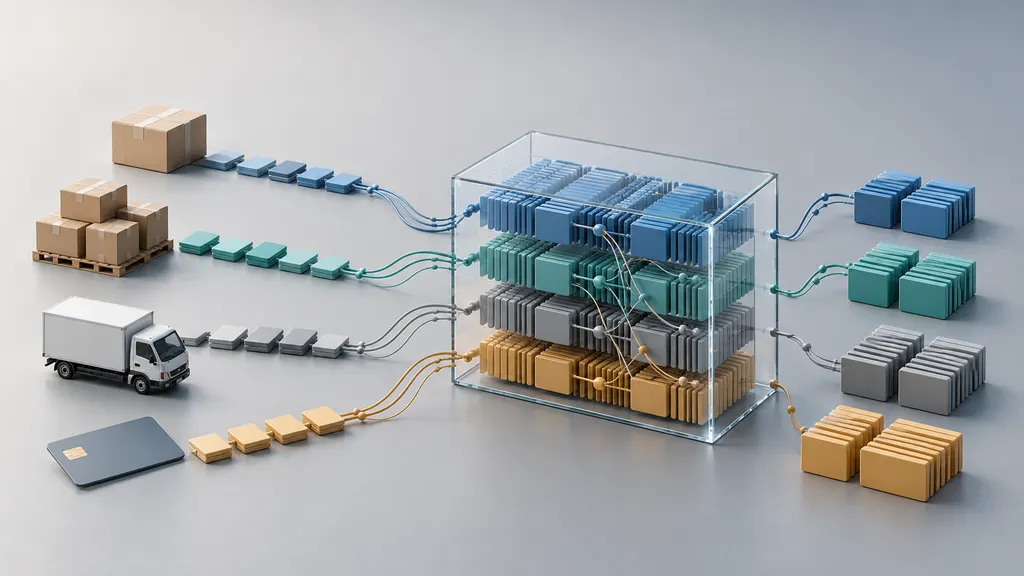
The more established concepts relevant to this interpretation are data warehouse, transaction processing, and transaction fact table. These concepts have different meanings: a data warehouse supports analysis, transaction processing records operational activity, and a transaction fact table represents events at a defined level of detail. This entry explains how a repository of transaction data can support ecommerce and logistics operations without treating the expression as a separate technical standard.
Meaning in Ecommerce and Logistics
A physical warehouse holds goods. A data warehouse holds structured information used for analysis. When transaction warehouse appears in an information-management context, warehouse refers to the latter concept. It does not indicate where goods are stored, whether a shipment has cleared customs, or which party owns inventory.
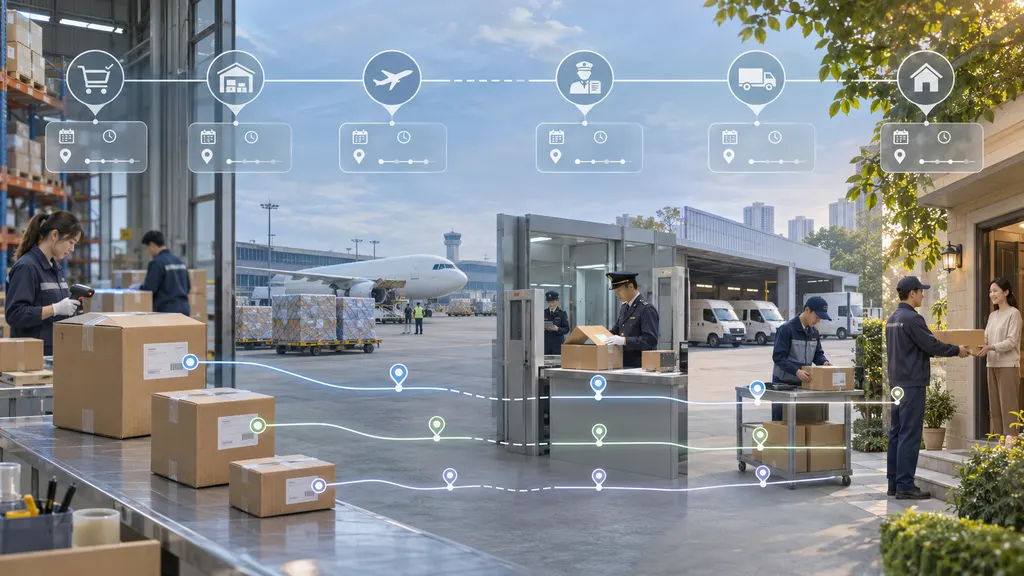
For an online retailer, relevant transaction records may originate in several systems. An ecommerce platform records orders and order lines; a warehouse management system records receipts, picking confirmations, and stock adjustments; a transportation system records shipment activity or freight charges; and financial systems record payments and refunds. An analytical repository can bring selected records together so that they can be examined across those operational boundaries.
These records are related, but they are not interchangeable. An order is a commercial request, a shipment represents goods dispatched through a delivery process, and a payment is a financial event. A single order may involve multiple shipments and multiple financial transactions. Combining their data therefore requires explicit relationships rather than an assumption that every order has exactly one corresponding shipment or payment.
Users may encounter the expression in an internal architecture diagram, a reporting specification, a software implementation document, or a database name. In those settings, the surrounding description is more informative than the label alone. It should identify the records stored, their source systems, their level of detail, and the intended analytical purpose.
Related Concepts and Important Distinctions
| Concept | Meaning | Relationship to Transaction Data |
|---|---|---|
| Physical warehouse | A facility used to receive, store, and handle goods. | Activities inside the facility generate records, but the facility is not a data repository. |
| Warehouse management system | Software used to manage warehouse activities and inventory-related workflows. | It can supply operational records to an analytical repository. |
| Online transaction processing | Processing designed to handle operational transactions, such as entering or updating an order. | It supports business activity rather than primarily supporting historical analysis. |
| Data warehouse | A repository that integrates data for querying, reporting, and analysis. | It can contain transaction-level records as well as summaries and reference data. |
| Transaction fact table | A dimensional-modeling table that records individual events at a declared level of detail. | It is one possible component of a data warehouse, not a synonym for the entire warehouse. |
| Transaction log | A database mechanism that records changes for purposes such as recovery. | It is not equivalent to a business reporting dataset, even when changes are used to feed one. |
The distinction between operational processing and analytical storage is especially important. A repository built for analysis should not automatically be treated as the authoritative place to cancel an order, reserve stock, issue a refund, or change a shipment instruction. Those actions belong to the operational systems and workflows designated to perform them.
How Transaction Data Is Organized
Defining the Level of Detail
The starting point is the grain: what one record represents. An order-level dataset contains one record per order, while an order-line dataset contains separate records for the items within an order. An inventory-movement dataset might represent each receipt, transfer, or adjustment separately. These choices determine which questions the data can answer reliably.
For example, an order-level total cannot, without additional information, explain how revenue is distributed across individual products. Similarly, a current inventory balance does not by itself explain every movement that produced that balance. Transaction-level data and balance snapshots serve related but different analytical purposes.
Identifying Records and Relationships
A useful design preserves identifiers that connect records to their source systems. These may include an order identifier, order-line identifier, shipment identifier, product identifier, facility identifier, or payment reference. Identifiers should be interpreted within their source context because two unrelated systems may generate identical-looking values.
Relationships also require care. Joining every order line to every shipment line using only an order identifier can duplicate amounts. A valid analysis needs either a more precise relationship or a documented allocation method. Where a relationship is unavailable, reporting should preserve that limitation rather than imply an exact connection.
Preserving Time, Amounts, and Meaning
Transaction records may include several timestamps: when an event occurred, when an operational system recorded it, and when an analytical repository received it. These times answer different questions. A delayed data transfer should not be mistaken for a delayed physical shipment.
Financial fields also need explicit definitions. Order value, captured payment, freight charge, duty, tax, and refund amount are not interchangeable measures. In cross-border reporting, the original currency should remain distinguishable from any converted reporting currency. If conversion is applied, the exchange-rate basis and relevant date need to be documented.
An Illustrative Ecommerce Workflow
Consider a hypothetical retailer receiving an order for two products. One product ships from one facility and the other from another facility. The customer later returns one product and receives a refund. A transaction-oriented analytical design could retain the following separate records:
| Business Event | Possible Record Detail | Analytical Use |
|---|---|---|
| Order placement | Order lines, quantities, prices, and order time. | Analyze demand and ordered value. |
| Inventory allocation or movement | Product, facility, quantity, and event type. | Examine stock activity associated with fulfillment. |
| Shipment dispatch | Shipment reference, dispatch time, and linked items. | Analyze split shipments and dispatch timing. |
| Return receipt | Returned item, quantity, receiving location, and receipt time. | Analyze the physical return flow. |
| Refund | Refund reference, amount, currency, and processing time. | Analyze the financial adjustment separately from the return. |
This example illustrates a data-modeling approach, not a mandatory industry workflow. A return and a refund may occur at different times, and a refund does not by itself prove that goods have arrived at a warehouse. Keeping the events separate prevents a financial record from being mistaken for evidence of physical receipt.
Use in Cross-Border Analysis
Cross-border commerce adds relationships among commercial orders, transported goods, financial settlements, and customs documentation. An analytical repository may link these records when suitable identifiers and permissions are available. However, an order record is not a substitute for a customs declaration, and a shipment status is not automatically evidence that a particular duty or tax has been paid.
Useful analysis depends on keeping the scope of each record clear. A commercial invoice may cover goods differently from an order dataset, while a parcel may contain only part of an order. Customs-related records also reflect the relevant jurisdiction and procedure. Storing them together does not remove those differences or create a universal customs interpretation.
Personal information requires similar attention. Names, addresses, and contact details should not be copied into an analytical repository merely because they exist in a source system. Access, retention, and permitted use need to follow applicable requirements and the organization's governance arrangements.
Checks Before Using the Data
The label transaction warehouse does not establish completeness, accuracy, freshness, or audit suitability. Before relying on a dataset, an analyst or operations team should check:
- Scope: Which transaction types, sales channels, facilities, and source systems are included?
- Grain: Does each row represent an order, line item, payment, shipment, or another event?
- Uniqueness: What identifies a record, and how are repeated deliveries of the same source record handled?
- Corrections: Are cancellations, reversals, and later adjustments preserved or overwritten?
- Timing: What do the timestamps mean, and how frequently is the repository updated?
- Reconciliation: Can quantities and amounts be checked against the relevant source records using consistent definitions?
- Relationships: Can orders, items, shipments, and refunds be connected without duplicating measures?
- Governance: Who may access the data, and which retention or privacy controls apply?
These checks help establish whether a repository is suitable for a particular question. They do not turn the expression into a formal warehouse classification. For contracts, technical specifications, and operating procedures, a precise description such as transaction-level analytical repository is more informative than an unexplained label.
QA
Is a transaction warehouse a physical storage facility?
Not necessarily. In an information-system context, the expression may describe a repository of transaction records. If it appears in a property, storage, or logistics contract, its meaning should be established from that document rather than assumed.
Is a transaction warehouse the same as a transaction processing system?
No. An operational transaction processing system handles business activity, such as recording orders or payments. An analytical repository brings data together for reporting and analysis. The intended function matters more than the name.
What is the difference between a transaction fact table and a data warehouse?
A transaction fact table records individual events at a defined grain. A data warehouse is the broader analytical environment and may contain multiple fact tables, descriptive tables, and other datasets.
Can transaction data prove that a parcel was delivered or a return was received?
Only when the records contain appropriate evidence of that specific event. An order, payment, or refund record alone does not establish physical delivery or warehouse receipt.
Sources
- IBM: What is a data warehouse? — Supports the established data warehouse concept and its analytical purpose; it does not establish transaction warehouse as a separate standardized term.
- AWS: OLAP versus OLTP — Supports the distinction between analytical processing and operational transaction processing.
- Microsoft Learn: Dimensional modeling in Fabric Warehouse — Fact tables — Supports fact-table grain and the distinction between transaction records and other fact-table structures.