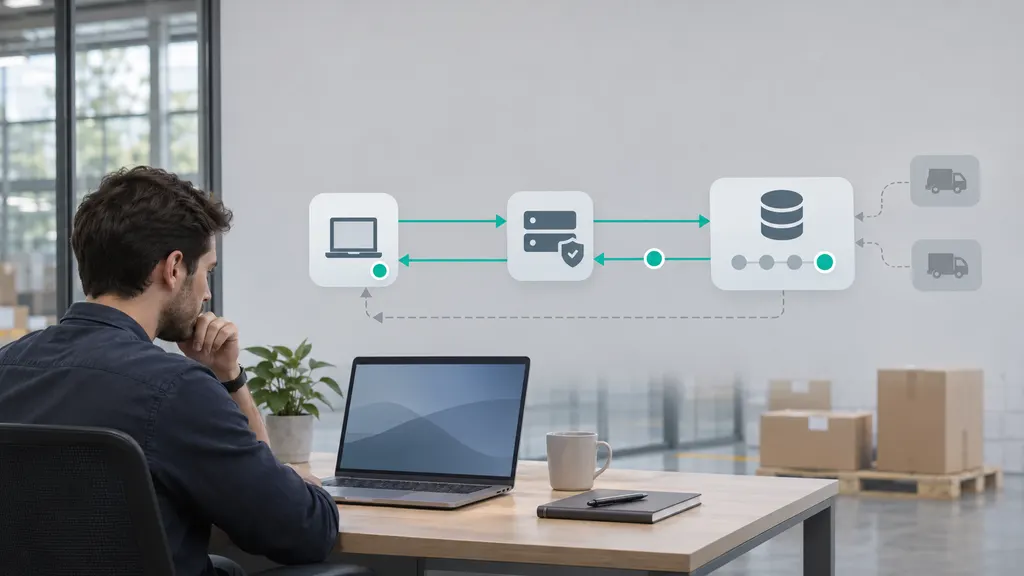
Automatic Storage and Retrieval System(As/Rs)
What Is an Automatic Storage and Retrieval System (AS/RS)?
An automatic storage and retrieval system (AS/RS), also called an automated storage and retrieval system, is a combination of storage equipment, computer-controlled handling machinery, and software that automatically places goods into defined storage locations and retrieves them when needed. In warehousing and logistics, it is used to store and move loads such as pallets, trays, totes, or cartons between storage positions and designated transfer points.
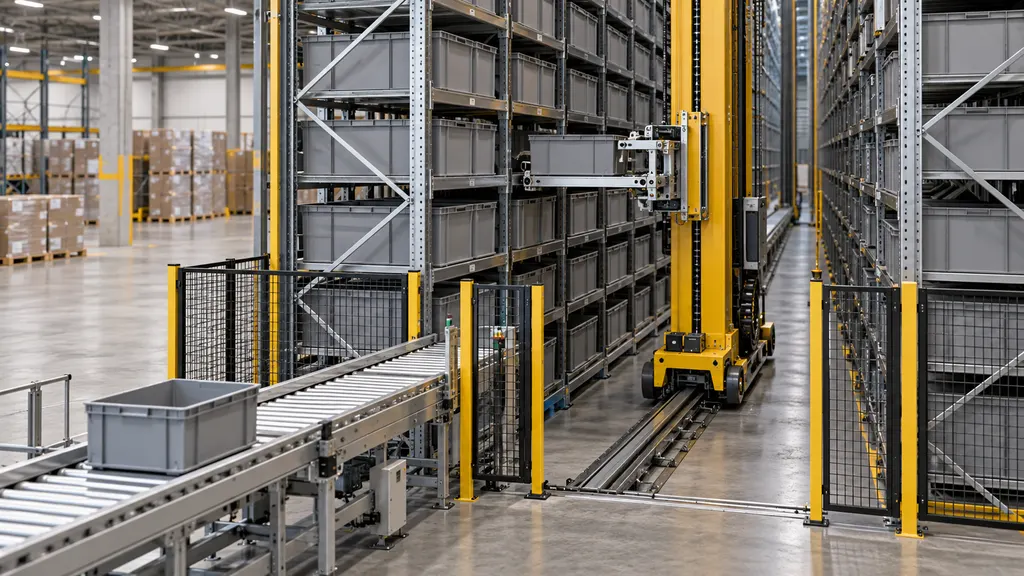
An AS/RS performs a physical inventory-handling function. It is not simply a database that records stock locations, nor does it necessarily automate an entire warehouse. Depending on the installation, workers or other equipment may still receive goods, inspect products, pick individual items, pack orders, and load outbound shipments.
The abbreviation AS/RS refers both to the overall technology category and to an individual installation. The defining feature is controlled, automatic placement and retrieval of stored loads, rather than any particular crane, robot, rack design, or warehouse layout.
Role in Warehousing and Ecommerce Fulfillment
An AS/RS operates within the storage and internal material-handling stages of a supply chain. It can hold reserve inventory, supply a picking area, buffer goods between processes, or present containers to an order-picking workstation. Its role depends on how the warehouse organizes receiving, replenishment, picking, and dispatch.
In ecommerce fulfillment, an AS/RS may support a goods-to-person workflow: equipment brings stored containers to a workstation instead of requiring a picker to travel to each storage location. However, goods-to-person describes a fulfillment method, while AS/RS describes storage and retrieval technology. The two concepts overlap but are not interchangeable.
For example, a retailer may store small products in totes. When an order requires one of those products, the system retrieves the appropriate tote and delivers it to a workstation. A worker removes the required quantity, confirms the pick, and sends the remaining stock back into storage. Packing, labeling, carrier handover, and delivery tracking remain separate activities unless additional systems connect them.
In cross-border ecommerce, the same equipment may support an export fulfillment facility or an overseas distribution center. Its physical storage function does not replace customs declarations, import permissions, duty calculations, or release procedures. Inventory subject to special regulatory controls still requires the appropriate records and operating controls beyond automated handling.
Main Components
An installation combines several functional layers. Their exact arrangement varies with the load, building, and operating requirements.
- Storage structure: Racks, shelves, channels, bins, or other structures provide defined positions for goods.
- Storage and retrieval equipment: Cranes, shuttles, lifts, extraction devices, or other mechanisms move loads into and out of those positions.
- Transfer interfaces: Conveyors, workstations, induction points, and discharge points connect storage with other warehouse processes.
- Identification and sensing: Barcode readers, position sensors, load checks, or other devices help identify loads and verify equipment conditions.
- Control software: Software translates storage and retrieval requests into equipment movements and monitors execution.
- Safety systems: Guards, interlocks, emergency controls, and controlled access arrangements address hazards associated with moving machinery and stored loads.
A warehouse management system (WMS) may determine which inventory is required, while equipment-control software determines how machinery executes the movement. Some installations also use a warehouse control system or warehouse execution system. Software names and responsibilities vary, so the actual division of tasks should be established from the system design rather than inferred from an acronym alone.
How an AS/RS Works
- Load preparation and identification: Goods are placed on an approved pallet or in a compatible container. The load is identified and checked against relevant dimensional, weight, and condition requirements.
- Storage assignment: Software selects a suitable location using configured rules. These may account for available space, load compatibility, product characteristics, or expected retrieval demand.
- Putaway: Equipment transfers the load from an input point to its assigned position. The system records the completed movement.
- Retrieval request: A warehouse process requests a load for picking, replenishment, production, consolidation, or another purpose.
- Retrieval and presentation: Equipment removes the load and transfers it to the required output point or workstation.
- Confirmation and inventory update: The relevant systems record the movement and any quantity changes. A partially used container may return to storage, while an empty container may follow a separate handling route.
Storage and retrieval movements can be scheduled separately or combined into coordinated cycles. Routing, sequencing, and storage assignment affect performance, as discussed in research on AS/RS design and control. A machine's movement speed alone does not establish the capacity of the complete fulfillment process.
Common Configurations
AS/RS terminology describes both the load being handled and the mechanical arrangement. These are different dimensions: a system can be described by load size and by its handling mechanism at the same time. The following are common configurations, not an exhaustive or mutually exclusive classification.
| Configuration | Storage and Retrieval Arrangement | Relevant Applications |
|---|---|---|
| Unit-load AS/RS | Handles larger load units, commonly pallets, using equipment designed for the specified load envelope. | Reserve inventory, pallet distribution, and production supply. |
| Mini-load AS/RS | Handles smaller containers, trays, or cartons, commonly with an aisle-based crane. | Small-parts storage, replenishment, and order-picking support. |
| Shuttle-based AS/RS | Uses shuttles to move loads within storage levels or channels, with lifts or other interfaces connecting movements. | Tote, carton, or pallet handling, depending on the design. |
| Vertical lift module | Uses an internal extraction mechanism to retrieve trays from vertical storage and present them at an access opening. | Parts storage and controlled presentation of smaller goods. |
| Automated carousel | Moves storage carriers around a horizontal or vertical loop to present the required carrier. | Item storage and picking where the load and access pattern suit the arrangement. |
These configurations have different access patterns, load restrictions, and expansion possibilities. A pallet-based installation and a tote-based installation should not be treated as interchangeable merely because both are described as AS/RS.
Operating Requirements and Limitations
Load Compatibility
Automated handling depends on loads remaining within the equipment's design limits. Dimensions, weight, pallet condition, container rigidity, overhanging goods, and load stability can affect whether a movement is possible. An installation designed for standardized totes does not automatically accommodate irregular parcels or damaged cartons.
Storage Capacity Versus Throughput
Storage capacity is the amount of inventory the installation can hold; throughput is the rate at which it can complete a defined handling task. Increasing available storage positions does not necessarily increase retrieval capacity. Lifts, transfer points, workstations, conveyors, or downstream processes may constrain overall output.
Performance requirements should therefore specify what is being counted: load movements, container presentations, order lines, or completed orders. These measures are not equivalent. Demand peaks, simultaneous replenishment, and the distribution of requests across stored products also matter.
Inventory and Software Accuracy
Equipment can retrieve the correct recorded container while the container itself contains an incorrect quantity or product. Reliable operation therefore depends on receiving checks, identification, movement confirmations, exception handling, and inventory reconciliation. Automation does not make inaccurate master data or unrecorded stock changes disappear.
Maintenance, Access, and Recovery
Moving equipment requires inspection, maintenance, and safe intervention procedures. A fault may restrict access to some inventory, depending on the installation's layout and redundancy. Recovery planning should address interrupted movements, inaccessible loads, software communication failures, and the reconciliation of physical stock with recorded locations.
Safety arrangements must account for the actual machinery and applicable requirements. OSHA's warehousing guidance provides broader context on warehouse hazards, but it does not substitute for a system-specific risk assessment, operating instructions, or applicable machinery standards.
Related Terms and Important Distinctions
| Related Term | Relationship to AS/RS | Important Distinction |
|---|---|---|
| Warehouse management system | Manages inventory information and warehouse tasks and may request storage or retrieval. | Software can manage a warehouse without automated storage machinery. |
| Goods-to-person | An AS/RS can deliver containers to a picking workstation. | The term describes how goods reach a picker, not one specific storage technology. |
| Conveyor system | Can connect AS/RS input and output points with other processes. | Transporting goods between points does not by itself constitute controlled storage and retrieval. |
| Automated picking | May operate alongside an AS/RS. | Retrieving a tote is different from selecting an individual product from that tote. |
Another important distinction is between physical location and inventory status. Retrieving a container makes it physically available at an output point; it does not by itself mean its contents are approved for sale, released from a quality hold, or cleared for an international shipment.
Practical Evaluation Questions
When reviewing an AS/RS specification, the following questions help clarify what the proposed system actually does:
- Which load formats, dimensions, weights, and conditions can the equipment accept?
- Does it retrieve pallets, containers, trays, or individual products?
- What throughput measure is specified, and under which operating conditions?
- How are receiving, replenishment, picking, and exception handling connected?
- Which software owns inventory records, movement instructions, and completion confirmations?
- How are blocked locations, damaged containers, and identification failures handled?
- What maintenance access and recovery procedures are required?
- Can downstream workstations and packing operations process the retrieved loads at the required rate?
These questions establish system boundaries rather than imply that one configuration is universally preferable. Suitability depends on the inventory profile, load characteristics, building constraints, service requirements, and integration with the rest of the operation.
QA
What does AS/RS stand for?
AS/RS stands for automatic storage and retrieval system, also commonly written as automated storage and retrieval system. It refers to equipment and controls that automatically store and retrieve loads.
Does an AS/RS pick and pack ecommerce orders?
Not necessarily. It may retrieve containers or pallets for picking, but selecting individual products and packing orders can remain separate manual or automated processes.
What is the difference between AS/RS and a WMS?
An AS/RS physically stores and retrieves goods. A WMS manages warehouse information and tasks. They can exchange instructions and confirmations, but they perform different functions.
Can returned goods go directly into an AS/RS?
Returned goods may enter automated storage after the required identification, condition checks, inventory decisions, and load preparation. Automated storage does not replace inspection or determine whether an item is suitable for resale.
Sources
- MHI — Automated Storage and Retrieval Systems. Industry reference for AS/RS terminology, equipment configurations, and material-handling applications.
- Roodbergen, K. J., and Vis, I. F. A. — A survey of literature on automated storage and retrieval systems. Academic reference for system design, storage assignment, routing, sequencing, and performance considerations.
- Occupational Safety and Health Administration — Warehousing. Official guidance providing broader context on warehouse hazards and safe working practices.