Cross Docking
What Is Cross Docking?
Cross docking, also written cross-docking, is a logistics process in which goods move from inbound transport to outbound transport with little or no intermediate storage. Instead of being placed into warehouse storage locations for later picking, goods are received, identified, sorted or consolidated as needed, and transferred to an outbound shipment. The process is used in distribution networks to connect incoming supplies with onward deliveries while limiting the role of storage.
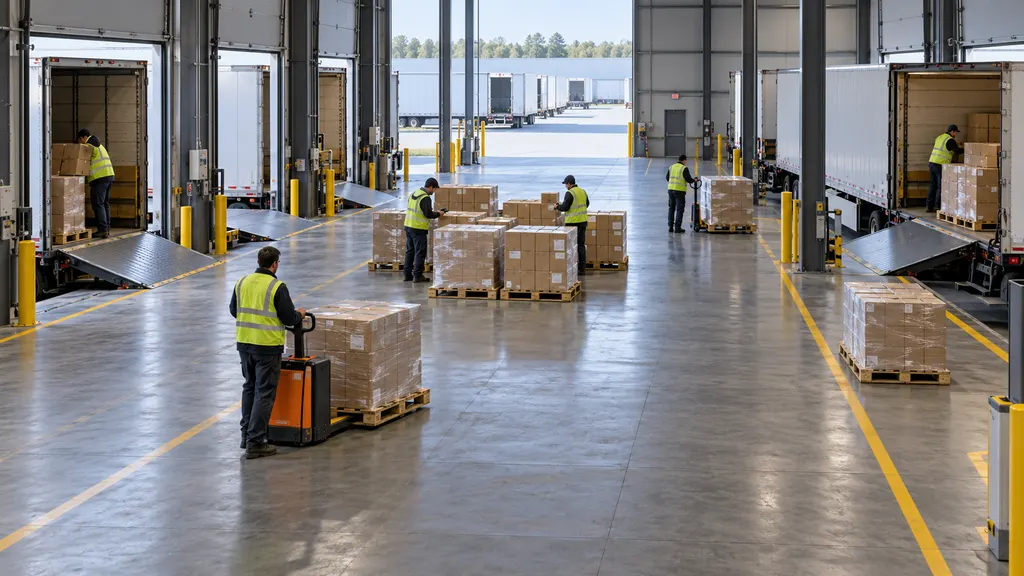
A facility performing this operation is called a cross-dock or cross-docking terminal. Cross docking can also take place within a distribution center that performs conventional warehousing. The defining feature is the flow of the goods, not the name or shape of the building: goods are directed toward onward movement rather than held as stock awaiting future demand.
How Cross Docking Works
Cross docking links receiving and dispatch activities closely. Successful execution depends on knowing what is arriving, where it must go next, and whether the outbound transport is available. A representative workflow includes the following stages, although the exact sequence varies with the goods, shipment structure, and facility.
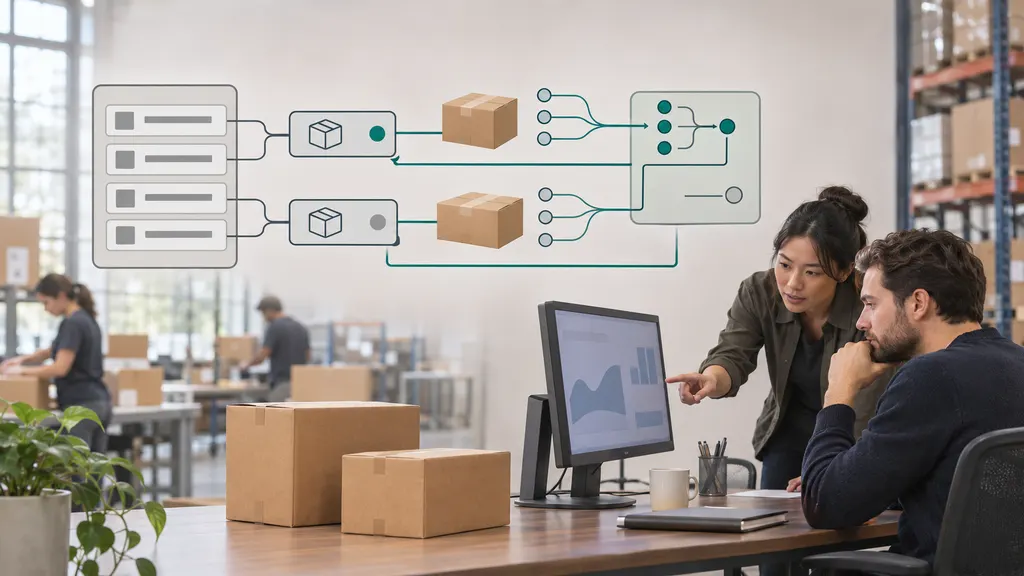
- Plan inbound and outbound movements. The operator coordinates expected receipts, destination requirements, vehicle availability, and dock capacity. Shipment information helps establish which inbound goods belong on each outbound movement.
- Receive and identify goods. Workers unload incoming vehicles and check shipment identities, quantities, visible condition, and destination information. Labels or other identifiers connect physical goods with operational records.
- Sort or consolidate. Goods may be separated by destination, customer order, delivery route, or another dispatch requirement. Alternatively, several incoming consignments may be combined into one outbound load.
- Transfer through the terminal. Goods move directly to an outbound loading area or enter temporary staging while the next transport movement is prepared.
- Verify and dispatch. The operator checks the outbound load against its shipping instructions, records the transfer, and loads the vehicle for onward transportation.
Not every operation requires unpacking or item-level sorting. A pallet already prepared for its next destination may move between receiving and shipping with limited additional handling. Mixed pallets may require separation and rebuilding before dispatch. These differences affect labor, space, equipment, and the time needed inside the facility.
Temporary Staging Is Not the Same as Storage-Based Fulfillment
Cross docking does not necessarily mean an uninterrupted vehicle-to-vehicle transfer. Goods may wait in a staging area because outbound loading has not started, a connecting vehicle is delayed, or sorting remains incomplete. There is no single universal dwell-time threshold that defines every cross-docking operation. The more useful distinction is whether goods are moving through a planned transfer process or being put away as inventory for later allocation and retrieval.
Allocation and Shipment Patterns
Cross-docking arrangements can be described by when goods receive their outbound destination assignment. The following distinction concerns allocation timing rather than a universal classification of facilities.
| Allocation approach | Meaning | Operational implication |
|---|---|---|
| Pre-distribution cross docking | The outbound destination is assigned before goods arrive at the cross-dock. | Upstream labeling and preparation can support direct routing to the appropriate outbound area. |
| Post-distribution cross docking | The outbound allocation is determined at the cross-dock using available demand or shipment information. | The facility needs the information and handling capability to allocate and sort goods after receipt. |
A separate distinction concerns how shipments are combined or divided. Consolidation brings goods from multiple inbound movements together for an outbound load. Deconsolidation divides an incoming load among several outbound movements. A facility may perform both, so these are not mutually exclusive facility types. They describe the relationship between incoming and outgoing shipments.
Cross Docking Compared with Related Operations
Several logistics terms overlap with cross docking without being exact synonyms. The distinctions below concern the purpose of each operation; a single distribution network may use all of them.
| Related operation | Primary purpose | Relationship to cross docking |
|---|---|---|
| Conventional warehousing | Hold goods as inventory until they are needed. | Cross docking minimizes the storage-and-retrieval stage for the goods passing through it. |
| Order picking | Retrieve goods from inventory to fulfill an order. | Cross docking can bypass storage-location picking, although sorting or order assembly may still occur. |
| Transloading | Transfer goods between transport vehicles, containers, or modes. | A cross-docking operation may involve transloading, but transloading alone does not establish how goods are allocated or whether they enter storage. |
| Shipment consolidation | Combine smaller shipments into a larger outbound movement. | Consolidation can take place at a cross-dock, but it can also occur after goods have been stored. |
| Drop shipping | Fulfill a seller's order by having a supplier or another party ship directly to the customer. | Drop shipping describes a fulfillment arrangement; cross docking describes the physical flow through a handling facility. |
Use in Retail, Ecommerce, and Cross-Border Logistics
Cross docking sits between upstream supply and downstream distribution. Its inbound goods may come from manufacturers, suppliers, warehouses, or transport terminals. Its outbound movements may serve stores, fulfillment centers, regional depots, or delivery networks. An outbound cross-dock shipment is therefore not necessarily a parcel addressed to the final customer.
In ecommerce, cross docking can connect incoming merchandise with existing order requirements or transfer prepared shipments between network stages. It does not inherently replace a fulfillment center: goods that need storage, detailed inspection, customization, or later item-level picking may still follow a warehousing process.
The following are illustrative operating scenarios, not claims about particular companies or the prevalence of a practice.
| Scenario | Illustrative flow | What makes it cross docking |
|---|---|---|
| Retail replenishment | A retailer receives supplier pallets, separates goods by store, and loads store-bound vehicles. | The goods move from receipt to dispatch without becoming stored replenishment stock. |
| Ecommerce order allocation | A merchant receives goods already allocated to customer orders and directs them toward packing and outbound dispatch. | Available inbound goods serve identified outbound requirements rather than entering reserve storage. |
| Regional shipment transfer | A terminal unloads a line-haul vehicle and sorts prepared shipments onto regional routes. | The terminal functions as a transfer and sorting point rather than an inventory-holding location. |
| Import distribution | Imported goods, once permitted to move under the applicable customs procedure, are separated into destination-specific outbound loads. | The distribution stage emphasizes transfer rather than storage; customs treatment remains a separate consideration. |
Customs and Tracking Boundaries
Cross docking is not a customs procedure and does not itself authorize the release or onward movement of imported goods. The applicable customs requirements must be established separately. Routing goods through a cross-dock does not, by itself, remove declaration, inspection, duty, or other obligations that may apply.
Physical transfers also need to remain distinguishable from information events. A receiving scan establishes a recorded handling event; it does not necessarily mean that outbound loading, customs release, or final delivery has occurred. Operational records should preserve the connection between inbound identifiers, any regrouped handling units, and outbound shipments.
Operating Requirements and Limitations
Cross docking shifts operational emphasis from storage management toward coordination. Reducing put-away and retrieval can remove handling steps, but the transfer process still requires receiving checks, material movement, shipment verification, and exception handling. Its suitability depends on the goods and the network rather than on an assumption that less storage is always better.
- Predictable supply and transport: Late inbound arrivals can disrupt outbound loading. Early arrivals can occupy staging space while awaiting a connection.
- Reliable shipment information: Missing identifiers, inaccurate quantities, or unclear destination instructions can prevent direct routing.
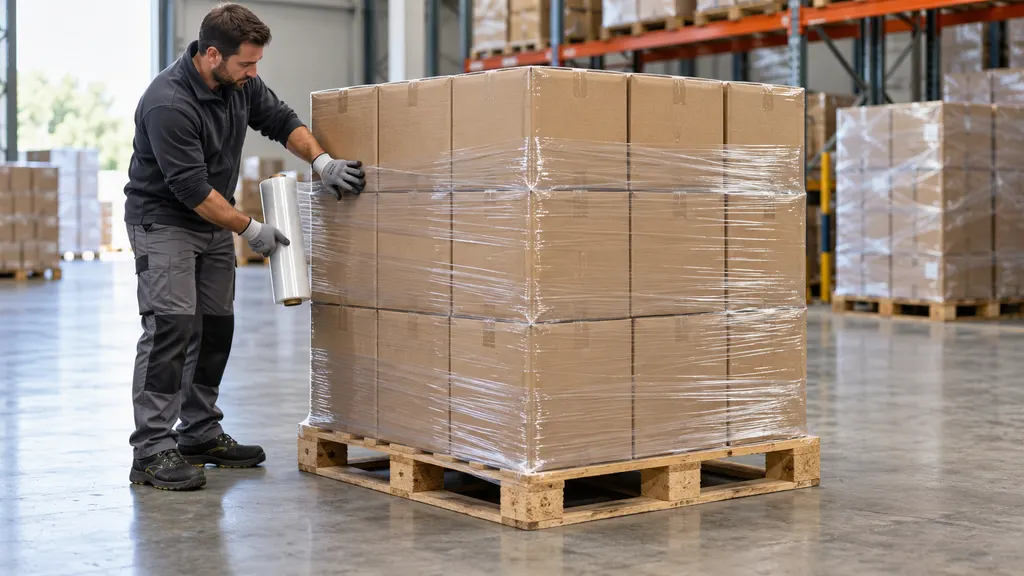
- Suitable goods preparation: Packaging and handling units must support unloading, transfer, and loading. Damaged or unstable loads may need additional work.
- Compatible demand: There must be a practical outbound requirement for the incoming goods. Unallocated surplus may need storage rather than immediate transfer.
- Appropriate facility capacity: Dock availability, staging space, equipment, and labor must accommodate the interaction between arrivals and departures.
- Exception capability: Shortages, damage, missed connections, and documentation problems need defined resolution paths outside the normal flow.
Potential benefits include less storage space devoted to the affected goods, fewer storage-related handling steps, and shorter transfer times when connections work as planned. These are possible outcomes, not guaranteed results. Congestion, repeated sorting, poorly synchronized transport, or underused outbound vehicles can offset the intended gains.
Practical Assessment Questions
Before treating a flow as suitable for cross docking, an operator can check whether destinations are known, whether expected receipts match dispatch requirements, and whether shipment data arrives early enough to support planning. The assessment should also establish what happens when quantities differ or a connecting vehicle fails to arrive.
Useful measures may include terminal dwell time, missed connections, misrouted goods, handling damage, and the share of goods diverted into storage. These measures describe operational performance; they do not create a universal definition of cross docking. Comparisons should account for differences in shipment size, sorting complexity, and service requirements.
QA
Does cross docking mean goods never stop moving?
No. Goods may pause for checking, sorting, or temporary staging. The central distinction is that they are being transferred toward outbound transport rather than put away for later demand.
Is cross docking the same as a warehouse?
No. Cross docking is a process, while a warehouse is a facility. A warehouse or distribution center can support both cross-docking flows and conventional inventory storage.
Can cross docking be used for ecommerce orders?
Yes. Incoming goods may be directed to existing order requirements, or prepared shipments may be transferred between transport stages. Goods requiring extended storage or additional processing may need a different flow.
Does cross docking eliminate inventory or customs requirements?
No. Goods remain physically present and require records even when storage is minimized. Cross docking also does not determine their customs status or remove applicable customs obligations.
Sources
- John J. Bartholdi III and Steven T. Hackman, Warehouse & Distribution Science — Educational reference supporting cross-docking principles, material flow, and distinctions from storage-based warehousing.
- Wikipedia: Cross-docking — Supplementary reference for terminology, allocation approaches, operational requirements, and distribution applications.