Through Transportation
Definition
Through transportation is the movement of goods from an origin to a final destination through more than one transport stage, often involving different carriers, transport modes, or handling points under an arranged through service. In logistics and international trade, the term usually describes a continuous or coordinated movement across a transport chain rather than a single vehicle journey. Depending on the contract and the parties involved, the movement may be documented by one through transport document or by several documents covering separate legs.
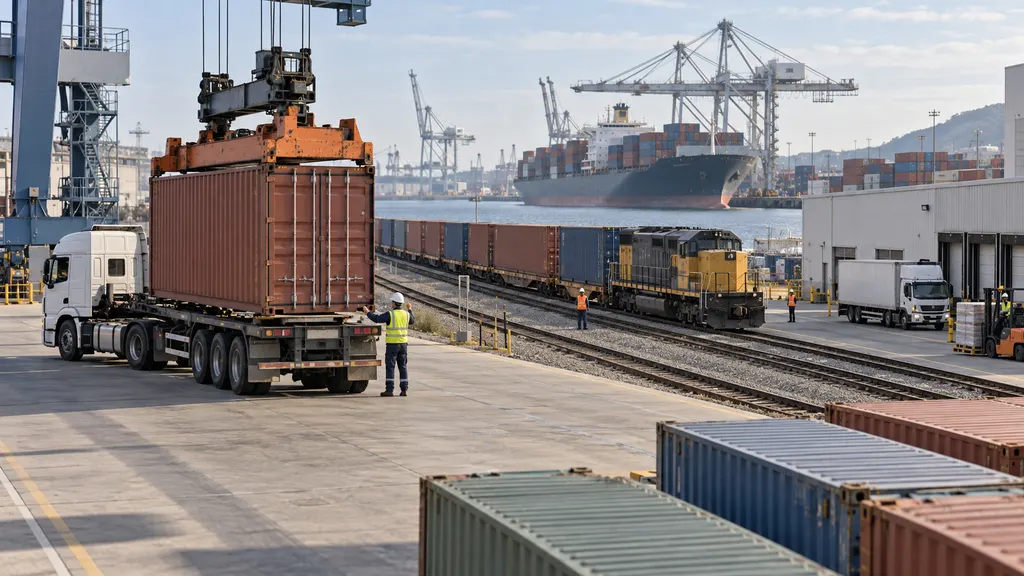
The term is descriptive rather than a single, universally standardized legal category. Its precise meaning can vary among carriers, freight forwarders, shippers, transport documents, and national legal systems. A shipment described as moving by through transportation may travel by truck from a seller to a port, by vessel between countries, and by truck or rail to the consignee. The fact that the shipment passes through several stages does not, by itself, establish who bears responsibility for loss, delay, customs formalities, or delivery.
Through Transportation in Logistics
Through transportation connects separate parts of the supply chain into one planned movement. It may be organized by a carrier, freight forwarder, non-vessel-operating common carrier, logistics provider, or another contracting party. The physical movement can include pre-carriage, a main international movement, and on-carriage. For example, a shipment may be collected from a factory, transported by truck to a rail terminal, moved by rail to a seaport, carried by ocean vessel to another country, and delivered by truck to a distribution center.
In this arrangement, the shipment remains associated with the same commercial order even though it may be handled by different operators. Operational systems may record separate transport legs, handovers, status events, and tracking numbers. The commercial arrangement may nevertheless present the journey as one planned movement from the place of receipt to the place of delivery.
Through transportation is especially relevant when the origin and destination are not directly connected by one mode or one carrier. It can support international trade, cross-border ecommerce, inventory replenishment, project cargo, and less-than-container-load freight. The parties normally need to coordinate routing, packaging, transfer points, documentation, customs procedures, and delivery instructions.
How Through Transportation Works
- Shipment planning: The shipper or logistics provider identifies the origin, destination, cargo characteristics, required service, and available transport modes.
- Route design: The movement is divided into practical legs, such as pickup, inland transport, terminal handling, international carriage, and final delivery. The route may use road, rail, sea, air, inland waterway, or a combination of these modes.
- Booking and documentation: The responsible party arranges capacity and prepares the documents required for the relevant legs. These may include a transport contract, bill of lading, waybill, commercial invoice, packing list, export documents, import documents, and customs declarations.
- Origin movement: The cargo is collected, consolidated where applicable, and moved to a transfer point such as a warehouse, rail terminal, airport, or seaport.
- Transfer between legs: The cargo may be unloaded, stored temporarily, inspected, consolidated, deconsolidated, or transferred to another vehicle. The exact handling depends on the equipment and service design.
- International or main-carriage movement: The shipment travels over the principal distance. The mode may be ocean, air, rail, road, or inland waterway transport.
- Destination movement and delivery: After arrival, the cargo may require import clearance, terminal release, inland transport, and delivery to the consignee, fulfillment center, store, or other agreed destination.
- Record completion: Proof of delivery, exception records, damage reports, and tracking events are collected according to the applicable service and contract.
These steps are a general operational sequence, not a mandatory legal procedure. Some shipments omit warehousing or customs transit, while others include multiple consolidation points or specialized handling operations.
Transport Modes and Service Structures
Through transportation can be organized in several ways. The following descriptions are practical distinctions used to explain the structure of a shipment; they should not be treated as a universal legal classification.
| Service structure | Operational meaning | Typical documentation or responsibility issue |
|---|---|---|
| Single-mode movement | The shipment travels from origin to destination mainly by one transport mode, although local pickup or delivery may still be required. | The principal carrier may handle the main movement, while local services can be arranged separately. |
| Multimodal movement | Two or more transport modes are used as part of one planned movement. | A single contractual arrangement may cover the entire journey, but the applicable liability terms must be checked. |
| Intermodal movement | Cargo moves through multiple modes while remaining in the same loading unit, such as a container, where the service design permits. | Handling the loading unit can reduce repeated unpacking, but each leg and transfer remains operationally important. |
| Through service | A provider offers or arranges transport from an origin or place of receipt to a destination, potentially using several carriers or modes. | The document may cover the through movement, or separate documents may govern individual legs. |
Multimodal, intermodal, combined, and through transport are sometimes used as if they were interchangeable. In professional and legal contexts, however, their definitions can depend on the governing contract, national law, industry practice, and the transport document. A shipper should therefore examine the actual terms rather than infer legal responsibility from the service label alone.
Documents and Allocation of Responsibility
A through movement can be represented by a through bill of lading, a multimodal transport document, a sea waybill, an air waybill combined with separate inland documents, or a series of documents for individual legs. The document name is not enough to determine the complete risk allocation. Important questions include who is the contracting carrier, whether a freight forwarder acts as an agent or principal, which liability regime applies to each leg, and where responsibility transfers.
For example, one party may arrange the complete movement while subcontracting the ocean, rail, and truck legs to different operators. Another arrangement may require the shipper to contract separately with each carrier. These structures can affect claims, delivery instructions, billing, tracking, and the evidence required when cargo is damaged or delayed.
Documents also communicate information needed for border and cargo control processes. Product descriptions, quantities, weights, package marks, values, origin information, and consignee details should be consistent across the relevant records. Errors can create delays or require corrections, but the exact consequences depend on the country, procedure, goods, and authorities involved.
Through Transportation in Cross-Border Ecommerce
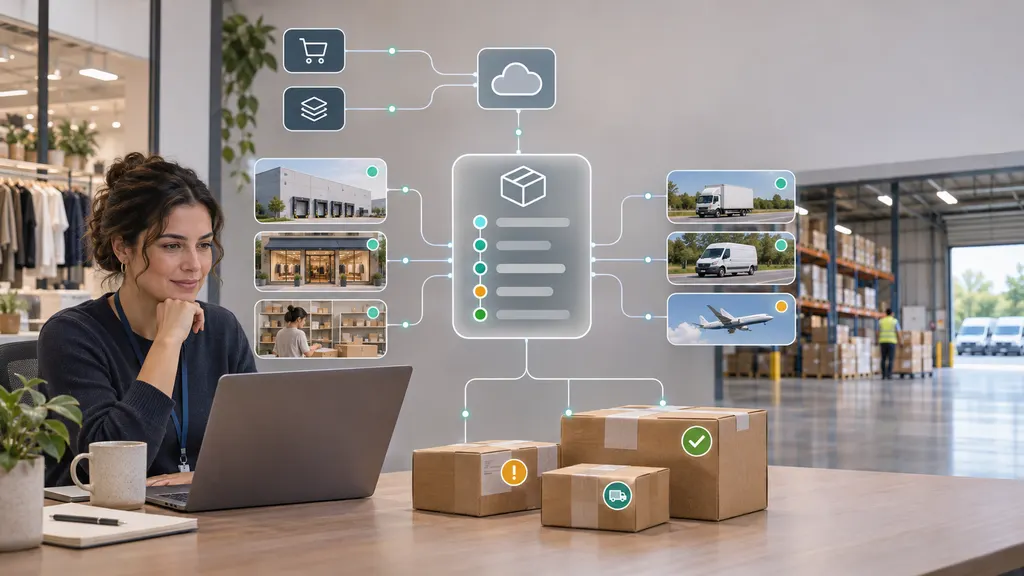
In cross-border ecommerce, through transportation may connect a seller, export warehouse, international line-haul service, import process, destination fulfillment facility, and final-mile carrier. A customer may see one order status even though the logistics provider records several physical legs. The order, shipment, and parcel are related but are not identical concepts: an order is a commercial request, a shipment is a movement of goods, and a parcel is a physical package or handling unit.
A retailer or marketplace may use through transportation when inventory is moved from an overseas supplier to a destination warehouse or when individual orders are sent from a fulfillment center to consumers in another country. The service may include consolidation before export and deconsolidation near the destination. A tracking interface may combine events from different carriers, but tracking visibility is an information function and does not necessarily prove that one carrier controls the whole movement.
Cross-border ecommerce operators should distinguish transport planning from customs responsibility. Through transportation can include border crossings, but it is not the same as customs transit. Customs transit is a customs procedure that allows goods to move under customs control between specified points without being released into the domestic market at each intermediate border. Whether a particular shipment qualifies for such a procedure depends on the applicable customs rules and the movement's documentation.
Advantages and Operational Limitations
Through transportation can simplify route coordination because the shipper may deal with one coordinating party or one booking process. It can also make it easier to plan a door-to-door movement, combine modes for geographic or capacity reasons, and connect international carriage with local delivery. In containerized or consolidated freight, a coordinated sequence can reduce unnecessary handling compared with repeatedly arranging isolated movements.
These potential advantages do not remove operational risks. Every transfer can create an opportunity for delay, damage, misrouting, data mismatch, or loss of visibility. A disruption in one leg may affect later bookings and delivery appointments. Capacity, weather, port or terminal conditions, customs processing, security controls, and inaccurate cargo information may also influence the outcome.
Before accepting a through service, a shipper should review the agreed place of receipt and place of delivery, planned modes, estimated transit information, chargeable services, transfer points, documentation requirements, customs roles, insurance arrangements, claims procedure, and delivery evidence. Transit estimates are not necessarily guaranteed delivery commitments. The contract should be consulted for the applicable standard.
Through Transportation and Related Terms
| Term | Meaning | How it differs from through transportation |
|---|---|---|
| Multimodal transport | Transport using two or more modes in one movement. | It emphasizes the use of multiple modes; through transportation emphasizes continuity or coverage from origin to destination. |
| Intermodal transport | Transport using multiple modes, often with the cargo remaining in the same loading unit. | It focuses on the movement structure and loading unit, not necessarily on one contract for the whole journey. |
| Transshipment | The transfer of cargo from one vessel, vehicle, or transport service to another during a journey. | Transshipment is an event or operation within a route; through transportation is the broader planned movement. |
| Freight forwarding | The arrangement and coordination of freight movement and related services. | Freight forwarding is a service or business activity that may organize through transportation. |
| Transit customs procedure | A customs procedure for moving goods under customs control between designated locations. | It concerns customs treatment, while through transportation concerns the physical and contractual transport arrangement. |
| Door-to-door transport | A service arranged from a specified origin location to a specified destination location. | Door-to-door transport may be through transportation, but the two expressions emphasize different aspects and are not always identical. |
Common Misunderstandings
- It does not always mean one carrier performs every leg. A through service may involve subcontracted carriers, agents, terminals, or separate transport operators.
- It does not automatically mean one legal contract. Some arrangements use a through document, while others use multiple contracts and documents.
- It is not the same as nonstop transport. Through transportation can include transfers, intermediate terminals, consolidation, storage, or customs procedures.
- It does not guarantee uninterrupted tracking. A tracking system may not receive timely events from every carrier or transfer point.
- It is not automatically the same as multimodal transport. The terms overlap in ordinary usage, but the applicable definition may depend on the document and legal context.
QA
What does through transportation mean in logistics?
It means a coordinated movement of goods from origin to final destination through multiple transport stages, carriers, or modes. The exact contractual meaning depends on the service arrangement and documents.
Is through transportation the same as multimodal transport?
Not necessarily. Multimodal transport specifically emphasizes the use of at least two transport modes, while through transportation emphasizes the planned movement across the journey. The terms can overlap, but they should not be treated as identical in every legal or commercial context.
Does through transportation use one carrier?
No. One provider may coordinate the movement while different carriers perform individual legs. The contract should identify the responsible parties and the applicable liability terms.
Is through transportation the same as customs transit?
No. Through transportation describes a physical or contractual transport arrangement. Customs transit describes a customs procedure for moving goods under customs control.
Sources
- United Nations Economic Commission for Europe, Glossary for Transport Statistics — transport terminology and distinctions involving multimodal and intermodal transport.
- International Federation of Freight Forwarders Associations, FIATA documents and freight-forwarding resources — freight-forwarding documentation and transport arrangements.
- World Customs Organization, Transit Guidelines — customs transit as a customs procedure and its distinction from physical transport.
- International Maritime Organization, Facilitation resources — international maritime transport documentation and facilitation context.