Door to Door Service
Definition
What is door-to-door service? In logistics, door-to-door service is a transport arrangement in which a logistics provider, carrier, freight forwarder, or other responsible party organizes the movement of a shipment from a defined origin address to a defined destination address. The service may include pickup, line-haul transportation, transfers between transport modes, customs-related procedures, final-mile delivery, and delivery confirmation, depending on the service contract.
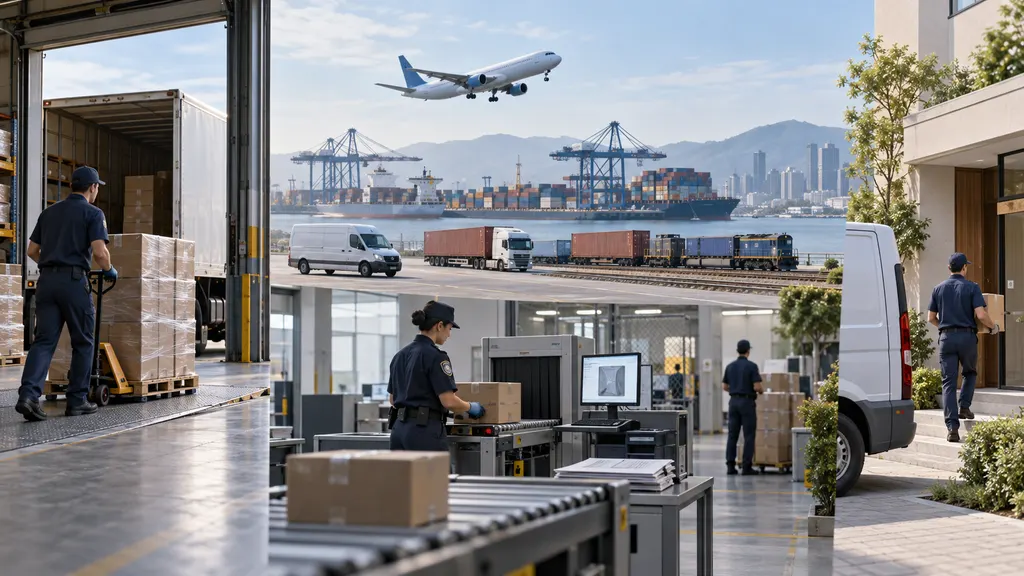
The term describes the scope of the transportation arrangement rather than a single transport mode or a universal set of included activities. A door-to-door shipment may move by road, rail, air, sea, or a combination of modes. In cross-border ecommerce, the origin may be a seller's warehouse and the destination may be the buyer's home or business address. The exact responsibilities of the provider, shipper, consignee, and customs parties depend on the agreed service terms, shipping documents, and, where applicable, the selected Incoterm.
In Logistics
Door-to-door service connects the main stages of a shipment into one coordinated movement. It is commonly contrasted with port-to-port, airport-to-airport, terminal-to-terminal, or depot-to-depot transportation, in which the customer is responsible for arranging one or more movements before pickup or after arrival at the named transport facility.
The word “door” should be understood as a named pickup or delivery location, not necessarily a literal handover at a private residence. A delivery address may be a warehouse, store, office, fulfillment center, apartment building, or other location that the carrier can access under its operating rules. Restrictions such as vehicle access, appointment requirements, security procedures, unloading arrangements, and local delivery limits can affect whether a shipment can be delivered directly to the requested point.
In a supply chain, door-to-door service usually covers the transportation link between a shipping point and a receiving point. It does not automatically mean that the provider owns the goods, controls the inventory, or bears every commercial risk. Transportation responsibility, customs responsibility, insurance, title, and risk of loss are separate questions that must be established by the contract and applicable trade terms.
How Door-to-Door Service Works
Although operating procedures differ, a door-to-door shipment commonly follows the sequence below.
- Shipment preparation: The shipper provides the origin and destination details, package or cargo information, dimensions, weight, contents, and any required shipping or customs documents.
- Pickup: A carrier or appointed service provider collects the shipment from the named origin. The pickup may be scheduled, performed during a delivery window, or subject to local operating conditions.
- Origin processing: The shipment may be weighed, labeled, consolidated, sorted, screened, or transferred to a line-haul carrier. For international shipments, export documentation or export-control checks may be relevant.
- Main transportation: The shipment travels between regions or countries by one or more transport modes. A door-to-door service can therefore be a multimodal arrangement rather than a single uninterrupted journey.
- Border and customs procedures: Where the shipment crosses a border, the required customs declaration, duties, taxes, permits, inspections, and supporting documents must be handled by the party assigned that responsibility. The provider may offer customs brokerage or coordination, but this is not automatically included in every service.
- Destination processing: The shipment may be unloaded, sorted, transferred to a local delivery network, or held pending payment, documentation, an appointment, or additional instructions.
- Final-mile delivery: The shipment is delivered to the named destination, subject to access, address accuracy, service restrictions, and the recipient's availability where applicable.
- Delivery record: The provider may record delivery through a scan, signature, photograph, electronic confirmation, or another operational event. The form of confirmation varies by provider and service.
This sequence is a general operational model, not a guarantee that every provider performs every step itself. A freight forwarder may subcontract transport, a carrier may use partner networks, and customs clearance may be performed by a broker or by the importer. The party selling the service should identify which activities are included and which are performed by another party.
Characteristics and Service Scope
Several characteristics help distinguish door-to-door service from other shipping arrangements.
| Characteristic | What it means | Why it matters |
|---|---|---|
| Named origin and destination | The service is arranged between specified pickup and delivery locations. | Responsibility can be evaluated against the agreed addresses and access conditions. |
| End-to-end coordination | One provider or contracting party coordinates multiple transportation stages. | The shipper may not need to arrange separate local and long-distance services. |
| Possible multimodal movement | The shipment may use road, rail, air, sea, or connecting services. | The phrase does not by itself identify the transport mode or transit time. |
| Variable customs scope | Customs declaration, brokerage, duties, and taxes may be included, excluded, or assigned to another party. | Unexpected delays or charges can result if the allocation is unclear. |
| Address and access dependency | Delivery depends on a usable address and practical access for the delivery operation. | Residential, remote, restricted, or appointment-based deliveries may require special arrangements. |
A quoted door-to-door service should therefore be read together with its service description. Important questions include whether pickup and delivery are included, whether the price covers loading or unloading, how remote-area charges are treated, who prepares customs documents, who pays import duties and taxes, how failed delivery is handled, and what happens when the shipment is damaged, refused, or returned.
Door-to-Door Service in Ecommerce
In ecommerce, door-to-door service is often used to describe the movement of an order from a merchant, marketplace seller, fulfillment center, or warehouse to the buyer's delivery address. It can support domestic orders as well as cross-border orders.
The service normally begins after an order has been accepted and inventory has been allocated. A warehouse or fulfillment operation may pick and pack the items, create a shipping label, and hand the parcel to a carrier. The carrier then performs or coordinates transportation and final delivery. In this setting, the customer may see a simplified promise such as delivery to an address, while the underlying operation contains several separate events and parties.
Door-to-door service should not be confused with fulfillment. Fulfillment is the broader process of receiving, storing, picking, packing, and dispatching inventory. Door-to-door service primarily describes the transportation arrangement from the defined origin to the defined destination. A business may perform its own fulfillment and purchase door-to-door transportation from a carrier, or it may use a third-party logistics provider that coordinates both activities.
Door-to-Door Service in Cross-Border Shipping
Cross-border door-to-door shipping adds customs and trade-compliance considerations. The shipment may require a commercial invoice, an accurate description of the goods, a classification, a declared value, origin information, and other documents required by the countries involved. The specific requirements depend on the goods, jurisdictions, shipment value, transport mode, and applicable regulations.
The phrase does not mean that customs formalities disappear. A provider may arrange clearance, but the importer or another designated party may still need to provide information, hold permits, pay duties and taxes, or meet local compliance obligations. An international door-to-door quotation should state whether customs brokerage is included and whether import charges are prepaid, billed to the recipient, or handled under another arrangement.
Incoterms can help define certain responsibilities, costs, and risks in a sale, but they do not replace a transportation contract or describe every operational detail of a parcel service. A seller and buyer should verify how the selected trade term interacts with the carrier's service conditions, customs process, insurance arrangements, and local delivery requirements.
Door-to-Door Compared With Related Terms
| Term | Primary meaning | Typical difference from door-to-door service |
|---|---|---|
| Port-to-port | Transportation between two named ports. | The customer or another provider arranges inland transport before pickup at the origin and after arrival at the destination. |
| Airport-to-airport | Air cargo movement between two airports. | Pickup, airport handling, customs, and final delivery may be separate services. |
| Terminal-to-terminal | Movement between designated terminals or depots. | The shipper or consignee usually manages the first-mile or final-mile connection. |
| Door-to-port | Movement from an origin address to a named port. | The destination-side transport is not necessarily included. |
| Port-to-door | Movement from a named port to a destination address. | The origin-side pickup is not necessarily included. |
| Door-to-door delivery | Delivery from a defined origin to a defined destination. | Often used in parcel and ecommerce contexts, but the detailed scope still depends on the service terms. |
These terms describe transport endpoints, not necessarily ownership, inventory management, delivery speed, or customs status. A shipment can be door-to-door and still be delayed by documentation, inspection, weather, congestion, address problems, or recipient-related issues.
Examples
| Scenario | How the term applies | Important qualification |
|---|---|---|
| Domestic online order | A carrier collects a parcel from a merchant's warehouse and delivers it to a buyer's home. | The service may exclude assembly, room-of-choice placement, or disposal of packaging. |
| Cross-border parcel | A seller sends an order from one country to a recipient's address in another country through a coordinated international parcel service. | Customs documents, duties, taxes, and brokerage responsibilities must be identified. |
| Business freight shipment | A provider arranges pickup from a supplier and delivery to a retailer or distribution center. | Dock access, delivery appointments, unloading, and pallet handling may affect the service. |
| Multimodal cargo | A forwarder coordinates inland pickup, ocean or air transport, destination handling, and local delivery. | The provider may use subcontracted carriers and separate transport documents. |
Common Misunderstandings
<- It does not always mean one carrier performs the entire journey. A contracted provider may coordinate several carriers, terminals, brokers, and local delivery partners.
- It does not automatically include customs clearance or import charges. Those responsibilities must be confirmed in the service contract and applicable trade arrangement.
- It does not guarantee a fixed delivery date. A door-to-door scope identifies the endpoints; it does not by itself establish a transit-time commitment.
- It is not the same as fulfillment. Fulfillment concerns inventory and order processing, while door-to-door service primarily concerns transportation between named locations.
- “Door” is not always a private residential doorway. It can refer to a commercial address, warehouse, store, office, or other accessible delivery point.
Practical Checks Before Booking
Before selecting a door-to-door service, a shipper should confirm the exact origin and destination, package or cargo specifications, permitted contents, pickup and delivery conditions, service exclusions, tracking availability, and procedures for failed delivery or return. For international shipments, the shipper should also confirm the required documents, the customs party, the treatment of duties and taxes, and the party responsible for responding to customs queries.
For ecommerce operations, it is also useful to distinguish the customer-facing promise from the carrier's contractual service level. A merchant may advertise delivery to an address while the operational terms contain limits for remote locations, restricted buildings, oversized items, dangerous goods, or signature requirements. Clear wording reduces confusion between shipping, delivery, customs clearance, and post-delivery services.
QA
What does door-to-door service mean in logistics?
It means that a shipment is arranged from a named origin address to a named destination address, usually with coordination of the transport stages between them.
Does door-to-door shipping include customs clearance?
Not necessarily. Customs clearance and import duties may be included, excluded, or assigned to the shipper, importer, broker, or another party according to the service terms.
Is door-to-door service the same as delivery?
Delivery is the act of bringing a shipment to its destination. Door-to-door service describes a broader transport arrangement that may include pickup, main transportation, transfers, customs coordination, and final delivery.
Is door-to-door shipping always faster?
No. The term describes the transport endpoints and coordination model, not a guaranteed speed. Transit depends on the selected service, route, documentation, handling, and operating conditions.
Sources
- International Chamber of Commerce, Incoterms 2020 — trade-term context and the distinction between commercial responsibilities and transport arrangements.
- U.S. Customs and Border Protection, Basic Importing and Exporting — customs documentation, importer responsibilities, and cross-border process context.
- DHL Global Forwarding — industry context for coordinated freight forwarding and multimodal transport services.
- FedEx, International Shipping — carrier context for international shipment preparation, documentation, and delivery services.