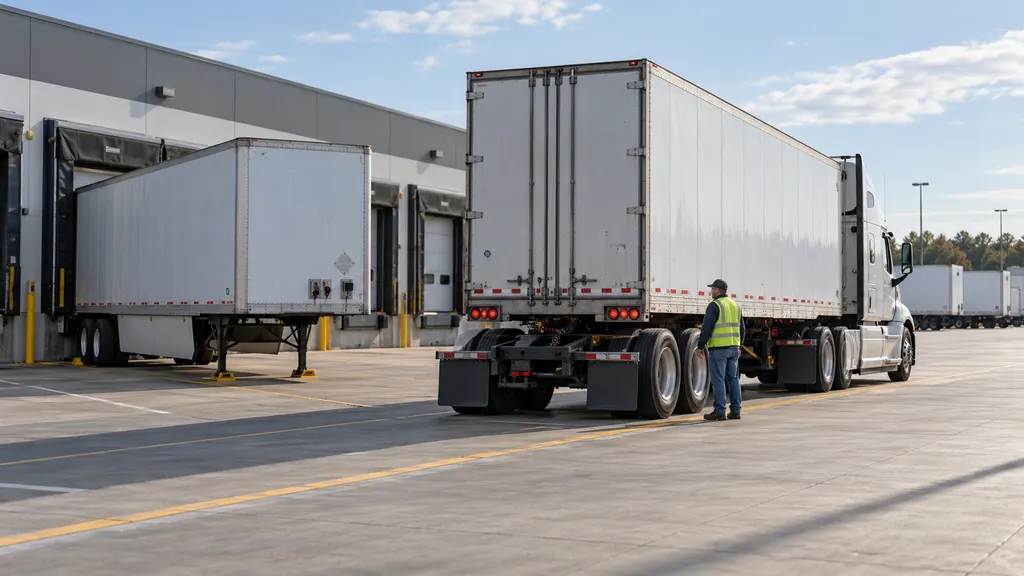
Transfer Transportation
Definition
Transfer transportation is the movement of goods, shipments, or cargo from one location, vehicle, facility, carrier, or transport service to another. In logistics and ecommerce, the term is usually used to describe an intermediate movement within a broader supply chain rather than the complete journey from seller to buyer. For example, goods may be transferred from a factory to a regional distribution center, from one truck to another at a cross-dock facility, or from a port terminal to an inland warehouse.
Transfer transportation is not a single universally standardized mode of transport. Its precise meaning depends on the operational context in which it appears. A logistics provider may use it for a scheduled movement between facilities, while a carrier or freight operator may use it for the handoff of cargo between transport services. In some contexts, the term can also describe the movement of passengers, but this glossary entry focuses on freight, logistics, ecommerce, and cross-border trade.
The word transfer emphasizes a change in location, vehicle, facility, service, or responsible transport operation. It does not necessarily mean that ownership of the goods changes. It also does not necessarily mean that the shipment is imported, exported, or cleared through customs.
In Logistics
Transfer transportation normally occupies an intermediate position in the supply chain. A shipment may begin with pickup from a supplier or seller, move through one or more transfer points, and then continue to a final delivery location. A transfer point can be a warehouse, fulfillment center, cross-dock, airport cargo terminal, seaport, rail terminal, parcel hub, or carrier depot.
The transfer may involve only physical movement, or it may also involve operational activities such as sorting, scanning, consolidation, deconsolidation, temporary storage, documentation checks, or a change of carrier. The exact activities depend on the service design and the type of shipment.
Transfer transportation is often encountered in tracking records. A status such as “transferred to another facility” may indicate that the shipment has left one operational node and is moving to another. Such a status does not by itself prove that the shipment has reached its destination, completed customs clearance, or entered the final-mile delivery stage. Tracking terminology differs among carriers, so the status should be interpreted together with the location, timestamp, and other available events.
How Transfer Transportation Works
- Origin preparation: Goods are packed, labeled, documented, and made available for collection or movement. The shipment may be associated with an order, purchase document, transport instruction, or customs record.
- Initial movement: A carrier or logistics provider moves the goods from the origin to a transfer point. This may be a local pickup, an inland line-haul movement, or a first leg of an international shipment.
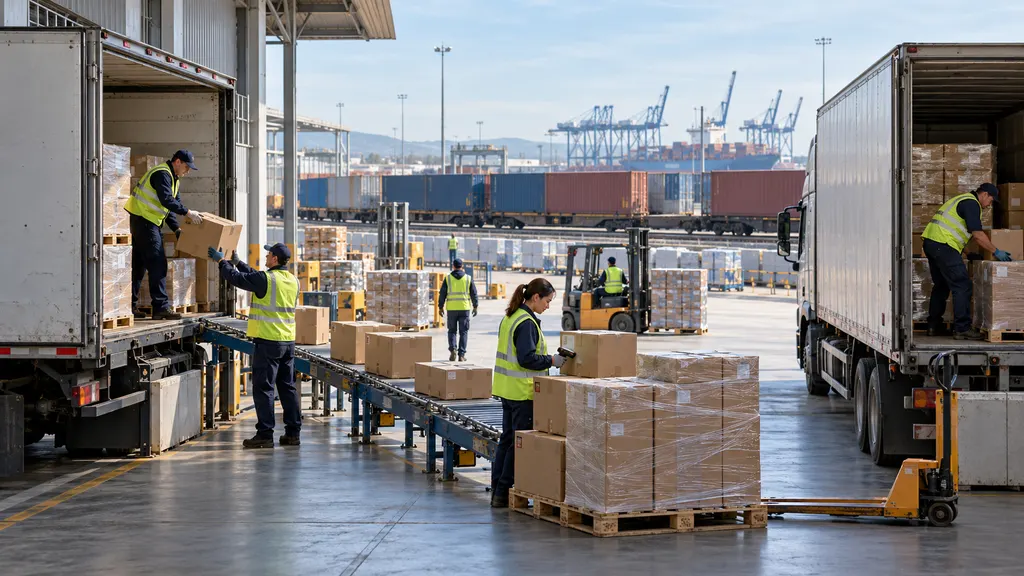
- Transfer operation: The shipment is handed to another vehicle, facility, carrier, mode, or service. Depending on the operation, the goods may be scanned, sorted, consolidated, temporarily held, or transferred without long-term storage.
- Documentation and control: Transport documents, shipment identifiers, labels, and, where relevant, customs information must remain associated with the goods. A transfer does not automatically replace the original commercial or customs documentation.
- onward movement: The shipment continues to another facility, border point, fulfillment operation, or delivery address. It may undergo several transfers before final delivery.
In practice, a single shipment can contain several transfer events. A cross-border ecommerce parcel, for instance, may move from a seller’s warehouse to an export consolidation center, then to an airport facility, an import processing location, a domestic parcel hub, and finally a last-mile depot. Each movement has a different operational purpose, even though the customer may see only a limited number of tracking updates.
Common Forms of Transfer Transportation
The following are descriptive operational forms rather than a single official classification. They are separated according to what changes during the movement.
| Form | What changes | Typical context | Example |
|---|---|---|---|
| Facility transfer | The shipment moves between logistics facilities | Warehousing, fulfillment, and distribution | Inventory moves from a central warehouse to a regional distribution center |
| Vehicle transfer | The goods are moved from one vehicle to another | Hubs, depots, cross-docking, and line-haul operations | Cartons are unloaded from an inbound truck and loaded onto an outbound truck |
| Carrier transfer | Operational responsibility or transport service changes | Multi-carrier and international shipping | An international carrier hands a parcel to a domestic delivery carrier |
| Mode transfer | The primary transport mode changes | Intermodal and multimodal freight | A container moves from a vessel to rail and then to a truck |
| Consolidation transfer | Individual shipments are grouped or separated | Freight forwarding and parcel networks | Several parcels are combined for a line-haul movement and later separated at a destination hub |
These forms can occur together. A container may be transferred from a vessel to a rail terminal, moved by rail to an inland terminal, and then transferred to a truck operated by a different carrier. Calling this sequence “transfer transportation” describes the intermediate movements, but it does not identify the full transport contract or the legal responsibilities of each party.
Transfer Transportation in Ecommerce
In ecommerce, transfer transportation connects inventory, fulfillment, shipping, and delivery operations. An order is a commercial instruction to provide goods to a customer; a shipment is the physical movement created to transport those goods. Transfer transportation usually concerns the shipment after it has been prepared, although an inventory transfer between warehouses may occur before a customer order is placed.
A retailer may transfer stock from one fulfillment center to another to position inventory closer to a future delivery area. A marketplace seller may send orders to a consolidation facility, where parcels are grouped before international dispatch. A parcel carrier may transfer an item from a national hub to a local delivery depot. These are different operations, but each includes movement between logistics nodes.
Transfer events can affect delivery visibility and customer communication. A shipment may temporarily show the same broad status while it is being sorted, transferred, or queued for onward movement. Merchants should therefore avoid treating every transfer scan as a delivery attempt. Customers may also confuse a transfer with a customs event. A transfer through an airport or port facility can occur before, during, or after customs procedures, but the word itself does not establish that customs clearance has occurred.
Transfer Transportation in Cross-Border Shipping
Cross-border shipments commonly involve transfers because international transport often uses multiple facilities, carriers, and modes. A shipment can be transferred at an export warehouse, a port, an airport, a border crossing, an import gateway, or a domestic distribution hub.
Transfer transportation and transshipment are related but not identical terms. Transshipment usually refers to cargo being moved from one vessel, vehicle, or transport service to another during its journey, often without being entered into the importing market as the final destination. Transfer transportation is broader and may include facility-to-facility movements, warehouse repositioning, or domestic handoffs that are not transshipment in the narrower transport sense.
A transfer also does not automatically mean that a new customs declaration is required. Customs treatment depends on the route, jurisdiction, cargo status, applicable rules, and the specific operation. A shipment moving through a transit facility may be subject to procedures different from those applying to goods released for domestic consumption. Because these requirements vary, a general definition of transfer transportation should not be used as a substitute for customs advice.
Transfer Transportation Compared with Related Terms
| Term | Meaning | Relationship to transfer transportation |
|---|---|---|
| Shipment | Goods moving under a transport arrangement or shipment record | A shipment may include one or more transfer movements |
| Transshipment | Movement of cargo from one transport service or vehicle to another during a journey | A narrower form of transfer that focuses on an intermediate transport handoff |
| Intermodal transportation | Transport using multiple modes, often with the cargo remaining in a loading unit such as a container | May include transfer between modes, but transfer transportation can also be single-mode |
| Cross-docking | Moving goods through a facility with little or no long-term storage | A facility process that may require transfer between inbound and outbound vehicles |
| Line-haul transportation | Longer-distance movement between major network points | A line-haul leg may include or follow a transfer, but the terms describe different aspects of the operation |
| Last-mile delivery | The final transport stage to the recipient or delivery address | Transfer transportation may precede last-mile delivery, but is not the same as it |
| Warehouse transfer | Movement of inventory between warehouses or fulfillment locations | A specific type of transfer transportation involving inventory facilities |
Operational Considerations
Transfer transportation requires accurate shipment identification and coordination. A transfer can create handling risks, delays, or visibility gaps if labels are damaged, scans are missed, documents are incomplete, or the receiving operation cannot match the goods to the relevant shipment record. These risks are operational considerations rather than inherent properties of every transfer.
Important information may include the origin and destination facilities, the planned transfer point, the responsible carrier, the transport mode, the shipment identifier, the expected handoff, and any special handling instructions. For cross-border goods, commercial invoices, packing information, transport documents, and customs data may also need to remain consistent across the movement.
When investigating a delayed transfer, a logistics team may check the last confirmed scan, the planned route, the receiving facility, the carrier responsible for the next leg, and whether the shipment is awaiting documentation or inspection. A status alone is often insufficient to determine the cause of a delay. The appropriate interpretation depends on the carrier’s tracking vocabulary and the shipment’s operational history.
Common Misunderstandings
- Transfer does not mean delivery. A transfer usually describes an intermediate movement or handoff. The shipment may still be far from the recipient.
- Transfer does not always mean a change of carrier. Goods can be transferred between facilities or vehicles operated by the same organization.
- Transfer is not automatically transshipment. Transshipment generally emphasizes a change between transport services or vehicles, while transfer transportation has a broader operational meaning.
- Transfer does not prove customs clearance. A shipment can move through a customs-related location without the tracking term itself confirming release or completion of formalities.
- Transfer does not necessarily change ownership. Physical movement and legal ownership are separate questions. A warehouse transfer may involve the same owner, while a carrier handoff may occur without any sale.
- Transfer transportation is not a fixed transport mode. It can involve road, rail, air, sea, or combinations of modes. The term describes the movement or handoff, not a particular vehicle type.
QA
What is transfer transportation in logistics?
It is the movement of goods between locations, facilities, vehicles, carriers, or transport services during a broader supply-chain journey.
Is transfer transportation the same as transshipment?
No. Transshipment is generally a narrower term for moving cargo between transport services or vehicles during transit. Transfer transportation can also include facility transfers, warehouse movements, and other intermediate operations.
Does a transfer status mean that a parcel is out for delivery?
No. A transfer status normally indicates an intermediate movement or handoff. Out-for-delivery status refers to a later stage in which a delivery vehicle or delivery service has received the parcel for final delivery.
Can transfer transportation occur before an ecommerce order is placed?
Yes. Inventory may be transferred between warehouses or fulfillment centers before it is assigned to a customer order.
Sources
- U.S. Department of Transportation, “What Is Intermodal Transportation?” — background on transport involving more than one mode and the relationship between transport legs.
- Federal Highway Administration, Freight Analysis Framework Glossary — reference terminology for freight movements, facilities, and transportation operations.
- Encyclopaedia Britannica Dictionary, “Transfer” — general reference for the meaning of transfer as movement or change from one place, person, or process to another.