Truck-Load Transportation
Definition
Truck-load transportation, more commonly written as truckload transportation or abbreviated as TL, is the movement of freight by truck in which a shipment is assigned substantial or all of a truck’s available capacity for a planned origin-to-destination movement. In logistics and freight operations, the term usually refers to a service model in which one shipper’s freight moves directly, or with limited intermediate handling, between the pickup location and the delivery location. The exact amount of freight required to qualify as truckload can vary by carrier, lane, equipment type, market practice, and pricing arrangement.
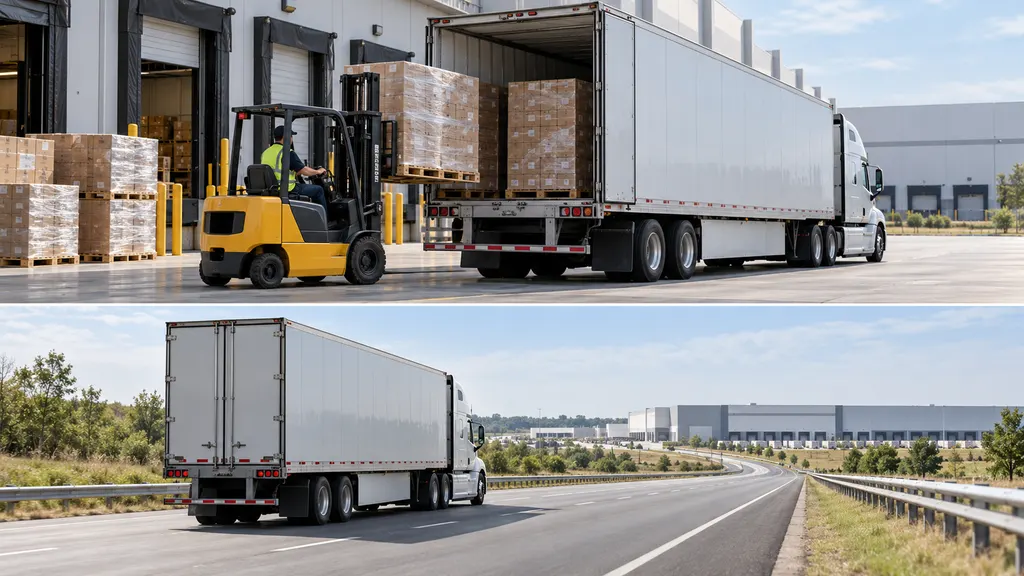
Truckload transportation is primarily a freight and supply-chain concept. It is used for shipments that are too large, time-sensitive, sensitive to handling, or operationally suitable for a dedicated truck movement. It is different from less-than-truckload transportation, in which freight from multiple shippers is consolidated, sorted, and moved through a terminal network. Truckload freight may be carried domestically or across an international border, provided that the equipment, carrier, customs, and regulatory requirements are satisfied.
In this context, “truck-load” does not describe a specific type of product. It describes how freight capacity is allocated and how a movement is organized. A truckload shipment may contain finished goods, raw materials, packaged merchandise, retail inventory, industrial components, or other lawful freight that is compatible with the selected equipment.
In Logistics and Supply Chains
Truckload transportation is a transport stage between a shipper’s facility and a receiving location. The shipper may be a manufacturer, wholesaler, retailer, fulfillment operation, or ecommerce business. The receiver may be a distribution center, store, warehouse, business customer, port facility, or another designated delivery point.
The service connects several supply-chain activities:
- Order and shipment planning: Freight is grouped into a shipment, and its origin, destination, requested dates, weight, dimensions, handling requirements, and equipment needs are recorded.
- Inventory movement: Truckload service can move replenishment stock between production sites, warehouses, distribution centers, and retail locations.
- Carrier assignment: A shipper, broker, freight forwarder, or transportation management system may source a carrier and match the shipment with available equipment.
- Execution and tracking: The carrier collects the freight, transports it, and provides status information through operational updates, electronic systems, or tracking events.
- Delivery and proof: The receiving party accepts the freight, subject to inspection and applicable documentation, and the carrier records delivery information.
For ecommerce, truckload is more often associated with inventory replenishment, supplier-to-warehouse movements, fulfillment-center transfers, and large business-to-business shipments than with the delivery of a single consumer order. A retailer may use a truckload movement to transfer packaged products from a supplier to a regional distribution center. An ecommerce operator may also use it to move inventory between fulfillment facilities before customer orders are shipped through parcel or other final-mile services.
How Truckload Transportation Works
- Shipment specification: The shipper identifies the freight’s quantity, weight, dimensions, packaging, loading method, pickup and delivery requirements, and any special conditions such as temperature control or hazardous-material handling.
- Equipment selection: The shipment is matched with equipment such as a dry van, refrigerated trailer, flatbed, or another suitable trailer type. Equipment availability depends on the route, cargo, season, and carrier network.
- Capacity sourcing: Capacity may be arranged directly with a carrier or through a broker, freight forwarder, or transportation platform. The commercial arrangement may be contract-based, transactional, or part of a dedicated operation.
- Pickup and loading: The truck arrives at the origin facility. The shipper or loading party prepares the freight and loading documents, while the parties confirm the quantity, condition, securing method, and any seal requirements.
- Line-haul movement: The carrier transports the shipment toward its destination. A truckload movement may be direct, although operational events such as a driver change, fueling stop, inspection, border crossing, or authorized transfer can occur.
- Delivery: The truck arrives at the receiving location, where the freight is unloaded or otherwise made available according to the delivery appointment and shipping documents.
- Record completion: The parties retain documents such as a bill of lading, delivery confirmation, accessorial records, customs documents when relevant, and billing information.
A truckload shipment is not automatically guaranteed to travel without any intermediate event. “Direct” commonly describes the planned transportation relationship and limited consolidation, but the actual movement remains subject to carrier operations, legal requirements, traffic, weather, border procedures, and the terms of the shipment agreement.
Main Characteristics
| Characteristic | What it means | Why it matters |
|---|---|---|
| Dedicated capacity | A truck or trailer is assigned primarily to one shipment or one shipper’s planned movement. | It can reduce the need to coordinate freight with unrelated shipments. |
| Origin-to-destination planning | The movement is organized around a specific pickup and delivery pair. | Transit planning, appointment scheduling, and pricing can be based on the lane. |
| Limited terminal handling | Freight is generally not routed through the extensive consolidation and break-bulk network used by LTL operations. | Fewer handling stages may be useful for large, fragile, or tightly scheduled loads. |
| Equipment dependency | The trailer must be suitable for the cargo and loading method. | Incorrect equipment can cause delays, rejected pickups, damage risk, or compliance problems. |
| Capacity-based pricing | Rates may reflect the route, equipment, market capacity, shipment characteristics, timing, and service terms. | The price is not determined only by the number of packages. |
These characteristics describe common operating patterns rather than a single universal legal definition. A carrier’s tariff, contract, quotation, or service guide may define the applicable service more precisely.
Common Operating Arrangements
Truckload operations can be described using several different dimensions. These dimensions should not be treated as one official classification system, because they answer different questions about the movement.
| Arrangement | Descriptive meaning | Typical use |
|---|---|---|
| Contract truckload | Capacity and service terms are arranged in advance between a shipper and a carrier or transportation provider. | Planned, recurring lanes or predictable inventory flows. |
| Spot truckload | A shipment is arranged for a particular movement, often using currently available market capacity. | Unplanned demand, irregular lanes, or temporary capacity requirements. |
| Dedicated operation | Equipment and transportation resources are assigned to a defined shipper, route, facility, or operating program for an agreed period or service scope. | Repeated movements with a need for operational consistency. |
| Dry-van truckload | Freight moves in an enclosed, non-temperature-controlled trailer. | Packaged goods that do not require refrigeration. |
| Refrigerated truckload | Freight moves in temperature-controlled equipment. | Goods requiring specified temperature conditions, such as some food or pharmaceutical shipments. |
| Flatbed or open-deck truckload | Freight moves on equipment designed for cargo that may be oversized, difficult to load through trailer doors, or suitable for external loading. | Construction materials, machinery, and other compatible cargo, subject to legal and safety requirements. |
Dry van, refrigerated, and open-deck descriptions concern equipment. Contract, spot, and dedicated descriptions concern how capacity and service are arranged. A single shipment can therefore be both a refrigerated truckload and a contract movement.
Truckload Compared with Related Terms
| Term | Meaning | Key distinction from truckload |
|---|---|---|
| Less-than-truckload | A freight service that consolidates shipments from multiple shippers and commonly uses terminal handling. | Truckload generally allocates substantially more capacity to one shipment and uses a different network model. |
| Parcel shipping | Transportation of relatively small individual packages through a parcel network. | A truckload concerns a larger freight movement, while parcel shipping focuses on separate packages and package-level handling. |
| Full truckload | A common expression for a shipment that uses most or all of a truck’s practical capacity. | In ordinary commercial use, “full truckload” and “truckload” may overlap, but the precise capacity or pricing rule depends on the provider. |
| Freight forwarding | Arranging and coordinating the movement of freight, often across carriers or transport modes. | A forwarder may arrange truckload transportation, but forwarding is a coordination service rather than a specific truck capacity model. |
| Drayage | Short-distance movement, often connecting a port, rail terminal, or inland facility with another location. | A truckload can be used for a drayage leg, but not every truckload movement is drayage. |
Truckload, shipment, order, and delivery are also different concepts. An order is a commercial request for goods. A shipment is a defined movement of goods. A truckload describes the transportation arrangement used for that movement. A delivery is the act or completion of bringing the shipment to its receiving destination. One order may be divided into several shipments, and one truckload may contain goods associated with one or more commercial orders when the arrangement permits it.
Cross-Border Truckload Transportation
In cross-border trade, a truckload movement includes the physical transport leg as well as the documents and controls required for the border crossing. Depending on the jurisdictions and goods involved, the parties may need commercial invoices, packing information, transport documents, customs declarations, permits, certificates, or security information. The exact requirements depend on the countries, commodity, value, route, parties, and applicable regulations.
Truckload transportation does not itself mean that customs clearance is included. A carrier may transport the freight while a customs broker, importer, exporter, or other authorized party handles declarations and clearance. Before dispatch, the shipper should confirm who is responsible for export procedures, import procedures, duties and taxes, documentation, inspections, and delivery after release. Incorrect commodity information, missing documents, or unclear responsibility can delay a load even when truck capacity is available.
For international ecommerce, truckload service is commonly relevant to bulk inventory movements rather than individual consumer parcels. The shipment may move from an overseas supplier to an inland warehouse, from a border facility to a distribution center, or between logistics sites in neighboring countries. Ecommerce order data may identify the demand, but the truckload movement is planned at the inventory and freight level.
Operational Considerations
- Freight characteristics: Weight, dimensions, packaging, stackability, center of gravity, temperature requirements, and loading restrictions affect equipment and handling decisions.
- Appointment requirements: Facilities may require scheduled pickup or delivery times, specific check-in procedures, or loading and unloading resources.
- Accessorial services: Waiting time, detention, layover, extra stops, residential access, inside delivery, liftgate service, rework, and other services may affect the final charge when included in the applicable terms.
- Load security: Freight must be packaged, distributed, blocked, braced, and secured in a manner suitable for the cargo, equipment, and applicable safety requirements.
- Visibility: Tracking may show pickup, in-transit, arrival, border, exception, and delivery events. The detail and timing of updates depend on the carrier and systems involved.
- Documentation: The bill of lading and related records should accurately describe the shipment, parties, quantity, condition, and agreed service details.
- Risk allocation: Liability, claims procedures, insurance, cargo value, and exclusions are governed by applicable law and the contract or transport terms. A quoted freight rate should not be assumed to define every liability provision.
A practical planning check is to confirm the cargo description, total weight and dimensions, equipment type, pickup and delivery addresses, operating hours, appointments, border responsibilities, required documents, accessorial conditions, and the process for reporting exceptions. These checks help distinguish a suitable truckload plan from a shipment that should use another service or be divided into multiple movements.
Common Misunderstandings
- “Truckload always means a completely full trailer.” Not necessarily. Commercial usage may refer to a capacity-based service even when the freight does not physically fill every available space.
- “Truckload is always faster than LTL.” It may involve fewer terminal handling stages, but actual transit depends on the route, appointments, capacity, border procedures, weather, traffic, and service commitments.
- “Truckload means one customer order.” The truckload is a freight movement, not an ecommerce order. Its contents may correspond to one order, multiple orders, or inventory transferred between facilities.
- “Truckload automatically includes customs clearance.” Transportation and customs brokerage are separate responsibilities unless the service agreement expressly combines them.
- “Full truckload and truckload have one universal threshold.” Definitions and pricing practices vary. The governing quotation, tariff, or contract should be used when a precise threshold matters.
QA
What does truckload mean in logistics?
Truckload means a freight transportation arrangement in which one shipment uses substantial or all of a truck’s practical capacity for a planned movement between an origin and a destination.
What is the difference between truckload and less-than-truckload?
Truckload generally assigns more dedicated capacity to one shipment and involves limited consolidation, while less-than-truckload combines freight from multiple shippers and commonly routes it through terminals.
Is truckload the same as full truckload?
The terms are often used interchangeably in commercial discussions, but the exact meaning of “full” or the applicable capacity threshold can vary by carrier, equipment, market, and contract.
Is truckload transportation used in cross-border ecommerce?
Yes. It can move bulk inventory or freight between suppliers, border facilities, warehouses, distribution centers, and fulfillment sites, but customs responsibilities must be arranged separately or expressly included in the service terms.
Sources
- U.S. Federal Motor Carrier Safety Administration, 49 CFR Part 371 — regulatory context for transportation brokers and motor-carrier arrangements.
- U.S. Federal Motor Carrier Safety Administration, 49 CFR 392.9 — requirements concerning cargo loading, securement, and safe operation.
- U.S. Federal Motor Carrier Safety Administration, Cargo Securement Rules — official reference for cargo securement considerations.
- World Trade Organization, Customs Valuation — trade and customs context relevant to cross-border freight documentation.
- World Customs Organization, WCO Data Model — international customs data and documentation context.