Integration of Military Logistics and Civil Logistics
Definition
Integration of military logistics and civil logistics is the coordinated use of military and civilian logistics capabilities, processes, infrastructure, information, and organizations to support defense operations, public authorities, commercial activity, or emergency response. In this context, integration does not necessarily mean that military and commercial supply chains become one system. It more often means that they cooperate through defined interfaces, shared planning, coordinated movement, compatible information, contractual arrangements, or the temporary use of one another’s resources.
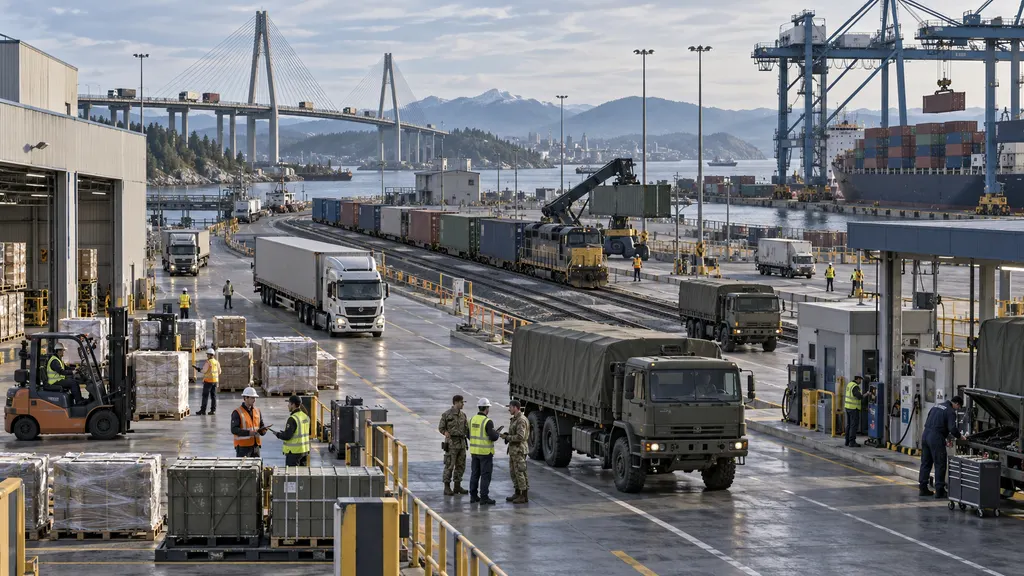
The term is used mainly in defense logistics, emergency logistics, supply chain management, transport planning, infrastructure policy, and civil-military cooperation. It may involve transport providers, ports, airports, railways, warehouses, fuel suppliers, manufacturers, customs authorities, public agencies, humanitarian organizations, and military logistics units. The exact meaning depends on the arrangement: a military organization may use commercial transportation, a civilian carrier may support a defense movement under contract, or military logistics assets may assist civilian authorities during a disaster.
Military logistics is concerned with sustaining armed forces and their operations. Civil logistics generally supports commercial, public-sector, humanitarian, or household demand. Integration creates mechanisms for these different systems to work together while preserving the legal authorities, security requirements, commercial obligations, and operational priorities that apply to each participant.
Why Integration Matters
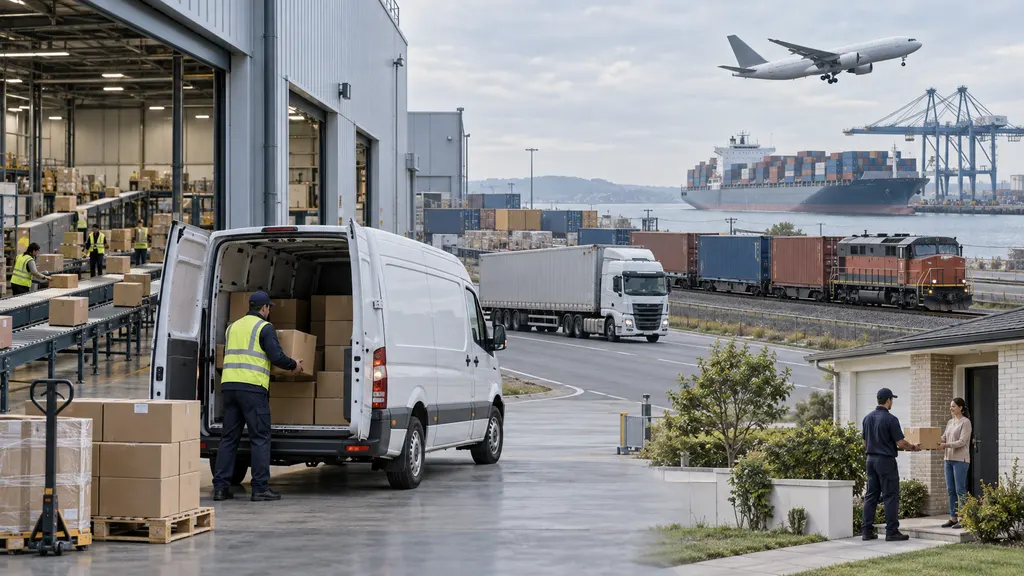
Military and civil logistics often depend on the same physical environment. Roads, bridges, rail networks, seaports, airports, fuel infrastructure, telecommunications systems, warehouses, repair facilities, and customs procedures may serve both defense and civilian users. A disruption in one part of this environment can affect several types of supply chains at the same time.
Military organizations may also need access to capabilities that are widely available in the commercial sector, such as container transport, heavy-lift equipment, inventory systems, freight forwarding, maintenance services, air cargo capacity, and specialized technical expertise. Civil authorities, in turn, may require military assistance when a crisis exceeds available civilian capacity or when access, security, engineering, transport, or communications capabilities are urgently needed.
Integration can therefore improve coordination and reduce avoidable duplication, but it does not remove resource constraints. A shared port, road, aircraft, warehouse, or carrier still has limited capacity. Integration is effective only when responsibilities, priorities, authorization procedures, data requirements, and security controls are clear.
Integration in Logistics
In a supply chain, integration may occur at several levels. Strategic integration concerns policy, infrastructure investment, national resilience, industrial capacity, and long-term planning. Operational integration concerns the coordination of movements, facilities, suppliers, inventories, and transportation networks for a particular contingency or mission. Tactical integration concerns the execution of individual shipments, delivery schedules, loading plans, documentation, and handovers.
| Integration level | Main focus | Illustrative activity |
|---|---|---|
| Strategic | Long-term capability and resilience | Planning transport infrastructure that can support both civilian commerce and authorized defense movements |
| Operational | Coordination of networks and resources | Aligning military movement plans with port, rail, road, warehouse, or carrier capacity |
| Tactical | Execution of specific logistics tasks | Arranging a shipment, confirming documentation, loading cargo, and recording delivery |
These levels are related but should not be treated as interchangeable. A country may have strategic cooperation between defense authorities and commercial infrastructure operators without integrating day-to-day shipment management. Similarly, a commercial carrier may transport military cargo for a particular contract without becoming part of the military command structure.
Common Forms of Integration
There is no single universally applicable model. The following forms describe common arrangements rather than a formal classification used by every government or organization.
Commercial Logistics Support
A military organization may obtain transportation, warehousing, maintenance, information technology, catering, fuel, or other services from civilian providers. The relationship may be governed by a procurement contract, framework agreement, service-level arrangement, or another authorized instrument. The commercial provider performs specified tasks, while the military organization retains responsibility for mission requirements and oversight within the applicable legal framework.
Shared Use of Infrastructure
Ports, airports, roads, railways, pipelines, distribution centers, and communications networks can support both civil and military users. Shared use may require scheduling rules, access controls, priority procedures, security arrangements, and contingency plans. In cross-border movements, the arrangement may also involve customs authorities, border agencies, and host-country permissions.
Civil Reserve or Contingency Arrangements
Some jurisdictions establish arrangements through which civilian transport assets, vessels, aircraft, equipment, or personnel can be made available for national emergencies or defense-related requirements. The legal structure and terminology vary by country. Such arrangements may specify activation conditions, compensation, liability, operational control, safety responsibilities, and release procedures.
Military Assistance to Civil Authorities
Military logistics capabilities may support civilian authorities during natural disasters, public emergencies, infrastructure failures, evacuations, or other authorized operations. Examples can include airlift, transport vehicles, temporary storage, engineering support, fuel distribution, field medical logistics, and communications. This is generally a support relationship, not a transfer of all civilian supply-chain responsibilities to the military.
Coordinated Information and Planning
Integration may also occur without sharing physical assets. Organizations can exchange capacity information, movement forecasts, infrastructure status, route restrictions, inventory requirements, or delivery schedules. Data sharing is useful only when the parties agree on data definitions, access rights, accuracy requirements, cybersecurity measures, and procedures for handling sensitive information.
How Integrated Logistics Works
- Define the requirement. The participating organizations identify the mission, emergency, movement, or supply need. This includes the type of goods, destination, timing, handling requirements, and level of service.
- Identify available capabilities. Planners assess military assets, commercial providers, public infrastructure, contracted capacity, inventory locations, transport modes, and possible constraints.
- Establish authority and responsibility. The parties determine who may request support, approve a movement, allocate capacity, issue instructions, accept risk, and confirm completion.
- Check legal and regulatory conditions. Depending on the movement, this may include procurement rules, customs requirements, dangerous-goods regulations, export controls, sanctions, security restrictions, labor rules, and national laws.
- Plan the movement or service. The plan may specify routes, modes, loading points, transshipment locations, escorts, documentation, delivery windows, storage conditions, and contingency options.
- Execute and monitor. Shipments or services are dispatched and monitored through agreed reporting channels. Commercial tracking information may be combined with military movement-control procedures, but sensitive operational information may need restricted handling.
- Verify delivery and review performance. The receiving organization confirms quantity, condition, identity, and delivery status. After-action reviews can identify capacity gaps, documentation problems, delays, safety issues, or communication failures.
The process resembles other coordinated logistics operations, but military requirements can add constraints concerning operational security, mission timing, controlled access, chain of command, force protection, and the sensitivity of cargo or destination information.
Characteristics and Constraints
| Characteristic | Meaning in an integrated system | Practical consideration |
|---|---|---|
| Interoperability | Organizations can exchange information or connect processes sufficiently to coordinate activity | Different software, terminology, data formats, and procedures may require translation or common standards |
| Scalability | Capacity can expand or contract as requirements change | Commercial capacity may be available in normal conditions but constrained during market disruption or simultaneous emergencies |
| Resilience | The network can continue operating or recover after disruption | Alternative routes, suppliers, facilities, and modes should be considered where appropriate |
| Security | People, cargo, infrastructure, and information receive appropriate protection | Commercial visibility requirements may conflict with operational-security or privacy requirements |
| Accountability | Responsibilities for decisions, custody, costs, safety, and performance are identifiable | Contracts and operating procedures should define handovers and acceptance criteria |
| Legal compatibility | Activities comply with the rules applicable to each participant | Military purpose does not automatically remove customs, safety, procurement, or transport obligations |
Use in Cross-Border Logistics
Cross-border integration is more complex because a movement can involve multiple jurisdictions and regulatory systems. A military or government shipment may need transport documents, customs declarations, permits, security clearances, or special procedures. The applicable requirements depend on the countries involved, the status of the shipment, the cargo, the transport mode, and the legal arrangements between the relevant authorities.
Civilian logistics providers involved in cross-border defense-related movements may need clear instructions about shipper and consignee information, cargo classification, packaging, dangerous goods, document custody, inspection procedures, delivery authorization, and records retention. A logistics provider should not assume that military cargo is exempt from ordinary border or transport requirements unless an applicable rule or official instruction establishes that treatment.
For ecommerce and international trade professionals, the concept is most relevant when commercial networks are used for government procurement, emergency supply, dual-use infrastructure, or contingency planning. It should not be confused with the routine movement of ordinary ecommerce orders. A parcel shipped by a commercial carrier remains a commercial shipment unless a specific authorized arrangement gives it a different status.
Integration Compared with Related Terms
| Term | Meaning | Difference from integration of military and civil logistics |
|---|---|---|
| Military logistics | Logistics activities that sustain armed forces and defense operations | It describes the military logistics domain, whether or not civilian organizations participate |
| Civil logistics | Logistics supporting commercial, public, humanitarian, or other non-military activity | It describes the civilian domain, whether or not military support is available |
| Civil-military cooperation | Coordination between military organizations and civilian authorities or organizations | It is broader than logistics and may include governance, security, infrastructure, and humanitarian coordination |
| Dual-use infrastructure | Infrastructure that can serve both civilian and military purposes | It is an infrastructure concept; integration is the broader coordination of capabilities and activities |
| Outsourcing | Obtaining a task or service from an external provider | Outsourcing may be one tool of integration, but integration can also involve planning, standards, information exchange, or shared infrastructure |
| Humanitarian logistics | Logistics supporting disaster relief and assistance to affected populations | Humanitarian logistics may cooperate with military logistics, but the two fields have different mandates and operating principles |
Common Misunderstandings
- Integration does not mean complete merger. Military and civil logistics can coordinate while remaining separate organizations with different authorities, objectives, and accountability systems.
- Commercial support does not automatically mean military control. A carrier, warehouse operator, or freight forwarder may provide a contracted service without becoming part of the military command hierarchy.
- Shared infrastructure does not guarantee priority. A road, port, airport, or rail line may serve multiple users. Priority rules must come from an applicable authority or agreement.
- Military cargo is not automatically exempt from regulation. Customs, dangerous-goods, export-control, safety, and procurement requirements depend on the relevant legal framework and official instructions.
- Logistics integration is not the same as supply-chain visibility. Tracking a shipment provides information about movement or status; integration also involves governance, processes, capabilities, responsibilities, and compatible decision-making.
Examples
| Scenario | How integration may appear | Important boundary |
|---|---|---|
| Disaster response | Military transport vehicles deliver relief supplies requested by a civilian emergency authority | The support should follow the authorized tasking and coordination process |
| Port or airport operations | A commercial facility schedules and handles an authorized defense movement alongside civilian traffic | Security, access, documentation, and capacity rules still apply |
| Contracted freight movement | A civilian carrier transports equipment under a government or defense contract | The contract should define custody, liability, service requirements, and reporting |
| Infrastructure planning | Road, rail, bridge, or terminal planning considers both commercial demand and possible contingency requirements | Planning for possible use does not establish an automatic right of access |
| Emergency warehousing | A civilian warehouse stores supplies for a public emergency or authorized defense activity | Inventory control, security, insurance, and release authority should be specified |
QA
What is the integration of military logistics and civil logistics?
It is the coordinated use of military and civilian logistics capabilities, infrastructure, information, and organizations while preserving the authorities and responsibilities applicable to each participant.
Is military logistics the same as civil-military cooperation?
No. Military logistics focuses on sustaining armed forces and operations. Civil-military cooperation is broader and may include logistics as well as infrastructure, governance, security, and humanitarian coordination.
Can a civilian carrier transport military cargo?
Yes, a civilian carrier may provide authorized transportation services under an applicable contract or arrangement. The specific legal, security, customs, safety, and documentation requirements depend on the movement.
Does integration mean that military and commercial supply chains are merged?
No. They may remain separate systems that coordinate through contracts, shared infrastructure, common planning, information exchange, or temporary support arrangements.
Sources
- U.S. Joint Chiefs of Staff, DOD Dictionary of Military and Associated Terms — reference terminology for military logistics and related defense concepts.
- NATO, Logistics — official overview of logistics as a defense capability and of the relationship between military requirements and supporting systems.
- NATO, Civil Emergency Planning — official background on cooperation between civil and military authorities in emergency and resilience contexts.
- World Customs Organization, Customs in the 21st Century — context for customs cooperation, supply-chain facilitation, and border-management coordination.
- International Civil Aviation Organization, Dangerous Goods — official reference for regulatory considerations affecting air transport of regulated cargo.