Choosing between Australia Post, Couriers, and 3Pl Fulfillment
For most Australian online businesses, Australia Post is the simplest starting point, a courier is usually the better choice when shipment speed, pickup control, or bulky parcels matter, and a 3PL becomes worthwhile when warehousing and daily fulfillment are consuming too much internal time. The right decision depends less on the carrier name than on order volume, delivery promise, product characteristics, inventory location, and how much operational work you want to keep in-house.

These options are also not mutually exclusive. A business can store stock with a 3PL, use Australia Post for selected destinations, and use one or more courier services for metro, express, oversized, or business deliveries. Treat the choice as an operating model decision rather than a simple search for the cheapest label.
What each option actually means
Australia Post
Australia Post is a national postal and parcel network that businesses can use for domestic and international sending. Its business services include shipping accounts, parcel lodgement options, tracking, and delivery products with different service characteristics. The exact price and delivery expectation depend on factors such as parcel dimensions, weight, destination, service selected, account arrangements, and any applicable surcharges.
Australia Post is often a practical fit for small and growing merchants because it can support low-to-moderate shipping volumes without requiring the business to build a dedicated carrier operation. It can also be useful when the customer base is spread across metropolitan, regional, and remote locations. That does not mean it is automatically the fastest or lowest-cost option for every lane. Businesses should compare quoted rates and published service information for their actual postcodes and parcel profiles.
Courier services
“Couriers” describes a broad category rather than one uniform product. Courier companies may offer same-day, next-day, time-definite, scheduled pickup, business-to-business, metro, interstate, or specialised freight services. Some focus on small parcels; others are better suited to bulky, fragile, temperature-sensitive, or palletised goods.
A courier may be attractive when your delivery promise is concentrated in particular cities, when regular pickup is valuable, or when a parcel is a poor fit for standard postal products. The trade-off is that courier pricing and service quality can vary significantly by route, account, fuel surcharge, residential delivery rules, accessorial fees, and the carrier’s network. A courier quote should therefore be assessed against real shipment samples rather than a headline base rate.
Third-party logistics fulfillment
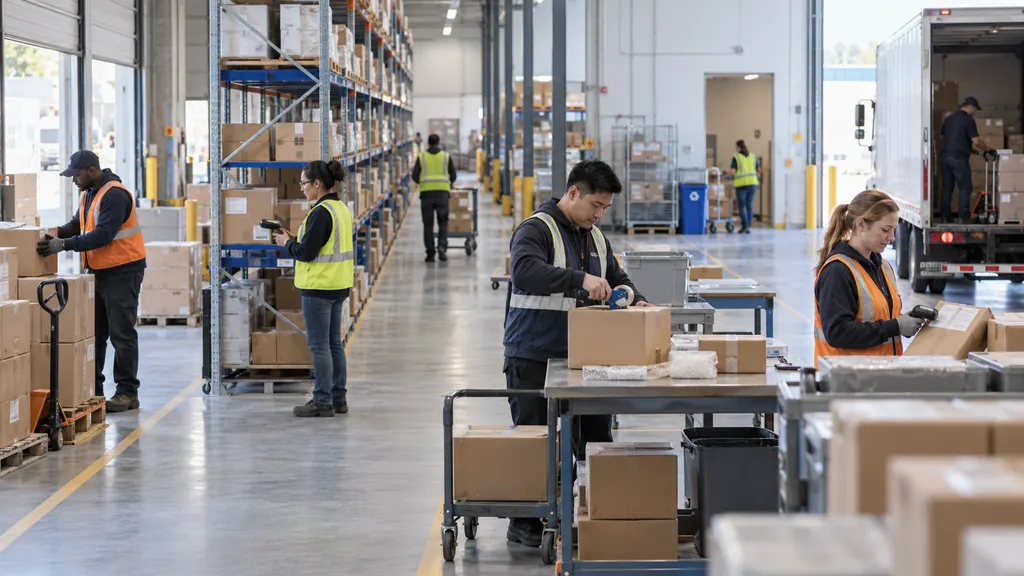
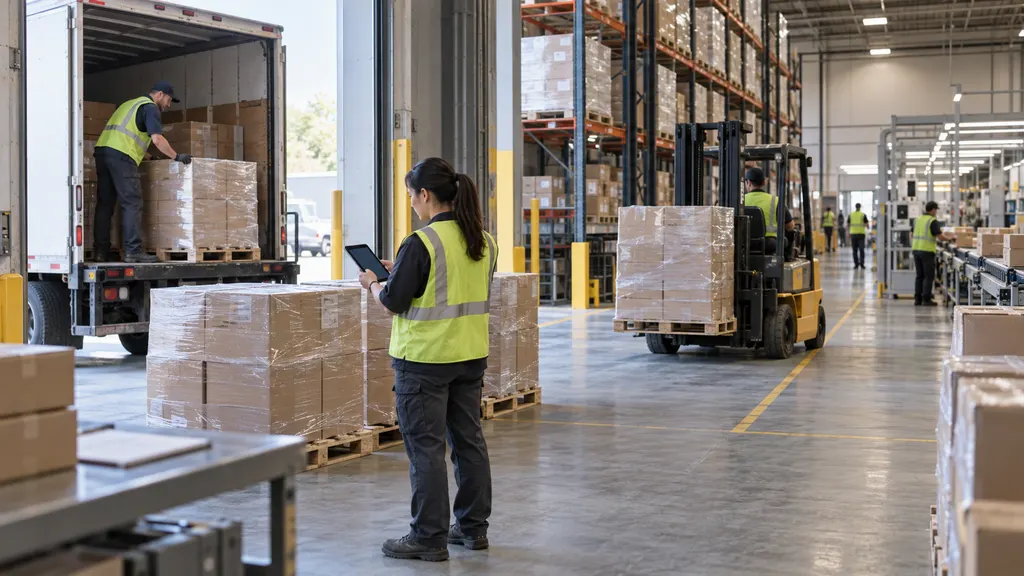
A third-party logistics provider, or 3PL, handles some or all of the physical operations that occur before and after an order is shipped. Depending on the provider and contract, this can include receiving inventory, storage, pick-and-pack, dispatch, returns processing, kitting, and connections to ecommerce or order-management systems. A 3PL is not simply another parcel carrier: it is an outsourced fulfillment operation that may use several carriers.
The commercial model usually has more components than a postage label. Potential charges can include receiving, storage, pick-and-pack, packaging materials, shipping, returns, account management, technology, and special handling. Providers do not all publish the same fee structure, so a direct proposal based on your product and order data is normally more useful than a generic online price comparison.
The practical differences
| Option | Best suited to | Main advantage | Main limitation to test |
|---|---|---|---|
| Australia Post | Businesses sending varied domestic or international parcels | Accessible network and established parcel processes | Whether the selected service meets your speed, size, and destination requirements |
| Courier | Time-sensitive, local, business, or specialised deliveries | Potentially stronger control over pickup and delivery service levels | Route coverage, variable surcharges, and account requirements |
| 3PL fulfillment | Merchants that need outsourced storage and order operations | Less internal handling as order volume and SKU complexity grow | Contract terms, inventory accuracy, implementation, and total fee structure |
When Australia Post is the better starting point
Choose Australia Post first when your team can pack orders reliably and the main requirement is dependable access to a broad delivery network without outsourcing the warehouse. This is particularly reasonable for an early-stage store, a low-volume seller, or a business still learning its order geography.
- You have limited daily order volume and can process dispatch internally.
- Your products fit standard parcel dimensions and do not require special handling.
- Orders go to a wide mix of Australian destinations rather than one concentrated metro area.
- You want to retain control of packing, inserts, inventory, and returns.
- Your current problem is shipping execution, not warehouse capacity.
Before committing, check the actual parcel measurements, not only the product weight. Dimensional rules, packaging choices, delivery areas, signature requirements, and international customs responsibilities can affect the final cost and customer experience. Australia Post’s business shipping information and service pages should be used for current product rules and account-specific details.
When a courier is the better choice
A courier is worth testing when delivery speed or operational control has a measurable commercial value. For example, a retailer with a high concentration of orders in one city may benefit from a metro courier arrangement, while a supplier serving business customers may value scheduled pickups and delivery procedures more than broad consumer parcel access.
The best courier decision is usually lane-specific. Ask for rates and service conditions based on a representative sample of destinations, weights, dimensions, delivery types, and monthly volume. Confirm how the provider handles failed delivery, residential addresses, re-delivery, authority to leave, proof of delivery, claims, and peak-period capacity. A faster stated service is not useful if it is unavailable for a large share of your customers or cannot support your pickup window.
Do not assume that a courier will be cheaper than Australia Post. The result can change with distance, parcel shape, delivery density, account volume, and additional fees. The comparison should use total delivered cost and service performance, not the base transport rate alone.
When a 3PL becomes economically sensible
A 3PL is usually a response to operational complexity rather than a particular order-count threshold. It may be appropriate when staff spend too much time receiving stock, finding items, packing orders, arranging dispatch, or processing returns. It can also help when a business needs warehouse space in a different region or wants fulfillment technology and processes that would be costly to build internally.
The decision should include the value of released staff time, warehouse rent, equipment, packaging procurement, software, inventory errors, and missed sales caused by slow dispatch. Compare those costs with the 3PL’s complete fee schedule. Storage can be charged by pallet, bin, cubic volume, or another unit; pick-and-pack may depend on order lines or items; and special projects such as kitting or relabelling may be priced separately.
A 3PL is not automatically the right answer for a business with a small catalogue. If inventory is simple, order volume is modest, and packing is not disrupting sales or customer service, outsourcing may add contract and integration overhead without solving a serious problem. Conversely, a business can need a 3PL at a lower volume if products are bulky, demand is geographically dispersed, or the team lacks suitable storage and fulfillment space.
A decision process that avoids expensive mistakes
- Describe the shipment profile. Record order lines, parcel dimensions, weights, destination postcodes, residential versus business addresses, international share, returns, and seasonal peaks for a representative period.
- Separate transport from fulfillment. Ask whether the problem is delivery cost, delivery speed, warehouse space, packing labour, inventory accuracy, or all of these. A new carrier will not fix a warehouse bottleneck, and a 3PL will not automatically produce the cheapest last-mile service.
- Compare like with like. Request Australia Post business pricing or account information, courier proposals for the same lanes, and 3PL proposals using the same monthly order and inventory assumptions. Include packaging, surcharges, returns, technology, and implementation.
- Run a controlled test. Measure dispatch time, scan events, delivery outcomes, damage, customer contacts, returns handling, and invoice accuracy. Test difficult destinations and peak-like volume, not only easy metro parcels.
- Review the exit terms. For a 3PL or courier account, confirm minimum commitments, rate-review mechanisms, liability, claims windows, data access, inventory ownership, service credits if applicable, and the process for moving stock or changing carriers.
Where tracking and post-purchase communication fit
Carrier selection does not end when a parcel leaves the warehouse. Customers need a usable way to see shipment progress, and the merchant needs to identify exceptions before they become support tickets. A multi-carrier tracking layer can be useful when orders move through Australia Post, courier networks, and 3PL-arranged carriers.
17TRACK offers consumer tracking, ecommerce order-tracking tools, returns products, and a tracking API through its official product pages. Those tools do not replace a carrier or a 3PL; they can sit above the transport network to consolidate tracking information and support customer or system-facing workflows. Any business considering this layer should confirm the relevant integrations, data fields, event timing, and plan terms for its own carrier mix before implementation.
Bottom line
Start with Australia Post when you need a practical, broadly accessible parcel option and can manage fulfillment yourself. Add or test couriers when specific lanes, delivery promises, or parcel characteristics justify a different service. Move toward a 3PL when storage and order operations are becoming a constraint, and make the decision using a full cost and process comparison rather than shipping rates alone.
For many merchants, the most resilient design is a combination: one primary parcel network, one or more backup or specialist carriers, and a fulfillment process that can switch between them. The right arrangement is the one that meets the promised customer experience while keeping inventory control, operational workload, and total delivered cost visible.
FAQ
Is Australia Post cheaper than a courier?
Not in every situation. The answer depends on parcel size, weight, destination, delivery speed, account terms, pickup arrangements, and surcharges. Compare the final invoiced cost for the same shipment profile rather than comparing a public base rate with a negotiated courier quote.
Does a 3PL replace Australia Post or a courier?
Usually, no. A 3PL generally manages fulfillment activities such as storage, picking, packing, and dispatch, while Australia Post and courier companies perform transportation. A 3PL may select or coordinate one or more carriers on the merchant’s behalf.
What should a small ecommerce business choose first?
If the business can store and pack orders efficiently, starting with a suitable Australia Post business arrangement and testing one relevant courier lane is often more manageable than outsourcing everything immediately. Reassess when fulfillment work, space, or errors begin to affect growth and customer service.
How should I compare 3PL quotes?
Use the same SKU count, inventory level, monthly orders, order-line distribution, packaging requirements, returns volume, destinations, and seasonal assumptions in every request. Ask for each fee separately and confirm implementation, software, insurance or liability terms, minimums, and exit conditions.
Can one business use multiple carriers?
Yes. A business may route shipments by destination, service promise, product type, or cost. It should document the rules, monitor delivery performance, and give customers a consistent tracking and support experience across the carrier mix.
Sources
- Australia Post business shipping — business shipping services and account information.
- Australia Post Parcel Post — domestic parcel service information.
- DHL Supply Chain Australia — example of third-party logistics and supply-chain services.
- Australian Competition and Consumer Commission: Consumer guarantees — information relevant to businesses’ responsibilities when selling goods and services.
- 17TRACK tracking — official tracking service information.
- 17TRACK Tracking API — official API product information for shipment-tracking workflows.