Cross-Border Shipping: a Beginner’S Guide from Order Placement to Delivery
Cross-border shipping moves an order from a seller in one country to a recipient in another, usually through order processing, export handling, international transport, import customs clearance, and local delivery. For buyers, the main tasks are to check the full cost before paying, provide accurate delivery information, follow tracking updates, and respond to legitimate customs or delivery requests. Sellers arrange the shipment and supporting information, but the buyer may still have responsibilities at import.
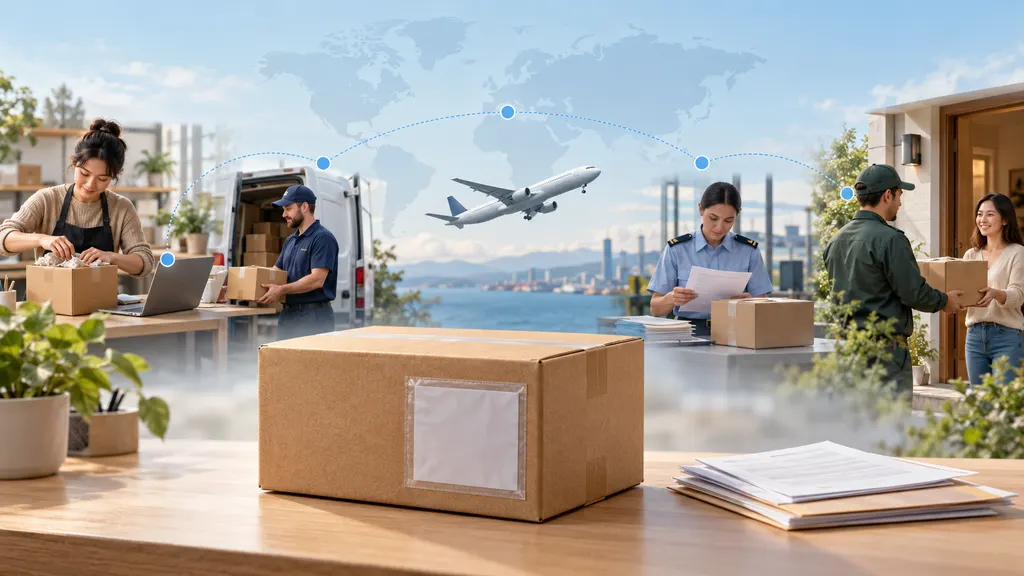
This guide follows an international online purchase from checkout to delivery, explaining who handles each step, where unexpected charges can arise, and what to do when a parcel stops moving.
Before checkout: confirm what you are actually buying
A store’s location, website language, or checkout currency does not necessarily tell you where your order will ship from. Check the dispatch country and destination restrictions, especially if delivery timing or import charges will affect your decision.
Also distinguish the seller’s processing time from the carrier’s transit estimate. An item that is available to order may still need preparation before it enters the delivery network. A shipping estimate that starts at dispatch is not the same as an arrival estimate measured from the date of purchase.
Check the total cost, not just the shipping fee
The amount paid at checkout may or may not include import duties, taxes, and clearance-related fees. Before ordering, look for an explicit explanation of what is included and who will pay any charges assessed at the destination.
- Product price: The price of the goods, including any applicable discount.
- Shipping: The transport charge shown by the seller.
- Import duties and taxes: Charges determined under the destination’s rules. Treatment can depend on the goods, their customs value, origin, and other shipment details.
- Clearance or handling fees: A carrier, postal operator, or broker may charge for customs-related services.
- Currency conversion: Your payment provider may apply its own conversion rate or transaction fee.
There is no single worldwide duty rate or tax-free allowance for online purchases. Check the destination customs authority rather than applying another country’s rules. For U.S.-bound purchases, U.S. Customs and Border Protection provides guidance specifically for internet purchases.
Understand DDP and DAP when they appear
Some sellers use Incoterms rules to describe delivery responsibilities. Under Delivered Duty Paid (DDP), the seller takes responsibility for import clearance and applicable import duties and taxes. Under Delivered at Place (DAP), import clearance and associated import charges generally fall to the buyer. These descriptions summarize only part of each rule; the named destination and agreed terms also matter.
Not every retail checkout formally incorporates an Incoterms rule. If the store simply says “international shipping included,” do not assume import charges are included. Ask for written clarification before paying.
Check product restrictions and return conditions
A product being available online does not guarantee that it can enter your country or travel through the selected service. Batteries, aerosols, perfumes, food, plants, medicines, and animal-derived products can face transport restrictions or import controls. Requirements depend on the product, route, and authorities involved.
For an expensive or difficult-to-return item, confirm the return destination, who pays return postage, and whether the seller offers a process for goods that cannot clear customs. Returning a parcel does not automatically reverse import charges.
Step 1: the seller processes the order
After payment, the seller checks the order, prepares the goods, and creates shipping information. At this stage, your order number and tracking number serve different purposes: the order number identifies the purchase in the store’s system, while the tracking number identifies a shipment in a logistics network.
One order may be split into several parcels, each with its own tracking number. Conversely, a seller may combine multiple items in one package. Check the dispatch confirmation rather than assuming one order always means one shipment.
Before dispatch, review your name, street address, apartment or unit number, postal code, country, and contact information. Some destinations or clearance procedures require additional recipient details. Supply these only through a verified seller, carrier, or official channel.
If the address is wrong, contact the seller immediately. Corrections become harder after handover, and neither the seller nor the carrier can guarantee that a parcel already in transit can be redirected.
Step 2: the parcel enters the shipping network
The seller or fulfillment provider packs the order, attaches the shipping label, and supplies the required customs information. The shipment may then pass through a collection service, postal operator, carrier, or logistics consolidator before international departure.
A status such as “label created” or “shipment information received” usually means electronic shipping details exist. It does not, by itself, confirm that the carrier physically holds the parcel. A later acceptance or collection event is stronger evidence of handover.
What customs information accompanies the goods?
The exact documents depend on the shipment and route. Commercial shipments commonly require a commercial invoice or corresponding electronic data. Postal shipments may use postal customs declarations. The U.S. International Trade Administration describes the commercial invoice as a document used in the customs-clearance process.
Information commonly required includes:
- The sender’s and recipient’s details.
- A specific description of the goods, rather than a vague label such as “accessories.”
- Quantity, value, and currency.
- Country of origin, which is not necessarily the dispatch country.
- A commodity classification code, where required.
The Harmonized System, maintained by the World Customs Organization, provides an international framework for classifying goods. Countries can extend the international six-digit structure for their own tariff purposes, so a code used in one country may need further detail at the destination.
For buyers: Keep your order confirmation and payment receipt in case customs requests proof of the transaction. Do not ask a seller to understate the value or describe a purchase as a gift to avoid charges.
For sellers: Accurate descriptions, values, classifications, and origin information help reduce avoidable clearance questions. A shipping label alone is not a substitute for the customs information required for the shipment.
Step 3: international transport and tracking handoffs
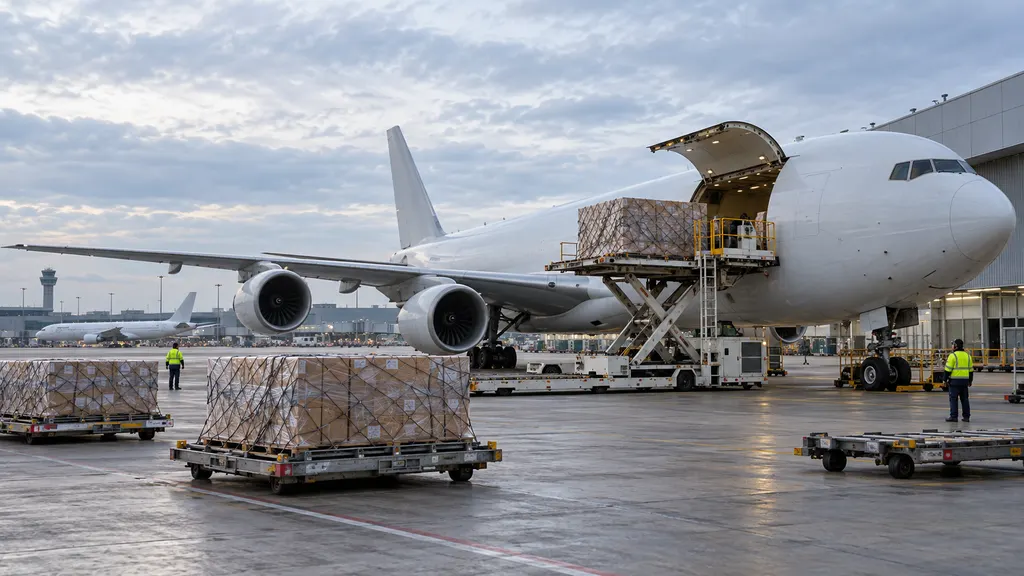
After origin processing and any required export formalities, the parcel travels toward the destination. Depending on the service, it may move by air, road, sea, or a combination of transport modes. Some routes also use intermediate hubs.
International shipping is not always handled by one company from start to finish. A logistics provider may organize the cross-border movement while a different operator handles the final delivery. A local tracking number may appear after this handoff.
This is why tracking can look uneven. One network may show departure while the next has not yet recorded arrival. Not every physical movement produces a public scan, and a gap between updates does not by itself establish that a parcel is lost.
You can check the carrier’s tracking page or use 17TRACK to follow shipment updates across supported carriers. Tracking helps you interpret reported events; it does not control customs decisions, accelerate transport, or replace the seller’s investigation process.
Read tracking events as milestones, not guarantees
| Tracking event | What it generally indicates | What to do |
|---|---|---|
| Information received | Shipping details have been submitted; physical acceptance may still be pending. | Compare with the seller’s stated dispatch window. |
| Departed origin facility | The parcel has left a processing location, not necessarily the country. | Watch for the next transport or arrival event. |
| Customs processing | The shipment is undergoing clearance-related processing. | Check for a specific document or payment request. |
| Released by customs | Customs release has been recorded; sorting and delivery may still remain. | Look for a local carrier handoff. |
| Out for delivery | The parcel has entered a delivery round. | Check access arrangements and any signature requirement. |
Wording varies by provider. Read the event history and location together rather than relying only on a summarized status.
Step 4: import customs clearance
At the destination, customs authorities may assess whether the goods are admissible, whether the declaration is adequate, and whether duties or taxes apply. The carrier, postal operator, or broker may submit the declaration and communicate requests, but the customs authority makes regulatory decisions.
Some shipments are released without any action from the recipient. Others require supporting documents, payment, identity information, permits, or inspection. A customs-related tracking event does not automatically mean something is wrong.
If you receive a request, first establish exactly what is missing and who must provide it. A seller may need to correct an invoice, while a recipient may need to provide purchase evidence or complete a destination-specific requirement.
- Verify the sender: Open the carrier’s official website independently rather than trusting an unexpected payment link.
- Match the shipment: Check that the tracking number and order details correspond to your purchase.
- Request a breakdown: Distinguish government charges from carrier or broker service fees.
- Check the checkout agreement: If import charges were included, contact the seller with the notice before paying again.
- Respond within the stated deadline: Unresolved requests can lead to storage, return, or other action under the applicable rules.
Do not refuse a shipment merely because an unexpected charge appears without first checking the consequences. Refusal does not guarantee a full refund or eliminate return transport costs.
Step 5: local delivery and receipt
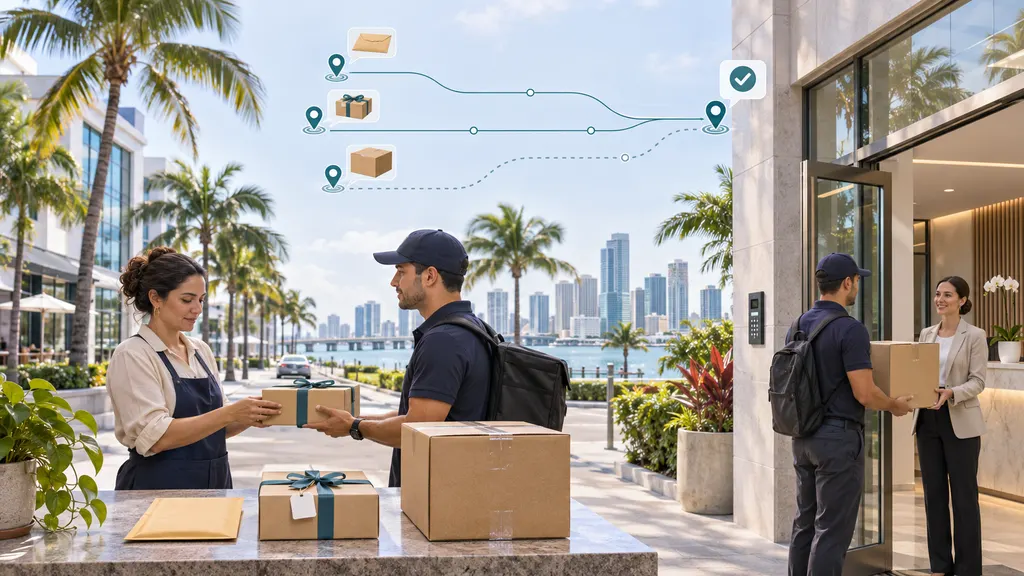
After clearance and destination processing, the parcel enters the local delivery network. Follow the final carrier’s instructions for appointment booking, collection, address clarification, or missed delivery. Delivery options depend on the service purchased and local availability.
When the package arrives, check the label and exterior before discarding anything. If it appears damaged or opened, photograph the packaging and contents and report the issue promptly through the seller’s or carrier’s documented process. Keep the packaging until the issue is resolved.
If tracking says “delivered” but you cannot find the parcel, check the delivery photo or proof of delivery if available, your mailbox, reception area, household members, and any designated safe place. Then contact the local carrier and notify the seller. Do not assume the delivered scan proves that you personally received it.
When to wait, and when to take action
There is no universal delivery time or scan-gap threshold for cross-border parcels. Service level, route, transport capacity, customs processing, holidays, and destination conditions all affect progress. Use the seller’s promised delivery window and the carrier’s service information as your reference points.
- No physical acceptance after the dispatch window: Ask the seller whether the parcel has actually been handed over.
- No updates during international transit: Check for a second tracking number and compare progress with the expected delivery window.
- A document, payment, or address exception: Verify the request and act on the specific requirement rather than simply waiting.
- The promised delivery window has passed: Ask the seller to investigate and explain the next steps.
- A purchase-protection deadline is approaching: Preserve your rights through the marketplace or payment provider’s process, even if a shipment investigation is still open.
For delivery instructions, the local carrier is usually the most practical contact. For non-dispatch, refunds, replacements, or a formal transport investigation, start with the seller. The seller or other party that booked the transport may need to open the carrier claim; the applicable contract and consumer rules determine the available remedies.
FAQ
Does free international shipping include customs charges?
Not necessarily. Free shipping describes the seller’s transport charge, not automatically the destination’s duties, taxes, or clearance fees. Look for a separate statement confirming that import charges are included.
Why did my tracking number change?
A shipment can receive another reference when it moves between logistics providers or enters the destination delivery network. Check the seller’s tracking details and the event history for a local delivery number. Keep both references until delivery is complete.
Can I contact customs to speed up my parcel?
Customs authorities generally cannot provide a guaranteed release date for an individual shipment. Start with the carrier or broker to establish whether anything is required from you. Supplying a requested document may resolve an information gap, but it does not guarantee immediate release.
Will I receive a refund if my order is returned to the seller?
A return-to-sender scan does not itself establish the refund amount or timing. Contact the seller to confirm the reason for return, whether the goods have arrived back, and how the store’s terms and applicable consumer protections apply. Import-charge refunds, where available, may require a separate process.
What should I save until the order is resolved?
Keep the order confirmation, invoice, payment receipt, checkout delivery terms, tracking numbers, charge notices, and correspondence. If the goods arrive damaged or incomplete, also retain photographs and packaging. These records help support clearance questions, seller investigations, and disputes.
Sources
- U.S. Customs and Border Protection: Internet Purchases — destination-specific guidance on importing online purchases into the United States.
- International Trade Administration: Commercial Invoice — the commercial invoice’s role in international shipping and customs clearance.
- World Customs Organization: What Is the Harmonized System? — the international framework for commodity classification.
- International Chamber of Commerce: Incoterms Rules — the framework for allocating delivery responsibilities between trading parties.
- 17TRACK: Package Tracking — the tracking tool referenced in this guide.