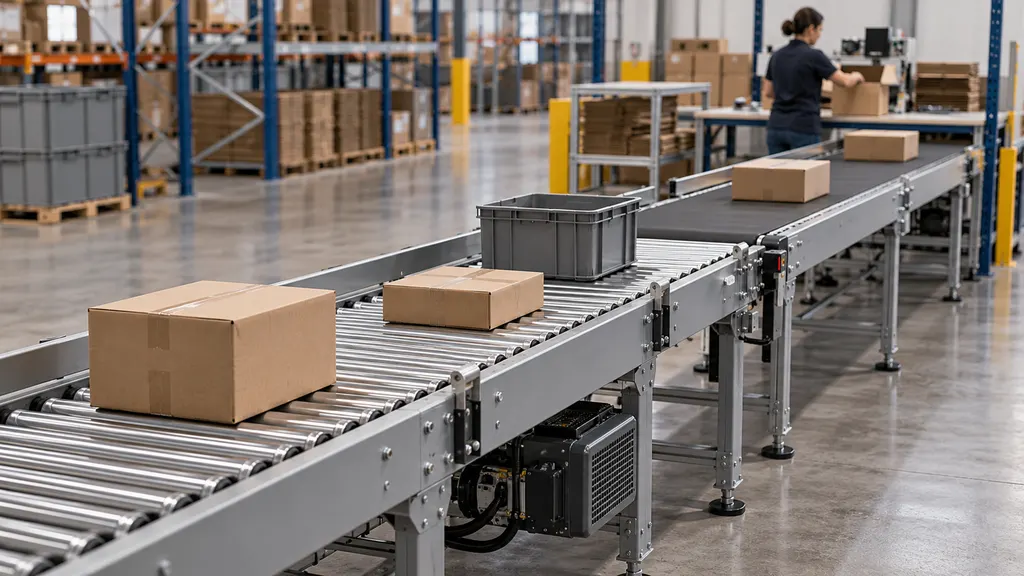
Bonded Goods
What Are Bonded Goods?
Bonded goods are goods held or moved under an authorized customs arrangement in which payment of applicable import duties, and sometimes other import taxes, is suspended until the goods are released for domestic use. In logistics and international trade, the term commonly refers to imported inventory stored in a customs warehouse, also called a bonded warehouse. The goods remain subject to customs control rather than being freely available for domestic distribution.

The word bonded refers to the customs arrangements and, where required, the financial security supporting compliance with them. It does not describe the goods' quality, ownership, packaging, or physical condition. The precise legal terminology, security requirements, and permitted activities depend on the jurisdiction and customs procedure.
Bonded status is therefore a regulatory status, not a product category. The same type of product may be bonded inventory at one stage of its journey and ordinary domestic inventory after the required customs release.
How Bonded Goods Move Through the Supply Chain
Bonded goods sit between international arrival and an authorized customs outcome, such as release for domestic consumption or re-export. Storage does not remove the goods from customs supervision. Customs authorities must be able to establish what entered the arrangement, where it is held, what happened to it, and how its obligations were discharged.
- Arrival and declaration: Goods arrive in the importing territory. The importer or its representative uses the appropriate customs procedure rather than assuming that arrival automatically makes the goods available for sale and delivery.
- Transfer into authorized storage: Goods are placed in a customs warehouse under the required declaration and movement arrangements. Permission to operate an ordinary commercial warehouse is not, by itself, authorization to hold bonded goods.
- Inventory control: The responsible operator maintains records that connect the physical inventory to the relevant customs documentation. These records support identification, stock reconciliation, and customs supervision.
- Permitted handling: Storage and any handling must remain within the activities allowed by the procedure and authorization. Permission to store goods does not automatically permit manufacturing or unrestricted alteration.
- Authorized exit: Goods leave through an appropriate customs procedure. Depending on the circumstances, this may involve domestic release, re-export, transfer to another authorized arrangement, or another legally permitted outcome.
This is a general workflow rather than a universal filing sequence. For example, European Union customs warehousing and United States bonded warehousing operate under different legal frameworks. Their declarations, guarantees, warehouse categories, and withdrawal rules should not be treated as interchangeable.
Duties, Taxes, and Customs Control
Suspension Is Not the Same as Exemption
The central distinction is between postponing a payment obligation and permanently eliminating it. Bonded storage can suspend import duty while goods remain under the procedure. If the goods are later released for domestic consumption, applicable duties and taxes must be addressed under the relevant rules.
If goods are re-exported through a properly completed procedure, domestic import duty may not become payable. However, that outcome depends on compliance with the applicable customs requirements. It should not be presented as an unconditional tax exemption for anything stored in a bonded warehouse.
Different Charges May Follow Different Rules
Customs duty, import value-added tax, excise duty, and warehouse service charges are not the same obligation. A customs warehousing arrangement should not be assumed to suspend every tax or eliminate commercial costs. Storage, handling, documentation, security, and transport charges may still arise under the relevant service agreements.
Excise warehousing is also a distinct concept. Goods such as alcohol may be subject to excise controls as well as customs requirements. Whether a facility or procedure covers one or both systems must be checked rather than inferred from the word bonded.
Control Continues During Storage
Bonded goods are not simply goods for which someone has chosen to pay duty later. Their treatment depends on an authorized legal arrangement. Unauthorized removal, unexplained shortages, or failure to discharge a procedure can have customs consequences, including a potential duty liability. The responsible parties and consequences depend on the applicable legislation and authorization.
Use in Ecommerce and Cross-Border Fulfillment
In cross-border ecommerce, bonded storage can separate the arrival of inventory from its release into a domestic market. This may be relevant when a retailer imports inventory before knowing how much will be sold locally and how much will be shipped elsewhere.
For example, a retailer may place imported accessories in an authorized customs warehouse. It may subsequently arrange domestic release for one portion and re-export another portion. The example illustrates two possible customs outcomes; it does not mean every country allows the same order-level fulfillment model or documentation process.
Warehouse availability and fulfillment availability must be distinguished. A warehouse management system may show that goods are physically in stock, while customs restrictions still prevent their dispatch as ordinary domestic inventory. Order allocation therefore needs to account for customs status as well as quantity, location, and product identity.
A parcel tracking event is not sufficient evidence of customs release. A shipment can arrive at a facility, be unloaded, or be recorded as received without being authorized for domestic distribution. Operational teams should rely on the relevant customs release and warehouse records, not only on transport milestones.
Returns require a separate assessment. Previously released goods do not automatically regain bonded status when a customer returns them. Any relief, re-entry, or subsequent warehousing treatment depends on the applicable procedure and supporting evidence.
Related Terms and Important Distinctions
| Term | Meaning | Distinction from bonded goods |
|---|---|---|
| Bonded warehouse | An authorized facility for holding goods under a customs warehousing arrangement. | The warehouse is the authorized place; bonded goods are the inventory subject to the arrangement. |
| Customs bond or guarantee | Financial security used to support customs obligations where required. | It supports compliance or payment obligations; it is not the inventory itself. |
| Goods in customs transit | Goods moving under a customs transit procedure. | Transit concerns an authorized movement rather than storage. Goods may move under transit before entering a warehouse. |
| Temporary storage | A customs-controlled status for goods awaiting placement under a customs procedure or another permitted outcome. | It is not interchangeable with customs warehousing and may have different conditions and time limits. |
| Free zone | A designated area subject to a particular customs framework. | It is not simply another name for an individual bonded warehouse; its legal treatment depends on local law. |
| Goods released for domestic consumption | Goods that have completed the applicable customs process for entry into the domestic market. | They no longer have the same duty-suspended warehousing status, although other regulatory obligations can remain. |
The expressions bonded goods and goods under customs control also differ in scope. Customs control can apply in situations other than bonded warehousing. A customs hold, inspection, or unresolved declaration does not by itself establish that goods have been entered into a bonded warehousing procedure.
Operational Checks Before Handling Bonded Inventory
The following checks help establish what can lawfully happen to a particular consignment. They are practical questions, not a substitute for the governing authorization or customs rules.
- Confirm the procedure: Identify the actual customs procedure and declaration reference. Do not rely solely on a supplier's description of the goods as bonded.
- Verify the location: Check that the facility and storage location are covered by the necessary authorization for the intended goods and activities.
- Identify responsibilities: Establish which parties are responsible for the procedure, warehouse records, declarations, and any required security.
- Check permitted handling: Confirm whether proposed inspection, repacking, labeling, or other operations are allowed. Do not assume permission for one activity covers another.
- Reconcile inventory: Maintain traceability between receipts, quantities held, authorized handling, and withdrawals. Investigate discrepancies before treating the stock as available.
- Confirm the exit route: Determine whether the goods will enter the domestic market, be re-exported, or move under another procedure, and obtain the required documentation.
- Check timing and product restrictions: Review any applicable storage limits, product-specific requirements, and conditions attached to the authorization.
These checks are especially important when commercial ownership and customs responsibility do not rest with the same party. A purchase, sale, or inventory transfer does not by itself demonstrate that customs obligations have been discharged.
Common Misunderstandings
“Bonded means duty-free.” Bonded status normally concerns suspension under a controlled procedure. The final duty treatment depends on the goods' authorized destination and the applicable rules.
“Anything in a bonded warehouse is bonded.” Physical location alone does not establish customs status. The relevant declarations, authorizations, and inventory records determine how particular goods are treated.
“Bonded storage allows any processing activity.” Storage authorization does not automatically authorize manufacturing. Some handling may be permitted, while other operations require a different procedure or additional approval.
“Bonded goods can be delivered as soon as an order is paid.” Customer payment is a commercial event. It does not replace customs release or authorize removal from customs supervision.
QA
Are bonded goods imported goods?
In their common logistics meaning, they are imported goods held under a customs arrangement before domestic release. However, specific warehousing frameworks can also accommodate other goods in defined circumstances, so the local legal category matters.
Can bonded goods be sold while they are in storage?
A commercial sale may occur while goods remain in storage, subject to applicable rules. The sale does not itself authorize removal, settle customs liabilities, or change the goods' customs status.
Can bonded goods be shipped directly to an ecommerce customer?
That depends on the destination and authorized fulfillment procedure. Domestic delivery requires the applicable customs release; an overseas dispatch must follow the relevant export or re-export requirements.
How long can goods remain bonded?
There is no universal period. Storage duration depends on the jurisdiction, procedure, goods, and authorization. Rules from one customs territory should not be applied to another without verification.
Sources
- European Union — Regulation (EU) No 952/2013 establishing the Union Customs Code. Supports the EU customs framework, including release for free circulation, transit, storage procedures, customs warehousing, and permitted handling.
- United States Electronic Code of Federal Regulations — 19 CFR Part 19. Supports the distinction between authorized bonded warehouses, warehouse operations, and customs control requirements.
- United States Electronic Code of Federal Regulations — 19 CFR Part 144. Supports the US framework for entry into bonded warehouses, warehouse transactions, and withdrawal of goods.