HP Logistics Tracking
Please enter the HP Logistics tracking number to check the latest shipping status.
About HP Logistics
HP Logistics is the carrier identity supplied for this tracking page. The official starting website is HP Logistics official website. Use the tracking number shown by the sender, marketplace, shipping label, or HP Logistics shipment notice; do not substitute an order number unless the carrier specifically identifies it as a tracking identifier.
| Verified field | Current page guidance |
|---|---|
| Official website | https://www.hplogistics.com.cn/ |
| Carrier identity | HP Logistics is the exact display name used on this page and should be selected when a tracking platform asks for a carrier. |
| Tracking scope | Available events depend on the identifier, service, origin, destination, and any transport or last-mile handoff. |
Carrier Entity Relationships
| Entity | Relationship to HP Logistics |
|---|---|
| HP Logistics | HP Logistics is the carrier name that should be matched against the shipment record supplied by the merchant or sender. |
| Official website | The supplied official website is the primary place to check carrier-specific shipment information and contact routes. |
| 17TRACK | 17TRACK is an independent tracking platform that aggregates available carrier events; 17TRACK does not transport the parcel or decide claims. |
Quick Answer
Enter the HP Logistics tracking number supplied by the sender into the official HP Logistics website or into 17TRACK. If no result appears, first check every character, remove accidental spaces, confirm that the number is a tracking number rather than an order or reference number, and ask the seller whether the label has been physically handed over.
How to Track HP Logistics Packages
The most reliable workflow is to use the identifier printed on the shipping label or provided in the dispatch notice, then compare the result with the merchant’s order record.
| Route | Steps |
|---|---|
| Official HP Logistics route | Open the official HP Logistics website, locate its tracking entry, paste the shipment identifier, submit it, and save the latest event and any delivery exception. |
| 17TRACK route | Open 17TRACK, enter the identifier, allow carrier recognition or select HP Logistics when offered, and compare the event timeline with the seller’s dispatch information. |
| No usable number | Ask the sender or marketplace for the carrier tracking number. An order number, payment reference, product SKU, or invoice number usually cannot replace it. |
Tracking Number Formats and Examples
A HP Logistics shipment identifier should be copied exactly from the sender’s dispatch notice or label. A visible number may be issued by HP Logistics, an origin partner, a marketplace, or a destination last-mile operator, so a matching result does not by itself prove who issued the identifier.
Tracking Number Format
| Identifier family | Normalized pattern and use |
|---|---|
| Carrier shipment identifier | Use the exact letters and digits supplied by HP Logistics or the sender; a public universal pattern should not be inferred from a prefix alone. |
| Origin or partner identifier | An upstream logistics, postal, or marketplace identifier may remain visible during a handoff and may be the number shown to the buyer. |
| Last-mile identifier | A destination delivery operator may assign a separate local number; the merchant or tracking platform may link it to the original shipment. |
| Order or reference number | This identifies a purchase or business record rather than necessarily identifying a physical parcel. |
For a redacted example, use a form such as HP######## only as a placeholder. Do not test a real person’s number publicly. If the official or 17TRACK page rejects a format, request the shipment identifier from the sender rather than guessing a service from the first characters.
Tracking Statuses and Meanings
Tracking wording varies by data source. The status should be read as the latest reported event, not as proof that every physical movement was scanned.
Status Quick Lookup
| Status | Meaning and next action |
|---|---|
| Label created / awaiting item | Shipment data may exist before physical acceptance. The sender should confirm handover; the recipient should contact the seller if dispatch timing has passed. |
| Accepted / received | A facility or carrier has recorded possession. Normal sorting or transport follows. |
| In transit | The latest scan indicates movement between facilities. Wait for the next event unless the seller’s promised delivery window has passed. |
| Customs or handoff | The shipment may be undergoing import processing or transfer to another operator. Customs arrival is not the same as customs release. |
| Out for delivery | The reported delivery network has assigned the item for a delivery attempt. Keep access instructions and contact details available. |
| Delivered | A delivery scan was recorded. Check the stated location, household members, reception desk, neighbors, and proof of delivery before escalating. |
| Exception or failed attempt | A delivery, address, transport, or documentation issue requires review. The recipient should follow the local operator’s instructions; the sender may need to open an inquiry. |
| Return to sender | The shipment is moving back or has been routed back. The merchant and sender should determine the reason and next shipment option. |
Services and Delivery Times
A service-specific catalog and delivery promise should be taken from the shipment quotation, label, or current HP Logistics documentation. A tracking page alone cannot establish a guaranteed delivery date.
Service Comparison
| Service record | How to interpret it |
|---|---|
| Named service on label or invoice | Use the exact service name shown by the sender; coverage, tracking depth, size limits, protection, and restrictions are service-specific. |
| Economy or cross-border movement | Events may be less frequent and delivery depends on export processing, line-haul capacity, customs, and destination handoff. |
Delivery Time
| Timing field | Practical interpretation |
|---|---|
| Estimated delivery window | A planning estimate affected by origin, destination, service selection, weekends, holidays, weather, capacity, address quality, customs, and partner handoff. |
| Service standard or guarantee | Only the applicable shipping contract or current official service terms can determine whether a delivery commitment is guaranteed. |
Destination Country Delivery Times
| Destination | Planning guidance |
|---|---|
| United States, Canada, Mexico | Use the seller’s quoted service window and monitor destination customs and last-mile scans; country-specific timing is shipment-dependent. |
| United Kingdom and European destinations | Allow for export, import documentation, taxes where applicable, customs processing, and local delivery handoff. |
| Australia, New Zealand, Japan, South Korea, Singapore and Southeast Asia | Review the shipment’s service terms and destination scan history; island, remote-area, customs, and partner processing can affect the window. |
| Other destinations | Do not apply a generic country average. The merchant or shipping contract should provide the applicable estimate for the actual origin, service, and destination. |
The destination table is intentionally limited to decision-safe guidance: a country-level average without a verified HP Logistics service, origin, and handoff route can mislead buyers. Customs and carrier transfers can create periods without a new public scan.
Common Tracking Problems and Solutions
Start with the latest event and identify who physically controls the shipment. The seller or shipper usually has more authority than the recipient to correct dispatch data or begin a formal transport inquiry.
Problem & Solution
| Problem or status | First action |
|---|---|
| Invalid number | Copy the identifier again, remove accidental punctuation, and ask the sender to distinguish tracking number from order number. |
| No tracking events | Confirm label creation and physical handover with the sender; a pre-advice record may precede the first acceptance scan. |
| Long gap or stuck in transit | Check the quoted delivery window, customs instructions, and destination operator. The seller should escalate through the shipping account when the applicable window has passed. |
| Shipping partner handoff | Treat the event as a transfer stage, not automatically as final-carrier acceptance; wait for the receiving scan or ask the seller which operator has custody. |
| Address error or failed delivery | Contact the destination delivery operator promptly if its notice provides an action; the sender should request corrections where recipient changes are restricted. |
| Delivered but not received | Check the delivery location, household members, reception desk, neighbors, and proof of delivery; then contact the local delivery operator and seller. |
| Lost, damaged, or returned | Keep packaging and photographs, notify the seller, and have the eligible shipper start the carrier inquiry or claim under the applicable service terms. |
| Customs delay | Read the destination notice, provide requested documents or payment through an official channel, and avoid sending sensitive information to an unverified contact. |
International Shipping, Customs and Carrier Handoffs
For an international HP Logistics shipment, the visible tracking timeline may combine events from the origin operator, transport network, customs authorities, HP Logistics, and the destination last-mile operator. Arrival in a country or exchange facility does not by itself prove customs release.
International Flow
| Stage | What the customer should understand |
|---|---|
| Origin booking and acceptance | The sender creates shipment data and hands over the parcel; a booking record is not necessarily a physical acceptance scan. |
| Export processing and security | The shipment is sorted and prepared for international transport; export checks or missing documents can delay departure. |
| Line-haul movement | The parcel travels between gateways. Scan gaps are possible while it is in transport or awaiting the next facility event. |
| Import customs | Authorities or their appointed agents review the declaration. Taxes, duties, documents, prohibited goods, or valuation questions may require action. |
| Partner handoff and last mile | A destination operator may receive the parcel and perform delivery. A new local number can appear, or the original identifier may continue. |
| Delivery, pickup, or return | The destination operator records delivery, a failed attempt, pickup availability, or return routing according to local rules. |
Customer Service
Use the official HP Logistics website as the starting point for current tracking and contact routes. The correct contact depends on whether the issue concerns shipment creation, international customs, destination delivery, or a purchase refund.
Customer Service
| Channel | Best use and preparation |
|---|---|
| Official website | HP Logistics official website; use the current tracking or contact route shown there. |
| Sender or marketplace | Best for dispatch confirmation, incorrect shipping data, merchant refunds, and claim coordination. Prepare the order record, tracking number, purchase date, and delivery address. |
| Destination delivery operator | Best for delivery scans, attempted delivery, pickup, local address instructions, and proof of delivery after handoff. Prepare the latest event and local notice. |
When escalating, provide the tracking number, ship date, origin and destination, service name, latest scan, recipient address, item description, declared value, packaging details, and clear damage photographs where relevant.
FAQ
Basic FAQs
Enter the tracking number on the official HP Logistics website or track it with 17TRACK to view available shipment events.
Look in the seller’s dispatch email, marketplace shipment page, shipping label, or receipt; ask the sender if the number is missing.
Use the exact identifier supplied for the shipment because formats can depend on the service or partner; do not identify a service from a prefix alone.
The label may have been created before physical handover, or the first scan may not yet be available; confirm dispatch with the sender.
Transport, facility processing, customs, weekends, and handoffs can create scan gaps; compare the latest event with the quoted delivery window before escalating.
The applicable estimate depends on the origin, destination, service, customs, and last-mile operator; use the seller’s shipment-specific quotation rather than a generic average.
Read the delivery notice, follow any official pickup or redelivery instruction, and contact the destination operator or seller promptly.
Check the delivery location, household members, reception desk, neighbors, and proof of delivery, then contact the local delivery operator and seller.
Notify the seller, preserve the packaging and contents, collect photographs and value evidence, and have the eligible shipper use the applicable carrier inquiry or claim process.
Start at the official HP Logistics website and use its current contact route; prepare the tracking number, shipment dates, addresses, and latest event.
Expert FAQs
No; label creation or electronic pre-advice can occur before a facility records possession, so the acceptance event is the stronger indication of physical handover.
Yes; a cross-border or last-mile shipment may expose an upstream or destination identifier, and the visible number does not necessarily identify the party that issued it.
No; arrival indicates processing has reached a customs stage, while release requires the relevant authority or appointed agent to complete its review.
A parcel may be moving between facilities, awaiting a flight or handoff, undergoing customs processing, or traveling through a network that does not publish every physical event.
No; 17TRACK displays available tracking data, while address changes, redelivery, pickup, inquiries, claims, and refunds must be handled by the responsible carrier, sender, or seller.
Tracking API
// Carrier-specific public API endpoint and credentials:
 // Current public official HP Logistics tracking API documentation is not established in the available evidence.

 // 17TRACK API
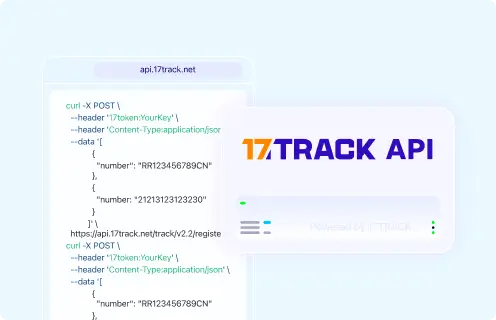
 POST https://api.17track.net/track/v2.4/register
 Headers:
   17token: YourKey
   Content-Type: application/json

 Body:
 [
   {
     "number": "TRACKING_NUMBER",
     "carrier": "CARRIER_CODE"
   }
 ]

 // Use the current 17TRACK carrier directory to obtain the carrier code.
 // Do not replace CARRIER_CODE with an unverified value.
Sources & References
- HP Logistics official website. HP Logistics
- 17TRACK tracking platform. 17TRACK
- 17TRACK API documentation. 17TRACK
17TRACK is an independent tracking platform and is not affiliated with HP Logistics.
Track your package
Global express parcel tracking service