COPE Sensitive Freight Tracking
Please enter the COPE Sensitive Freight tracking number to check the latest shipping status.
About COPE Sensitive Freight
COPE Sensitive Freight is an Australian specialist freight carrier providing end-to-end transport, warehousing, project management, installation and delivery coordination for sensitive and high-value equipment. Its network covers every Australian state, capital cities and major regional areas, and the company regularly facilitates, manages and executes movements to New Zealand.
| Fact | Verified information |
|---|---|
| Official name | COPE Sensitive Freight |
| Official website | https://www.cope.com.au/ |
| Carrier type | Australian specialist freight carrier with transport, warehousing, project and installation services. |
| Primary region | Australia, including capital cities and major regional centres; New Zealand movements are also facilitated. |
| Tracking page | Consignment Tracking on the official website |
| Network | Fourteen depots, more than 350 trucks and trailers, and warehouses with security and CCTV. |
Carrier Entity Relationships
| Entity | Relationship |
|---|---|
| COPE Sensitive Freight | COPE Sensitive Freight is the carrier and logistics provider responsible for planned Australian sensitive-freight movements. |
| Transport services | Transport, warehousing, freight consolidation, project delivery and returns are services provided within COPE Sensitive Freight solutions. |
| Customer reporting system | COPE Sensitive Freight provides customer access to a locally developed transport and warehouse management system through an ERP interface or the web. |
| Depots and warehouses | COPE Sensitive Freight depots and secure warehouses are operational facilities used for storage, staging, preparation and distribution. |
| 17TRACK | 17TRACK is an independent tracking platform; it does not operate COPE Sensitive Freight transport, change delivery instructions or decide claims. |
Quick Answer
Use the consignment or tracking identifier supplied by the sender, marketplace or COPE Sensitive Freight on the official COPE Sensitive Freight website. You can also enter the identifier into 17TRACK when the carrier is recognised. If no event appears, first check that the identifier is a consignment number rather than an order or invoice number, confirm every character, and ask the sender whether the freight has been physically handed to COPE Sensitive Freight.
How to Track COPE Sensitive Freight Packages
| Route | Steps |
|---|---|
| Official COPE Sensitive Freight route | Open the official website, choose Consignment Tracking, enter the consignment identifier and submit it. If the identifier is unavailable, contact the local COPE office selected through Contact us & Transit Times. |
| 17TRACK route | Enter the identifier in 17TRACK, review the detected carrier and compare the latest event with the sender’s dispatch information. |
| Business route | Use the COPE customer ERP or web access where enabled for the account. Ask the account or project team about integration requirements. |
A tracking number identifies transport activity; an order number identifies a purchase; a reference number may be an internal customer identifier; a label number belongs to a shipping label; and a delivery notice number may identify a delivery communication. The sender is normally the best source when a number has not activated or when the wrong carrier was selected.
Tracking Number Formats and Examples
COPE Sensitive Freight’s public website describes a Consignment Tracking function but does not publish a universal public length, prefix or checksum rule. The identifier may therefore be account- or consignment-specific. Use the complete identifier exactly as supplied and do not infer the service from a prefix alone.
Tracking Number Format
| Identifier family | Normalized pattern | ||||||||||
|---|---|---|---|---|---|---|---|---|---|---|---|
| COPE consignment identifier | Use the exact account-issued alphanumeric or numeric value; a public fixed pattern is not stated on the supplied official pages. | ||||||||||
View all details for COPE consignment identifiers
| |||||||||||
| Customer reference | Use only when COPE or the sender confirms that the reference is searchable; no public conversion rule is stated. | ||||||||||
View all details for customer references
| |||||||||||
Tracking Statuses and Meanings
| Status or stage | Meaning |
|---|---|
| Consignment created | A record or transport instruction may exist; this does not by itself prove that COPE Sensitive Freight has physically received the freight. |
| Received or collected | A COPE event indicates that the freight has entered the carrier’s operational process. |
| In transit | The freight is moving between facilities, depots or delivery points. |
| At depot or warehouse | The freight is being staged, stored, prepared or allocated for the next movement. |
| Out for delivery | The delivery leg has been assigned or dispatched; access, site readiness and receiver availability can still affect completion. |
| Delivered or completed | The recorded delivery activity is complete. If the freight cannot be located, check the receiving point and ask the sender or local COPE office for delivery evidence. |
| Exception or held | An operational issue requires review, such as access, address, scheduling, damage or site-readiness information. |
| Returned | The freight is moving back or has been directed back; the sender should confirm the reason and next instruction. |
Services and Delivery Times
COPE Sensitive Freight uses tailored solutions rather than a publicly listed parcel-service menu. Delivery timing is planned by origin, destination, freight characteristics, access requirements and the project or customer schedule. The official Contact us & Transit Times page provides an origin-and-destination estimate tool.
Service Comparison
| Service | Best use |
|---|---|
| Tailgate delivery | High-value or sensitive freight requiring planned handling and delivery to commercial or residential sites. |
| Project delivery | Complex movements requiring planning, site inspections, coordination, installation, commissioning or handover. |
| Warehousing and staging | Short- or long-term storage, inventory control, preparation, packing, consolidation and staged distribution. |
| Returns and asset movements | Equipment relocation, returns, replacement programs and managed reverse logistics. |
Delivery Time
| Movement | Published timing guidance |
|---|---|
| Australian depot-to-depot or site delivery | Use the official origin-and-destination transit-time estimator; timing is route and freight specific rather than a universal service promise. |
| Project or installation delivery | A customer-specific quote, timeline and project plan determine the expected schedule. |
| New Zealand movement | Timing depends on the movement plan and cross-border requirements; obtain a route-specific estimate. |
Destination Country Delivery Times
| Destination | Planning guidance |
|---|---|
| Australia | Use the COPE origin-and-destination transit-time estimator and confirm the delivery site requirements. |
| New Zealand | COPE regularly facilitates New Zealand movements; request a route-specific estimate and confirm cross-border documentation. |
The public evidence does not support a reliable country-by-country average-day table for additional destinations. Weather, public holidays, depot schedules, access restrictions, freight dimensions, site readiness, subcontractor coordination and cross-border processing can change the planned window.
Common Tracking Problems and Solutions
Problem & Solution
| Problem or status | First action |
|---|---|
| Invalid number | Remove accidental spaces only if the official tool requires it, recheck every character and ask the sender whether the number is a consignment identifier. |
| No tracking event | Confirm that the freight has been collected or accepted; a created record is not proof of physical handover. |
| No update for several days | Check the last depot or transport event, then contact the sender or local COPE office with the consignment number and delivery details. |
| Delivery exception or failed delivery | Check address, site access, receiver availability and any delivery appointment; the sender or account contact should coordinate a revised instruction. |
| Delivered but not received | Check the nominated receiving area, loading dock, security desk, household members, neighbours and site staff; then request delivery evidence through the sender or COPE office. |
| Lost or damaged freight | Photograph the packaging and contents, preserve all packaging, record the last scan and notify the sender or account contact promptly for the applicable investigation or claim process. |
| Return movement | Ask the sender why the return was initiated and confirm whether a new delivery instruction or site appointment is required. |
International Shipping, Customs and Carrier Handoffs
COPE Sensitive Freight is primarily described as an Australian freight specialist. Its official site confirms that it regularly facilitates, manages and executes New Zealand movements, but it does not publish a universal international parcel network or destination-post handoff model.
International Flow
| Stage | What to confirm |
|---|---|
| Origin planning | Confirm the shipper, route, freight description, documents, collection point and receiving site. |
| Export or border processing | The responsible party and required documentation depend on the agreed movement; a tracking event alone does not prove customs release. |
| Line-haul or partner movement | A partner or border operator may hold the freight while the COPE consignment remains the customer-facing reference. |
| Destination delivery | Confirm the receiving party, site access, appointment and any local delivery requirement with the sender or project team. |
Delivery Management and Post-shipment Options
COPE Sensitive Freight’s published capabilities include pre-advice and notifications, site preparation, loading and unloading, subcontractor management, returns, project coordination and customer reporting. Specific changes after dispatch should be requested through the sender, account manager or local COPE office.
| Option | Who should request it |
|---|---|
| Delivery appointment or site preparation | The business customer, sender or project team should provide access, timing and site information before dispatch. |
| Address or receiver correction | The sender or account contact should submit the corrected instruction; success depends on the shipment stage. |
| Return or rescheduled delivery | The sender or project team should coordinate the new instruction and receiving requirements. |
Lost, Damaged, Claims, Insurance and Refunds
| Process | Use when |
|---|---|
| Tracking inquiry | Use when an event, delivery status or next operational step needs clarification. |
| Damage or loss investigation | Use when freight is damaged, missing or delivered with missing contents; preserve packaging and evidence. |
| Commercial refund or replacement | The seller, sender or contracting customer handles the commercial remedy; 17TRACK cannot approve it. |
| Insurance or liability claim | The contracting customer should follow the applicable COPE terms and provide the consignment record, value evidence, photographs and packaging. |
The supplied official pages do not publish a single filing deadline or universal claim form. Contact the local COPE office or contracting account team promptly and ask which terms apply to the service and customer account.
Shipping Restrictions and Special Handling
| Category | Operational consideration |
|---|---|
| High-value equipment | COPE Sensitive Freight plans handling, security, storage, access and site delivery around the equipment requirements. |
| Heavy, large or technical freight | Confirm dimensions, weight, handling equipment, access points, lifting needs and site conditions before booking. |
| Regulated or hazardous goods | Obtain approval and provide accurate documentation before transport; the public pages do not provide a complete prohibited-goods schedule. |
| Sensitive data-bearing equipment | COPE describes secure data wiping and asset destruction services for applicable technology and legacy equipment projects. |
Customer Service
| Channel | Best use |
|---|---|
| Consignment Tracking | Use the official website to access the tracking function and submit the consignment identifier. |
| Contact us & Transit Times | Select a COPE depot for local contact details or request an origin-and-destination transit estimate. |
| Local COPE office | Best for delivery exceptions, site access, appointment coordination, freight damage and status questions. |
| Account or project team | Best for business reporting, ERP access, project schedules, returns and multi-site distribution. |
Prepare the consignment identifier, sender and receiver details, origin and destination, collection date, service or project name, latest scan, site-access information, photographs and value documentation where relevant. Published phone numbers, email addresses and opening hours should be taken from the selected depot’s current official contact details.
Ecommerce and Business Tracking
Business customers can use COPE Sensitive Freight’s customer-facing ERP or web access where enabled, while project teams can use reporting and KPI reviews to manage transport, inventory and delivery activity. COPE states that integration requirements should be discussed with the company.
Developer/API Comparison
| Option | Provider | ||||||||
|---|---|---|---|---|---|---|---|---|---|
| Customer ERP or web access | COPE Sensitive Freight | ||||||||
View all details for COPE customer access
| |||||||||
| Multi-carrier tracking API | 17TRACK | ||||||||
View all details for the 17TRACK API
| |||||||||
FAQ
Basic FAQs
Enter the consignment identifier in the official COPE Sensitive Freight Consignment Tracking function or try 17TRACK to view available events.
Look in the sender’s dispatch advice, freight documentation, customer portal or project communication and ask the sender if the number is missing.
COPE Sensitive Freight does not publish one universal public format, so use the complete account-issued identifier rather than guessing from a prefix.
The freight may be awaiting collection, moving between facilities, being staged or awaiting the next scan; confirm the last event with the sender or local COPE office.
Use the official origin-and-destination transit-time estimator because timing depends on route, freight, site access and the agreed service plan.
Check the address, access conditions and receiver availability, then ask the sender or COPE office to coordinate the next delivery instruction.
Check the nominated receiving point, loading dock, security desk, household members and neighbours, then request delivery evidence through the sender or local office.
Keep the packaging, photograph the damage, record the latest event and contact the sender or contracting account team promptly.
The official site confirms regular New Zealand movements; ask COPE for the route-specific plan and documentation for other international requirements.
Use the official Contact us & Transit Times page, select the relevant depot and prepare the consignment identifier and delivery details.
Expert FAQs
No; a created record or pre-advice can exist before physical collection, so look for a collection or received event.
COPE provides warehousing, inventory control, packing, project management, site preparation, installation, commissioning, handover and returns for applicable projects.
Yes, its published capabilities include site inspections, access planning, equipment handling, positioning, installation and project coordination.
COPE provides customer access through an ERP interface or web-based transport and warehouse management system where enabled and asks customers to discuss integration requirements.
The supplied official pages describe ERP and web access but do not publish a public API endpoint; request current integration details from COPE.
It can indicate storage, staging, preparation, consolidation or allocation for the next movement, so the next scan should be interpreted with the project schedule.
The sender, business customer or authorised account contact should request the change because eligibility depends on the freight’s operational stage.
No; 17TRACK can display available events but cannot redirect freight, alter a project schedule or approve a claim.
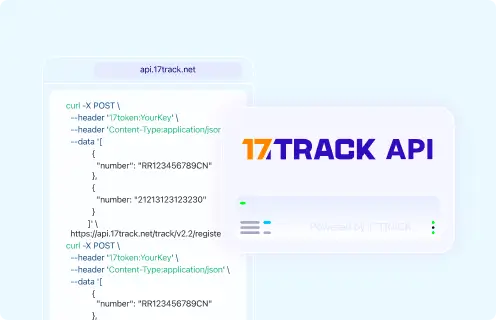
Tracking API
// 1. COPE Sensitive Freight official API:
// Current public official tracking API endpoint and authentication are not confirmed
// in the supplied official COPE Sensitive Freight pages.
// Contact COPE about ERP or web integration requirements.

// 2. 17TRACK API
// Confirm the current carrier code in the 17TRACK documentation before production use.
POST https://api.17track.net/track/v2.4/register
17token: YourKey
Content-Type: application/json

[
  {
    "number": "TRACKING_NUMBER",
    "carrier": "CARRIER_CODE"
  }
]
Sources & References
- COPE Sensitive Freight — Official website and Consignment Tracking entry. COPE Sensitive Freight
- What we do — Transport, warehousing, project delivery and distribution services. COPE Sensitive Freight
- How we do it — Network, systems, fleet and service approach. COPE Sensitive Freight
- Contact us & Transit Times — Depot contacts and route estimate tool. COPE Sensitive Freight
- IT, Power, Telcos & Tech — Technical equipment logistics and tracking context. COPE Sensitive Freight
- Print — Equipment transport, storage and installation services. COPE Sensitive Freight
- Gaming — Gaming equipment transport, storage and returns. COPE Sensitive Freight
- 17TRACK API Documentation. 17TRACK
17TRACK is an independent tracking platform and is not affiliated with COPE Sensitive Freight.
Track your package
Global express parcel tracking service