Waste Material Logistics
What Is Waste Material Logistics?
Waste material logistics is the planning and control of how discarded, surplus, damaged, returned, or recoverable materials are collected, identified, stored, transported, processed, recycled, reused, treated, or disposed of. It applies to the movement of materials after they are no longer wanted for their original purpose, while also covering the information, documentation, handling controls, and compliance checks needed to move them safely and lawfully.
In logistics and supply chain management, waste material logistics is closely related to reverse logistics, but the terms are not identical. Reverse logistics covers the movement of products, packaging, or materials from a customer or downstream location back toward a seller, warehouse, repair facility, manufacturer, or other point of recovery. Waste material logistics focuses on materials that are classified, or may need to be classified, as waste under the applicable legal and operational framework. A returned product may enter reverse logistics without being waste if it can be resold or repaired. It may become waste when the holder discards it or intends to discard it.
The meaning of “waste” can differ between jurisdictions and regulatory systems. A material that is a usable product, by-product, recyclable input, or waste in one context may receive a different classification in another context. For that reason, waste material logistics requires more than arranging transport. It requires a reliable decision about the material’s status, composition, condition, destination, and permitted treatment.
Waste Material Logistics in the Supply Chain
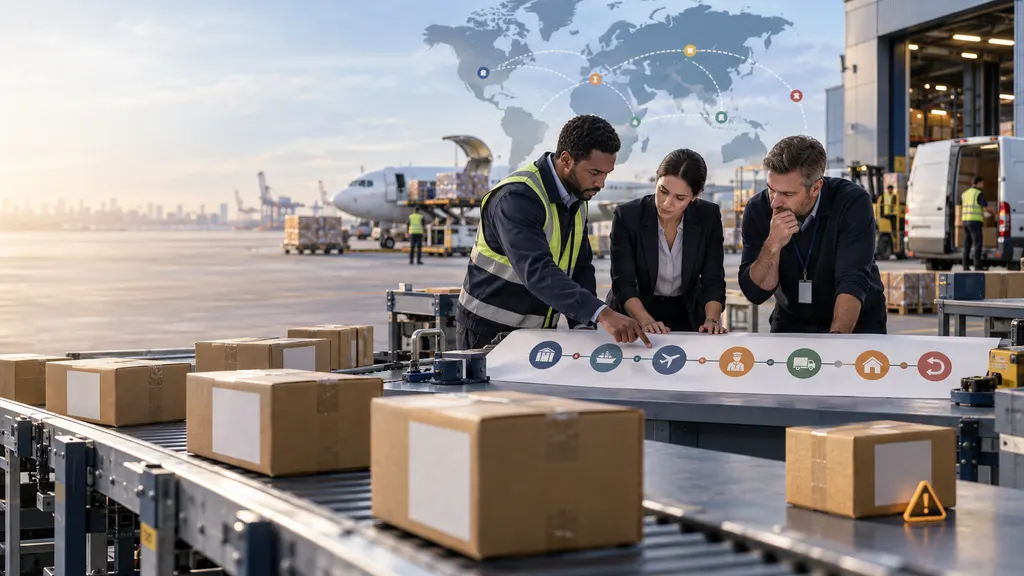
Waste material logistics is a downstream and reverse-flow activity within the supply chain. It may begin at a factory, warehouse, retail location, delivery point, office, construction site, or customer address. The material then moves through one or more controlled stages before reaching a reuse, recycling, recovery, treatment, or disposal destination.
In ecommerce, common triggers include damaged inventory, customer returns, excess packaging, failed delivery items, defective electronics, expired goods, and products that cannot be resold in their original condition. A retailer or marketplace may need to decide whether an item should be returned to saleable inventory, sent for repair, consolidated for recycling, transferred to a specialist treatment facility, or managed as regulated waste.
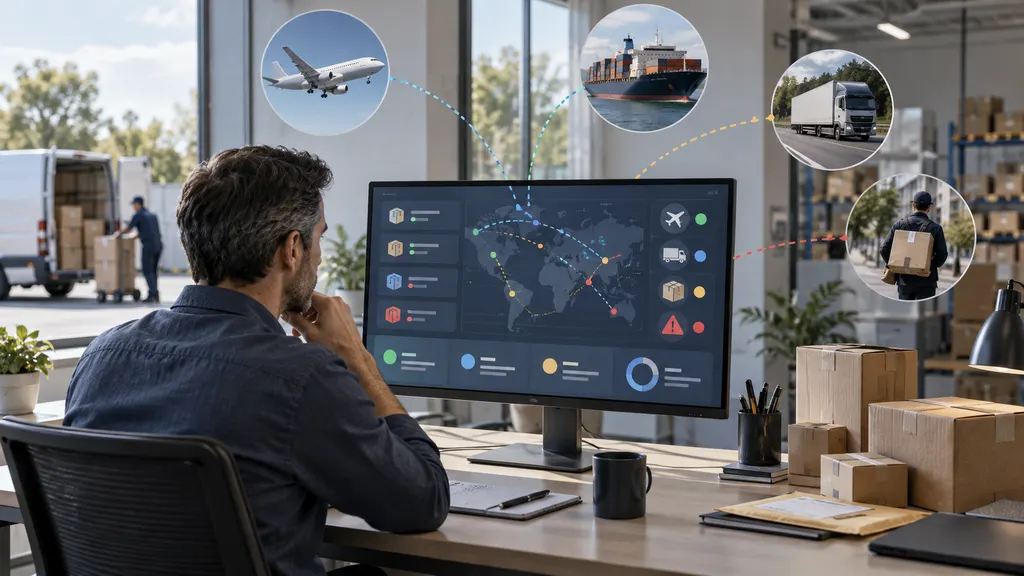
The activity may involve retailers, manufacturers, fulfillment centers, carriers, parcel operators, freight forwarders, waste contractors, recycling facilities, customs brokers, and public authorities. Each party may handle a different part of the flow. Physical transportation is only one element; data about the material and its chain of custody is equally important.
Key Characteristics
- Reverse direction: The material often moves from a customer, store, or operating site back toward a recovery or treatment point rather than following the normal outbound route.
- Variable condition: Materials may be unused, damaged, contaminated, incomplete, obsolete, or mixed with other materials. Their condition affects handling and destination decisions.
- Classification dependence: The correct process may depend on whether the item is a product, returned merchandise, used material, recyclable material, by-product, or waste under applicable rules.
- Safety requirements: Batteries, chemicals, medical materials, contaminated goods, and other regulated materials may require special packaging, labeling, storage, transport, or documentation.
- Traceability: Records may be needed to identify the material, its origin, transfer points, carrier, treatment route, and final outcome.
- Uncertain volumes: Waste flows may be irregular because they depend on returns, product failures, recalls, seasonal activity, damage events, or changes in inventory.
- Multiple possible outcomes: The material may be reused, repaired, refurbished, recycled, recovered for energy or other purposes, treated, or disposed of, depending on its characteristics and permitted destination.
How Waste Material Logistics Works
There is no single universal workflow for every type of waste material. However, a controlled process commonly includes the following steps.
- Identification at the point of origin: The organization records what the material is, where it came from, why it is being removed from normal use, and whether it is intact, damaged, contaminated, or mixed.
- Status and risk assessment: The holder determines whether the material remains a product or is being discarded, and checks whether composition, condition, or intended destination creates special regulatory or safety requirements.
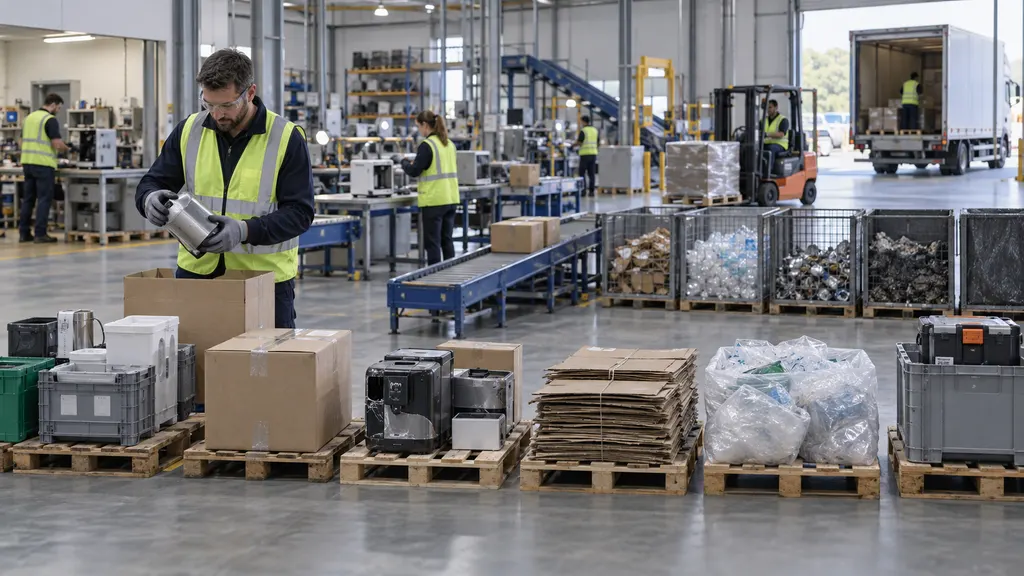
- Segregation: Materials are separated by type, hazard, compatibility, condition, or treatment route. Segregation can prevent contamination and reduce the risk of sending unsuitable materials to a recovery facility.
- Packaging and labeling: The material is prepared for storage and transport according to its physical properties and any applicable transport, environmental, or workplace requirements. Packaging decisions should reflect leakage, breakage, ignition, contamination, and exposure risks.
- Consolidation and storage: Small quantities may be grouped at a warehouse, return center, or collection point. Storage controls can include access management, inventory records, separation of incompatible materials, and time limits imposed by applicable rules.
- Carrier and route selection: The shipper selects a carrier and route capable of handling the material. The lowest-cost parcel route may not be suitable for material requiring specialized equipment or documentation.
- Documentation and handover: Information follows the material through transfers. Depending on the material and jurisdiction, records may include descriptions, quantities, origin, destination, transport details, permits, declarations, or treatment instructions.
- Receipt and treatment: The receiving facility checks the shipment and directs it to reuse, repair, recycling, recovery, treatment, or disposal. A discrepancy between the declared material and the received material may require investigation or rejection.
- Outcome recording: The organization records the final disposition and uses the information to improve packaging, product design, inventory controls, return policies, or supplier processes.
Classification and Decision Points
Classification should be based on the applicable legal and operational framework rather than on a marketing label such as “eco-friendly” or “recyclable.” A material may be technically recyclable but still require a specific collection or treatment route. Conversely, a returned product may be reusable even though it has entered a reverse flow.
| Material situation | Likely logistics question | Possible route |
|---|---|---|
| Unused item in saleable condition | Can it return to normal inventory? | Inspection, restocking, or resale |
| Damaged but repairable product | Can value be restored safely? | Repair, refurbishment, or parts recovery |
| Packaging separated by material type | Is a suitable recovery channel available? | Collection, consolidation, and recycling |
| Product containing batteries or other regulated components | Are special handling and transport controls required? | Specialist collection, treatment, or recycling |
| Contaminated or unusable material | Can it be accepted by the intended facility? | Controlled treatment or permitted disposal |
This table is descriptive rather than a universal legal classification. The actual status and required route depend on the material, the parties involved, the country or region, and the applicable rules.
Waste Material Logistics and Cross-Border Shipping
Cross-border movement adds customs, environmental, transport, and destination-country considerations. A shipment that crosses a border may need an accurate description of its contents, an appropriate commodity or waste classification, supporting documents, and confirmation that the receiving party is authorized or able to accept it. These requirements are not necessarily the same as those for ordinary commercial merchandise.
The Basel Convention provides an international framework for controlling certain transboundary movements of hazardous wastes and their disposal. National and regional rules may add procedures for notification, consent, documentation, carrier obligations, facility authorization, or restrictions on particular movements. The details vary by material and jurisdiction, so a business should verify the rules in the origin, transit, and destination locations before shipping.
Customs treatment also depends on the facts. A returned commercial product, a repair shipment, a recyclable material, and a waste shipment may require different descriptions and supporting information. Misdescribing waste as ordinary merchandise can create compliance, safety, delay, and cost risks. A carrier’s acceptance of a package does not by itself establish that the shipment complies with environmental or customs requirements.
Waste Material Logistics in Ecommerce
Ecommerce operators usually encounter waste material logistics at several points in the order lifecycle. Before sale, damaged or obsolete inventory may need removal from a fulfillment center. During delivery, packaging and failed delivery items may enter a reverse flow. After delivery, a customer return may be assessed for resale, repair, donation, parts recovery, recycling, or disposal.
A practical ecommerce process separates at least three decisions. First, the operator determines whether the item is still a product that can be sold or repaired. Second, it identifies any safety or regulatory restrictions. Third, it selects the destination and transport method that match the item’s condition and classification. These decisions can be supported by return authorization data, inspection records, product identifiers, packaging instructions, and facility acceptance criteria.
For example, a customer may return a small electronic device because it does not work. The fulfillment or returns center may inspect it, remove personal data where relevant, and determine whether it can be tested, repaired, used for parts, or sent to an authorized recycling route. The item’s route should be based on its actual condition and the receiving facility’s requirements, not simply on the fact that it was returned.
Waste Material Logistics and Reverse Logistics
| Term | Primary meaning | Relationship to waste material logistics |
|---|---|---|
| Reverse logistics | Movement and management of products, packaging, or materials from downstream locations back toward recovery, repair, resale, or another upstream or controlled destination. | Broader concept; it may include items that are not waste. |
| Waste material logistics | Management of discarded or potentially discarded materials and their movement to reuse, recycling, recovery, treatment, or disposal. | More focused on waste status, handling, compliance, and final disposition. |
| Returns logistics | Processes for receiving and handling products sent back by customers or other buyers. | May lead to waste logistics, but may also lead to resale, exchange, or repair. |
| Recycling logistics | Collection, sorting, consolidation, and transport of materials intended for recycling. | A specialized part of waste material logistics when recycling is the selected outcome. |
| Disposal logistics | Movement and controlled handling of materials intended for final disposal. | One possible outcome, not a synonym for all waste logistics. |
Common Misunderstandings
- All returns are waste. A return is a flow or process, not automatically a waste classification. It may be resold, repaired, exchanged, or recycled.
- Recyclable means unrestricted. A material can have recovery value while still requiring separation, approved facilities, or controlled transportation.
- Waste logistics is only transportation. Classification, storage, documentation, facility acceptance, and outcome verification are also essential parts of the process.
- A carrier label determines legal status. A shipping label supports operational handling, but it does not replace the applicable environmental, customs, or dangerous-goods assessment.
- Cross-border waste moves like ordinary ecommerce inventory. International movements may be subject to additional controls, and the destination may not accept the material even when a carrier can physically transport it.
Related Terms
Reverse logistics is the broadest closely related term and includes product returns, repairs, refurbishment, and recovery flows. Returns logistics focuses on goods sent back by buyers or other recipients. Recycling logistics focuses on collecting and moving materials to recycling operations. Waste management is broader than logistics because it also includes prevention, treatment, recovery, disposal, policy, and facility management. Freight and cargo describe goods or materials being transported, but they do not by themselves indicate whether those materials are waste.
QA
What does waste material logistics mean in logistics?
It means planning and controlling the identification, storage, transport, treatment, recovery, recycling, or disposal of materials that have been discarded or may be classified as waste.
Is waste material logistics the same as reverse logistics?
No. Reverse logistics includes many downstream-to-upstream flows, including resale and repair. Waste material logistics focuses on materials that are discarded or managed as waste.
How is waste material logistics used in ecommerce?
It is used to manage damaged inventory, returned products, excess packaging, defective items, and other materials that cannot remain in normal saleable inventory.
What should be checked before shipping waste across a border?
The shipper should verify the material’s status and classification, applicable origin, transit, and destination requirements, transport restrictions, documentation, and the receiving facility’s ability to accept it.
Sources
- U.S. Environmental Protection Agency, Sustainable Materials Management — background on managing materials across their life cycles and reducing waste.
- Basel Convention, Convention Overview — international framework and context for certain transboundary movements of hazardous wastes and their disposal.
- European Commission, Waste Shipments — regional policy and regulatory context for shipments of waste within, into, and out of the European Union.
- United Nations Environment Programme, Global Waste Management Outlook 2024 — broader reference context on waste management systems and resource use.