Transit Cargo
What Is Transit Cargo?
Transit cargo is goods being transported through an intermediate country, customs territory, or transport location on their way to another destination. In international trade and customs, the term usually refers to goods passing through a territory without being released there for domestic consumption. These goods may move under a customs transit procedure, which keeps them under customs control while allowing applicable import duties and taxes to remain suspended, subject to the relevant rules.
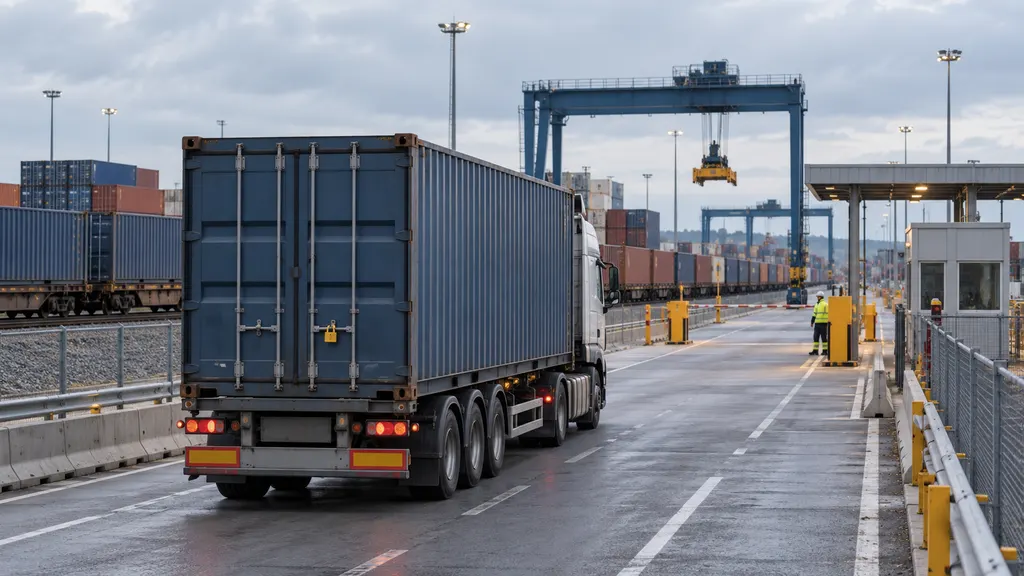
The meaning depends on context. A freight document may use transit cargo to describe goods passing through a port or transport hub, while a customs declaration may identify goods moving under a specific legal procedure. The broader expression cargo in transit can simply mean goods somewhere between dispatch and delivery. It does not, by itself, establish their customs status.
Transit Cargo in International Trade
Transit connects the physical route of a shipment with the customs territories along that route. A shipment can leave its country of origin, cross an intermediate country, and enter its destination country without becoming an ordinary import for consumption in the intermediate country.
Article V of the General Agreement on Tariffs and Trade describes traffic in transit by reference to a journey that begins and ends beyond the frontier of the territory being crossed. That journey may involve transshipment, warehousing, breaking bulk, or a change in transport mode. Consequently, cargo does not necessarily lose its transit character merely because it stops moving or changes vehicles.
Customs transit is a related but distinct concept. The World Customs Organization's Revised Kyoto Convention describes it as a customs procedure under which goods are transported under customs control from one customs office to another. Depending on the applicable system, this can include movements between an entry office and an exit office, or movements involving an inland customs office. Customs transit therefore should not be understood only as crossing an entire foreign country.
For cross-border ecommerce, transit cargo may consist of consolidated parcels, inventory replenishment shipments, or goods moving toward an inland clearance location. The fact that goods correspond to online orders does not change the underlying distinction between transportation, customs transit, and release for domestic consumption.
How a Customs Transit Movement Works
The following sequence describes a common operating pattern rather than a universal procedure. Required documents, responsible parties, guarantees, and completion rules depend on the customs territory and transit arrangement involved.
- The route and customs treatment are established. The parties determine whether the goods will pass through an intermediate territory, move to an inland customs office, or follow another route requiring customs control. They also identify which procedure applies to each relevant movement.
- A transit declaration or recognized transit document is submitted. Information may include the goods description, package count, transport details, departure office, destination office, and the party responsible for the movement. The required data varies by system.
- Customs authorizes the movement under applicable conditions. Authorities may require a guarantee, identification measures, seals, presentation at designated offices, or compliance with a specified time limit. These requirements should not be assumed to apply identically everywhere.
- The cargo travels under customs control. A carrier transports the goods toward the designated customs office. Transfers, storage, or changes in transport mode may be permitted, but they must comply with the procedure's conditions.
- The goods and required information are presented at the destination office. Customs checks the arrival and any relevant discrepancies. Physical arrival alone should not be treated as proof that all administrative obligations have been completed.
- The transit procedure is completed or discharged as applicable. The goods may then enter another customs procedure, leave the territory, or undergo import clearance. Release for domestic consumption is a separate event where that treatment is required.
The distinction between transport completion and customs completion is operationally important. A delivery record can establish that cargo reached a location, but the responsible party may still need customs confirmation that the transit movement has been properly concluded.
Customs Control, Duties, and Responsibilities
Duty suspension is not unrestricted entry
Under a customs transit arrangement, applicable import duties and taxes may remain suspended while the goods move under customs control. This does not mean the goods have been permanently exempted from every possible liability, nor does it authorize their unrestricted sale or use in the transit territory.
The WTO Trade Facilitation Agreement addresses transit formalities, documentation, controls, and guarantees. Where a guarantee is required, the agreement links it to ensuring that requirements arising from traffic in transit are fulfilled. The exact obligation for a particular shipment still depends on the applicable legal framework and the authorized procedure.
Goods must remain identifiable
Customs authorities need to establish that the goods presented at the end of the movement correspond to those placed under transit. Depending on the arrangement, identification may rely on seals, package markings, cargo descriptions, records, or other accepted measures. An intact seal can be relevant evidence, but it is not a substitute for completing the required customs formalities.
Commercial roles and customs roles differ
A seller, buyer, carrier, freight forwarder, customs representative, and party responsible for the transit procedure may have different obligations. Hiring a transport provider does not, by itself, explain who must provide a guarantee, report a discrepancy, or obtain confirmation of completion. Those responsibilities should be checked against the transit declaration, representation arrangements, transport contract, and applicable customs rules.
Transit Cargo and Related Terms
| Term | Main meaning | Distinction from transit cargo |
|---|---|---|
| Cargo in transit | Goods between dispatch and arrival in a broad transport sense. | Does not necessarily indicate movement through an intermediate customs territory or use of a customs transit procedure. |
| Customs transit | A procedure for transporting goods under customs control between customs offices. | Describes the legal procedure rather than merely the goods or their physical location. |
| Transshipment | Transfer of goods between transport vehicles or vessels during a journey. | Describes a handling operation that may occur during transit; it is not synonymous with customs transit. |
| Import clearance | Customs formalities associated with bringing goods into a territory under the applicable import treatment. | Transit through a territory does not necessarily mean release there for domestic consumption. |
| Customs warehousing | A procedure allowing goods to be stored under customs control under specified conditions. | Has storage as its central function, whereas customs transit concerns controlled movement. Goods may move between these procedures. |
| In-transit tracking status | A transport update indicating that a shipment remains within a delivery journey. | Is not, by itself, evidence of a customs declaration, duty suspension, or completion of a transit procedure. |
These concepts can overlap within one shipment. For example, cargo may travel under customs transit, undergo an authorized transshipment, and subsequently enter customs warehousing. Each term describes a different aspect of the operation rather than an interchangeable shipment category.
Illustrative Logistics Scenarios
Crossing an intermediate country
A retailer may ship inventory from Country A to Country C by road through Country B. The goods are transit cargo in Country B when they pass through without being released there for domestic consumption. The movement must follow the applicable transit requirements; reaching Country C does not replace the need to complete the relevant exit and arrival formalities.
Moving from a seaport to an inland customs office
A container may arrive at a seaport and move under an authorized customs transit procedure to an inland customs office. Import clearance can then take place at the inland location. This example shows why customs transit can occur within one customs territory rather than only between a country's entry and exit borders.
Changing transport mode at a hub
An ecommerce shipment may arrive by sea and continue by road toward its destination. The transfer is a change in transport mode and may involve transshipment. Whether the goods remain under the same transit arrangement, require a new declaration, or enter another procedure depends on the applicable rules. The physical transfer alone does not answer that customs question.
How to Interpret Transit Cargo Records
When the term appears on a document or shipment update, the most useful first step is to identify what the record actually establishes. A commercial shipping instruction, a customs declaration, and a parcel tracking event serve different purposes.
- Check the document type. Determine whether the wording comes from customs records, carrier tracking, a transport document, or warehouse instructions.
- Check the route and intended destination. Establish whether the location shown is an intermediate hub, an exit point, an inland clearance office, or the final delivery address.
- Identify the customs procedure. Do not infer duty suspension or legal transit status solely from the words “in transit.”
- Identify the responsible party. Confirm who must present the goods, meet procedural conditions, and resolve discrepancies.
- Check any transfer or storage conditions. A planned stop does not automatically authorize unloading, opening sealed equipment, or redirecting goods.
- Look for completion evidence. Distinguish transport arrival from customs confirmation that the transit procedure has ended or been discharged.
This approach helps avoid two common misunderstandings: that transit cargo must remain continuously in motion, and that an ordinary tracking status proves a particular customs treatment. Stops can be compatible with transit, while customs status requires evidence beyond general transport wording.
QA
Is transit cargo the same as imported cargo?
Not necessarily. Goods can enter a territory under customs transit without being released there for domestic consumption. Import clearance at the intended destination is a separate process where required.
Can transit cargo be unloaded or stored?
Transit can involve transshipment or storage, but the relevant customs conditions must be followed. The term does not provide unrestricted permission to handle or redirect the goods.
Does “in transit” on a tracking page mean the shipment is under customs transit?
No. It can simply mean that the shipment is progressing through its transport journey. Customs transit is a specific procedure that cannot be established from that tracking phrase alone.
Are duties always payable on transit cargo?
Applicable import duties and taxes may be suspended under a customs transit procedure. Whether a guarantee, liability, or other charge applies depends on the relevant rules and compliance with the procedure.
Sources
- World Trade Organization — GATT 1947, Article V: Freedom of Transit. Supports the international trade meaning of traffic in transit, including journeys involving transshipment, warehousing, breaking bulk, or changes in transport mode.
- World Customs Organization — Revised Kyoto Convention, Specific Annex E. Supports the customs transit definition and the framework for customs control, identification, formalities, and completion of transit movements.
- World Trade Organization — Agreement on Trade Facilitation, Article 11: Freedom of Transit. Supports discussion of transit formalities, documentation, controls, and guarantees.