Export Processing Zone
What Is an Export Processing Zone?
An export processing zone (EPZ) is a designated area in which businesses manufacture, assemble, or process goods mainly for export under a special regulatory and customs framework. Depending on national law, eligible businesses may import production inputs with duties suspended or exempted, provided they comply with requirements governing their use and the subsequent movement of goods. In international trade and logistics, an EPZ connects the import of materials and components with export-oriented production and outbound shipping.
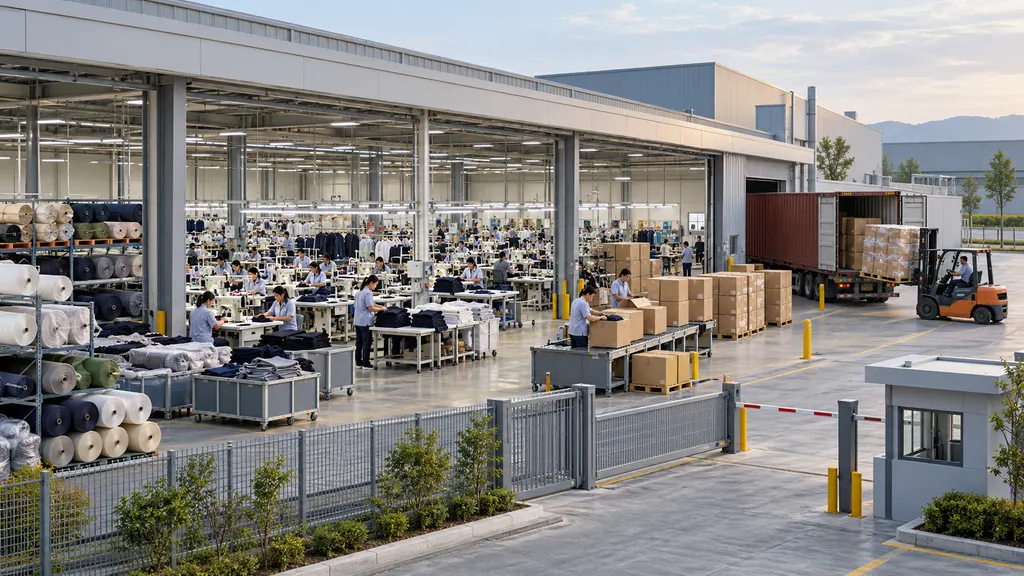
EPZs are commonly discussed as a form of special economic zone (SEZ). Their distinguishing emphasis is export-oriented processing or manufacturing, rather than storage or distribution alone. However, terminology differs between jurisdictions: the legal meaning of a zone, its permitted activities, and its customs treatment must be established from the applicable local framework.
Main Characteristics
An EPZ combines a physical operating location with rules that differ in specified ways from those applying elsewhere in the economy. The following characteristics help explain the concept, but they are not a universal checklist of legal entitlements.
- Export-oriented production: Businesses process materials, assemble components, or manufacture finished goods intended primarily for foreign markets.
- Defined eligibility: Zone authorities or other responsible agencies determine which businesses, activities, and goods qualify for the regime.
- Special customs treatment: Eligible inputs may receive duty relief or suspension, subject to the conditions of the relevant scheme.
- Controlled goods movements: Entries, transfers, production use, exports, and releases into the domestic market may require declarations, records, or authorization.
- Production infrastructure: A zone may provide industrial premises, utilities, transport connections, and administrative services supporting its authorized activities.
- Jurisdiction-specific incentives: Tax treatment, administrative procedures, and other benefits vary. The EPZ designation alone does not establish a particular benefit.
An EPZ is not outside the sovereignty of its host country. Special treatment applies only to the matters covered by the governing legislation. The designation should not be interpreted as a general exemption from labor, environmental, safety, or other applicable laws.
How an Export Processing Zone Works
The following sequence illustrates a possible EPZ supply chain. It is an explanatory model, not a statement that every jurisdiction uses identical procedures.
| Stage | Business activity | Customs or logistics consideration |
|---|---|---|
| Authorization | A business obtains approval to operate and conduct specified activities. | Its eligibility, approved processes, and reporting obligations establish the scope of the arrangement. |
| Input sourcing | The business purchases raw materials, components, or production equipment. | Eligibility for duty treatment depends on the goods and the applicable rules. |
| Movement into the zone | Goods travel from an arrival point or supplier to the authorized premises. | Entry and transit procedures may apply; transport to the zone is not necessarily unrestricted. |
| Processing | Inputs are transformed or assembled into products. | Inventory and production records support reconciliation of inputs, outputs, losses, and waste. |
| Export | Finished goods leave for a foreign destination. | Export documentation and evidence of departure may be required to complete the relevant customs procedure. |
| Alternative disposition | Goods are sold domestically, returned, transferred, or disposed of. | Separate approval, declarations, duties, taxes, or other conditions may apply. |
The logistics boundary is therefore not simply the zone gate. Businesses must distinguish physical movement from customs status. A shipment can reach a warehouse or production facility while still being subject to restrictions on use, transfer, or release.
Role in Logistics and Cross-Border Ecommerce
An EPZ sits upstream of international distribution when goods are manufactured or processed before export. Its operational relevance includes inbound transport, production inventory, export consolidation, and the coordination of customs documentation. Freight forwarders and carriers move the goods, while the authorized business and its representatives must address the obligations associated with the zone regime.
For a cross-border ecommerce business, an EPZ may be relevant when products are manufactured or assembled there before being shipped to a destination-country warehouse or fulfillment provider. Selling those products through an online storefront does not, by itself, change the customs treatment of their production or export.
Direct parcel fulfillment from an EPZ requires closer examination. An export-manufacturing authorization should not be assumed to permit storage-only operations, retail sales, repacking, or individual consumer shipments. The business must establish whether the intended activity is authorized and how each outbound movement will be documented.
EPZ treatment also does not determine the import treatment of the customer’s country. Destination customs authorities apply their own rules on valuation, classification, origin, duties, taxes, restrictions, and product compliance. Relief granted to production inputs in the exporting country does not automatically carry over to the finished product at its destination.
Illustrative Supply Chain
For example, a manufacturer may import fabric and accessories into an EPZ, produce garments, and export finished cartons to an overseas fulfillment warehouse. The manufacturer would need records connecting incoming materials with production and outgoing goods. The overseas importer would separately address the destination country’s import requirements.
If some garments are instead sold to buyers in the EPZ’s host country, that movement is not equivalent to export. Whether the sale is permitted, which declarations are necessary, and how duties or taxes are calculated depend on local rules. The example illustrates the distinction between export production and domestic release; it does not establish a universal domestic-sales allowance.
Export Processing Zones and Related Terms
Zone labels overlap internationally, and a local legal definition takes precedence over a general comparison. The distinctions below describe common uses of the terms rather than universally standardized categories.
| Term | Main emphasis | Relationship to an EPZ |
|---|---|---|
| Special economic zone | An area with a distinct regulatory framework, potentially covering manufacturing, services, logistics, or several activities. | A broader concept under which EPZs are commonly classified. |
| Free zone | A designated area with special customs treatment for goods, as defined by the relevant framework. | May accommodate processing, but does not necessarily have the same export-manufacturing focus as an EPZ. |
| Free trade zone | A label often associated with trading, storage, distribution, and re-export activities. | Can overlap with EPZ terminology; the name alone does not establish whether manufacturing is permitted. |
| Bonded warehouse | Authorized storage of goods under customs control without immediate payment of specified import duties and taxes. | Primarily a storage arrangement, not automatically an authorization for manufacturing. |
| Industrial park | A planned location providing premises and infrastructure for industrial businesses. | May host manufacturing without having special customs status or an export-oriented legal regime. |
The World Customs Organization’s Revised Kyoto Convention provides a customs definition of a free zone based on the treatment of goods for import duties and taxes. That concept should not be read as making the area foreign territory for every legal purpose. Nor does the free-zone definition alone establish all the production, investment, or tax conditions associated with a particular EPZ.
Operational Records and Decision Points
Understanding an EPZ requires examining both the authorization and the goods flow. Before arranging production or shipments, businesses can use the following questions to identify the applicable requirements:
- What is authorized? Confirm the approved operator, premises, production activities, and any restrictions on subcontracting or transfers.
- Which goods qualify? Check the treatment of materials, components, machinery, packaging, and locally purchased inputs rather than assuming they receive identical treatment.
- How are movements recorded? Identify the documents and inventory records needed for admission, production use, transfers, export, and other dispositions.
- How are discrepancies handled? Determine the procedures for production losses, scrap, damaged goods, and unexplained inventory differences.
- What closes the customs obligation? Establish which evidence demonstrates export or another authorized disposition.
- What happens on domestic release? Check whether release is allowed and which approvals, duties, taxes, and product requirements apply.
- How are returns treated? Confirm whether returned finished goods may re-enter the zone and whether inspection, repair, or reprocessing is authorized.
These are verification questions, not a substitute for jurisdiction-specific instructions. Their purpose is to prevent a commercial plan from relying on benefits or activities that the zone authorization does not actually cover.
Common Misunderstandings
“Everything in an EPZ is tax-free.”
Special treatment is conditional and may apply only to specified goods, taxes, activities, or transactions. Duty suspension, duty exemption, and other incentives are different mechanisms. None should be inferred solely from the zone’s name.
“Goods produced in an EPZ automatically qualify for preferential tariffs.”
Zone status and preferential origin are separate questions. A claim for preferential tariff treatment must satisfy the applicable trade agreement’s origin requirements and any relevant conditions. Processing in a designated zone is not sufficient evidence on its own.
“An EPZ is just a warehouse near a port.”
An EPZ is a regulatory arrangement associated with export-oriented production, not simply a convenient location for storing freight. Proximity to a port may support logistics, but it does not create EPZ status.
QA
What does EPZ mean in shipping?
EPZ means export processing zone. In shipping documents or operating instructions, it can identify an origin, destination, or authorized facility where special customs and export-production rules affect the movement of goods.
Can goods from an EPZ be sold in the domestic market?
That depends on the governing rules. Domestic release may be permitted subject to authorization, declarations, duties, taxes, or other conditions. It should not be assumed to have the same treatment as export.
Is an export processing zone the same as a special economic zone?
Not exactly. An EPZ is commonly treated as an export-manufacturing form of special economic zone. SEZ is the broader concept and can include zones focused on other activities.
Can an ecommerce business use an EPZ for fulfillment?
Possibly, but only where the permitted activities and customs procedures support the proposed operation. Permission to manufacture for export does not automatically authorize retail fulfillment or the handling of consumer returns.
Sources
- UNCTAD, World Investment Report 2019, Chapter IV: Special Economic Zones — Supports the relationship between EPZs and SEZs, export-oriented manufacturing characteristics, and variation in zone activities and regulatory frameworks.
- World Customs Organization, Revised Kyoto Convention, Specific Annex D — Provides the customs framework for customs warehouses and free zones, including admission, authorized operations, goods movements, and treatment on removal. This supports the related-term comparison rather than a universal legal definition of an EPZ.