About VL Cargo
VL Cargo is the carrier identity associated with the supplied official website. Use the identifier printed on the VL Cargo waybill, dispatch message, invoice, or merchant shipment record when checking a consignment. Service scope, route, handling responsibilities, and delivery commitments should be read from the applicable booking document rather than inferred from the brand name alone.
Carrier Overview
| Field | Verified value |
|---|
| Canonical carrier | VL Cargo |
| Official website | http://www.vlcargo.in/ |
| Tracking input | Use the shipment identifier exactly as displayed on the waybill or dispatch record. |
| Independent tracking option | 17TRACK can check available carrier events when the identifier and carrier match. |
Carrier Entity Relationships
| Entity | Entity type |
|---|
| VL Cargo | Canonical carrier identity |
View all details for VL Cargo
| Relationship to VL Cargo | VL Cargo is the name users should select when the shipment record identifies VL Cargo as the carrier. |
|---|
| Why it matters to tracking | Choosing the carrier shown on the shipment record reduces false matches with similarly named logistics businesses. |
|---|
| Official evidence | The supplied official website identifies the relevant web domain. |
|---|
|
| Shipment identifier | Tracking or consignment data |
View all details for the shipment identifier
| Relationship to VL Cargo | The identifier connects a booking or parcel record to available VL Cargo shipment events. |
|---|
| Why it matters to tracking | An order number or payment reference may not be accepted as a carrier tracking number. |
|---|
| Official evidence | The authoritative identifier is the value printed on the applicable VL Cargo shipment record. |
|---|
|
| 17TRACK | Independent multi-carrier tracking platform |
View all details for 17TRACK
| Relationship to VL Cargo | 17TRACK displays available tracking data but does not transport VL Cargo shipments. |
|---|
| Why it matters to tracking | 17TRACK cannot change an address, release customs cargo, approve a claim, or issue a merchant refund. |
|---|
| Official evidence | 17TRACK API documentation |
|---|
|
Quick Answer
To track a VL Cargo shipment, copy the tracking or consignment number from the waybill, receipt, shipping email, or seller account and check it through the VL Cargo official website or 17TRACK. If no result appears, first check for typing errors, spaces, an order number entered instead of a tracking number, or a shipment record created before physical handover.
Pro Tip: 17TRACK is an independent visibility platform. Transportation changes, delivery instructions, investigations, claims, and refunds must be handled by VL Cargo, the booking party, or the merchant responsible for the sale.
How to Track VL Cargo Packages
Track with the carrier record for shipment-specific support, or use 17TRACK when you want a consolidated tracking view.
- Find the tracking, consignment, airway-bill, docket, or shipment number on the waybill, receipt, dispatch email, invoice, or merchant order page.
- Copy the value exactly. Remove accidental leading or trailing spaces, but preserve meaningful letters and digits.
- Open the VL Cargo official website and use the available shipment-tracking route.
- Alternatively, open 17TRACK, enter the identifier, and select VL Cargo if carrier detection is uncertain.
- Read the latest event together with its location and timestamp. A data-created event does not prove that VL Cargo physically received the goods.
Identifier differences: a tracking or consignment number identifies the transport record; an order number identifies a purchase; a reference number may be assigned by a merchant; a label number can identify a transport label; and a partner number may become relevant after handoff. If the seller supplied only an order number, request the carrier name and carrier-issued shipment identifier.
Tracking Statuses and Meanings
Status wording can differ by route and connected carrier. Interpret the event together with its location, timestamp, and responsible transport stage.
Status Quick Lookup
| Status | What it means |
|---|
| Shipment information received | A shipment record or label data exists; physical receipt is not established by this event alone. |
View all details for shipment information received| Lifecycle stage | Pre-shipment |
|---|
| Current responsible party | The shipper remains responsible for completing handover until an acceptance event appears. |
|---|
| What happens next | Pickup, drop-off, or an initial facility scan. |
|---|
| What you should do | Ask the sender to confirm physical handover if the status does not progress. |
|---|
|
| Accepted or picked up | The shipment has received an initial physical acceptance or collection event. |
View all details for accepted or picked up| Lifecycle stage | Accepted |
|---|
| Current responsible party | The carrier or collecting transport party shown in the event. |
|---|
| What happens next | Origin processing and dispatch. |
|---|
| What you should do | Monitor the next facility or transit event. |
|---|
|
| In transit | The shipment is moving between facilities or waiting for its next scheduled transport movement. |
View all details for in transit| Lifecycle stage | Line-haul or network processing |
|---|
| Current responsible party | The carrier or transport partner holding the shipment at the latest event. |
|---|
| What happens next | Arrival, sorting, partner handoff, or destination processing. |
|---|
| What you should do | Compare progress with the booking commitment and check service alerts supplied by the booking party. |
|---|
|
| Customs or regulatory processing | A cross-border shipment is undergoing document, security, or import review; arrival does not mean release. |
View all details for customs processing| Lifecycle stage | Customs or handover |
|---|
| Current responsible party | The relevant customs authority, broker, declarant, or carrier according to the pending action. |
|---|
| What happens next | Release, document request, duty assessment, inspection, or return decision. |
|---|
| What you should do | Respond through the verified broker, carrier, or merchant channel if documents or payment are requested. |
|---|
|
| Out for delivery | The final-delivery party has assigned the shipment to a delivery run. |
View all details for out for delivery| Lifecycle stage | Final delivery |
|---|
| Current responsible party | The carrier or partner operating the delivery route. |
|---|
| What happens next | Delivery, attempted delivery, pickup routing, or an exception event. |
|---|
| What you should do | Keep the delivery point accessible and monitor for contact or instructions. |
|---|
|
| Delivered | A delivery completion scan was recorded at the destination, reception point, or authorized delivery location. |
View all details for delivered| Lifecycle stage | Delivered |
|---|
| Current responsible party | The recipient should first verify the delivery location; the delivery carrier retains scan and proof records. |
|---|
| What happens next | The shipment closes unless a delivery dispute is raised. |
|---|
| What you should do | Check reception, household members, neighbors, safe locations, and proof of delivery before escalating. |
|---|
|
| Delivery exception or attempt | Delivery could not be completed because of address, access, recipient, route, weather, damage, or operational conditions. |
View all details for a delivery exception| Lifecycle stage | Exception |
|---|
| Current responsible party | The final carrier controls the next operational attempt; the shipper may need to correct shipment data. |
|---|
| What happens next | Reattempt, contact, pickup, correction, or return routing. |
|---|
| What you should do | Read the exact reason and contact the party authorized to change the shipment. |
|---|
|
| Return to sender | The shipment is being routed back after a delivery, address, customs, refusal, or service exception. |
View all details for return to sender| Lifecycle stage | Return |
|---|
| Current responsible party | The carrier moves the goods while the shipper or merchant manages replacement and refund decisions. |
|---|
| What happens next | Return transport and receipt by the sender. |
|---|
| What you should do | Contact the seller promptly; do not assume a return scan automatically creates a refund. |
|---|
|
Services and Delivery Times
Use the service name, origin, destination, and commitment printed on the VL Cargo booking record. A tracking estimate is an operational forecast and should not be treated as a service guarantee unless the applicable contract expressly says so.
Service Comparison
| Service | Best for |
|---|
| Service shown on the VL Cargo booking record | The specific cargo movement purchased by the shipper. |
View all service details for a booked VL Cargo shipment
| Service type | Use the exact product or handling description on the waybill, quote, or contract. |
|---|
| Coverage | Limited to the accepted origin, destination, and routing in the booking. |
|---|
| Tracking level | Depends on scans produced during the booked route and any connected partner legs. |
|---|
| Key size/weight condition | The accepted chargeable weight, dimensions, and cargo description on the booking control handling. |
|---|
| Included protection/extra service | Only terms expressly included in the booking or transport contract apply. |
|---|
| Main limitation | The carrier name alone does not identify the service level or delivery commitment. |
|---|
|
Delivery Time
| Service | Published delivery standard |
|---|
| Booked VL Cargo movement | Use the commitment stated on the applicable quote, waybill, service agreement, or merchant shipping promise. |
View all delivery-time conditions
| Business or calendar days | Apply the day-counting method stated in the booking terms. |
|---|
| Guarantee status | An estimated date is not a guarantee; only an express contractual commitment can establish guaranteed performance. |
|---|
| Starts counting from | Follow the booking terms, which may distinguish record creation from physical acceptance. |
|---|
| Main delay factors | Late handover, missed cutoff, routing, weekends, holidays, weather, address quality, inspections, customs, partner transfer, and incomplete documents. |
|---|
| Official source date/validity | The shipment-specific booking record and current contractual terms govern. |
|---|
|
Destination Country Delivery Times
| Destination Country / Region | Primary Service Type |
|---|
| Destination stated on the shipment booking | The service purchased and printed on the transport record |
View destination delivery-time guidance
| Estimated Delivery Time Range | Use the shipment-specific estimate supplied for the booked origin, destination, cargo type, and service. |
|---|
| Average Delivery Days | Calculate operational averages only from comparable VL Cargo shipments using the same lane, service, acceptance point, and delivery region. |
|---|
| Last-Mile Partner / Handoff Carrier | Use the partner name displayed in the shipment events or supplied by the booking party after an actual handoff. |
|---|
| Customs & Clearance Tips | For cross-border cargo, prepare accurate descriptions, values, invoices, consignee details, and destination-specific permits; arrival at a gateway does not establish customs release. |
|---|
|
Country-level ranges should not be invented from unrelated carrier averages. For planning, request a lane-specific estimate from the booking party and separate origin handling, line-haul, customs, partner handoff, and final delivery time.
Common Tracking Problems and Solutions
Start with the latest event, the party physically holding the shipment, and the shipment document. The seller should handle order-level remedies, while the carrier or booking party handles transport investigation.
Problem & Solution
| Problem/status shown | Likely cause |
|---|
| Invalid number or no result | Typing error, order ID used, wrong carrier selection, or shipment data not yet activated. |
View solutions for an invalid number| Check first | Compare every character with the waybill and verify that VL Cargo is named as the carrier. |
|---|
| Immediate action | Retry without accidental outer spaces and ask the sender for the carrier-issued identifier. |
|---|
| When to escalate | Escalate when the sender confirms physical handover but cannot provide a working transport reference. |
|---|
| Who to contact | Sender or merchant first; then the booking contact shown on the shipment document. |
|---|
|
| Shipment information received only | Electronic booking data exists, but physical handover may still be pending. |
View solutions for pre-shipment status| Check first | Ask whether pickup or drop-off actually occurred. |
|---|
| Immediate action | Request handover evidence from the shipper. |
|---|
| When to escalate | Escalate against the dispatch promise or contractual collection date. |
|---|
| Who to contact | The shipper or merchant controlling handover. |
|---|
|
| No update or stuck in transit | Movement between scan points, missed scan, consolidation, operational delay, or partner transfer. |
View solutions for no tracking update| Check first | Review the last location, timestamp, service commitment, weekends, holidays, and route conditions. |
|---|
| Immediate action | Save the tracking history and ask the booking party whether the next leg has departed. |
|---|
| When to escalate | Escalate when the shipment passes its contractual delivery or investigation threshold. |
|---|
| Who to contact | The party that purchased transport or the contact on the waybill. |
|---|
|
| Partner handoff pending | Electronic data may have been sent before the downstream carrier physically received the goods. |
View solutions for a partner handoff| Check first | Look for a physical acceptance scan by the named partner. |
|---|
| Immediate action | Track both identifiers if the shipment record displays an original and partner number. |
|---|
| When to escalate | Escalate if neither party records physical receipt within the booked handoff plan. |
|---|
| Who to contact | The booking party before handoff; the receiving partner after an acceptance scan. |
|---|
|
| Address or delivery exception | Incomplete address, access restriction, unavailable recipient, or route disruption. |
View solutions for an address or delivery exception| Check first | Compare the destination on the order and waybill. |
|---|
| Immediate action | Ask the shipper or authorized account holder whether a correction or delivery instruction is allowed. |
|---|
| When to escalate | Act before the shipment enters return routing. |
|---|
| Who to contact | The booking party or delivery carrier named in the latest event. |
|---|
|
| Customs hold | Document review, valuation, duty, inspection, permit, or restricted-goods issue. |
View solutions for a customs hold| Check first | Identify whether customs, a broker, the consignee, or the shipper must act. |
|---|
| Immediate action | Provide requested invoices, descriptions, values, identity details, permits, or payment only through a verified channel. |
|---|
| When to escalate | Escalate when a formal request remains unanswered or documents were submitted without acknowledgment. |
|---|
| Who to contact | The broker, declarant, booking party, or customs contact identified in the notice. |
|---|
|
| Delivered but not received | Safe-location delivery, reception acceptance, neighbor delivery, premature scan, or delivery error. |
View solutions for delivered but not received| Check first | Check the address, entrance, reception, mailroom, household members, neighbors, and any proof-of-delivery detail. |
|---|
| Immediate action | Report the discrepancy to the final-delivery contact and notify the merchant in writing. |
|---|
| When to escalate | Escalate promptly if the delivery location or recipient evidence does not match. |
|---|
| Who to contact | The delivery carrier for scan evidence and the merchant for order resolution. |
|---|
|
| Lost, damaged, or returned | Transport loss, handling damage, packaging failure, refusal, address failure, or unresolved regulatory issue. |
View solutions for lost, damaged, or returned cargo| Check first | Confirm the latest event, booking terms, declared contents, value evidence, and visible package condition. |
|---|
| Immediate action | Preserve the goods, inner packaging, outer packaging, labels, photographs, invoice, and delivery record. |
|---|
| When to escalate | Start the contractual investigation or claim process without waiting beyond the applicable filing period. |
|---|
| Who to contact | The shipper or account holder usually starts the carrier process; the buyer separately contacts the merchant. |
|---|
|
International Shipping, Customs and Carrier Handoffs
When a booked VL Cargo movement crosses a border or connects with another carrier, tracking can include separate data, physical custody, customs, and final-delivery stages. A pre-advice message is not physical handover, and arrival in the destination country is not customs release.
International Flow
| Stage | Physical custodian/responsible entity |
|---|
| Booking and pre-advice | Shipper or booking party until physical collection |
View booking and pre-advice details| Typical tracking event | Shipment information received |
|---|
| What is happening | Transport data and a reference are created. |
|---|
| Can the tracking number change? | A partner identifier may be added later. |
|---|
| Normal visibility gap | No physical scan appears until collection or facility receipt. |
|---|
| What the customer should do | Ask the shipper to confirm actual handover. |
|---|
|
| Origin acceptance and processing | The collecting carrier or origin handling facility shown in tracking |
View origin processing details| Typical tracking event | Accepted, picked up, or processed at origin |
|---|
| What is happening | The cargo is checked, sorted, consolidated, and prepared for dispatch. |
|---|
| Can the tracking number change? | The booking identifier normally remains useful, while a transport-leg number may be added. |
|---|
| Normal visibility gap | Scanning may pause between origin processing and the next gateway. |
|---|
| What the customer should do | Verify documents and monitor dispatch progress. |
|---|
|
| Export and line-haul | Export handlers, authorities, and the booked line-haul operator |
View export and line-haul details| Typical tracking event | Export processing, departed facility, or in transit |
|---|
| What is happening | Security, export formalities, consolidation, and international or interregional movement take place. |
|---|
| Can the tracking number change? | Master and partner references can coexist with the customer-facing number. |
|---|
| Normal visibility gap | There may be no public scan while cargo is moving between gateways. |
|---|
| What the customer should do | Do not treat a scan gap alone as proof of loss. |
|---|
|
| Import customs | Destination customs authority, broker, importer, and carrier according to the pending task |
View import customs details| Typical tracking event | Presented to customs, held, documents requested, assessed, or released |
|---|
| What is happening | Authorities review the declaration, goods, value, permits, taxes, and admissibility. |
|---|
| Can the tracking number change? | The customs or broker case can have a separate reference. |
|---|
| Normal visibility gap | Public tracking may not show each internal review step. |
|---|
| What the customer should do | Respond to verified requests and keep proof of submission or payment. |
|---|
|
| Partner handoff and final delivery | The receiving carrier after a physical acceptance scan |
View partner handoff and final-delivery details| Typical tracking event | Pre-advice sent, handed to partner, received by partner, out for delivery, or delivered |
|---|
| What is happening | Data exchange may occur first; operational responsibility transfers after physical receipt. |
|---|
| Can the tracking number change? | A last-mile number may be added or the original number may continue. |
|---|
| Normal visibility gap | A gap can occur between release, transfer, and the partner's first scan. |
|---|
| What the customer should do | Use the partner identifier after acceptance and contact the current custodian for delivery issues. |
|---|
|
Delivery Management and Post-shipment Options
Request shipment changes through the authorized booking contact before the goods reach final delivery or return processing. A request does not guarantee operational success.
Delivery Management
| Option | Who can request |
|---|
| Address correction, hold, redelivery, or delivery instruction | The shipper, account holder, or other party authorized under the booking terms. |
View delivery-management conditions
| Eligibility | Depends on shipment stage, service, route, security controls, address rules, and contractual authority. |
|---|
| Deadline/available stage | Request action before final delivery, irreversible line-haul movement, customs disposition, or return processing. |
|---|
| Fee | Apply only fees communicated through the authorized booking channel. |
|---|
| Guaranteed? | No; operational, regulatory, and contractual limits can prevent a requested change. |
|---|
| Official action link | VL Cargo official website |
|---|
|
Lost, Damaged, Claims, Insurance and Refunds
A tracking inquiry, transport investigation, cargo claim, freight adjustment, and merchant refund are separate processes. Preserve all evidence and follow the applicable VL Cargo booking terms without delay.
Claims and Refunds
| Process | Use when |
|---|
| Tracking inquiry or transport investigation | Movement has stopped, delivery is disputed, or the current custodian must be identified. |
View investigation requirements| Who files | The booking party or authorized account contact. |
|---|
| Earliest/latest filing time | Follow the service contract and act once the contractual investigation condition is met. |
|---|
| Required evidence | Tracking number, waybill, dates, route, addresses, cargo description, and latest event. |
|---|
| Possible outcome | Location update, delivery evidence, continued search, return information, or claim guidance. |
|---|
| Official link | VL Cargo official website |
|---|
|
| Loss, damage, or shortage claim | Goods are lost, damaged, or partly missing and the booking terms permit a claim. |
View cargo claim requirements| Who files | The contractual claimant, commonly the shipper or account holder. |
|---|
| Earliest/latest filing time | Use the notice and claim limits in the applicable transport contract. |
|---|
| Required evidence | Waybill, invoice, value proof, cargo description, photographs, damage notation, packaging, and correspondence. |
|---|
| Possible outcome | Investigation, request for evidence, settlement under applicable liability terms, or denial. |
|---|
| Official link | VL Cargo official website |
|---|
|
| Merchant refund or replacement | A buyer seeks an order remedy from the seller rather than a carrier liability decision. |
View merchant remedy requirements| Who files | The buyer contacts the merchant or marketplace. |
|---|
| Earliest/latest filing time | Follow the seller or marketplace buyer-protection period. |
|---|
| Required evidence | Order number, payment proof, tracking history, photos, and communications. |
|---|
| Possible outcome | Replacement, refund, further investigation, or denial under the sales policy. |
|---|
| Official link | Use the merchant or marketplace order-support channel. |
|---|
|
17TRACK cannot approve a transport claim, determine liability, issue compensation, or refund an ecommerce order.
Shipping Restrictions and Special Handling
The shipper must disclose the exact goods and obtain acceptance before tender. Legal restrictions, route rules, mode-of-transport rules, and destination requirements can all apply.
Shipping Restrictions
| Category | Prohibited or restricted |
|---|
| Dangerous, regulated, perishable, high-value, liquid, or battery-containing goods | Acceptance depends on applicable law, route, transport mode, documentation, packaging, and VL Cargo booking approval. |
View special-handling conditions
| Typical examples | Flammable materials, pressurized containers, chemicals, medicines, food, live or biological material, valuables, weapons, loose batteries, and damaged batteries. |
|---|
| Key condition/packaging | Accurate classification, declaration, permits, labels, compatible packaging, cushioning, leak prevention, and handling instructions may be required. |
|---|
| Transport limitation | Goods may be limited by air, road, destination, temperature, quantity, value, or security controls. |
|---|
| Possible tracking/delivery impact | Inspection, refusal, routing change, hold, return, disposal, or enforcement action can interrupt normal tracking progress. |
|---|
| Official rules | Confirm acceptance through the VL Cargo official website and the current booking contact before tender. |
|---|
|
Customer Service
For the most relevant response, begin with the booking contact printed on the waybill, invoice, quote, or merchant dispatch record. Prepare the full shipment reference and the latest event before contacting support.
Customer Service
| Channel | Verified contact/link |
|---|
| Official website | http://www.vlcargo.in/ |
View official contact preparation details
| Best for | Finding the carrier's current shipment, company, or contact route. |
|---|
| Region/language | Use the channel applicable to the shipment origin, destination, and booking office. |
|---|
| Hours and time zone | Follow the hours displayed by the current official contact channel. |
|---|
| Information to prepare | Tracking or consignment number, ship date, service, origin, destination, addresses, latest scan, cargo description, value proof, invoice, and photos where relevant. |
|---|
| Important limitation | The website or visibility channel does not replace the contractual booking contact for claims or shipment amendments. |
|---|
|
| Shipper, merchant, or booking agent | Use the contact shown on the order, invoice, waybill, or booking confirmation. |
View booking-party escalation details
| Best for | Missing tracking numbers, handover proof, service commitments, account-authorized changes, claims, refunds, and replacement decisions. |
|---|
| Region/language | The commercial relationship and shipment contract determine the appropriate office. |
|---|
| Hours and time zone | Use the business hours supplied in the booking or sales record. |
|---|
| Information to prepare | Order number, transport reference, invoice, payment record, dispatch promise, and written description of the requested remedy. |
|---|
| Important limitation | A recipient may lack authority to amend a shipment purchased by the sender. |
|---|
|
Efficient escalation order: verify the identifier, identify the physical custodian, contact the booking party, provide evidence in one message, obtain a case reference, and escalate through the contractual claim route if the investigation does not resolve the issue.
Ecommerce and Business Tracking
Consumers generally need a single-shipment lookup, while merchants need standardized events, exception monitoring, batch registration, and delivery-data reconciliation across carriers.
Developer/API Comparison
| Option | Provider |
|---|
| Official shipment access through current booking channels | VL Cargo |
View developer details for VL Cargo
| Carrier coverage | VL Cargo shipment records associated with the applicable booking relationship. |
|---|
| Primary use | Carrier-specific shipment lookup and operational support. |
|---|
| Authentication | Use only credentials and access instructions supplied through an authorized VL Cargo business relationship. |
|---|
| Tracking/batch/webhook capability | Implement only capabilities documented for the current business account. |
|---|
| Current developer documentation | VL Cargo official website |
|---|
| Migration/deprecation note | Do not reuse undocumented endpoints copied from third-party pages or legacy integrations. |
|---|
|
| Multi-carrier Tracking API | 17TRACK |
View developer details for 17TRACK
| Carrier coverage | Multi-carrier shipment tracking supported by 17TRACK. |
|---|
| Primary use | Centralized tracking registration, normalized visibility, and multi-carrier workflows. |
|---|
| Authentication | API key supplied in the 17token request header. |
|---|
| Tracking/batch/webhook capability | Use the capabilities and limits described in the current 17TRACK API documentation. |
|---|
| Current developer documentation | 17TRACK API documentation |
|---|
| Migration/deprecation note | Use the documented current API version and review documentation before changing production integrations. |
|---|
|
FAQ
1. How do I track my VL Cargo package?Enter the tracking or consignment number through the VL Cargo official website or use 17TRACK to view available shipment events. Select VL Cargo manually if automatic carrier detection produces an uncertain match.
2. Where can I find my VL Cargo tracking number?Look on the waybill, receipt, dispatch email, invoice, seller account, or booking confirmation. If you only see an order number, ask the sender for the carrier-issued shipment identifier.
3. What does a VL Cargo tracking number look like?Use the complete identifier printed on the applicable VL Cargo shipment record rather than relying on a prefix or length. Merchant references and partner numbers may follow different structures.
4. When will the first VL Cargo tracking update appear?The first physical update should follow collection, drop-off, or facility acceptance. A shipment-information event can appear earlier and does not prove that VL Cargo has received the goods.
5. Why is my VL Cargo tracking not updating?The shipment may be moving between scan points, consolidated, awaiting a partner, delayed, or missing an intermediate scan. Check the last event against the booking commitment and ask the booking party to investigate when the contractual threshold is reached.
6. How long does VL Cargo delivery take?Use the delivery commitment attached to the specific service, route, and booking. Origin handling, weekends, holidays, weather, customs, partner transfer, and final-delivery conditions can affect the result.
7. What should I do after a VL Cargo delivery attempt?Read the exception reason and contact the authorized booking or delivery contact before return processing begins. Address changes and redelivery requests depend on shipment stage and account authority.
8. What if VL Cargo shows delivered but I cannot find the shipment?Check the delivery address, entrance, reception, mailroom, household members, neighbors, and proof-of-delivery details first. Then report the discrepancy to the final-delivery contact and notify the merchant in writing.
9. How do I report a lost or damaged VL Cargo shipment?Ask the contractual booking party to start the applicable investigation or claim. Keep the waybill, invoice, photographs, goods, labels, inner packaging, and outer packaging until the process is complete.
10. How do I contact VL Cargo?Use the current contact route on the VL Cargo official website or the booking contact printed on the waybill, invoice, quote, or dispatch record. Prepare the tracking number, route, ship date, latest scan, and requested resolution.
11. Does a VL Cargo label-created event mean the carrier has my shipment?No. Electronic shipment data can exist before physical handover; an acceptance, pickup, or facility-receipt event is stronger evidence that the transport party received the goods.
12. Can a VL Cargo shipment receive a second tracking number?A connected carrier or final-delivery party may add its own identifier when a handoff applies. Keep both numbers and use the partner number after the partner records physical acceptance.
13. Does arrival at customs mean a VL Cargo shipment has cleared customs?No. Arrival, presentation, assessment, inspection, and release are separate stages; wait for an explicit release or onward-processing event and respond to verified document or payment requests.
14. Who is responsible during a VL Cargo partner handoff?Responsibility follows physical custody and the applicable contract, not data transmission alone. The original booking party remains the first escalation point until the receiving carrier records acceptance.
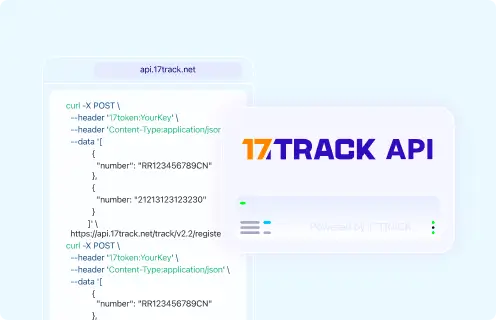
15. Can businesses track VL Cargo shipments through an API?Businesses should use only current access supplied through an authorized VL Cargo relationship or a documented multi-carrier service such as 17TRACK. The 17TRACK registration endpoint requires a 17token header, while the VL Cargo carrier code should be taken from current account documentation rather than guessed.
Tracking API
Use a carrier code supplied by current 17TRACK account documentation or carrier lookup. The placeholder below is intentional because a VL Cargo carrier code should not be inferred from the brand name.
# 1. VL Cargo official tracking API
# Current public official tracking API not confirmed.
# Use only endpoint and authentication details supplied through
# an authorized VL Cargo business relationship.

# 2. 17TRACK API
curl --request POST \
  --url https://api.17track.net/track/v2.4/register \
  --header '17token: YourKey' \
  --header 'Content-Type: application/json' \
  --data '[
    {
      "number": "TRACKING_NUMBER",
      "carrier": "CARRIER_CODE"
    }
  ]'
Sources & References
17TRACK is an independent tracking platform and is not affiliated with VL Cargo.