Maersk Tracking
Please enter the Maersk tracking number to check the latest shipping status.
About Maersk
Maersk is a global logistics and container-shipping company. A Maersk shipment may be represented by a booking reference, bill of lading reference, container number, or another shipment identifier rather than a consumer parcel number. The correct identifier depends on the product, booking channel, origin, destination, and the party that issued the transport document.
| Field | Information |
|---|---|
| Official display name | Maersk |
| Official website | https://www.maersk.com/ |
| Carrier type | Integrated container shipping and logistics provider |
| Primary tracking context | Ocean cargo, containers, bookings, bills of lading, and logistics shipments |
Quick Answer
To track Maersk cargo, use the official Maersk tracking entry and enter the reference supplied by the shipper, freight forwarder, or Maersk booking record. You can also try 17TRACK when the shipment identifier is supported by its carrier database. If no result appears, verify the identifier type, remove accidental spaces, check whether the booking has been activated, and ask the shipper which reference should be used.
17TRACK is an independent tracking platform. It does not transport cargo, change delivery instructions, approve refunds, or decide claims.
How to Track Maersk Packages
Use the official record first because Maersk shipment tracking depends on the transport document and shipment type.
| Route | Steps |
|---|---|
| Official Maersk tracking | Open the Maersk website, select the tracking or shipment-search function, enter the reference from the booking or transport document, and compare the latest event with the planned vessel or delivery information. |
| 17TRACK | Open 17TRACK, submit the identifier, allow carrier recognition, and review the event timeline. Confirm important dates against Maersk or the logistics provider. |
| No identifier | Ask the shipper, seller, freight forwarder, or booking contact for the shipment reference. An order number alone may not be searchable. |
Keep the booking confirmation, bill of lading, container details, origin and destination, vessel or voyage information, and the most recent event when requesting help.
Tracking Number Formats
Maersk shipment identifiers are not one universal consumer-parcel format. The issuing party and the document context matter more than a prefix alone.
Tracking Number Format
| Identifier family | Normalized pattern | ||||||
|---|---|---|---|---|---|---|---|
| Booking reference | Alphanumeric reference supplied in a booking confirmation. | ||||||
View all details for Maersk booking references
| |||||||
| Bill of lading reference | Document reference printed on the bill of lading or transport record. | ||||||
View all details for Maersk bill of lading references
| |||||||
| Container number | Equipment identifier printed on the container and shipping documents. | ||||||
View all details for Maersk container numbers
| |||||||
Tracking Statuses and Meanings
| Status | Meaning |
|---|---|
| Booking received | A transport request or booking record exists; this does not by itself prove cargo was physically received. |
| Gate-in or received at terminal | A facility has recorded cargo or equipment activity. The next event may depend on cut-off, documentation, and vessel planning. |
| Loaded on vessel | The transport record indicates loading activity; sailing and destination timing remain subject to the voyage plan. |
| Discharged at destination | Cargo or equipment was recorded at a destination port. Customs release and inland delivery may still remain. |
| Delivered or completed | The relevant transport workflow has reached a completion event. Confirm the exact document or delivery context. |
| Exception or delay | An operational, documentary, customs, weather, congestion, or routing issue may require action by the shipper or consignee. |
Services and Delivery Times
Maersk delivery timing depends on the origin, destination, port pair, vessel schedule, cargo readiness, documentation, customs, inland transport, and the selected logistics arrangement. A published transit estimate should not be treated as a guaranteed arrival date unless the applicable contract expressly provides a guarantee.
Service Comparison
| Service context | Best use |
|---|---|
| Ocean container shipping | International cargo moved between ports under a scheduled transport arrangement. |
| Integrated logistics | Shipments requiring coordination beyond the ocean leg, subject to the selected contract and destination arrangement. |
| Inland or last-mile coordination | Cargo requiring onward movement after port handling through the applicable logistics provider. |
Delivery Time
| Timing element | How to interpret it |
|---|---|
| Port-to-port transit | Time between scheduled transport points; it excludes some origin, destination, customs, and inland activities. |
| End-to-end estimate | A planning estimate that may include terminal, customs, inland, and handoff activity. |
| Delay factors | Weather, congestion, vessel changes, documentation, customs, inspections, equipment, holidays, and inland capacity can affect the estimate. |
Destination Country Delivery Times
| Destination region | Planning guidance |
|---|---|
| North America | Use the booking-specific voyage and inland plan; customs and port congestion can change the final delivery window. |
| Europe | Check the named destination port, customs status, and inland delivery appointment rather than relying only on vessel arrival. |
| Asia-Pacific | Compare the origin cut-off, planned sailing, transshipment points, destination discharge, and local delivery arrangement. |
| Latin America, Middle East, and Africa | Confirm destination-port procedures, documentation, customs requirements, and the local inland handoff with the booking contact. |
Common Tracking Problems and Solutions
| Problem or status | First action |
|---|---|
| Invalid or empty result | Check whether the value is a booking, bill of lading, container, order, or reference number; then ask the shipper for the searchable identifier. |
| No update after booking | Allow time for document creation and the first operational scan, then check cargo readiness, cut-off, and booking status with the responsible party. |
| Long period without movement | Compare the last event with the planned voyage, port, customs, and inland milestones. The shipper or account holder should request an operational investigation. |
| Customs or documentary hold | Ask the importer, customs broker, or shipper which document, declaration, duty, or inspection is outstanding. |
| Delivered but cargo not received | Check the named delivery location, terminal or warehouse records, appointment details, receiving staff, and proof-of-delivery documentation before escalating. |
| Damage or shortage | Photograph the cargo and packaging, preserve seals and documents, record exceptions at receipt, and notify the contracting party promptly. |
International Shipping and Handoffs
| Stage | What it means |
|---|---|
| Origin preparation | Cargo, booking, documents, export requirements, and terminal cut-offs are coordinated. |
| Export processing | The shipment may undergo terminal, security, customs, and loading procedures before departure. |
| Ocean movement | The vessel leg is represented by planned and actual transport events. |
| Destination discharge | Discharge at a port does not by itself mean customs release or final delivery. |
| Partner handoff | Inland carriers, terminals, brokers, warehouses, or other logistics parties may take responsibility for the next stage. |
| Final delivery | The consignee or receiving location accepts cargo according to the applicable delivery arrangement. |
Delivery Management
Delivery changes are controlled by the applicable booking, transport contract, destination facility, and local delivery provider. Contact the shipper, consignee service team, or named logistics provider before requesting an address or appointment change.
| Option | Responsible requester |
|---|---|
| Delivery appointment | Usually coordinated by the consignee, shipper, terminal, or inland delivery provider under the shipment arrangement. |
| Address or destination change | Request through the contracting party as early as possible; approval, cost, and feasibility depend on cargo status and documentation. |
| Proof of delivery | Request from the responsible transport or delivery party using the shipment reference and receiving details. |
Claims and Shipping Restrictions
| Process | Use when |
|---|---|
| Tracking inquiry | The shipment record needs clarification or an event has not appeared. |
| Operational investigation | Cargo is delayed, missing, damaged, short, or affected by a documentary issue. |
| Contractual claim | Loss, damage, delay, or expense may create a claim under the applicable transport contract and deadline. |
Keep the transport document, commercial invoice, packing list, photographs, seal information, exception notes, value evidence, and correspondence. 17TRACK cannot approve a Maersk claim, refund, insurance settlement, or contractual remedy.
Shipping Restrictions
Dangerous goods, batteries, liquids, perishables, controlled commodities, oversized cargo, and cargo requiring special handling may have declaration, packaging, routing, equipment, or approval requirements. Check the current Maersk rules and the laws of the origin, transit, and destination countries before tendering cargo.
Customer Service
| Channel | Best use |
|---|---|
| Maersk website | Open the official Maersk website for regional contact, tracking, booking, and support routes. |
| Shipper or freight forwarder | Use this route when the shipment was booked through a seller, forwarder, or logistics account. |
| Destination broker or delivery provider | Use this route for import documents, customs release, delivery appointments, and receiving issues. |
Prepare the reference, booking or document number, container number where relevant, origin, destination, cargo description, latest event, contact details, and photographs or documents supporting the request.
Ecommerce and Business Tracking
Businesses should map their internal order, booking, container, and transport-document identifiers to the identifier used by the carrier or logistics provider. A multi-carrier platform can normalize events, but it cannot replace the contractual source for document changes, claims, customs, or delivery instructions.
Developer/API Comparison
| Option | Provider | ||||||
|---|---|---|---|---|---|---|---|
| Official integration | Maersk | ||||||
View all details for the Maersk official integration
| |||||||
| 17TRACK API | 17TRACK | ||||||
View all details for the 17TRACK API
| |||||||
FAQ
Basic FAQs
Enter the reference from your Maersk booking or transport document on the official Maersk website, or try 17TRACK for supported identifiers.
Look in the booking confirmation, bill of lading, container record, freight-forwarder message, or shipping notice supplied by the shipper.
Maersk tracking identifiers vary because bookings, transport documents, containers, and orders use different reference systems.
The first visible event appears after the relevant booking, document, terminal, or operational record is created and processed.
A scan gap can occur between operational milestones, during documentation or customs processing, or while another logistics party handles the next stage.
Timing depends on the origin, destination, voyage, port, customs, inland movement, and contracted service; use the shipment-specific plan rather than a generic number.
Check the delivery location and appointment information, then contact the shipper, consignee service team, or named inland provider.
Check the named receiving location, terminal, warehouse, appointment record, and proof-of-delivery information, then escalate through the contracting party.
Notify the contracting shipper or carrier contact promptly, preserve the cargo and packaging, and provide photographs, documents, value evidence, and exception records.
Use the regional contact route on the official Maersk website and prepare the shipment reference, origin, destination, latest event, and requested action.
Expert FAQs
No. A container number identifies equipment, while a booking reference identifies a transport booking; use the identifier requested by the relevant tracking tool.
No. Discharge, customs release, documentation, terminal availability, and inland delivery may still be pending after vessel arrival.
The responsible importer, customs broker, government authority, and transport parties each have different roles; ask the named broker which document or payment is required.
Events can be corrected, consolidated, or presented differently as operational systems synchronize, so retain the reference and compare the official record with supporting documents.
Businesses should use the current access process for the applicable Maersk product or a supported 17TRACK integration, and verify authentication, identifier coverage, and event capabilities before deployment.
Tracking API
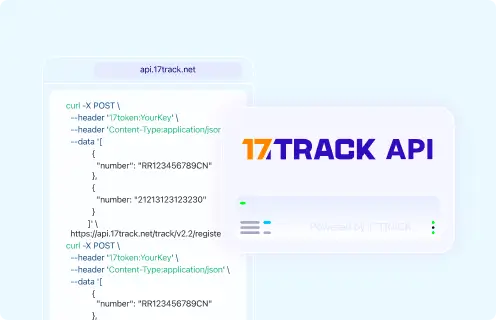
POST https://api.17track.net/track/v2.4/register
17token: YourKey
Content-Type: application/json

[
  {
    "number": "TRACKING_NUMBER",
    "carrier": "CARRIER_CODE"
  }
]

# Use the current 17TRACK documentation to confirm carrier-code
# coverage and response handling for the selected Maersk identifier.
# Official Maersk API access depends on the applicable Maersk product
# and customer credentials; consult current official documentation.
Sources & References
- Maersk — Official website. Maersk
- 17TRACK API Documentation. 17TRACK
17TRACK is an independent tracking platform and is not affiliated with Maersk.
Track your package
Global express parcel tracking service