GLS Group Tracking
Please enter the GLS Group tracking number to check the latest shipping status.
About GLS Group
GLS Group is the public-facing name used here for General Logistics Systems B.V., an international parcel and logistics provider headquartered in Amsterdam, the Netherlands. GLS Group provides B2B, B2C and C2C parcel, logistics and express solutions through subsidiaries and network partners across more than 50 countries.
| Field | Verified information |
|---|---|
| Official name | General Logistics Systems B.V. |
| Official website | https://gls-group.eu/ |
| Carrier type | International parcel, logistics and express provider. |
| Primary region | Europe, North America and connected international markets. |
| Tracking page | Tracking and support are selected through the relevant country website from the GLS Group country selector. |
| Parent organization | International Distribution Services plc. |
| Founded | 1999. |
| Headquarters | Amsterdam, The Netherlands. |
Carrier Entity Relationships
| Entity | Relationship to GLS Group |
|---|---|
| General Logistics Systems B.V. | General Logistics Systems B.V. is the corporate entity identified by GLS Group’s corporate information page. |
| Parcel, logistics and express services | These are service categories operated through GLS Group subsidiaries and network partners. |
| Country subsidiaries and network partners | They perform local collection, hub, depot and delivery activities in the countries selected by the customer. |
| Depots, agencies and Parcel Shops | These facilities support parcel distribution, dispatch and recipient collection, subject to country service rules. |
| 17TRACK | 17TRACK aggregates available carrier events for tracking; it does not operate GLS Group transport or decide claims. |
Quick Answer
Enter the GLS Group tracking number shown on the shipping receipt, label, dispatch email or merchant order page into the applicable country tracking page, or use 17TRACK for an independent multi-carrier view. If no result appears, first check that you entered a parcel tracking number rather than an order number, remove accidental spaces, and allow time for the first carrier scan.
How to Track GLS Group Packages
The official route depends on the country subsidiary handling the shipment. The GLS Group country selector directs users to the relevant local website, while 17TRACK can help identify and consolidate available events.
| Route | Steps |
|---|---|
| Official country tracking | 1. Open the GLS Group country selector. 2. Choose the shipment country. 3. Open the local tracking tool. 4. Enter the parcel tracking number exactly as shown. |
| 17TRACK tracking | 1. Open 17TRACK. 2. Enter the parcel identifier. 3. Let automatic carrier recognition run or select the detected carrier. 4. Compare the latest event with the official country page when an exception needs action. |
| Number source | Look on the parcel label, postal receipt, dispatch confirmation, merchant account or delivery notice. An order ID and a reference ID may identify a purchase without being trackable parcel numbers. |
| No number | Ask the seller or sender for the parcel tracking number. The recipient normally cannot create a carrier investigation without shipment details. |
Tracking Number Formats and Examples
GLS Group does not publish one universal global number pattern on its group overview pages. Local subsidiaries, service products, origin partners and destination partners may issue different identifiers. A pattern alone should therefore be verified through the official country tracker or automatic carrier recognition.
Tracking Number Format
| Identifier family | Normalized pattern and use | ||||||
|---|---|---|---|---|---|---|---|
| Local GLS Group parcel number | Country-specific numeric or alphanumeric identifier issued by the relevant GLS Group subsidiary or operating partner; the exact length and prefix depend on the country and product. | ||||||
View all details for local GLS Group parcel numbers
| |||||||
| Partner or origin identifier | An origin carrier, marketplace logistics provider or international partner may issue the first identifier before a GLS Group subsidiary receives the parcel. | ||||||
View all details for partner or origin identifiers
| |||||||
| Order, reference or label ID | Merchant order IDs and internal references identify a purchase or shipment record and should not be assumed to be parcel tracking numbers. | ||||||
| International postal number | A postal partner may use a UPU S10-style identifier such as XX#########YY; that identifier can remain visible after a destination carrier receives the item. | ||||||
Tracking Statuses and Meanings
| Status | Lifecycle meaning |
|---|---|
| Label created / pre-advice | Shipment data exists, but a physical acceptance scan may not yet have occurred. The sender should confirm handover. |
| Accepted / collected | A local carrier facility or driver has recorded receipt. Sorting and line-haul movement normally follow. |
| In transit | The parcel is moving between depots, hubs, countries or delivery facilities. Scan gaps can occur between facilities. |
| Customs or partner handoff | The parcel is undergoing border processing or transfer between origin, GLS Group and destination network entities; this is not automatically customs release. |
| Out for delivery | The parcel has been assigned to a delivery route. The recipient should monitor access, address and collection instructions. |
| Delivered / pickup ready | A delivery or collection event was recorded. If the parcel is missing, check the delivery location, household, reception desk, Parcel Shop or locker information. |
| Exception / return | An address, access, damage, customs, refusal or routing issue requires follow-up. The sender or local customer service should act before return processing completes. |
Services and Delivery Times
GLS Group states that domestic parcels usually arrive in less than 24 hours, European delivery generally takes 24–96 hours, and cross-border shipments average about 48 hours in the cross-border overview. These are general network statements, not a universal guarantee for every country, product or address.
Service Comparison
| Service | Best fit |
|---|---|
| Standard parcel | Domestic and European parcel delivery within defined standard delivery times. |
| Cross-border parcel | B2B and B2C shipments moved through GLS Group subsidiaries and network partners. |
| Express | Urgent national or Europe-wide shipments in countries where the local subsidiary offers an express product. |
| Freight and logistics | Goods requiring separate freight distribution or special handling because of size, weight or urgency. |
Delivery Time
| Service scope | Published network indication |
|---|---|
| Domestic parcel | Usually less than 24 hours according to the group overview; local cut-off times and regional terms apply. |
| European parcel | Generally 24–96 hours; customs, destination, weekends and service selection can change the result. |
| Cross-border overview | The cross-border page describes an average of 48 hours for cross-border shipments; this is not a money-back guarantee. |
| Special, freight or express | The local product terms and destination quote control; size, urgency, handoff and customs can affect delivery. |
Destination Country Delivery Times
| Destination / service | Official network indication |
|---|---|
| Domestic destination | Usually less than 24 hours for domestic parcels, subject to the local subsidiary’s service terms. |
| European destination | Generally 24–96 hours for European parcel movements; the destination country website provides the applicable route detail. |
| North American or other international destination | The group pages confirm network coverage and cross-border capability, but route-specific delivery estimates must be obtained from the relevant country product. |
Delivery estimates can be affected by collection cut-off, weekends, public holidays, remote addresses, weather, peak volume, address quality, customs, prohibited goods and partner handoffs. An estimated delivery window is different from a guaranteed delivery date.
Common Tracking Problems and Solutions
| Problem or status | First action |
|---|---|
| Invalid number | Check the identifier against the label or seller record; distinguish order ID from parcel number, then try the relevant country tracker. |
| No tracking events | Confirm the seller has physically handed over the parcel. A label or electronic pre-advice is not proof of acceptance. |
| No update for several days | Check the last facility, destination country and service standard; ask the sender or local support when the route’s stated delivery window has passed. |
| Customs or handoff delay | Prepare invoice, product description, HS code and recipient details; the importer may need to respond to customs or pay assessed charges. |
| Address or delivery failure | Contact the local subsidiary promptly with the tracking number and corrected address; the sender may control redirection or return requests. |
| Delivered but not received | Check the delivery location, household members, reception desk, neighbours, Parcel Shop or locker; request proof of delivery and ask the seller to open a carrier inquiry. |
| Lost or damaged parcel | Keep packaging and photographs, record the last scan and contact the sender; the contracting shipper commonly controls the formal claim. |
| Return to sender | Ask the sender why the return was triggered and whether a new shipment or address correction is possible before reshipping. |
International Shipping, Customs and Carrier Handoffs
GLS Group’s international network uses subsidiaries and network partners. A destination scan, customs arrival or partner pre-advice does not necessarily mean that GLS Group has physically received the parcel or that customs has released it.
International Flow
| Stage | What it means |
|---|---|
| Origin acceptance | The origin carrier or GLS Group country operation records collection and prepares sorting. |
| Export processing | The parcel is routed through an origin depot or hub and may undergo export security or customs checks. |
| Line-haul | The shipment moves between hubs or countries; event visibility may pause during transport. |
| Partner handoff | Electronic data, physical transfer and first receiving scan are separate events; a partner scan alone does not establish physical receipt by the next carrier. |
| Import customs | Authorities or a customs intermediary assess documents, classification, duties and taxes. Arrival at an exchange or customs facility is not release. |
| Destination delivery | The destination GLS Group subsidiary, partner, depot, Parcel Shop or locker network completes final delivery or collection. |
For cross-border goods, accurate contact details, declared value, country of origin, product description, HS code and any required EORI information support customs processing. Duties, import VAT and clearance fees depend on the destination rules and shipment terms.
Delivery Management and Post-shipment Options
| Option | Practical use |
|---|---|
| Home delivery | The standard destination method; local country rules determine delivery notifications and available instructions. |
| Parcel Shop or drop-off box | GLS Group describes Parcel Shops and drop-off boxes as recipient options in its network overview; eligibility depends on the local service. |
| Parcel Locker | Locker collection is available in parts of the GLS Group network; the local tracker or delivery message provides the applicable location and deadline. |
| Address or delivery change | Request options vary by country and shipment stage. The recipient should use the local subsidiary, while the sender may retain contractual control. |
| Proof of delivery | Ask the relevant country operation or delivery support for available delivery evidence when the tracking record shows delivered. |
Claims and Shipping Restrictions
A tracking inquiry, a carrier investigation, an insurance claim and a merchant refund are different processes. The sender should normally contact the relevant country operation because the shipping contract and service terms determine eligibility, evidence and filing deadlines.
Claims and Refunds
| Process | Use when and who acts |
|---|---|
| Tracking inquiry | Use when an event needs explanation; the recipient can ask support, while the sender should provide shipment records. |
| Loss or damage investigation | The sender or contracting customer generally starts the investigation with the tracking number, shipment date, contents, value and packaging evidence. |
| Insurance or compensation claim | Eligibility, limits and deadlines depend on the local product terms; retain the parcel, packaging, photographs, invoice and proof of value. |
| Merchant refund | A seller decides a commercial refund or replacement separately from any carrier investigation. 17TRACK cannot approve it. |
Shipping Restrictions
| Category | Customer implication |
|---|---|
| Dangerous goods and batteries | May be prohibited or subject to product-specific packaging, labeling and route rules; non-compliance can cause refusal, delay or return. |
| Liquids, perishables and valuables | Eligibility and protection vary by country and service. Check the local terms before tendering the parcel. |
| Customs-controlled goods | Accurate descriptions, HS codes, origin and recipient information are required for cross-border clearance. |
| Oversize or heavy goods | Freight or special-handling networks may apply instead of ordinary parcel services. |
Customer Service
| Channel | Verified route and best use |
|---|---|
| Country customer support | Use the GLS Group country and partner contact directory for tracking, delivery and local support. |
| Corporate contact | The corporate information page directs tracking and delivery questions to the country support contacts rather than the Amsterdam corporate office. |
| Information to prepare | Tracking number, sender and recipient details, collection date, service, latest scan, address, contents description, value evidence and damage photographs. |
| Escalation order | Check tracking first, contact the destination country support for delivery issues, ask the sender to open an investigation, and preserve all records for a claim. |
Ecommerce and Business Tracking
Merchants should distinguish the local GLS Group website from a multi-carrier platform. A merchant can use the official country service for carrier-specific operations, while a multi-carrier API can normalize events, monitor exceptions and reduce “where is my order” requests across several carriers.
Developer/API Comparison
| Option | Provider | ||||||||
|---|---|---|---|---|---|---|---|---|---|
| Country carrier integration | Relevant GLS Group subsidiary or country operation. | ||||||||
View all details for country carrier integration
| |||||||||
| 17TRACK API | 17TRACK multi-carrier tracking platform. | ||||||||
View all details for the 17TRACK API
| |||||||||
FAQ
Basic FAQs
Enter the parcel tracking number on the applicable country website selected from GLS Group’s country selector or use 17TRACK to view available events.
Look on the parcel label, collection receipt, dispatch email or merchant shipment page; an order number may not be trackable.
The format varies by country, subsidiary, service and partner, so the official country tracker should verify the identifier rather than relying on a prefix alone.
The first event normally appears after the carrier or partner records a physical acceptance scan; label creation can occur earlier.
The parcel may be between hubs, awaiting a handoff, undergoing customs processing or still awaiting physical acceptance; compare the last scan with the applicable delivery standard.
GLS Group describes domestic delivery as usually less than 24 hours and European delivery as generally 24–96 hours, subject to local service terms and exceptions.
Check the tracking message, address and delivery instructions, then contact the applicable country operation promptly; the sender may need to request a correction.
Check the delivery location, household, reception desk, neighbours, Parcel Shop or locker, then request proof of delivery and ask the seller to open an inquiry.
Keep the packaging and photographs, record the tracking history and ask the sender to start the applicable investigation or claim.
Use the country support directory linked from the corporate information page and include the GLS Group tracking number in every message.
Expert FAQs
GLS Group operates through country subsidiaries and network partners, so tracking availability and event wording can vary by country and service.
No; electronic pre-advice, partner possession and the first GLS Group receiving scan are separate events.
The parcel moves through origin sorting, line-haul, partner or subsidiary handoff, import processing and destination delivery; customs arrival is not the same as release.
Import duties, taxes and clearance fees depend on destination law, declared goods and the shipment’s commercial terms, including the applicable Incoterms.
GLS Group describes Parcel Shops, drop-off boxes and Parcel Lockers as network receiving options, but availability depends on the local subsidiary and shipment eligibility.
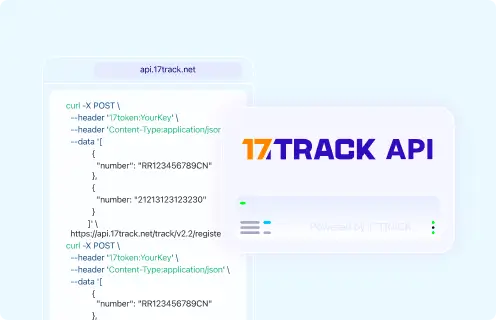
Businesses can use an applicable country integration where documented or use the 17TRACK API for multi-carrier tracking; the supported carrier code must be confirmed in current 17TRACK documentation.
No; address changes, delivery instructions and redirection are controlled by the relevant country operation and shipment terms.
Tracking API
// 1. Current public official GLS Group tracking API:
// Current public official tracking API not confirmed from the supplied official evidence.

// 2. 17TRACK API
// Endpoint: POST https://api.17track.net/track/v2.4/register
// Header: 17token: YourKey
// Header: Content-Type: application/json
// Confirm the current GLS Group carrier code in 17TRACK documentation
// before replacing CARRIER_CODE.

fetch("https://api.17track.net/track/v2.4/register", {
  method: "POST",
  headers: {
    "17token": "YourKey",
    "Content-Type": "application/json"
  },
  body: JSON.stringify([
    {
      "number": "TRACKING_NUMBER",
      "carrier": "CARRIER_CODE"
    }
  ])
});
Sources & References
- GLS Group — Official country selector. GLS Group
- Corporate Information. General Logistics Systems B.V.
- About us. GLS Group
- Our network. GLS Group
- Parcel, Logistics & Express. GLS Group
- Cross border services. GLS Group
- Country and partner customer support. GLS Group
- 17TRACK API documentation. 17TRACK
17TRACK is an independent tracking platform and is not affiliated with GLS Group.
Track your package
Global express parcel tracking service