DPD (RU) Tracking
Please enter the DPD (RU) tracking number to check the latest shipping status.
About DPD (RU)
DPD (RU) is the carrier identity used for tracking shipments associated with DPD operations in Russia. Use the official DPD (RU) website for the carrier’s current shipment options, tracking results, delivery instructions and support routes. Service availability, route coverage and customer options depend on the shipment contract, origin, destination and current operating conditions.
Carrier Overview
| Field | Verified reference |
|---|---|
| Canonical display name | DPD (RU) |
| Official website | https://www.dpd.ru/ |
| Primary tracking action | Enter the shipment identifier supplied by the sender or shown on the carrier label. |
Carrier Entity Relationships
| Entity | Relationship summary |
|---|---|
| DPD (RU) | DPD (RU) is the carrier identity to select when a shipment is assigned to this tracking network. |
| Shipment identifier | The shipment identifier connects a label or booking record with available carrier events; an order number is a different commercial reference. |
| Official tracking page | The official DPD (RU) website is the primary source for carrier-controlled tracking and delivery actions. |
| 17TRACK | 17TRACK aggregates available tracking events as an independent platform and does not physically transport shipments or decide claims. |
Quick Answer
To track a DPD (RU) shipment, enter the shipment number from the sender, label, receipt or dispatch notification on the official DPD (RU) website or use 17TRACK. If no result appears, check that you entered a tracking number rather than an order number, remove accidental spaces, and ask the sender whether the parcel has been physically handed over.
How to Track DPD (RU) Packages
The official route is best for carrier-specific delivery options. 17TRACK is useful when the shipment has passed through more than one logistics network or when you want a consolidated event history.
Tracking Paths
| Path | Action |
|---|---|
| Official DPD (RU) tracking | Open the official website, locate the tracking function, enter the shipment identifier and review the latest carrier event. |
| 17TRACK tracking | Open 17TRACK, paste the shipment identifier, select or confirm DPD (RU) when prompted, and compare the event history with the seller’s information. |
| No tracking number | Ask the sender or marketplace seller for the shipment identifier and dispatch confirmation; an order number alone may not be searchable. |
A buyer normally finds the tracking number in the shipping email, marketplace order page, carrier notification or seller message. A reference number, invoice number, order number, delivery notice number and tracking number can be different identifiers. Do not infer the carrier solely from a prefix; use the official lookup or 17TRACK’s carrier recognition.
Tracking Number Formats and Examples
DPD (RU) shipment identifiers should be copied exactly as supplied by the sender. Public materials do not establish one universal format that can safely identify every DPD (RU) service, so a prefix or length should not be treated as proof of a product, origin or destination. Examples below are deliberately masked.
Tracking Number Format
| Identifier family | Normalized pattern | ||||||||||
|---|---|---|---|---|---|---|---|---|---|---|---|
| DPD (RU) shipment identifier | Use the exact carrier-issued or booking-issued value shown by the sender; a masked example may look like ############. | ||||||||||
View all details for DPD (RU) shipment identifiers
| |||||||||||
| Partner or handoff identifier | A separate partner value may appear in cross-border or multi-carrier records; use the number linked to the current tracking page. | ||||||||||
View all details for partner or handoff identifiers
| |||||||||||
| Order or reference number | A merchant value such as ORDER-#### is not automatically a DPD (RU) tracking number. | ||||||||||
View all details for order or reference numbers
| |||||||||||
Tracking Statuses and Meanings
A tracking status describes the latest recorded event, not necessarily the parcel’s exact position at the moment you check. Responsibility can change during a partner handoff, customs process or last-mile delivery attempt.
Status Quick Lookup
| Status family | Meaning | ||||||||
|---|---|---|---|---|---|---|---|---|---|
| Pre-shipment or label created | Shipment data may exist before physical acceptance; the sender should confirm handover. | ||||||||
View all details for pre-shipment status
| |||||||||
| Accepted or in transit | The shipment has a recorded carrier movement or processing event. | ||||||||
View all details for accepted or in-transit status
| |||||||||
| Customs or handover | The shipment is undergoing border, documentation or partner-transfer processing. | ||||||||
View all details for customs or handover status
| |||||||||
| Out for delivery or delivered | The parcel is assigned to a delivery route or has a recorded delivery event. | ||||||||
View all details for delivery statuses
| |||||||||
| Exception or return | A delivery, address, payment, customs or handling issue requires resolution. | ||||||||
View all details for exception or return status
| |||||||||
Services and Delivery Times
Delivery timing must be read from the shipment’s service agreement and route-specific quote. A tracking page may show an estimate, while a service standard or guarantee has separate contractual conditions.
Service Comparison
| Service category | Best use |
|---|---|
| Domestic parcel delivery | Shipments moving within the carrier’s applicable domestic network. |
| Cross-border shipment | A parcel requiring international transport, border processing or a destination partner. |
| Business shipment | Commercial consignments arranged under a sender’s account or contract. |
Delivery Time
| Timing item | How to interpret it |
|---|---|
| Estimated delivery date | A planning estimate generated from route, service and available shipment data. |
| Published service standard | A service-specific standard whose scope, exclusions and counting rules must be checked in the applicable carrier terms. |
| Delivery guarantee | A contractual commitment only where the selected service explicitly provides one; an estimate is not automatically a guarantee. |
Destination Country Delivery Times
| Destination group | Planning guidance |
|---|---|
| Domestic Russian destinations | Use the route-specific estimate shown in the shipment booking or official tracking record. |
| International destinations | Confirm the contracted service, border route, customs requirements and destination delivery arrangement before relying on an estimate. |
| Remote or restricted destinations | Allow for additional routing, access, weather, customs or partner-processing time where applicable. |
A precise country-by-country average is not inserted without a current DPD (RU) service source because route times can change with origin, destination, contract, customs, weekends, holidays, weather, address quality and handoff arrangements.
Common Tracking Problems and Solutions
Problem & Solution
| Problem or status | First action |
|---|---|
| Invalid number | Copy the identifier again, remove accidental spaces, and ask the sender to confirm the carrier number rather than the order number. |
| No events or label created | Ask when the parcel was physically handed over; electronic pre-advice does not prove acceptance. |
| No update for an extended period | Review the last scan, consider weekends and handoffs, then ask the sender to contact the shipping account owner. |
| Customs or handover delay | Check whether documents, duties or recipient information are required through the official channel. |
| Delivery exception or failed attempt | Verify the address and contact the official delivery channel or sender about reattempt or pickup options. |
| Delivered but not received | Check the entrance, safe place, reception desk, household members and neighbours, then request proof-of-delivery details and contact the seller. |
| Lost or damaged parcel | Preserve packaging, photographs, invoices and correspondence; the sender or account holder should ask the carrier about an investigation or claim. |
| Returned to sender | Ask the sender why the return was triggered and whether a corrected address, customs document or new shipment is required. |
International Shipping, Customs and Carrier Handoffs
For a cross-border shipment, the latest scan may belong to an origin carrier, customs authority, transport partner or destination delivery network. Arrival at an exchange or customs facility does not by itself mean that customs clearance is complete.
International Flow
| Stage | What it means |
|---|---|
| Origin acceptance | The origin shipping network records receipt or preparation of the parcel. |
| Export processing | The shipment is sorted and prepared for departure, subject to route and documentation rules. |
| Line-haul movement | The shipment moves between transport facilities; scan gaps can occur between departures and arrivals. |
| Partner handoff | Electronic pre-advice, physical transfer and first receiving scan are separate events; a partner scan does not necessarily prove final-carrier acceptance. |
| Import customs | Authorities or their appointed agents assess documents, duties, restrictions and release requirements. |
| Destination delivery | A destination network performs final-mile movement, pickup, delivery or return according to the applicable arrangement. |
Delivery Management and Post-shipment Options
Delivery changes are controlled by the carrier, sender account or destination partner. The recipient should use the official DPD (RU) route shown for the shipment rather than relying on a third-party tracker to change delivery instructions.
| Option | Who should request it |
|---|---|
| Address correction | Usually the sender or contracted account holder, with recipient cooperation where the carrier permits it. |
| Redelivery or pickup | The recipient may follow the delivery notice or official tracking instructions, subject to shipment eligibility. |
| Proof of delivery | The recipient or sender should request it through the official carrier or account channel when a delivery dispute exists. |
Lost, Damaged, Claims, Insurance and Refunds
A tracking inquiry, carrier investigation, insurance claim, postage refund and seller refund are different processes. Keep the shipment number, dispatch record, packaging, contents photographs, invoice and proof of value. The sender or account holder commonly controls carrier claims, while a marketplace refund follows the marketplace’s own rules.
Claims and Refunds
| Process | Use when |
|---|---|
| Tracking inquiry | The latest event needs clarification or the shipment appears delayed. |
| Carrier investigation | The shipment appears lost, misrouted or delivered incorrectly; ask the sender or account holder to initiate the official process. |
| Damage claim | Contents or packaging arrived damaged; retain the parcel and document the condition before disposal. |
| Seller or marketplace refund | The purchase dispute concerns the merchant transaction rather than a carrier payment obligation. |
Shipping Restrictions and Special Handling
Prohibited and restricted goods depend on the route, service, packaging, transport mode and applicable law. Confirm the current DPD (RU) rules before shipping batteries, liquids, aerosols, dangerous goods, valuables, perishables or regulated documents.
Shipping Restrictions
| Category | Practical precaution |
|---|---|
| Dangerous goods and batteries | Confirm acceptance, classification and packaging before tender; rejection or delay may follow from incorrect declaration. |
| Liquids, aerosols and perishables | Check route-specific restrictions, leakage protection and temperature requirements. |
| Valuable or regulated goods | Check declared-value, insurance, documentation and signature conditions. |
| Customs-controlled goods | Use accurate descriptions, value and origin information; incomplete data can delay clearance or cause return. |
Customer Service
Use the official DPD (RU) website for the current tracking entry, contact route and regional service information. Prepare the shipment number, sender and recipient details, dispatch date, latest scan, address, service type, contents description and any photographs before contacting support.
| Channel | Best use |
|---|---|
| Official website | Current tracking, service information and official contact routes. |
| Sender or marketplace | Missing shipment data, address corrections, seller refunds and account-controlled claims. |
| 17TRACK | Independent multi-carrier event aggregation; it cannot authorize delivery changes or claims. |
Ecommerce and Business Tracking
Businesses should distinguish the consumer tracking page, any carrier account integration and a multi-carrier tracking API. A merchant can use standardized events and exception monitoring to answer delivery questions, but the carrier or contracted account owner remains responsible for operational corrections and claims.
Developer/API Comparison
| Option | Provider | ||||||||||
|---|---|---|---|---|---|---|---|---|---|---|---|
| Official carrier integration | DPD (RU) | ||||||||||
View all details for the official carrier integration
| |||||||||||
| 17TRACK API | 17TRACK | ||||||||||
View all details for the 17TRACK API
| |||||||||||
FAQ
Basic FAQs
Enter the shipment number on the official DPD (RU) website or use 17TRACK to view available shipment events.
Look in the seller’s dispatch message, marketplace order page, carrier notification, label or shipping receipt.
The format depends on the shipment workflow, so use the complete identifier supplied by the sender rather than guessing from a prefix.
The parcel may be between scans, awaiting handover, undergoing processing or affected by a data delay; ask the sender to confirm physical acceptance.
Delivery time depends on origin, destination, selected service, address, operating conditions and any customs or partner processing.
Check the delivery event and official instructions, verify the address and contact the carrier or sender about reattempt or pickup options.
Check the entrance, safe place, reception desk, household members and neighbours, then request delivery details and contact the seller.
Preserve packaging and evidence, then ask the sender or contracted account holder to begin the carrier investigation or claim process.
Use the shipment identifier on the official site or 17TRACK and remember that a partner or destination carrier may provide later events.
Start with the current contact route on the official DPD (RU) website and prepare the shipment number, address and latest event.
Expert FAQs
No. A label or electronic booking can precede the first physical acceptance scan, so the sender should confirm handover.
Yes, a cross-border or partner workflow can expose linked identifiers; ask the sender to provide the number used by the current delivery network.
No. Arrival, inspection, document review, duty assessment and release are separate stages.
The sender or contracted account holder generally controls shipment corrections, while recipient participation depends on the service and delivery stage.
Businesses should confirm current DPD (RU) integration access directly with the carrier or use the documented 17TRACK API for supported multi-carrier tracking.
The official DPD (RU) route is carrier-specific, while 17TRACK is an independent aggregator that organizes available events from supported networks.
No. Address changes, redelivery requests and claims must follow the official carrier or sender-account process.
Not automatically. An estimate is a planning indication; a guarantee exists only when the selected service terms expressly provide one.
Tracking API
// 1. Carrier official tracking API
// Current public official DPD (RU) tracking API endpoint and authentication
// are not established from the available evidence. Confirm them directly
// with DPD (RU) before implementing an official integration.

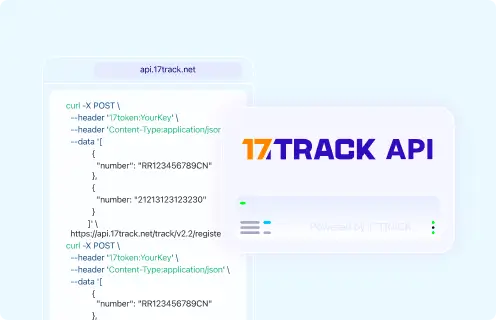
// 2. 17TRACK API
POST https://api.17track.net/track/v2.4/register
Headers:
  17token: YourKey
  Content-Type: application/json

Body:
[
  {
    "number": "TRACKING_NUMBER",
    "carrier": "CARRIER_CODE"
  }
]

// Confirm the current DPD (RU) carrier code in the 17TRACK documentation
// or account materials before sending production requests.
Sources & References
- DPD.ru — Official DPD (RU) website. DPD (RU)
- 17TRACK — Multi-carrier tracking platform. 17TRACK
- 17TRACK API Documentation. 17TRACK
17TRACK is an independent tracking platform and is not affiliated with DPD (RU).
Track your package
Global express parcel tracking service