CTC Tracking
Please enter the CTC tracking number to check the latest shipping status.
About CTC
CTC is the logistics identity associated with the official website below. Use the shipment number supplied by the seller or shipper to identify available CTC events, and rely on the tracking record to identify any partner that handles a later transport or delivery stage.
CTC Overview
| Field | Verified information |
|---|---|
| Canonical display name | CTC |
| Official website | https://www.szctc.cn/ |
| Tracking access | Use CTC shipment tools available through the official website or enter the carrier-issued number on 17TRACK. |
| 17TRACK relationship | 17TRACK independently aggregates tracking events made available for supported carriers; it does not transport CTC shipments. |
Carrier Entity Relationships
| Entity | Relationship to CTC | ||||||
|---|---|---|---|---|---|---|---|
| CTC | CTC is the canonical carrier identity used on this tracking guide. | ||||||
View all details for the CTC identity
| |||||||
| Shipment identifier | A CTC or partner shipment identifier links a parcel to tracking events. | ||||||
View all details for shipment identifiers
| |||||||
| Handoff carrier | A partner may receive physical custody during line-haul, customs processing, or last-mile delivery. | ||||||
View all details for handoff carriers
| |||||||
| 17TRACK | 17TRACK provides independent multi-carrier tracking visibility for supported CTC identifiers. | ||||||
View all details for 17TRACK
| |||||||
Quick Answer
Enter the CTC shipment number shown in the dispatch message, shipping label, seller account, or logistics record on the official CTC website or 17TRACK. If no result appears, remove spaces, confirm that the value is a tracking number rather than an order number, and allow time for the first physical acceptance scan.
17TRACK is an independent tracking platform. Address changes, delivery instructions, customs documents, searches, claims, insurance decisions, and refunds must be handled by CTC, the current delivery partner, the shipper, or the merchant as applicable.
How to Track CTC Packages
Track through CTC when you need the carrier’s own record, or use 17TRACK when you need one view that may connect CTC and a later carrier.
- Copy the shipment number from the shipping label, seller dispatch email, order shipment page, or logistics manifest.
- Open the official CTC website and use its available shipment-tracking function.
- Alternatively, open 17TRACK, paste the number, and select CTC if automatic carrier detection is inconclusive.
- Read the most recent event together with its location, timestamp, and named handling carrier.
- If a last-mile number appears, track both identifiers and contact the carrier that has the newest physical scan.
Which Identifier Should You Use?
| Identifier | Tracking use |
|---|---|
| Carrier tracking number | Use this first for CTC shipment events. |
| Last-mile tracking number | Use after the destination carrier is named or the secondary number appears. |
| Merchant order number | Use in the store account; it is not automatically a carrier tracking number. |
| Reference or invoice number | Use only when the CTC business workflow explicitly accepts that reference. |
| Delivery notice number | Use with the carrier named on the notice for pickup or redelivery instructions. |
CTC Tracking Number Formats and Examples
Use the complete identifier exactly as issued. CTC number families should not be inferred from a prefix alone because merchant references, partner numbers, and last-mile numbers may coexist in one shipment record.
Tracking Number Format
| Identifier family | Normalized pattern | ||||||||||||
|---|---|---|---|---|---|---|---|---|---|---|---|---|---|
| CTC shipment identifier | Enter the full value printed or transmitted for the shipment; remove surrounding spaces. | ||||||||||||
View all details for a CTC shipment identifier
| |||||||||||||
| Partner-issued identifier | Preserve letters, digits, and any leading zeroes; remove display spaces only when the tracking form requires it. | ||||||||||||
View all details for partner-issued identifiers
| |||||||||||||
| UPU S10 postal identifier | AA ### ### ### BB, where the final letters identify the issuing postal authority’s country code. | ||||||||||||
View all details for S10 identifiers
| |||||||||||||
| Merchant order or reference ID | Store-defined letters and digits; example: ORDER-####-XXXX. | ||||||||||||
View all details for merchant references
| |||||||||||||
CTC Tracking Statuses and Meanings
Read a CTC status as a lifecycle event, not a delivery promise. The current responsible party is normally the organization named in the newest physical scan.
Status Quick Lookup
| Status | What it means | ||||||||
|---|---|---|---|---|---|---|---|---|---|
| Shipment information received | A label or electronic record exists, but physical acceptance is not established. | ||||||||
View all details for shipment information received
| |||||||||
| Accepted or collected | The shipment received its first physical custody scan. | ||||||||
View all details for accepted shipments
| |||||||||
| In transit or departed facility | The parcel is moving between processing points or awaiting the next recorded scan. | ||||||||
View all details for in-transit shipments
| |||||||||
| Customs processing | The shipment or its declaration is under border-agency review; arrival does not mean release. | ||||||||
View all details for customs processing
| |||||||||
| Handed to delivery partner | A partner relationship is recorded; physical custody is strongest when the partner posts a receiving scan. | ||||||||
View all details for partner handoff
| |||||||||
| Out for delivery | The destination carrier assigned the parcel to a delivery route. | ||||||||
View all details for out for delivery
| |||||||||
| Delivered | The carrier recorded completion at the stated location, recipient, locker, or pickup point. | ||||||||
View all details for delivered shipments
| |||||||||
| Available for pickup | The parcel is being held at the named facility, shop, locker, or service point. | ||||||||
View all details for pickup shipments
| |||||||||
| Delivery exception | Delivery was interrupted by address, access, recipient, weather, operational, or compliance issues. | ||||||||
View all details for delivery exceptions
| |||||||||
| Returning to sender | The carrier has begun moving the parcel back rather than continuing delivery. | ||||||||
View all details for return to sender
| |||||||||
CTC Services and Delivery Times
The booked CTC product, route, customs requirements, and destination carrier determine delivery timing. Use the service name and ETA in the individual booking rather than treating a general tracking estimate as a guaranteed date.
Service Comparison
| Service | Best for | ||||||||||||
|---|---|---|---|---|---|---|---|---|---|---|---|---|---|
| Booked CTC shipment service | Parcels or consignments accepted under the product stated in the shipper’s booking. | ||||||||||||
View all details for booked CTC shipment services
| |||||||||||||
| Partner last-mile delivery | Destination delivery after CTC or another upstream operator transfers the parcel. | ||||||||||||
View all details for partner last-mile delivery
| |||||||||||||
Delivery Time
| Service | Published delivery standard | ||||||||||
|---|---|---|---|---|---|---|---|---|---|---|---|
| CTC shipment | Use the route-specific standard or ETA shown in the accepted booking and tracking record. | ||||||||||
View all timing details for CTC shipments
| |||||||||||
Destination Country Delivery Times
CTC route-level country averages should be taken from the accepted quotation or shipment ETA. The following destination matrix explains how to interpret route timing without inventing a universal country promise.
| Destination Country / Region | Estimated Delivery Time Range |
|---|---|
| United States | Use the booked CTC route estimate and the destination-carrier ETA. |
| Canada | Use the booked CTC route estimate and the destination-carrier ETA. |
| Mexico | Use the booked CTC route estimate; import processing may change the window. |
| United Kingdom | Use the booked CTC route estimate; tax-data quality can affect release. |
| Germany | Use the booked CTC route estimate; complete electronic customs data is important. |
| France | Use the booked CTC route estimate; monitor import and local-carrier scans. |
| Spain | Use the booked CTC route estimate; islands and remote areas may add time. |
| Italy | Use the booked CTC route estimate; customs or address review may extend delivery. |
| Netherlands | Use the booked CTC route estimate and any local handoff ETA. |
| Belgium | Use the booked CTC route estimate and any local handoff ETA. |
| Poland | Use the booked CTC route estimate; allow for destination processing. |
| Sweden | Use the booked CTC route estimate; remote-area delivery may add time. |
| Austria | Use the booked CTC route estimate and local-carrier ETA. |
| Switzerland | Use the booked CTC route estimate; duties and import documents may affect release. |
| Japan | Use the booked CTC route estimate and destination-carrier ETA. |
| South Korea | Use the booked CTC route estimate; recipient import data may be required. |
| Australia | Use the booked CTC route estimate; biosecurity screening can affect timing. |
| New Zealand | Use the booked CTC route estimate; biosecurity review may add time. |
| Singapore | Use the booked CTC route estimate and destination-carrier ETA. |
| Malaysia | Use the booked CTC route estimate; monitor customs and handoff events. |
| Thailand | Use the booked CTC route estimate; recipient or tax information may be requested. |
| India | Use the booked CTC route estimate; import identification and document checks may add time. |
| Philippines | Use the booked CTC route estimate; island and regional delivery may extend timing. |
| Indonesia | Use the booked CTC route estimate; customs and archipelago delivery may add time. |
| Brazil | Use the booked CTC route estimate; recipient tax identification and customs processing may affect release. |
| Chile | Use the booked CTC route estimate; monitor customs and destination-carrier induction. |
| United Arab Emirates | Use the booked CTC route estimate; address and phone quality are important for delivery. |
| Saudi Arabia | Use the booked CTC route estimate; recipient and address data may affect clearance or delivery. |
| South Africa | Use the booked CTC route estimate; customs and regional delivery may extend timing. |
For every destination above, the primary service, average delivery days, last-mile carrier, and clearance workflow are shipment-specific. Use the booking confirmation and tracking record to identify those fields. A predicted date is an estimate unless the applicable contract explicitly provides a guarantee.
Common CTC Tracking Problems and Solutions
Start with the newest physical scan, identify who currently holds the parcel, and direct the request to that party. Buyers should also involve the seller when dispatch, value, replacement, or refund evidence is needed.
Problem & Solution
| Problem/status shown | Immediate action |
|---|---|
| Invalid number or no result | Copy the number again, remove spaces, preserve leading zeroes, and confirm it is not an order ID. |
| Label created with no acceptance | Ask the seller when and where the parcel was physically tendered. |
| Long gap in transit | Check the route ETA, latest location, customs status, and any alternate carrier number. |
| Shipping partner handoff | Wait for the partner’s first receiving scan; electronic data alone does not prove physical transfer. |
| Customs hold | Review requests for invoice, description, value, recipient identification, tax, or permit information. |
| Address issue | Contact the current delivery carrier and the shipper promptly; correction may be restricted after dispatch. |
| Failed delivery | Follow the carrier notice for retry, pickup, access, or contact instructions. |
| Available for pickup | Collect from the named location with the notice and required identification. |
| Returning to sender | Contact the seller about the return reason and replacement or refund options. |
| Delivered but not received | Check the recorded location, household, reception, neighbors, safe place, locker, and proof of delivery. |
| Lost or damaged | Preserve packaging, contents, photos, invoices, label, and tracking history; ask the contracting shipper to start the applicable process. |
CTC International Shipping, Customs and Carrier Handoffs
An international CTC shipment can pass through several custodians. Electronic pre-advice, physical handoff, customs release, and last-mile acceptance are separate events.
International Flow
| Stage | What is happening |
|---|---|
| Shipment creation | The shipper creates the logistics record and customs data. |
| Origin acceptance | CTC or an origin collection partner records physical receipt. |
| Origin processing | The parcel is sorted, consolidated, measured, and prepared for its route. |
| Export compliance | Data or goods may be screened for export, security, and transport compliance. |
| International line-haul | A transport operator moves the parcel between origin and destination gateways. |
| Destination arrival | The parcel reaches a destination gateway or exchange facility; this does not itself prove customs release. |
| Import customs | The declaration may be reviewed, assessed, inspected, released, or queried. |
| Partner handoff | Shipment data may be sent before the destination carrier physically receives and scans the parcel. |
| Last-mile delivery | The destination carrier sorts the parcel to a route, pickup point, or delivery address. |
The importer or recipient may be responsible for duties, taxes, identification, permits, or supporting documents according to destination law and the sale terms. A tracking status cannot override a customs decision, and no tracking platform can promise a clearance time.
CTC Delivery Management and Post-shipment Options
Delivery changes depend on the booked service and the carrier currently holding the parcel. The sender normally has the strongest authority to request a contractual change.
Delivery Management
| Option | Who can request |
|---|---|
| Address correction | Usually the shipper; recipient options depend on the current carrier. |
| Redelivery or pickup | The recipient when the destination carrier offers the option. |
| Intercept or return | Usually the contracting shipper, subject to route and shipment stage. |
| Proof of delivery | The shipper or recipient where the delivery carrier makes it available. |
A request is not a guarantee of success. Security controls, customs status, service eligibility, delivery stage, and carrier policy may prevent a change or create a fee.
CTC Lost, Damaged, Claims, Insurance and Refunds
A tracking inquiry, transport investigation, insurance claim, shipping-fee refund, and merchant refund are different processes. Use the process attached to the shipping contract and retain all evidence.
Claims and Refunds
| Process | Use when |
|---|---|
| Tracking inquiry | The parcel is delayed, has an unexplained scan gap, or needs location clarification. |
| Loss or damage investigation | The shipment cannot be located, arrives damaged, or has missing contents. |
| Insurance or contractual claim | The claimant seeks compensation under purchased cover or the transport contract. |
| Merchant refund or replacement | The buyer seeks a commercial remedy from the seller. |
Prepare the tracking number, booking record, ship date, service, item description, declared value, commercial invoice, payment proof, packaging, label, damage photographs, and correspondence. Do not discard packaging before the carrier or seller confirms that inspection is unnecessary. 17TRACK cannot approve compensation or refunds.
CTC Shipping Restrictions and Special Handling
Restrictions depend on the route, transport mode, product, and destination law. Obtain route approval before shipping regulated or hazardous goods.
Shipping Restrictions
| Category | Key condition |
|---|---|
| Dangerous goods | Require classification, approval, documentation, packaging, marking, and a permitted transport mode. |
| Lithium batteries | Battery type, rating, condition, packing configuration, and route determine acceptance. |
| Liquids, aerosols, and powders | May need leak-resistant packaging, declarations, testing records, or route approval. |
| Food, plants, and animal products | May be prohibited or require health, quarantine, or import permits. |
| Medicines and medical products | May require prescriptions, licenses, temperature control, or importer authorization. |
| Weapons, illegal goods, and controlled substances | Prohibited or strictly regulated by applicable law and transport rules. |
| Valuables and perishables | Acceptance, liability, packaging, and service eligibility may be restricted. |
A restricted item can cause security screening, customs holds, return, disposal, seizure, delayed tracking, or denial of compensation. Consult the current CTC website before tendering the shipment.
CTC Customer Service
Use the official website and the contact path shown in the shipment record. For marketplace purchases, contact the seller when the issue involves dispatch proof, a commercial invoice, replacement, or refund.
Customer Service
| Channel | Verified contact/link | ||||||||||
|---|---|---|---|---|---|---|---|---|---|---|---|
| Official CTC website | https://www.szctc.cn/ | ||||||||||
View all details for the official CTC website
| |||||||||||
| 17TRACK | 17TRACK shipment tracking | ||||||||||
View all details for 17TRACK
| |||||||||||
| Seller or shipper | Use the order account or contractual business contact that created the shipment. | ||||||||||
View all details for seller or shipper support
| |||||||||||
CTC Ecommerce and Business Tracking
Merchants can use shipment-level CTC tracking for operational checks and a multi-carrier platform for normalized milestones, exception monitoring, and customer-facing visibility across carriers.
Developer/API Comparison
| Option | Provider | ||||||||||||
|---|---|---|---|---|---|---|---|---|---|---|---|---|---|
| Official shipment integration | CTC | ||||||||||||
View all details for CTC integration
| |||||||||||||
| Multi-carrier Tracking API | 17TRACK | ||||||||||||
View all details for the 17TRACK API
| |||||||||||||
CTC FAQ
Enter the shipment number on the official CTC website or on 17TRACK. If a local carrier number appears later, track that number with the named delivery partner as well.
Look in the dispatch email, seller account, shipping label, commercial shipment record, or message from the shipper. An order number is not necessarily a CTC tracking number.
Use the complete identifier displayed in the original CTC shipment record because a single public prefix rule should not be assumed. Preserve letters and leading zeroes, and remove only accidental spaces.
The first meaningful transport event normally appears after collection, acceptance, or facility processing. Label creation alone means shipment data exists and does not prove physical receipt.
A gap can occur between facilities, during line-haul, customs review, consolidation, or partner handoff. Check the latest location, route ETA, and any secondary tracking number before escalating.
Use the estimate attached to the booked service and route. Customs, weekends, holidays, weather, capacity, remote delivery, address quality, and partner transfers can change the date.
Read the exception reason and follow the destination carrier’s notice for redelivery, access, or pickup. Contact the shipper if an address correction or contractual request is needed.
Check the stated delivery location, household members, reception, neighbors, safe places, lockers, and any proof of delivery. Then contact the local delivery carrier and seller with the tracking number and delivery details.
Ask the contracting shipper to open the applicable inquiry or claim and preserve the packaging, label, contents, photographs, invoice, and value proof. A buyer should separately follow the seller’s replacement or refund process.
Use the current contact path on the official CTC website or the contact shown in the shipment record. Prepare the tracking number, ship date, latest event, origin, destination, and issue description.
No. It establishes an electronic record, while an acceptance, collection, or processing scan provides stronger evidence that CTC or an origin partner has physical custody.
A second identifier may be issued by an origin, line-haul, postal, customs, or last-mile partner. The original number can remain useful while the local number provides stronger destination visibility.
Responsibility follows physical custody and the transport contract, not merely electronic pre-advice. CTC may remain the physical custodian until the partner records its first receiving scan.
No. Destination arrival identifies a gateway or exchange stage, while customs release is a separate decision that may follow document review, assessment, or inspection.
No, unless the applicable shipment contract explicitly provides a guarantee. A tracking ETA is a forecast and can change as new scans, customs information, or partner events arrive.
Only when the booked service and current carrier permit it. The shipper usually has stronger authority, and customs, fraud controls, or advanced delivery stages may prevent a change.
Businesses should use current integration documentation supplied through their CTC account or use the 17TRACK API for supported multi-carrier tracking. Do not implement an endpoint copied from an undated third-party example.
No. 17TRACK displays available tracking data, while CTC, the current carrier, the contracting shipper, customs, or the merchant controls operational actions and commercial remedies.
CTC Tracking API
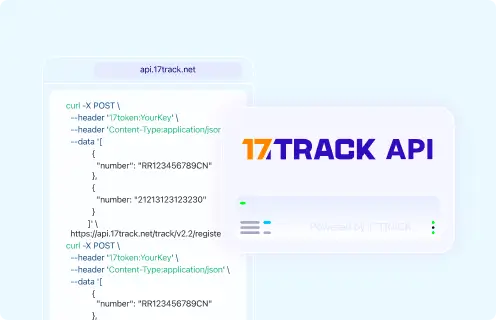
Use only the current credentials, endpoint, method, and payload issued through an applicable CTC business integration. For multi-carrier tracking, the 17TRACK registration endpoint accepts a tracking number and carrier code; keep the carrier placeholder until the current CTC code is confirmed in your 17TRACK account or documentation.
# 1. CTC official tracking API
# Use only the endpoint, method, credentials, headers, and payload
# supplied through the applicable CTC business integration.
# No unverified public CTC endpoint is included.

# 2. 17TRACK API: register a tracking number
curl --request POST \
  --url "https://api.17track.net/track/v2.4/register" \
  --header "17token: YourKey" \
  --header "Content-Type: application/json" \
  --data '[{"number":"TRACKING_NUMBER","carrier":"CARRIER_CODE"}]'

# Keep CARRIER_CODE as a placeholder until the current CTC carrier
# code is confirmed in your 17TRACK account or documentation.
Sources & References
- CTC official website. CTC
- 17TRACK shipment tracking. 17TRACK
- 17TRACK API Documentation. 17TRACK
17TRACK is an independent tracking platform and is not affiliated with CTC.
Track your package
Global express parcel tracking service