BR1 Tracking
Please enter the BR1 tracking number to check the latest shipping status.
About BR1
BR1 is the carrier name associated with the supplied BR1 website. Use the shipment identifier provided by the sender or merchant to check available tracking events. Service names, operating regions, legal company details and delivery commitments should be verified against the shipping label, booking confirmation or current carrier documentation before making a time-sensitive decision.
BR1 Overview
| Field | Verified entry |
|---|---|
| Carrier display name | BR1 |
| Official website supplied for tracking research | http://www.br1express.com/ |
| Independent multi-carrier tracking | https://www.17track.net/en |
Carrier Entity Relationships
| Entity | Relationship | ||||||
|---|---|---|---|---|---|---|---|
| BR1 | BR1 is the canonical carrier display name used on this page. | ||||||
View all details for BR1
| |||||||
| 17TRACK | 17TRACK is an independent platform that displays available carrier tracking data and does not transport BR1 shipments. | ||||||
View all details for 17TRACK
| |||||||
Quick Answer
To track a BR1 shipment, copy the tracking number from the shipping confirmation, dispatch notice or label and enter it on the supplied BR1 website or 17TRACK. If no result appears, remove spaces, verify every character, confirm that the value is a tracking number rather than an order number, and ask the sender whether the shipment has been physically handed over.
How to Track BR1 Packages
Use the carrier-issued shipment identifier, not the store order number. The official route is appropriate for carrier-specific information, while 17TRACK is useful when you manage shipments from multiple carriers.
- Find the tracking number in the dispatch email, marketplace shipment page, shipping label, receipt or sender message.
- Copy the number exactly, then remove surrounding spaces or punctuation introduced by the message layout.
- Open the supplied BR1 website and use its available tracking function.
- Alternatively, open 17TRACK, enter the number and select BR1 if automatic carrier recognition does not resolve the carrier correctly.
- Read the latest event together with its location, timestamp and prior scans; one event alone may not identify the parcel’s current physical location.
Which Identifier Should You Use?
| Identifier | How to use it |
|---|---|
| Tracking number | Use this first for carrier tracking. It is normally attached to a shipment record or transport label. |
| Order number | Use it with the merchant to identify the purchase; carrier tracking tools often cannot search a retail order number. |
| Merchant reference | Use it when contacting the seller. Ask the seller to map it to the carrier tracking number. |
| Partner or last-mile number | Use it on the named partner’s tracking site after a documented carrier handoff. |
Tracking Number Formats and Examples
Use the exact tracking identifier supplied for the shipment. Do not infer a BR1 service, destination or delivery speed from a prefix alone. A merchant reference, partner number and carrier tracking number can coexist for the same order.
Tracking Number Format
| Identifier family | Normalized pattern | ||||||||||||
|---|---|---|---|---|---|---|---|---|---|---|---|---|---|
| BR1 shipment identifier | Enter the complete identifier shown in the shipment notice; remove display spaces only when the tracking interface rejects them. | ||||||||||||
View all details for the BR1 shipment identifier
| |||||||||||||
| Merchant order or reference ID | Preserve the merchant’s exact formatting and use it in the store or marketplace account. | ||||||||||||
View all details for a merchant order or reference ID
| |||||||||||||
| Partner or last-mile identifier | Use the complete secondary number shown in a handoff event or merchant record. | ||||||||||||
View all details for a partner or last-mile identifier
| |||||||||||||
Tracking Statuses and Meanings
Tracking wording can differ by data source. Interpret the event sequence, location and timestamp together, especially around electronic pre-advice, customs processing and partner handoffs.
Status Quick Lookup
| Status | What it means | ||||||||
|---|---|---|---|---|---|---|---|---|---|
| Shipment information received | An electronic record may exist before physical carrier acceptance. | ||||||||
View all details for shipment information received
| |||||||||
| Accepted or received | A carrier or logistics facility recorded receipt of the shipment. | ||||||||
View all details for accepted or received
| |||||||||
| In transit or departed facility | The shipment is moving between processing points or awaiting the next scan. | ||||||||
View all details for in transit
| |||||||||
| Customs processing | The shipment is undergoing an import, export, security or documentation process; arrival does not equal release. | ||||||||
View all details for customs processing
| |||||||||
| Out for delivery | The delivery unit has assigned the parcel to a route, but delivery on that day is not assured by the status alone. | ||||||||
View all details for out for delivery
| |||||||||
| Delivered | A delivery scan was recorded at the stated time and location. | ||||||||
View all details for delivered
| |||||||||
| Delivery exception or return | An address, access, damage, customs, refusal or operational issue has interrupted normal delivery. | ||||||||
View all details for a delivery exception or return
| |||||||||
Services and Delivery Times
The applicable service and delivery commitment are the ones shown on the shipping label, booking confirmation or merchant promise. Do not treat a tracking-platform estimate as a carrier guarantee.
Service Comparison
| Service record | Best source | ||||||||||||
|---|---|---|---|---|---|---|---|---|---|---|---|---|---|
| Shipment-specific BR1 service | Shipping label, booking confirmation, invoice or merchant dispatch record. | ||||||||||||
View all details for the shipment-specific service
| |||||||||||||
Delivery Time
| Time reference | How to interpret it |
|---|---|
| Merchant delivery promise | The seller’s customer-facing commitment; use the order terms when requesting a replacement or refund. |
| Carrier service standard | A service-specific transit target that may begin after physical acceptance and may exclude non-working days or customs time. |
| Tracking ETA | A changing estimate derived from available events; it is not automatically a guaranteed delivery date. |
| Guaranteed date | Applies only when the written service terms expressly provide a guarantee and all eligibility conditions are met. |
Destination Country Delivery Times
| Destination evidence | Decision guidance | ||||||||||
|---|---|---|---|---|---|---|---|---|---|---|---|
| Shipment-specific destination and service | Use the written quote or merchant promise for the actual origin, destination, service and dispatch date rather than an unsupported country average. | ||||||||||
View all destination timing details
| |||||||||||
Delivery can be affected by acceptance cutoffs, weekends, holidays, remote-area routing, severe weather, peak volumes, address quality, customs review, prohibited contents, partner handoffs and missed scans.
Common Tracking Problems and Solutions
Start with the latest event, shipment number and sender’s dispatch record. The sender is usually best placed to correct booking data or open a contractual investigation, while the recipient can verify delivery access and provide local evidence.
Problem & Solution
| Problem/status shown | Immediate action |
|---|---|
| Invalid number or no result | Recheck every character, remove display spaces and ask the sender to distinguish the tracking number from the order number. |
| Label created or information received | Ask the sender whether the physical parcel has been handed over and request acceptance evidence. |
| No recent update or stuck in transit | Compare the last event with the booked service and merchant promise, then ask the sender to escalate through the shipping contract. |
| Partner handoff pending | Look for a physical receipt scan rather than relying only on an electronic pre-advice event. |
| Address problem or failed delivery | Use an authorized carrier channel promptly; the sender may need to approve an address correction or redirection. |
| Customs hold | Check for a verified document, tax or identity request and coordinate with the importer, sender or broker named in the shipment. |
| Delivered but not received | Check the exact delivery location, household members, reception, neighbors, safe places and proof of delivery, then contact the delivery carrier and sender. |
| Damaged, missing contents or lost | Photograph the parcel and contents, retain all packaging, preserve value evidence and notify the sender before discarding anything. |
| Return to sender | Ask the sender whether reshipment, correction or refund is available; interception may be impossible after return movement begins. |
International Shipping, Customs and Carrier Handoffs
For a cross-border BR1 record, use the actual event sequence to identify each responsible party. Electronic pre-advice, physical transfer, customs release and last-mile acceptance are separate milestones.
International Flow
| Stage | What is happening |
|---|---|
| Shipment data created | The sender or logistics platform transmits label and customs data; physical custody may remain with the sender. |
| Origin acceptance and export processing | The origin operator receives, sorts and prepares the shipment for export controls and line-haul. |
| International line-haul | The shipment moves between countries, sometimes within a consolidated container with limited item-level scans. |
| Import customs | Authorities or a broker assess admissibility, documents and applicable duties; arrival does not mean customs release. |
| Partner handoff | Electronic data may arrive before the physical parcel; responsibility transfers only according to the actual handoff and receipt record. |
| Destination delivery | The destination carrier sorts, routes and attempts final delivery or pickup. |
Delivery Management and Post-shipment Options
Only use options displayed for the specific shipment through an authorized BR1, sender or last-mile channel. Eligibility may depend on the service, shipment stage, customs status and sender restrictions.
Delivery Management
| Option | Safe next step |
|---|---|
| Address correction or redirection | Ask the sender or currently responsible delivery carrier before the shipment reaches final delivery. |
| Redelivery or pickup | Follow the verified instructions attached to the failed-delivery or pickup event. |
| Proof of delivery | Request it from the carrier that recorded delivery or through the sender’s shipping account. |
Lost, Damaged, Claims, Insurance and Refunds
A tracking inquiry, carrier investigation, insurance claim and merchant refund are separate processes. The account holder or sender may need to open the carrier case, while the buyer should preserve evidence and use the seller’s order-resolution process.
Claims and Refunds
| Process | Use when |
|---|---|
| Tracking inquiry or shipment investigation | Use when progress conflicts with the booked service or merchant promise. |
| Loss, damage or missing-content claim | Use when the eligible contract or insurance terms cover the reported outcome. |
| Merchant refund or replacement | Use when seeking an order remedy from the seller or marketplace. |
| Postage or service refund | Use only when the booked service terms provide a qualifying refund remedy. |
Prepare the tracking number, shipping receipt, service name, sender and recipient addresses, contents description, invoice or value proof, damage photographs and all original packaging. File according to the written terms attached to the shipment. 17TRACK cannot approve or pay a claim, issue a refund or alter a carrier decision.
Shipping Restrictions and Special Handling
Check the current rules for the booked service, origin, destination and transport mode before shipping. Carrier acceptance does not override aviation, customs, postal, dangerous-goods or import laws.
Shipping Restrictions
| Category | Required check |
|---|---|
| Batteries and powered devices | Confirm chemistry, watt-hour rating, installation state, packaging, labels and transport-mode eligibility. |
| Liquids, aerosols and flammables | Confirm dangerous-goods classification, leak-proof packaging and route restrictions. |
| Food, plants and perishables | Confirm shelf life, temperature needs and destination quarantine or import rules. |
| Medicines, cosmetics and chemicals | Confirm permits, composition, quantity limits and customs documentation. |
| Currency, valuables and controlled goods | Confirm prohibition, declared-value limits, licensing and insurance exclusions. |
Customer Service
Start with the sender when the issue concerns booking data, service selection, a refund or a claim. Use the carrier named in the latest physical scan for local delivery questions.
Customer Service
| Channel | Verified contact/link | ||||||||||
|---|---|---|---|---|---|---|---|---|---|---|---|
| BR1 website | http://www.br1express.com/ | ||||||||||
View all details for the BR1 website
| |||||||||||
| Sender or merchant | Use the contact method in the order confirmation, marketplace account or invoice. | ||||||||||
View all details for contacting the sender
| |||||||||||
| 17TRACK | https://www.17track.net/en | ||||||||||
View all details for 17TRACK
| |||||||||||
Ecommerce and Business Tracking
Businesses should retain the mapping between order ID, customer reference, carrier tracking number and any last-mile number. This prevents order numbers from being submitted to carrier tracking tools and helps support teams identify the party currently responsible for each shipment.
Developer/API Comparison
| Option | Provider | ||||||||||||
|---|---|---|---|---|---|---|---|---|---|---|---|---|---|
| Carrier-controlled shipment systems | BR1 | ||||||||||||
View all details for BR1 shipment systems
| |||||||||||||
| Multi-carrier Tracking API | 17TRACK | ||||||||||||
View all details for the 17TRACK API
| |||||||||||||
BR1 FAQ
Enter the complete tracking number on the supplied BR1 website or use 17TRACK to view available shipment events. Select BR1 manually if automatic carrier detection chooses a different carrier.
Look in the dispatch email, marketplace shipment page, shipping label, receipt or sender message. If only an order number is shown, ask the seller for the carrier tracking number.
Use the exact letter-and-digit sequence supplied for the shipment rather than identifying it by prefix alone. Preserve every character and remove display spaces only if the tracking interface rejects them.
The first visible event can be electronic shipment information rather than physical acceptance. Ask the sender for a receipt or acceptance event if the record remains at the label-created stage.
A parcel may be moving between scan points, consolidated for transport, awaiting customs action or waiting for a partner handoff. Compare the last event with the booked service and ask the sender to escalate when the merchant promise is missed.
Use the service and delivery commitment printed on the shipment record or order confirmation. Origin, destination, acceptance time, weekends, customs and last-mile routing can change the actual delivery date.
Read the exact exception event and follow only the verified redelivery or pickup instructions attached to the shipment. Address corrections or redirection may require sender authorization.
Check the stated location, safe places, reception, household members and neighbors first. Then request proof of delivery from the delivering carrier and notify the sender if the parcel remains missing.
Notify the sender promptly and preserve the tracking record, invoice, photographs, contents and original packaging. The shipping account holder may need to open the carrier investigation or claim.
Use the contact or tracking options presented through the supplied BR1 website and prepare the tracking number, shipping date, addresses, latest event and service information. Contact the merchant for refunds, replacements and order-level disputes.
No, electronic shipment information alone does not prove physical custody. Look for an acceptance, received or facility-processing event tied to the carrier or partner that actually received the parcel.
Yes, a merchant reference, origin identifier and partner or last-mile number can coexist. Use the identifier linked to the current physical custodian and retain the mapping between all numbers.
No, arrival, presentation, inspection and release are separate customs stages. Wait for a release or onward-processing event and respond through verified channels if documents or taxes are requested.
Responsibility follows the actual custody transfer shown by physical receipt events, not electronic pre-advice alone. Use the latest accepted scan and any secondary tracking number to identify the operating carrier.
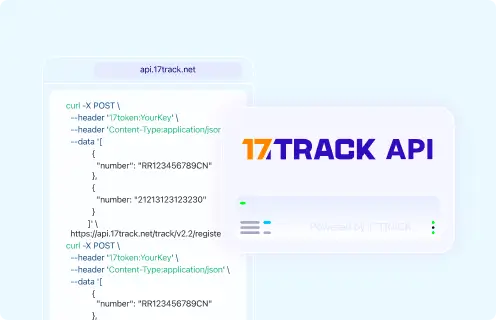
Businesses can use the 17TRACK multi-carrier API for supported carrier tracking workflows. For a carrier-direct integration, obtain current technical documentation and credentials through the authorized BR1 account channel before building an endpoint.
Tracking API
Use carrier-direct credentials only with current documentation supplied through an authorized BR1 channel. The example below therefore includes no invented BR1 endpoint. For multi-carrier tracking, follow the current 17TRACK API documentation. Keep the carrier value as a placeholder until the applicable 17TRACK carrier code is verified.
# 1. BR1 carrier-direct tracking API
# Use only current endpoint, method, authentication and request fields
# supplied through an authorized BR1 developer or account channel.

# 2. 17TRACK API: register a tracking number
curl --request POST \
  --url https://api.17track.net/track/v2.4/register \
  --header '17token: YourKey' \
  --header 'Content-Type: application/json' \
  --data '[
    {
      "number": "TRACKING_NUMBER",
      "carrier": "CARRIER_CODE"
    }
  ]'

# Replace CARRIER_CODE only after verifying the applicable BR1 code
# against current 17TRACK documentation or carrier metadata.
Sources & References
- BR1 website — Carrier website supplied for BR1. BR1
- 17TRACK — Multi-carrier shipment tracking platform. 17TRACK
- 17TRACK API Documentation — Tracking API reference. 17TRACK
17TRACK is an independent tracking platform and is not affiliated with BR1.
Track your package
Global express parcel tracking service