AUTO Tracking
Please enter the AUTO tracking number to check the latest shipping status.
About AUTO
AUTO is the display name used for this carrier page. The supplied official website identifies the operating company as Shenzhen Aotong International Freight Forwarding Co., Ltd. and uses “Aotong Cross-border” in Chinese-language company information. AUTO is an international freight-forwarding and cross-border logistics provider serving ecommerce sellers, with China-origin air, sea, express-line, dangerous-goods and overseas-warehouse services.
| Verified field | AUTO information |
|---|---|
| Official website | https://www.autochina-logistics.com/ |
| Carrier type | International freight forwarder, NVOCC, cross-border logistics provider and overseas-warehouse operator. |
| Primary regions | North America, including the United States, Canada and Mexico; the official website also identifies Europe and Australia services. |
| Established | 2016, according to the company profile. |
| Headquarters | Shenzhen, Guangdong, China. |
| Official tracking page | AUTO tracking page |
Carrier Entity Relationships
| Entity | Relationship to AUTO | ||||||
|---|---|---|---|---|---|---|---|
| Shenzhen Aotong International Freight Forwarding Co., Ltd. | This is the company identified by the official website behind the AUTO display identity. | ||||||
View all details for AUTO operating services
| |||||||
| Ocean and airline partners | The official company profile names shipping-company relationships including ZIM, Matson, COSCO and WH; these entities may perform vessel or transport legs arranged by AUTO. | ||||||
View all details for AUTO tracking relationships
| |||||||
Quick Answer
Enter the shipment or consignment identifier supplied by the seller or AUTO on the official AUTO tracking page. You can also submit the identifier to 17TRACK when AUTO or the relevant transport partner is recognized. If no result appears, first check whether you entered an order number instead of a shipment number, whether the label has been activated, and whether the shipment has already moved to a destination-country partner.
How to Track AUTO Packages
Use the identifier shown on the AUTO booking, warehouse receipt, seller dispatch notice or shipping document. A marketplace order number is usually a commercial reference, not the transport identifier.
| Tracking path | Action |
|---|---|
| Official AUTO tracking | Open the AUTO tracking page, enter the shipment identifier, remove accidental spaces if the page rejects the entry, and save the latest event. |
| 17TRACK | Submit the same identifier to 17TRACK for available multi-carrier events. AUTO, a shipping line or a destination carrier may be detected separately. |
| No number or no result | Ask the seller or shipper for the transport number and dispatch date. A label, booking or electronic pre-advice can exist before a physical acceptance scan. |
Tracking Number Formats and Examples
The official AUTO pages reviewed do not publish one universal public numbering specification. AUTO-managed shipments can contain a forwarding reference, warehouse or FBA reference, ocean booking or bill-of-lading reference, and a destination last-mile number. Do not infer the service solely from a prefix.
Tracking Number Format
| Identifier family | Normalized pattern or example | ||||||||
|---|---|---|---|---|---|---|---|---|---|
| AUTO forwarding reference | Alphanumeric or numeric reference supplied by AUTO; use a redacted form such as AUTO-XXXXXX rather than a real shipment number. | ||||||||
View all details for AUTO forwarding references
| |||||||||
| Ocean or air transport reference | Use the exact booking, bill-of-lading, airway-bill or container reference supplied for the route; format varies by transport partner. | ||||||||
View all details for AUTO transport references
| |||||||||
| Destination last-mile identifier | A local courier, postal or trucking number issued after handoff; use the exact number shown in the destination notice. | ||||||||
View all details for AUTO last-mile identifiers
| |||||||||
Tracking Statuses and Meanings
AUTO status wording can depend on the transport leg and connected provider. The key distinction is between electronic preparation, physical receipt, movement, customs processing and final delivery.
Status Quick Lookup
| Status or stage | Meaning and next action | ||||||
|---|---|---|---|---|---|---|---|
| Label, booking or pre-advice created | Shipment data exists, but physical acceptance may not have occurred. The shipper should confirm handover if no movement follows. | ||||||
View all details for AUTO pre-shipment status
| |||||||
| In transit | The shipment has a movement event, but it may be travelling between warehouses, ports, airports or line-haul facilities. | ||||||
| Arrived at destination or customs | The shipment has reached a destination facility or customs stage; arrival does not itself prove customs release. | ||||||
| Handoff or last-mile received | A destination provider may now control delivery. Search the linked local identifier if AUTO supplies one. | ||||||
| Out for delivery or delivered | The local delivery provider is responsible for the delivery scan. If marked delivered but missing, check the delivery location and contact the seller or local provider. | ||||||
| Exception or return | An address, customs, handling or delivery issue requires review. The shipper should contact AUTO because forwarding instructions and claims may be contract-controlled. | ||||||
Services and Delivery Times
AUTO publishes service categories and destination coverage, but the reviewed official pages do not give one universal delivery standard for every product. Route, origin warehouse, vessel or flight, customs, delivery partner and service agreement determine the actual schedule.
Service Comparison
| Service | Best fit |
|---|---|
| Express lines | Cross-border ecommerce shipments requiring a managed delivery route. |
| Air freight | Shipments where air transport is selected for the route or cargo profile. |
| Ocean freight | FBA, containerized and larger-volume cargo moving to North American or other supported ports. |
| DG lines | Dangerous-goods cargo subject to acceptance, documentation and packaging rules. |
| Overseas warehouse | Storage, transfer, return, relabeling and related ecommerce operations in supported countries. |
Delivery Time
| Service type | Delivery-time guidance |
|---|---|
| Air and express-line services | Route-specific quotation required; timing depends on origin handling, flight capacity, customs and last-mile delivery. |
| Ocean and FBA services | Route-specific quotation required; port schedule, transshipment, container handling, customs and inland delivery affect the estimate. |
| Warehouse transfer or return | Timing depends on inventory receipt, warehouse processing and the selected onward carrier. |
Destination Country Delivery Times
| Destination | Route and clearance guidance |
|---|---|
| United States | AUTO identifies FBA, air, sea, local express and trucking solutions; obtain the route quotation for the delivery estimate and destination handoff. |
| Canada | AUTO identifies Canada FBA, ocean, air, overseas warehouses and local delivery; customs and inland delivery are route-dependent. |
| Mexico | AUTO identifies Mexico international logistics and overseas-warehouse support; request the shipment-specific schedule. |
| United Kingdom, Germany, France, Italy, Poland and Spain | The official site lists European service coverage, but does not publish a common country-level delivery table; use the commercial quotation and current customs instructions. |
| Australia | The official site identifies Australia-related international logistics; timing depends on the selected air, sea or local delivery route. |
Common Tracking Problems and Solutions
The fastest resolution usually starts with the shipper or seller because the contracting party can identify the forwarding reference, transport service, declared cargo and destination partner.
Problem & Solution
| Problem or status | First action |
|---|---|
| Invalid number | Compare the identifier with the dispatch notice and ask whether it is an order, warehouse, booking or last-mile number. |
| No tracking events | Confirm label activation and physical handover; electronic pre-advice is not proof of acceptance. |
| No update during transit | Check the transport mode and latest facility. Sea, customs and partner handoffs can create visibility gaps. |
| Customs or delivery exception | Ask the seller or AUTO which documents, taxes, address corrections or consignee actions are required. |
| Delivered but not received | Check the entrance, reception desk, warehouse, neighbours and delivery notice; then contact the destination provider and seller. |
| Lost or damaged | Photograph the parcel and packaging, preserve documents, notify the seller or shipper promptly and ask which contract claim process applies. |
| Returned to sender | Ask for the return reason and confirm whether redelivery, address correction or a new booking is possible. |
International Shipping, Customs and Carrier Handoffs
AUTO’s international workflow can combine shipper pickup, Chinese warehouse handling, export clearance, ocean or air transport, destination customs, overseas warehousing and local delivery. Each scan identifies an event, not necessarily the company physically holding the cargo at every moment.
International Flow
| Stage | What the customer should understand |
|---|---|
| Origin pickup and warehouse | AUTO or an appointed pickup provider receives cargo, checks it into a warehouse and prepares the forwarding movement. |
| Export customs and security | Documents, commodity descriptions and restricted-goods compliance can affect release and departure. |
| Line-haul | Air or ocean partners move the shipment. Scan frequency can be lower than parcel courier tracking. |
| Destination customs | Arrival at customs is not the same as release. Duties, taxes, importer information or inspection can delay delivery. |
| Partner handoff and last mile | A local courier, trucking company or warehouse may receive the shipment and issue a new local identifier. |
Delivery Management and Post-shipment Options
Delivery changes depend on the transport contract and the destination provider. Ask AUTO or the seller before assuming that an address change, interception or redelivery is available.
| Option | Responsible party and limitation |
|---|---|
| Address correction | Usually requested by the shipper or consignee through AUTO or the destination provider; eligibility depends on shipment stage. |
| Warehouse transfer or return | AUTO’s warehouse and operations teams may coordinate transfer or return services under the commercial arrangement. |
| Local redelivery or pickup | The destination delivery provider controls local delivery instructions, pickup and attempted-delivery procedures. |
Lost, Damaged, Claims, Insurance and Refunds
A tracking inquiry, transport investigation, cargo claim, postage refund and marketplace refund are separate processes. The shipper or contracting customer should ask AUTO for the applicable claim form, deadline and evidence requirements.
| Process | Use when and who should start |
|---|---|
| Tracking inquiry | Use when an event is unclear; the consignee can ask the seller, while the shipper can request operational details from AUTO. |
| Loss or damage claim | The contracting shipper should request the applicable process and preserve packaging, photographs, invoices, value proof and dispatch documents. |
| Marketplace refund | The buyer normally follows the seller or marketplace process; 17TRACK cannot approve a refund or decide liability. |
Shipping Restrictions and Special Handling
AUTO advertises a DG line, but dangerous goods, batteries, liquids, chemicals, food, plants, medicines and other controlled cargo require route-specific acceptance. The cargo description must be accurate before booking.
| Category | Required customer action |
|---|---|
| Dangerous goods | Declare the goods before booking and provide the requested classification, packaging and transport documents. |
| Batteries and liquids | Confirm mode, packaging, quantity and destination acceptance with AUTO; restrictions can affect routing and visibility. |
| Oversize or heavy cargo | Provide accurate dimensions and weight because warehouse, container, port and last-mile equipment requirements vary. |
| Customs-controlled goods | Prepare commercial invoices, accurate commodity information and importer details for the destination requirements. |
Customer Service
AUTO’s official website lists a telephone contact and offices in Shenzhen, Dongguan and Yiwu. Contact the seller or shipper first when the shipment was purchased through ecommerce because the contracting party can provide the correct internal reference.
Customer Service
| Channel | Verified contact and best use |
|---|---|
| Official tracking | AUTO tracking page; use for available shipment events. |
| Telephone | 18948738427, listed on the official website; the reviewed pages do not state business hours or time zone. |
| Head office | Donglian Building B, B210, near Chuangye 2nd Road South 4th Lane, Bao'an District, Shenzhen, Guangdong, China. |
| Online contact | Use the contact navigation on the official website for current inquiry channels and route-specific support. |
Prepare the shipment number, order or booking reference, ship date, origin and destination, service type, latest scan, cargo description, declared value and photographs of any damage.
Ecommerce and Business Tracking
Businesses should distinguish AUTO’s customer-facing tracking page from a carrier API and from 17TRACK’s multi-carrier API. The official AUTO evidence reviewed confirms a tracking page and a self-operated cross-border logistics system, but does not publish a current public AUTO developer API specification.
Developer/API Comparison
| Option | Provider | ||||||
|---|---|---|---|---|---|---|---|
| Official tracking page | AUTO | ||||||
View all details for the AUTO tracking page
| |||||||
| 17TRACK API | 17TRACK | ||||||
View all details for the 17TRACK API
| |||||||
FAQ
Basic FAQs
Enter the shipment identifier on the official AUTO tracking page or submit it to 17TRACK, then compare the latest event with the seller’s dispatch information.
Look in the seller’s shipping notice, AUTO booking, warehouse receipt, freight document or destination delivery notice.
AUTO does not publish one universal public format; an AUTO reference, transport document number and local delivery number can have different structures.
The first physical event appears after a warehouse, pickup, terminal or transport provider records receipt; a booking can exist earlier.
Sea transport, customs, warehouse processing and partner handoffs can create visibility gaps; ask the shipper to verify the latest operational status.
The delivery estimate depends on route, service, transport mode, customs and local delivery, so request the shipment-specific quotation.
Check the address and delivery notice, then ask the seller, AUTO or the local delivery provider whether redelivery or pickup is available.
Check reception areas, neighbours, warehouse staff and the delivery notice, then request delivery evidence from the local provider or seller.
Notify the shipper promptly, preserve packaging and documents, photograph the damage and ask AUTO for the applicable transport claim procedure.
Use the official tracking and contact pages or call 18948738427; the official pages reviewed do not state customer-service hours.
Expert FAQs
No. AUTO may provide a forwarding reference while a shipping line or airline issues the transport document reference; ask which identifier applies to the requested tracking system.
No. Arrival at a customs facility shows location or processing stage, while release requires the destination customs process to be completed.
Forwarding, ocean or air transport, warehouse handling and destination last-mile delivery can each use a related identifier.
The destination courier, trucking provider or warehouse normally controls the physical delivery leg after acceptance, while AUTO or the shipper remains important for contract and escalation questions.
The reviewed official AUTO pages publish a tracking page and describe an internal logistics system, but they do not publish a current public API specification; businesses should ask AUTO directly or use a documented multi-carrier API.
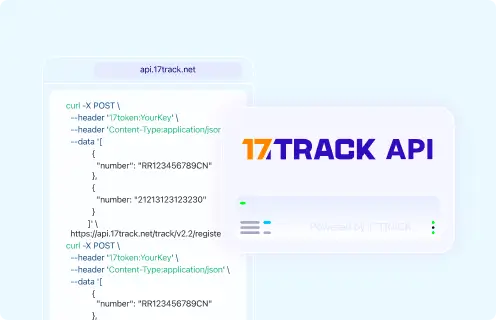
Tracking API
// 1. Current public official AUTO tracking API: not confirmed
// The official AUTO pages reviewed publish a web tracking page but no current public API specification.

// 2. 17TRACK API
// Confirm the current carrier code in 17TRACK documentation before production use.
POST https://api.17track.net/track/v2.4/register
Headers:
  17token: YourKey
  Content-Type: application/json

Body:
[
  {
    "number": "TRACKING_NUMBER",
    "carrier": "CARRIER_CODE"
  }
]

// Documentation:
// https://api.17track.net/en/doc
Sources & References
- AUTO official website. Shenzhen Aotong International Freight Forwarding Co., Ltd.
- AUTO company profile. Shenzhen Aotong International Freight Forwarding Co., Ltd.
- AUTO company introduction and development history. Shenzhen Aotong International Freight Forwarding Co., Ltd.
- AUTO tracking page. Shenzhen Aotong International Freight Forwarding Co., Ltd.
- 17TRACK API documentation. 17TRACK.
17TRACK is an independent tracking platform and is not affiliated with AUTO.
Track your package
Global express parcel tracking service