APG eCommerce Tracking
Please enter the APG eCommerce tracking number to check the latest shipping status.
About Apg Ecommerce
Apg Ecommerce presents itself as an ecommerce delivery-solutions business focused on customer delivery experience. Its official website describes services designed to address traditional delivery solutions that may be slow or expensive. The available official tracking page asks users to track an order with a “Tracking Reference.”
| Field | Confirmed information |
|---|---|
| Official name | Apg Ecommerce |
| Official website | https://apgecommerce.com/ |
| Business role | Ecommerce delivery-solutions provider, according to the official company description. |
| Official tracking page | Track your order, using a Tracking Reference. |
| Services | The official site provides an Our Services section focused on delivery customer experience. |
Carrier Entity Relationships
| Entity | Relationship to Apg Ecommerce |
|---|---|
| Apg Ecommerce | Apg Ecommerce is the canonical business entity described by the supplied official website. |
| Apg Ecommerce delivery solutions | The official services page connects Apg Ecommerce with delivery solutions intended to improve the delivery customer experience. |
| Tracking Reference | A Tracking Reference is the identifier that the official tracking page instructs customers to use for order tracking. |
| 17TRACK | 17TRACK is an independent tracking platform that can display available events when a shipment is recognized by its tracking systems; 17TRACK does not operate Apg Ecommerce shipments. |
Quick Answer
Use the Tracking Reference supplied by the seller or in the dispatch message on the official Apg Ecommerce tracking page. You may also enter the identifier in 17TRACK to check available aggregated events. If no result appears, first remove spaces, confirm that you copied the Tracking Reference rather than an order number, and ask the seller whether the reference has been activated.
How to Track Apg Ecommerce Packages
The official route is the Apg Ecommerce tracking page. The practical alternative is 17TRACK, which may combine events from recognized logistics participants.
| Route | Steps |
|---|---|
| Official Apg Ecommerce tracking | Open the official tracking page, enter the Tracking Reference, submit it, and save the latest event and any delivery instruction. |
| 17TRACK | Open 17TRACK, enter the identifier, allow carrier recognition, and compare the newest event with the seller’s dispatch information. |
| No identifier | Contact the seller or marketplace first; provide the order number and purchase details so the seller can locate the shipment reference. |
| Identifier rejected | Check spelling, spaces, hyphens, zero versus letter O, and whether the value is an order, reference, label, or delivery-notice number. |
Tracking Number Formats and Examples
The official Apg Ecommerce tracking page names the required value “Tracking Reference” but does not publish a universal public pattern in the supplied material. Do not infer the carrier, service, or delivery stage from a prefix alone.
Tracking Number Format
| Identifier family | Normalized pattern | ||||||||||||
|---|---|---|---|---|---|---|---|---|---|---|---|---|---|
| Apg Ecommerce Tracking Reference | Use the exact seller-provided value; a safe redacted example is APG-XXXX-####. | ||||||||||||
View all details for Apg Ecommerce Tracking Reference
| |||||||||||||
| Merchant order or reference ID | Usually an order-style value such as ORDER-XXXX; use it only when the seller says it is also the Tracking Reference. | ||||||||||||
View all details for merchant order or reference IDs
| |||||||||||||
Tracking Statuses and Meanings
A status describes the latest recorded event. “Label created” or a pre-advice event does not by itself prove that Apg Ecommerce physically received the parcel.
Status Quick Lookup
| Status | Lifecycle stage and meaning | ||||||
|---|---|---|---|---|---|---|---|
| Label created / awaiting item | Pre-shipment; shipment data exists, but physical acceptance has not been demonstrated. The sender should verify handover. | ||||||
View all details for pre-shipment status
| |||||||
| Accepted / in transit | The shipment has a recorded movement or acceptance event and is progressing through sorting or line-haul. | ||||||
| Customs or handoff | The parcel is being processed by customs or transferred between logistics entities; arrival at customs is not release. | ||||||
| Out for delivery | A local delivery route has been assigned; monitor the address and delivery instructions. | ||||||
| Delivered | A delivery scan was recorded. Check the delivery location, household, reception desk, neighbours, and proof of delivery before escalating. | ||||||
| Exception / return | A delivery or transport issue requires review; the seller and the responsible delivery party should determine the next action. | ||||||
Services and Delivery Times
Apg Ecommerce’s official services page describes a focus on delivery customer experience, but the supplied official evidence does not publish named service tiers or delivery standards. Delivery estimates should therefore come from the seller’s order promise and the latest tracking events.
Service Comparison
| Service category | Confirmed customer use |
|---|---|
| Ecommerce delivery solutions | The official site presents Apg Ecommerce as focused on delivery solutions and the customer delivery experience. |
| Tracking Reference service | Customers use a Tracking Reference on the official tracking page to locate an order. |
Delivery Time
| Timing source | How to interpret it |
|---|---|
| Seller or checkout estimate | Use the origin, destination, purchase date, and service selected by the seller; an estimate is not a guarantee. |
| Tracking events | Use the latest physical scan to assess progress; scan gaps can occur during transport or handoff. |
Destination Country Delivery Times
| Destination | Practical planning guidance |
|---|---|
| Domestic destination | Use the seller’s destination-specific promise and the official Tracking Reference. |
| International destination | Confirm the origin service, destination partner, customs requirements, and seller estimate before treating a delay as a carrier failure. |
Common Tracking Problems and Solutions
The fastest resolution normally starts with identifying whether the issue belongs to the seller, the physical delivery operator, customs, or a data-only tracking event.
Problem & Solution
| Problem/status shown | First action |
|---|---|
| Invalid or no result | Re-enter the Tracking Reference exactly, remove formatting marks, and ask the seller to confirm the identifier. |
| No update after dispatch | Check the dispatch date and handoff evidence; the seller should investigate the manifest with its logistics contact. |
| Stuck in transit | Compare the latest scan with the seller’s delivery estimate and escalate through the seller when the promised window has passed. |
| Shipping-partner handoff | Treat electronic pre-advice separately from physical acceptance; ask the seller which party currently holds the parcel. |
| Address or delivery exception | Contact the seller promptly and follow any instruction in the latest event; do not assume 17TRACK can alter delivery details. |
| Delivered but not received | Check the doorstep, safe place, household, reception desk, neighbours, and proof of delivery, then contact the seller and local delivery operator. |
| Lost or damaged parcel | Keep packaging and photographs, notify the seller, and ask the sender to use the applicable investigation or claim process. |
| Customs delay or return | Check whether duties, identity information, invoice data, or import instructions are required; the importer or seller may need to respond. |
International Shipping, Customs and Carrier Handoffs
For an international order, responsibility can move from the seller to an origin operator, border authorities, a destination delivery operator, and the final-mile network. A destination scan does not by itself prove customs release.
International Flow
| Stage | What customers should understand |
|---|---|
| Order and label | The seller creates shipment data and supplies the Tracking Reference; this is not necessarily physical acceptance. |
| Origin processing | The parcel is collected, sorted, and prepared for transport by the responsible logistics participant. |
| Export and line-haul | Export checks and international transport can create scan gaps while the parcel is moving between facilities. |
| Import customs | Customs may request information or payment; the recipient or importer should follow the destination authority’s instructions. |
| Destination handoff and last mile | A destination operator may receive the parcel and provide later events; the seller remains the best escalation point for an ecommerce order. |
Delivery Management and Post-shipment Options
The supplied official pages provide a tracking entry point and contact route, but do not establish public self-service functions for interception, redirection, pickup, delivery instructions, or proof-of-delivery retrieval.
Lost, Damaged, Claims, Insurance and Refunds
Tracking support, a missing-shipment investigation, an insurance claim, a postage refund, and a marketplace refund are separate processes. For an ecommerce purchase, the buyer should notify the seller first; the sender generally holds the shipment evidence and commercial transaction record.
Claims and Refunds
| Process | Use when |
|---|---|
| Seller support request | Use for missing, damaged, delayed, or incorrectly delivered ecommerce orders. |
| Carrier investigation or claim | The sender should ask the responsible logistics party about the applicable process, eligibility, evidence, and filing window. |
| Marketplace refund | Use the marketplace’s buyer-protection process separately from shipment tracking. |
Shipping Restrictions and Special Handling
The applicable restrictions depend on the origin, destination, transport operator, customs regime, and product. Confirm requirements with the seller before dispatch rather than relying on a tracking page.
Shipping Restrictions
| Category | Customer precaution |
|---|---|
| Batteries, liquids, aerosols, and dangerous goods | Ask the seller whether the selected route accepts the item and follow the required packaging and declaration rules. |
| Prohibited or restricted imports | Check destination customs rules, accurate invoice data, and any permit or tax requirement before shipment. |
| Perishable or fragile goods | Use suitable packaging and verify that the service accepts the contents; delay or inspection can affect condition. |
Customer Service
For business enquiries, help, and support, the official Apg Ecommerce website directs visitors to contact the team. Use the official contact route rather than relying on unverified phone numbers or social profiles.
Customer Service
| Channel | Verified contact or purpose |
|---|---|
| Official contact route | Contact the Apg Ecommerce team for business enquiries, help, and support. |
| Official tracking page | Enter a Tracking Reference to view available order events. |
| Information to prepare | Tracking Reference, order number, dispatch date, delivery address, latest event, seller name, and photographs for damage reports. |
Ecommerce and Business Tracking
Merchants can use the official tracking page for individual checks or evaluate a multi-carrier tracking platform for centralized order visibility. Any batch, webhook, standardized-status, or exception-monitoring capability must be verified against the current provider documentation and the merchant’s contract.
Developer/API Comparison
| Option | Provider | ||||||||
|---|---|---|---|---|---|---|---|---|---|
| Official carrier integration | Apg Ecommerce | ||||||||
View all details for official carrier integration
| |||||||||
| Multi-carrier tracking API | 17TRACK | ||||||||
View all details for 17TRACK multi-carrier tracking API
| |||||||||
FAQ
Basic FAQs
Enter the Tracking Reference on the official Apg Ecommerce tracking page or try 17TRACK for available aggregated events.
Check the seller’s dispatch email, marketplace order area, label, or support message, and ask the seller if the value is missing.
Apg Ecommerce’s public tracking page calls it a Tracking Reference but the supplied official material does not define one universal public format, so use the exact seller-provided value.
The first event appears after shipment data is registered and a participating logistics system records an event; label creation alone does not prove handover.
A scan gap, transport movement, data delay, or incomplete handoff can prevent a new event; ask the seller to check dispatch and handover records.
Use the seller’s destination-specific estimate and the latest tracking event because the supplied official pages do not publish a universal delivery standard.
Read the latest event, check the address, and contact the seller for the responsible delivery operator and next delivery instruction.
Check safe places, household members, reception staff, and neighbours, then request proof of delivery and notify the seller.
Tell the seller promptly, preserve packaging, and provide photographs, the Tracking Reference, order details, and value evidence.
Use the official Apg Ecommerce website’s contact route for business enquiries, help, and support.
Expert FAQs
Not necessarily; an order number identifies a commercial purchase, while the Tracking Reference is the value used by the official tracking page.
No; a data or label event can precede physical acceptance, so confirm the first physical scan or handover with the seller.
Merchants should map the Tracking Reference to the order, record the latest event, and escalate exceptions through their contracted support route.
No; 17TRACK displays tracking information and cannot authorize address changes, interception, redelivery, refunds, or claims.
Businesses should request current integration documentation from Apg Ecommerce and may evaluate the documented 17TRACK API for multi-carrier tracking.
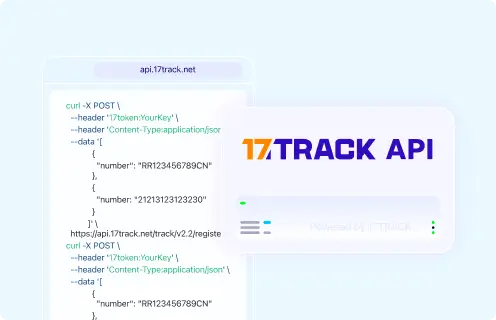
Tracking API
// Official Apg Ecommerce public tracking API: current documentation was not supplied.
// Use the provider's current technical support route before building a direct integration.

// 17TRACK API
// POST https://api.17track.net/track/v2.4/register
// Headers: 17token: YourKey
//          Content-Type: application/json
// Replace CARRIER_CODE only with the carrier code confirmed in current 17TRACK materials.
POST /track/v2.4/register
Host: api.17track.net
17token: YourKey
Content-Type: application/json

[
  {
    "number": "TRACKING_NUMBER",
    "carrier": "CARRIER_CODE"
  }
]
Sources & References
- APG Ecommerce Solutions — official website. Apg Ecommerce
- About Us — About APG. Apg Ecommerce
- Our Services. Apg Ecommerce
- Track your order — Tracking Reference page. Apg Ecommerce
- FAQ’s. Apg Ecommerce
- 17TRACK API documentation. 17TRACK
17TRACK is an independent tracking platform and is not affiliated with Apg Ecommerce.
Track your package
Global express parcel tracking service