What Is a Shipping Consolidator? Carrier Handoffs, Tracking, and Delivery Times?
A shipping consolidator is a logistics provider that combines shipments from multiple senders for part of their journey, then passes individual parcels to a postal service or another carrier for final delivery. If your tracking mentions a shipping partner or a carrier handoff, your package may be moving through this arrangement. Delivery time depends on the service purchased, the route, and the transfer between networks—not simply on when a tracking number first appears.
For shoppers, the practical questions are straightforward: who currently has the parcel, which company will deliver it, and when should you ask for help? Understanding the difference between an electronic shipment notice and a physical acceptance scan makes those questions much easier to answer.
What a shipping consolidator actually does
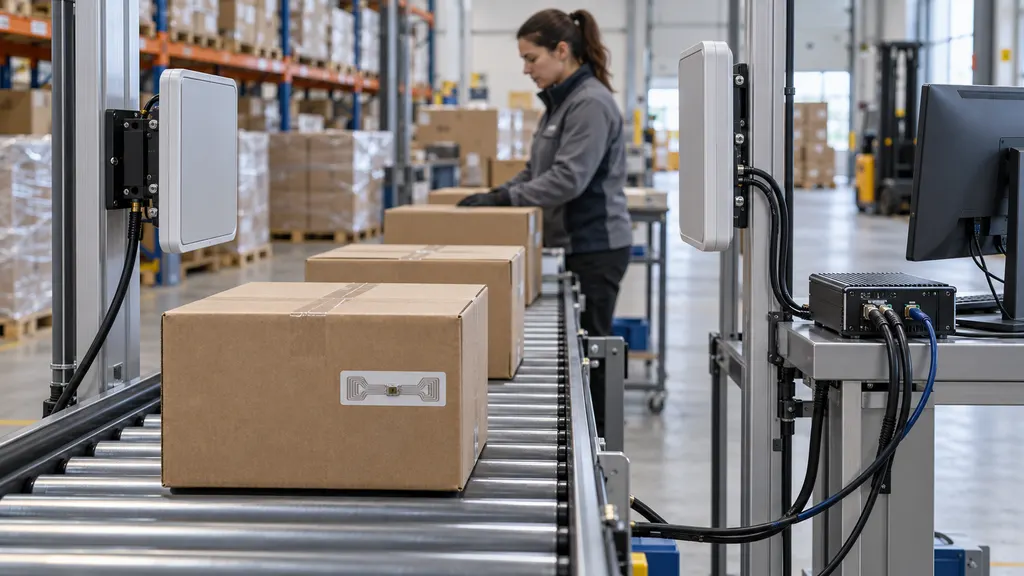
A consolidator brings together packages that would otherwise travel separately. It may collect parcels from merchants, sort them by destination, transport them in larger loads, and hand them to a delivery network closer to the recipient. The exact responsibilities depend on the shipping arrangement.
The economic logic is shared transportation: moving many parcels together can reduce the cost of handling and transporting each one. That does not guarantee that every consolidated shipment is cheaper for the buyer, or that every service follows the same route. A merchant may include shipping in the product price, charge a flat fee, or offer several delivery options.
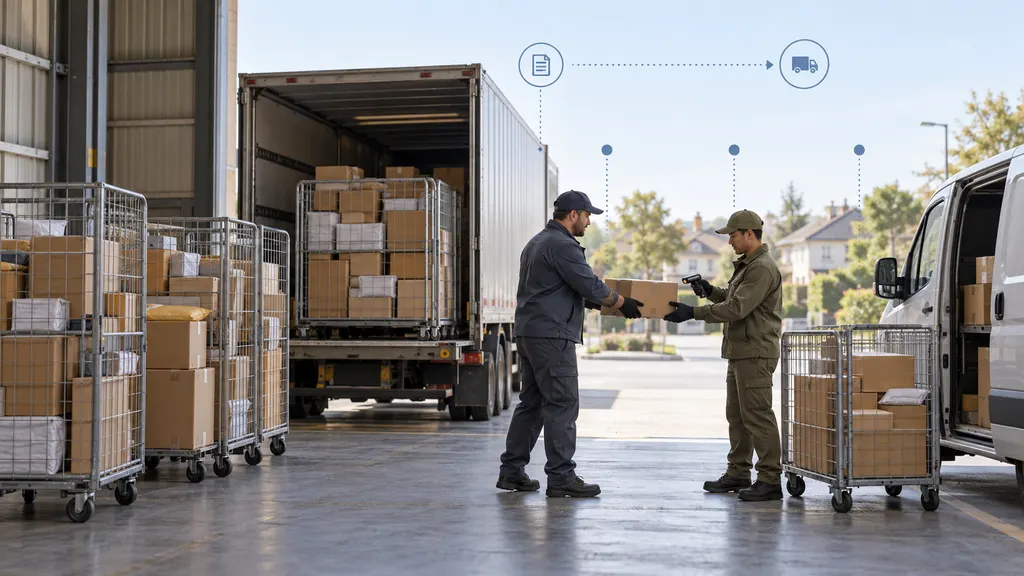
In parcel shipping, consolidation often separates the middle portion of the journey from the last mile. The company moving a parcel between facilities may not be the company whose driver arrives at your address.
- The seller or fulfillment warehouse prepares the order and supplies the shipping details.
- The consolidator groups parcels, arranges transportation, and transfers them into another delivery network.
- The final-mile carrier handles the local delivery portion after accepting the parcel.
A consolidator is therefore not necessarily the retailer, and it is not necessarily the final delivery company. It is also different from a tracking website, which displays shipment information but does not physically move the package.
How the carrier handoff works
A typical consolidated parcel follows the sequence below. Some shipments skip stages, use additional partners, or cross an international border.
- The seller creates a label. A tracking number may become available before the parcel leaves the warehouse.
- The shipment enters the consolidator’s network. Parcels are collected or dropped off, then sorted for transport.
- The consolidated load moves toward the destination. Individual packages may travel together in containers or other grouped loads.
- The consolidator transfers the parcel. The receiving carrier processes it through an agreed entry point in its network.
- The final carrier records acceptance and completes delivery. Subsequent scans may show local processing, out-for-delivery activity, and delivery.
The crucial distinction is between sending shipment data and transferring physical possession. A final-mile carrier can know that a parcel is coming without having received it. Likewise, a departure scan from the shipping partner does not by itself prove that the receiving carrier has accepted the package.
For a concrete example, USPS explains shipping-partner events in its package-status guidance. A status containing “USPS Awaiting Item” indicates that USPS does not yet have possession. The appearance of USPS in the tracking history should not be read as proof that the parcel is already moving inside the USPS network.
How to interpret tracking during consolidation
Read the full event description, not just the carrier logo or the broad “in transit” label. The wording often tells you whether a parcel has been announced, physically processed, or accepted by its next carrier.
| Tracking event | What it generally tells you | What it does not establish |
|---|---|---|
| Label created or shipment information received | A shipment record exists. | That a carrier has collected the package. |
| Arrived at or departed shipping-partner facility | The partner has reported a processing or movement event. | That the final-mile carrier has accepted it. |
| Final carrier awaiting item | The receiving carrier is still awaiting possession according to that status. | That the parcel is lost or that delivery is imminent. |
| Accepted or received by final carrier | The receiving network has recorded acceptance. | A guaranteed delivery date unless the purchased service provides one. |
| Out for delivery | The carrier reports that the parcel has reached the delivery stage. | That delivery has already been completed. |
Status wording varies by carrier. A general tracking label may simplify a more detailed carrier event, so check the original description when deciding whether to contact someone.
Why there may be two tracking numbers
Some arrangements use one reference throughout the journey. Others assign a separate number for the final-mile carrier. A second number can be useful when the original tracking page shows only the consolidator’s portion of the trip.
Check the order page and shipment details for a delivery-partner reference. If none appears, ask the seller whether one has been assigned. Do not assume that a new number must exist or that entering the original number on every carrier website will work.
Why tracking can go quiet around a handoff
Tracking is a record of reported events, not a continuous location feed. A parcel may be traveling between facilities, waiting for processing, or awaiting its next scan. Information can also reach different tracking systems at different times.
A gap alone cannot identify the cause. It does not prove a loss, but it also should not be used to dismiss a missed delivery promise. Judge the gap against the purchased service, the latest physical scan, and the seller’s delivery window.
How long does consolidated shipping take?
There is no universal delivery time for shipping consolidators. Consolidation is an operating model, not a single service level. A domestic economy parcel and an international shipment can both use consolidation while having very different delivery expectations.
Use the merchant’s stated delivery window and the terms of the specific service rather than a generic estimate for “consolidated shipping.” Check whether the estimate starts at checkout, dispatch, carrier acceptance, or another defined point.
- Order processing: The seller may need time to prepare the parcel before transportation begins.
- Collection and dispatch schedules: A shipment’s departure depends on the relevant pickup and transport arrangements.
- Distance and route: Longer routes and additional transfers can add stages.
- Handoff processing: The receiving carrier must accept and process the parcel.
- Customs, where applicable: Clearance or requests for information can affect international shipments.
- Local operating conditions: Weather, holidays, address problems, and network disruptions can affect delivery.
Consolidation can introduce coordination steps that a single-network service does not have, but that does not mean every consolidated parcel is slower. Compare actual service commitments, not the business model alone. For a time-sensitive purchase, an explicit delivery commitment is more useful than an unsupported claim that one shipping method is always faster.
What to do when your package seems stuck
The best contact depends on the last meaningful event. Start by saving the order number, tracking number, latest scan, and promised delivery window.
- Confirm whether the parcel was actually dispatched. If tracking shows only label creation, ask the seller whether the package has been handed over and whether there is a collection or acceptance record.
- Identify the last carrier reporting physical handling. A shipping-partner facility event and a final-carrier acceptance event point to different stages.
- Check for a final-mile reference. Review the seller’s shipment page or ask for the delivery carrier’s name and tracking number.
- Compare the shipment with its delivery window. An unfinished handoff before the expected date is different from an overdue parcel with no recent activity.
- Escalate through the right channel. Before final-carrier acceptance, the seller is usually the most useful starting point because it can contact its shipping provider. After acceptance, the final carrier may be able to investigate events within its network.
A useful message to the seller is: “My tracking shows [exact status] dated [date], and the delivery window was [window]. Please confirm the last physical acceptance event, whether the final carrier has received the parcel, and whether you can open an inquiry.”
Do not wait indefinitely for another scan if a marketplace dispute deadline or payment-provider protection deadline is approaching. Check the rules that apply to your purchase; investigation and claim procedures vary by seller, platform, carrier, and service.
Where a multi-carrier tracking tool helps
You can use 17TRACK to look up shipment tracking when a journey involves different carriers. It can provide a convenient starting point for reviewing the tracking information associated with your number. If the result is unclear, compare it with the identified carrier’s own tracking page.
A tracking tool cannot transfer the parcel, create a missing physical scan, or authorize a refund. Use tracking information to identify the next question and the appropriate contact—not as a substitute for a seller or carrier investigation.
What merchants should clarify before using a consolidator
For merchants, the decision should balance transportation cost with delivery predictability and customer-support workload. A lower quoted shipping rate is less useful if the service does not fit the delivery promise made at checkout.
Before committing, ask where parcels enter the final-mile network, which events confirm acceptance, whether customers receive a secondary tracking number, and who investigates a stalled handoff. Confirm how delivery estimates are calculated and whether they are estimates or contractual commitments.
Also establish who can submit claims and what evidence is required. Responsibility for customer support, physical custody, and contractual liability are not necessarily identical. Keep those distinctions clear in internal procedures and customer messages.
FAQ
Does “shipping partner” mean the package has not shipped?
Not necessarily. The parcel may already be moving through the partner’s network. However, a shipping-partner event does not establish that the final-mile carrier has received it. Look for the latest physical processing event and a separate acceptance scan.
Can I collect my package from the final carrier while it is awaiting the item?
Do not assume it is available for collection. If the carrier says it is awaiting the item, it has not reported possession. Collection options depend on the carrier’s rules and the parcel’s actual location; wait for explicit confirmation before visiting a facility.
Does a shipping consolidator handle customs?
It may arrange customs-related services as part of an international shipping offering, but consolidation alone does not establish who performs clearance or who owes duties and taxes. Check the seller’s shipping terms and the specific service arrangement.
Can I change carriers after the seller dispatches my order?
Usually, the recipient cannot independently replace the shipping service mid-journey. Ask the seller about available options. Any interception, address change, or delivery modification depends on the shipment’s stage and the participating carriers’ rules.
Does an unchanged tracking status mean my package is lost?
No. An unchanged status does not by itself establish loss. If the delivery window has passed, ask the seller or relevant carrier to investigate rather than relying on the absence of scans alone. Preserve any purchase-protection deadlines while the inquiry is underway.
Sources
- USPS: Where Is My Package? — guidance on shipment statuses, including shipping-partner events and USPS awaiting possession.
- USPS Tracking: The Basics — background on tracking information and shipment progress.
- 17TRACK official tracking website — the shipment-tracking resource referenced in this guide.