What Does “in Transit” Mean, and How Long Does It Take?
“In transit” means that a carrier has accepted a shipment and it is moving through, or between, parts of the delivery network. It does not necessarily mean the package is on a truck headed directly to the recipient. A parcel can remain in transit while traveling between facilities, waiting for the next transportation leg, undergoing customs processing, or moving without a new scan. The time remaining may be a few hours or several days, depending on the service, route, country, customs process, carrier, and the latest tracking event.
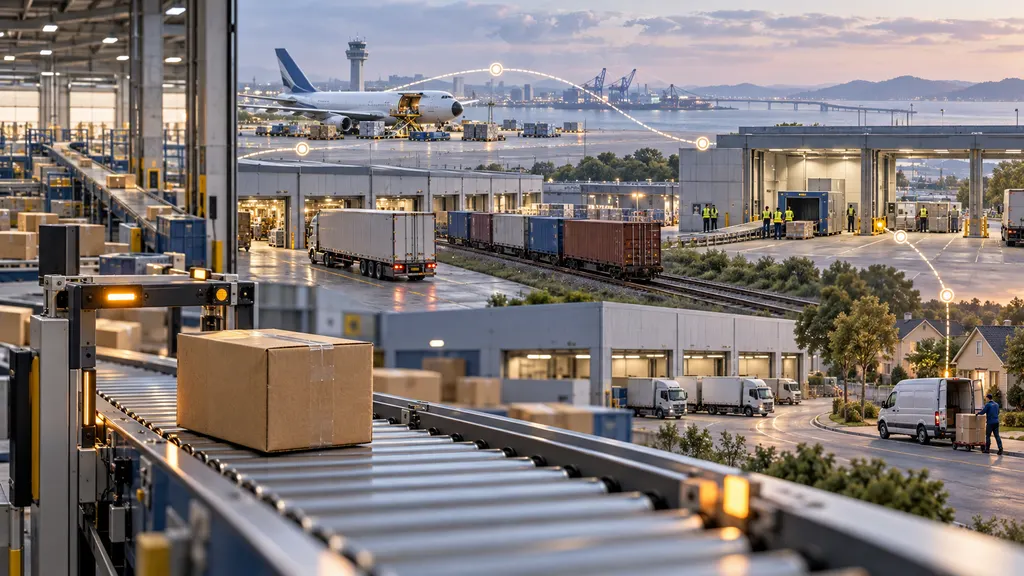
For most shipments, “in transit” is a normal status rather than proof that a package is late. The useful question is not simply how long the status has appeared, but whether the shipment is still progressing within the carrier’s expected delivery window and whether any exception has been reported.
What “in transit” usually means
Carriers use tracking statuses to summarize events recorded in their operational systems. “In transit” generally indicates that the parcel has entered the carrier’s transportation network and has not yet reached the final delivery stage. The package may be moving by road, air, rail, or another transport method. It may also be between scans.
The exact wording differs by carrier. One carrier may show “in transit,” while another may display “departed facility,” “moving through network,” “on the way,” or a similar message. These labels are not always standardized, so the event history and estimated delivery date often provide more useful context than the status phrase alone.
An in-transit shipment can be in any of these situations:
- Traveling from the origin facility to a regional sorting center.
- Moving between international airports, ports, or distribution hubs.
- Waiting for transfer to another carrier or local delivery partner.
- Passing through customs or awaiting customs-related information.
- Moving normally but temporarily without a visible scan.
- Held by an operational exception that has not yet changed the main status.
A tracking page records scans, not the continuous physical location of a parcel. A package can therefore be moving even when the tracking page has not changed recently.
How long does “in transit” take?
There is no single standard duration for an in-transit status. The time depends on the service purchased, the distance, the origin and destination countries, the carrier’s network, weekends and holidays, customs, weather, address issues, and handoffs between logistics providers.
Domestic shipments using an expedited service may move through the network quickly, while economy or postal shipments can remain in transit for longer. International packages often take more time because they may cross borders, pass through customs, and transfer between postal operators or commercial carriers. A shipment’s estimated delivery date, if supplied by the carrier, is a better reference point than a universal number of days.
Consider the status in relation to the shipment’s service level:
| Situation | What the status may mean | What to check |
|---|---|---|
| Recent acceptance scan | The parcel has entered the carrier’s network and may be awaiting its first line-haul movement. | Service type and the carrier’s estimated delivery date. |
| Several movement scans | The parcel is progressing through facilities or transport legs. | Latest location, scan time, and whether the route is still consistent with the destination. |
| No scan for a short period | The shipment may be between facilities or waiting for the next scan. | The expected delivery window and any exception messages. |
| International movement | The parcel may be in transport, customs, or a carrier handoff. | Customs requests, destination-country tracking, and required documents. |
| Past the expected delivery date | The shipment may be delayed even if the headline remains “in transit.” | Carrier support, sender claims rules, and any delivery guarantee terms. |
This table describes common interpretations, not guaranteed timelines. Only the responsible carrier or shipping service can confirm the applicable delivery commitment.
Why a package can stay in transit without a new update
Tracking events are created when a parcel is scanned or when a carrier receives a relevant electronic update. There may be no scan at every point along the route. For example, a package traveling between two facilities may not receive another public scan until it arrives at the destination facility.
Longer gaps can also result from operational or administrative factors:
- Transport between major facilities: A line-haul trip can cover a substantial distance before the next scan.
- Non-business days: Some services reduce processing or delivery activity on weekends and public holidays.
- Carrier handoffs: The original tracking number may not display every event from a postal operator, customs broker, or local partner.
- Customs processing: A shipment may need documentation, duties, tax assessment, inspection, or other clearance steps.
- Weather and network disruption: Severe weather, transport interruptions, congestion, or facility issues can delay movement.
- Address or label problems: An incomplete address, damaged label, or unreadable barcode can require manual handling.
- Scan timing: A physical movement may occur before the corresponding electronic event appears online.
A lack of a new scan is not, by itself, proof that a shipment is lost. The significance increases when the gap extends beyond the carrier’s expected delivery window, the route stops making sense, or an exception appears.
“In transit” versus related tracking statuses
Label created or shipment information received
This usually means the sender or shipping platform has submitted shipment information, but the carrier may not have physically received or scanned the parcel yet. It is different from “in transit,” which generally indicates that the parcel has entered the network. The exact meaning depends on the carrier’s event definitions.
Accepted or received by carrier
An acceptance event indicates that the carrier has taken possession of the shipment or recorded it at a facility. The package may still be waiting for sorting or departure, so acceptance does not always mean immediate long-distance movement.
Out for delivery
“Out for delivery” generally means the parcel has been assigned to a final-mile delivery route or vehicle. It is a later stage than ordinary in-transit movement, although delivery on that day is not guaranteed. A failed delivery attempt, route change, or operational issue can move the shipment to a later date.
Exception or delivery exception
An exception indicates that something requires attention or has interrupted the expected process. The message may identify a weather disruption, address issue, customs requirement, failed attempt, or another cause. Read the detailed event rather than relying only on the headline status.
Delivered
Delivered means the carrier has recorded a delivery event. If the recipient cannot find the parcel, check the delivery location, proof-of-delivery details, household members, neighbors, building reception, and any safe-place instructions before contacting the carrier or seller.
What to do when “in transit” has not changed
Use a measured escalation process instead of assuming the package is lost.
- Review the full event history. Look at the latest scan, facility names, dates, time zones, and any message that appears below the main status.
- Confirm the expected delivery window. Compare the shipment’s current position with the service level and the date shown by the carrier or seller.
- Check for a second tracking number. International shipments and marketplace orders may use a local delivery number after handoff. If one exists, track both numbers.
- Look for customs or address requests. A carrier may be waiting for duties, identification, an invoice, a corrected address, or another document.
- Allow for normal scan gaps. A short period without an event can be routine, particularly between major facilities or during non-business days.
- Contact the right party. The recipient can contact the carrier for tracking information, but the sender often has to open a formal investigation or claim.
- Keep records. Save the tracking number, order confirmation, promised delivery window, screenshots, and correspondence if the delay becomes a dispute.
For a quick cross-carrier view, consumers can enter the tracking number into 17TRACK’s tracking page. It can help organize events from multiple carriers, but the carrier responsible for the parcel remains the authoritative source for delivery commitments, customs instructions, investigations, and claims.
When should you contact the carrier or seller?
Contact the carrier or seller when the shipment is past its stated delivery window, the tracking shows an exception, customs requests action, the address is wrong, or the event history has remained unchanged for an unusually long period relative to the service used. There is no universal number of days that applies to every route and carrier.
International shipments deserve earlier attention when the tracking page indicates customs action, an unsuccessful handoff, or an address problem. Waiting without checking can allow a response deadline or document request to expire. If the shipment was purchased from a retailer or marketplace, the seller may have access to shipping records and claim procedures that are not available to the recipient.
Ask specific questions: What was the last physical scan? Is the parcel waiting for customs clearance? Has it been handed to another carrier? Is a delivery estimate still active? Does the sender need to start an investigation? Specific questions are more likely to produce a useful next step than simply asking why the status has not changed.
Does “in transit” mean the package is lost?
No. “In transit” alone does not establish that a package is lost. It means the shipment has not been recorded as delivered and is associated with an ongoing movement or processing status. A shipment becomes more concerning when it is beyond the expected delivery window, has no meaningful progress, shows contradictory routing, or receives an exception that is not resolved.
Carriers may have formal definitions for delayed, missing, or lost shipments, along with different investigation and claim deadlines. Those rules vary by service and country. If the shipment is valuable, the sender should review the applicable terms for insurance, declared value, compensation, and proof of loss rather than relying on the public tracking label.
How senders can reduce “in transit” confusion
Clear post-purchase communication reduces unnecessary support requests. Sellers should provide the tracking number, carrier name, service type when available, estimated delivery window, and a plain-language explanation that scan gaps can occur. They should also tell customers where to find customs instructions and how to report an address problem.
For stores handling several carriers, a multi-carrier tracking workflow can consolidate events and make it easier to identify stalled shipments, exceptions, and handoffs. The goal is not to promise an exact arrival time that the carrier has not guaranteed. It is to give the recipient the latest verified event and a clear action when the shipment needs attention. Businesses can review 17TRACK’s multi-carrier tracking service as one option for organizing shipment updates across carriers.
FAQ
Does “in transit” mean my package is moving right now?
Not necessarily. It generally means the shipment is in the carrier’s network and has not reached delivery. The package may be moving, waiting for a transfer, undergoing processing, or between public scans.
How many days can a package be in transit?
There is no universal limit. Delivery time depends on the service, route, country, customs, carrier, holidays, and disruptions. Use the carrier’s estimated delivery window as the main reference.
Why has my tracking not updated for several days?
The package may be traveling between facilities, waiting for a handoff, moving through customs, or experiencing a scan delay. Check the full event history and look for an exception or request for action.
Should I contact the carrier or the seller?
Contact the carrier for current operational details. Contact the seller as well if the shipment is late, because the sender may need to open an investigation or claim and may have access to additional shipping records.
Can an international package be in transit during customs?
Yes. Some tracking systems continue to show an in-transit label while a package is being processed for import or transferred between customs and delivery operators. Check for a customs message, duty request, or documentation requirement.