Walmart Bets Bigger on Drone Delivery with 300 New Zipline Sites Planned
Walmart is planning a major expansion of its drone-delivery partnership with Zipline, with reports pointing to as many as 300 additional delivery sites. The plan would extend a service that already connects selected Walmart stores with nearby customers, but the rollout should be understood as a planned expansion rather than a guarantee that every listed site will open on a fixed schedule.

The announcement matters because it moves drone delivery beyond a small pilot conversation. Walmart’s strategy links local store inventory, autonomous aircraft, and rapid last-mile fulfillment. For shoppers, the practical question is not simply whether a drone can fly a package. It is whether the service is available at a specific address, which products qualify, how much delivery costs, and what happens when weather or airspace restrictions interrupt a flight.
What Walmart and Zipline are planning
Walmart and Zipline have been expanding a partnership designed to serve customers from participating Walmart locations. In its public announcement, Walmart described plans to extend drone delivery to more communities and households, while Zipline supplied the autonomous delivery technology and operating network.
The reported 300-site figure represents the scale of the planned network, not 300 completed facilities. A site may involve a store-based launch operation or another approved location connected to the delivery network. The final number of operating sites, launch dates, service areas, and eligible addresses can change as the companies work through permits, construction, aircraft deployment, local demand, and operating approvals.
This distinction is important for anyone evaluating the announcement. A planned site is a capacity commitment. It does not automatically mean that customers in the surrounding area can order immediately. Availability normally depends on the local launch status, the customer’s address, the order contents, operating conditions, and the delivery window offered at checkout.
Why Walmart is investing in drone delivery
Using stores as local fulfillment points
Walmart has a large physical store network, and that network can support shorter delivery routes than a centralized fulfillment model for some orders. If the required products are already available at a participating store, a drone can potentially move a small order directly from that location to a nearby customer.
This model is best suited to lightweight, time-sensitive purchases rather than a full weekly grocery shop. A customer might value fast delivery for a forgotten household item, an urgent food purchase, or a small health and personal-care order. The economic case depends on whether the aircraft can serve enough nearby orders without adding excessive labor, maintenance, or infrastructure costs.
Improving delivery speed for selected orders
Drone delivery can reduce the road distance and routing complexity involved in some local deliveries. A direct aerial route may be faster than sending a vehicle through congested streets, although the total order time still includes picking, packing, safety checks, flight preparation, and handoff.
For that reason, “drone delivery” should not be treated as a universal promise of instant delivery. The customer experience depends on the complete process, not only on the time the aircraft spends in the air. A nearby order that is ready at the store may be a strong candidate. An order requiring substitutions, age verification, special handling, or products stored in different areas may not be.
Building a repeatable operating network
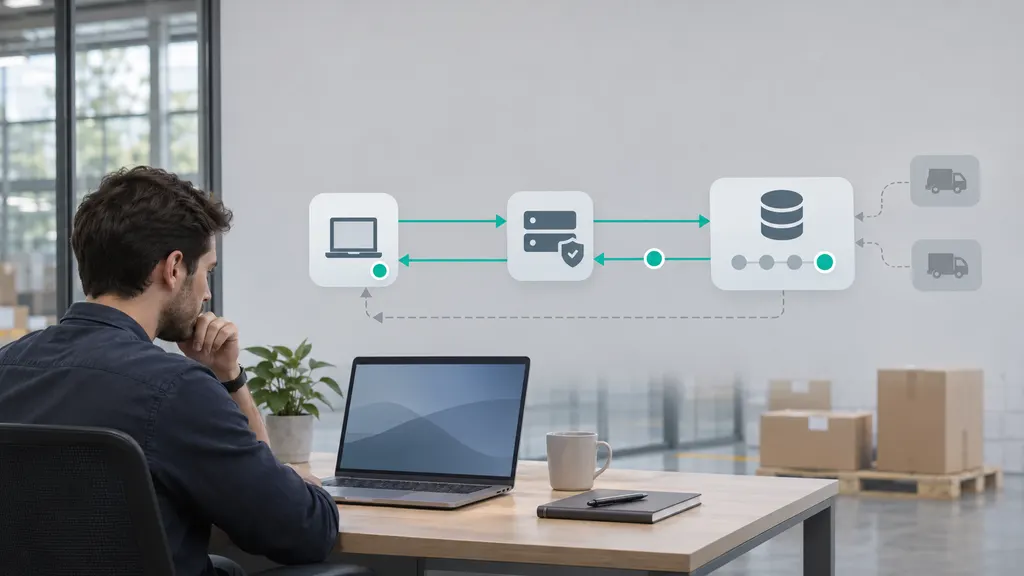
A larger network can give Walmart and Zipline more opportunities to test common procedures across different communities. Those procedures may include order selection, packaging, launch-site operations, customer notifications, landing or drop-off protocols, aircraft recovery, and incident handling.
Scale also creates operational challenges. Each location has its own property layout, nearby buildings, traffic patterns, weather conditions, local rules, and customer expectations. A network expansion therefore requires more than adding aircraft. It requires a reliable operating process at every participating site.
How a typical drone order may work
The exact customer journey can vary by market, but the process generally includes several stages:
- Address eligibility: The customer enters a delivery address, and the retailer checks whether the location falls within an active drone service area.
- Product eligibility: The order is screened for weight, dimensions, packaging requirements, and any restrictions that could make aerial delivery unsuitable.
- Store fulfillment: Associates locate and prepare the items at the participating Walmart location.
- Flight preparation: The delivery is secured for transport, and the operator or system confirms that conditions are suitable for the flight.
- Autonomous delivery: The aircraft travels to the approved delivery area. Depending on the operating design, the package may be lowered or placed at a designated point rather than handed directly to a person.
- Customer confirmation: The customer receives delivery updates and should follow the instructions provided for locating and collecting the package.
The last step is easy to overlook. A delivery can be technically successful while still creating frustration if the customer does not know where the package was placed, cannot access the drop-off area, or misses a required confirmation. Clear notifications and practical delivery instructions are therefore as important as flight technology.
What the expansion could mean for shoppers
More local availability, but not universal coverage
Three hundred planned sites could materially increase the number of households that can access drone delivery. It does not mean that Walmart will offer the service nationwide or that every store will support it. Drone operations need defined geographic boundaries and approved flight procedures.
Customers should check the service at checkout rather than rely on a general announcement. A city may be included in a company’s expansion plans while a particular neighborhood remains outside the active delivery zone. Service can also be limited to certain hours or suspended temporarily.
A narrower product range
Small and relatively light items are the natural fit for drone delivery. Large, heavy, fragile, temperature-sensitive, or regulated products may require another fulfillment method. The retailer’s checkout system is likely to determine which products can be combined in a drone order.
Customers should also expect that an order may be divided between delivery methods. If some products qualify for a drone and others do not, the available options may include separate shipments, a conventional local delivery, or a different delivery time.
Weather and operating conditions still matter
Autonomous aircraft do not eliminate the effects of wind, rain, visibility, heat, or other operating conditions. A delivery window may change when conditions fall outside the system’s safety limits. Temporary restrictions can also arise from local events, airspace constraints, technical issues, or site-level disruptions.
A dependable service should make these changes visible to customers instead of presenting a drone option as fixed until the last moment. For shoppers, the practical benefit is flexibility: use drone delivery when speed and convenience matter, but keep a conventional delivery option available when the order is important or time-critical.
What the expansion means for logistics teams
For logistics professionals, the announcement is more significant than a new delivery option on a checkout page. It represents an attempt to integrate an emerging transport mode into a high-volume retail network.
The most important questions are operational:
- How accurately can the system promise delivery windows?
- How are failed or interrupted deliveries handled?
- What packaging protects products without adding unnecessary weight?
- How are customer instructions and proof of delivery recorded?
- How does the system manage refunds, replacements, and missing packages?
- Can store associates support the process without slowing normal order fulfillment?
- How does performance change across seasons and different weather conditions?
These questions matter because the customer sees only the final delivery. A successful drone program must connect inventory accuracy, order management, packaging, aviation operations, customer communication, and exception handling. If any one of those links fails, the speed of the aircraft may not improve the overall experience.
Regulatory and safety considerations
Commercial drone delivery operates within aviation rules and approval processes. In the United States, the Federal Aviation Administration regulates unmanned aircraft operations, including advanced operations such as package delivery. Operators may need to meet requirements related to aircraft systems, remote supervision, airspace, operating procedures, and safety risk management.
Regulatory approval is only one part of local readiness. Companies may also need suitable property arrangements, community coordination, privacy safeguards, noise management, and procedures for incidents or unexpected landings. These factors help explain why a large expansion plan may be implemented in stages.
Consumers do not need to understand every aviation requirement to use the service, but they should recognize that a delayed drone order is not necessarily a failed retail process. Safety restrictions can appropriately take priority over a promised delivery window.
How to assess Walmart’s drone-delivery expansion
The strongest measure of the project will not be the number of planned sites alone. A useful evaluation should track whether the service produces a consistent customer outcome at scale.
Watch for evidence in five areas:
- Actual availability: Are customers in newly announced markets able to select drone delivery at checkout?
- Reliability: Are orders delivered within the stated window, including during less favorable weather?
- Order fit: Does the eligible product range cover practical everyday needs?
- Exception handling: Are cancellations, substitutions, failed drops, and refunds explained clearly?
- Customer value: Is the time saved meaningful compared with the available local delivery alternatives?
This approach also keeps the 300-site plan in perspective. Expansion can increase reach, but reach is only valuable when the service is dependable, understandable, and useful for the types of orders customers actually place.
Bottom line
Walmart’s planned expansion with Zipline signals a serious effort to make drone delivery part of local retail fulfillment rather than a limited technology demonstration. The reported 300 additional sites could broaden access and create a larger operating network, especially for small orders that need to move quickly from nearby stores.
The plan is still best viewed as a rollout in progress. Customers should verify address eligibility, product restrictions, delivery fees, delivery windows, and contingency options at checkout. Retailers and logistics teams should judge the program by end-to-end reliability, not aircraft speed alone. The most meaningful test will be whether drone delivery consistently solves a real local-delivery problem without making the ordering and exception process harder for customers.
FAQ
Is Walmart opening 300 drone-delivery sites immediately?
No. The 300-site figure describes a planned expansion associated with Walmart and Zipline. It should not be interpreted as 300 sites already operating or as a promise that all locations will launch at the same time. Customers need to confirm availability in their own area.
What products can be delivered by drone?
Eligibility depends on the local program and the order’s weight, size, packaging, and handling requirements. Small, lightweight items are generally more compatible with drone delivery than bulky, heavy, fragile, or restricted products. The checkout experience should identify whether an item qualifies.
How fast is Walmart drone delivery?
The available delivery window depends on the market, order readiness, operating conditions, and local service rules. Drone flight time is only one part of the process. Picking, packing, safety checks, and customer handoff can affect the total time from order placement to delivery.
What happens if weather prevents a drone delivery?
The order may be delayed, rescheduled, canceled, or moved to another delivery method, depending on the local program. Customers should review the notification and available options rather than assume that the original delivery window remains unchanged.
Will every Walmart store offer drone delivery?
No public announcement should be read as a guarantee that every store will support the service. Participating locations need suitable operating conditions, approved procedures, and a defined delivery area. Service availability is determined at the address and order level.