Vinyl Record Shipping Boxes: Sizes for Single and Multiple Lps, Where to Buy
The safest vinyl record shipping box is usually a rigid, square mailer with enough room for the record jacket, protective padding, and stiffeners without allowing the contents to move. For a standard 12-inch LP, start by looking for a box with an internal footprint of roughly 13 by 13 inches, then choose the depth according to the number of records and the thickness of their jackets. The exact size should be confirmed against the packed record rather than the advertised external dimensions.
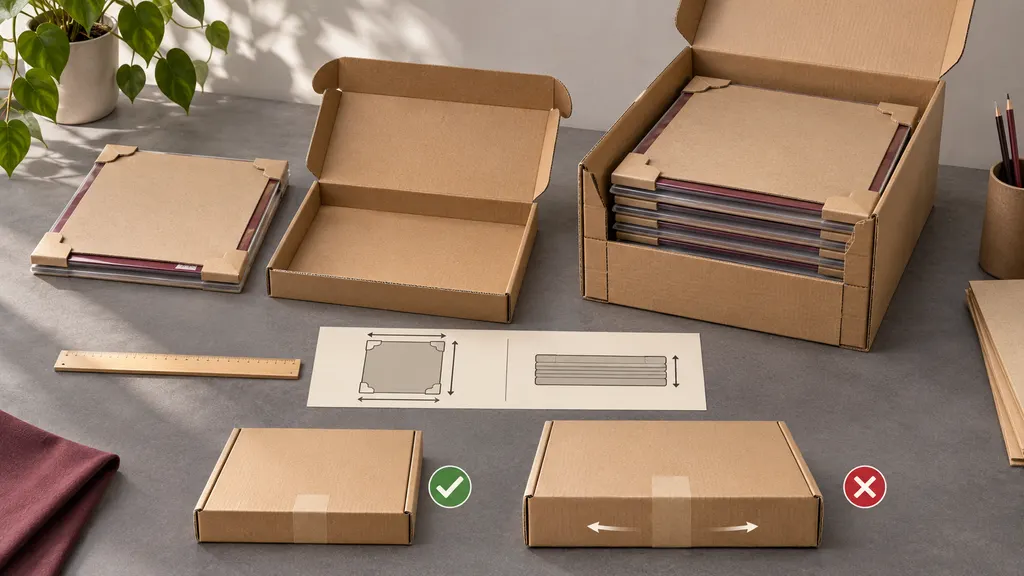
A single LP and a ten-record order do not need the same box. A mailer that is too tight can damage corners or split a jacket during packing, while an oversized carton can let the records shift and absorb more impact. This guide explains how to choose dimensions, how many records common box formats can hold, what to check before buying, and where sellers and collectors can find suitable mailers.
Start with the packed dimensions
Vinyl records are commonly described by diameter, but the shipping unit is larger than the disc itself. A 12-inch LP normally travels inside a jacket, often with an inner sleeve, an outer protective sleeve, and sometimes a cardboard stiffener. Gatefold jackets, box sets, lyric inserts, and multiple jackets can add substantial thickness.
Measure the item after preparing it for shipment. Record these three dimensions:
- The length and width of the largest jacket or protective sleeve.
- The total thickness of the record stack, including jackets and inserts.
- The additional space needed for stiffeners or cushioning.
Do not rely only on a box’s listed outside dimensions. Corrugated board, folded flaps, and interior padding reduce usable space. If a supplier provides both external and internal measurements, use the internal measurements for your comparison.
Common vinyl record box sizes
The following ranges are practical buying guides rather than universal industry standards. Products vary by manufacturer, board thickness, and folding design. The number of records a box can hold also changes when the shipment includes thick gatefold sleeves, double albums, or box sets.
| Shipment | Useful internal footprint | Typical depth approach | Best use |
|---|---|---|---|
| One 12-inch LP | About 13 x 13 inches | A shallow mailer with room for stiffeners | Single records and ordinary jackets |
| Two to five LPs | About 13 x 13 inches | Adjustable or deeper mailer | Small orders and grouped shipments |
| Six to ten LPs | About 13 x 13 inches | A deeper rigid carton with internal support | Larger orders with similar jacket sizes |
| 7-inch singles | A purpose-built smaller square mailer | Shallow, with edge protection | Singles and small-format records |
| 10-inch records | A purpose-built mid-size mailer | Based on the jacket, not the disc diameter alone | 10-inch LPs and EPs |
A 13-by-13-inch format is popular because it leaves a modest protective margin around many 12-inch jackets. It is not automatically correct for every LP. Some jackets are larger than others, and a rigid mailer can lose usable space when several stiffeners are inserted. Treat these dimensions as a starting point for product searches, then compare the supplier’s internal measurements with your own packed sample.
Choosing a box for one LP
For a single standard LP, look for a dedicated record mailer rather than a flat envelope. The mailer should hold the jacket without compressing it and should allow cardboard stiffeners to sit on both sides. A fold-over design with multiple depth settings is useful because it can be tightened around a thin single album or expanded for a thicker jacket.
The record should normally be protected from sliding inside the jacket during transit. Sellers often remove the disc from the jacket and place it beside the jacket inside its sleeve, especially when the jacket is valuable or prone to seam splits. That packing choice depends on the item and the seller’s method, but the box still needs to keep both pieces flat and supported.
Avoid a box that closes only by forcing the flaps down. Compression can leave corner marks, bend the jacket, or make the package difficult to seal evenly. A small amount of working room is preferable, but there should not be enough empty space for the record package to slide from side to side.
Choosing a box for multiple LPs
For multiple records, footprint is usually less difficult than depth. If the jackets have a similar length and width, the same square footprint can work while the required depth increases. The stack should be measured after adding sleeves, inserts, and any separators.
A useful selection process is:
- Place the records in the same orientation in which they will be shipped.
- Add the protective sleeves, inserts, and at least one rigid stiffener on each broad face.
- Measure the complete stack at its thickest point.
- Compare that measurement with the box’s internal depth, leaving enough room for the box to close without crushing the contents.
- Test for movement by gently tilting the closed, unsealed package.
Do not assume that a deeper box is always better. Extra depth can create a void that allows the records to accelerate inside the carton. If the box is deeper than the stack, use firm, lightweight fill or an adjustable mailer design to prevent movement. Soft loose fill alone may not provide enough resistance for a heavy record stack.
For larger orders, dividing the shipment into two well-supported cartons may be safer than placing a heavy stack in one oversized box. The decision depends on the number of records, the carton’s strength, the shipping distance, and the value of the contents. Weigh the completed package and check the carrier’s current size, weight, and packaging requirements before buying postage.
What construction features matter
Rigid corrugated board
Choose a mailer made from corrugated board or another rigid packaging material. Thin paperboard may be adequate for retail display but offers less protection against bending and compression in a parcel network. The supplier should state the material or board construction clearly; if it does not, ask before ordering in quantity.
Adjustable depth
Scored fold lines or multiple locking positions let one mailer fit different stack thicknesses. This is especially useful for sellers who ship both single LPs and small bundles. An adjustable box can reduce movement, but only if the final fold is tight and the closure is secure.
Flat, protected edges
Corners and jacket seams are vulnerable because they receive concentrated impact. Select a design that places stiff material across the faces and leaves a protective margin around the edges. Corner protection is more useful than simply adding empty space around the record.
Reliable closure
A self-locking tab can speed up packing, but valuable shipments should still be sealed with suitable packing tape. Do not use decorative gift tape as the primary closure. The United States Postal Service, UPS, and FedEx each publish packaging guidance, and their requirements can vary by service and shipment type.
Where to buy vinyl record shipping boxes
The best buying source depends on quantity, required size, and whether you need a specialized record mailer or a general corrugated carton.
- Specialty packaging suppliers: These vendors commonly list LP mailers, adjustable record mailers, stiffeners, and protective sleeves together. They are a practical option for collectors and regular sellers who want a design made specifically for records.
- Music and record-supply retailers: Record-focused stores may sell mailers designed around 7-inch, 10-inch, or 12-inch formats. Check the internal dimensions and the quantity per case before ordering.
- Packaging distributors: General packaging suppliers can be useful for larger volumes. They may offer stronger cartons and bulk pricing, but you may need to buy separate stiffeners or determine the best interior fit yourself.
- Marketplaces: Online marketplaces offer many sizes and pack counts. Product listings should be treated as a starting point. Verify the seller’s measurements, board type, reviews, and return terms rather than selecting only by the product title.
- Local shipping-supply stores: A local supplier lets you inspect the board and test a sample stack before buying a case. This can prevent an expensive order of boxes with insufficient depth.
Bags Unlimited maintains a dedicated record-mailer category, which is one example of a specialty source to check for format-specific packaging. Marketplace searches can also help compare pack counts, but listings change, so confirm current specifications directly on the product page.
A practical buying checklist
Before placing an order, check the following:
- Are the stated measurements internal or external?
- Does the footprint fit the largest jacket, not just the vinyl disc?
- Is the depth suitable for your thinnest and thickest usual order?
- Can you add stiffeners without preventing the box from closing?
- Does the design prevent side-to-side movement?
- Is the board rigid enough for the weight of the shipment?
- How many boxes, stiffeners, and accessories are included in the listed price?
- Are samples available before a bulk purchase?
- Will the completed package remain within the carrier’s size and weight limits?
Order a small quantity first if the supplier’s measurements are unclear. Pack a representative single LP, a gatefold album, and the largest multi-record stack you expect to ship. A short trial can reveal fit problems that are not obvious from a product photograph.
Packing and final inspection
Place the record and jacket in protective sleeves, add rigid stiffeners, and center the contents in the mailer. The package should close without bending the jacket. Seal every intended closure point, then inspect all edges for gaps. If the contents rattle, reduce the empty space with firm packing material or choose a shallower box.
Before handing the parcel to a carrier, confirm the address, service level, weight, and any required customs information. Keep a record of the tracking number and the package condition at dispatch. Tracking does not replace good packaging, but it helps the sender and recipient follow the shipment and identify delivery exceptions.
FAQ
What size box is best for one 12-inch LP?
A dedicated mailer with an internal footprint of about 13 by 13 inches is a common starting point. Choose the depth based on the jacket, sleeve, and stiffeners, and verify the supplier’s internal measurements before buying.
Can one LP box hold multiple records?
Only if its internal depth is sufficient and the package can close without compression. Measure the complete stack rather than relying on a stated record count. Gatefolds and double albums may use more space than ordinary single jackets.
Should vinyl records be shipped in a regular cardboard box?
A rigid corrugated carton can work if it fits the records closely and includes face and edge protection. A purpose-built record mailer is often easier to size and pack, particularly for single LPs.
Where can I buy record mailers in bulk?
Specialty packaging suppliers, record-supply retailers, packaging distributors, and marketplaces all sell record mailers. Compare internal dimensions, board construction, included stiffeners, pack quantity, and shipping cost rather than comparing the box title alone.
How much empty space should be left in a record mailer?
Leave enough room for protective materials and a stress-free closure, but not enough for the record stack to slide. The correct amount depends on the mailer design and the stiffness of the packing materials.