How to Ship Vinyl Records Internationally: Packing, Customs, and Carrier Options
To ship vinyl records internationally, protect the record and sleeve from bending, moisture, impact, and movement; describe the contents accurately on the customs form; and choose a carrier based on destination, delivery speed, tracking, insurance terms, and the parcel’s dimensions. The safest method is a rigid record mailer with stiffeners inside a water-resistant outer layer, followed by a careful customs declaration and a service that provides tracking for the complete route.
Vinyl records are more vulnerable than their weight suggests. A parcel can be crushed, bent, exposed to rain, or delayed in customs even when the record itself is not fragile glass. A reliable shipping process therefore treats the sleeve, jacket, inner sleeve, and record as separate items that all need protection.
1. Prepare the Record Before Packing
Inspect the record and packaging before you choose a mailer. Check for warping, split seams, seam wear, water damage, and cracks. Photograph the record, jacket, labels, and any visible defects. These photographs create a useful condition record for a sale or insurance claim, but they do not replace the carrier’s own claim requirements.
Remove the disc from the jacket if the record will be shipped inside its original cover. During transport, the disc can move inside the jacket and place pressure on the seams, especially when the package is compressed. Put the record in a clean inner sleeve, then place it beside the jacket or between protective inserts. If the record is valuable, use a separate outer sleeve to keep the record and jacket together while preventing direct rubbing.
For a used record, do not use an unverified description such as “rare,” “mint,” or “collectible” on the customs form unless that wording is genuinely relevant and supported by the transaction. Customs information should describe the physical item clearly and state its actual transaction value or other value required by the destination’s rules.
2. Use a Rigid, Properly Sized Mailer
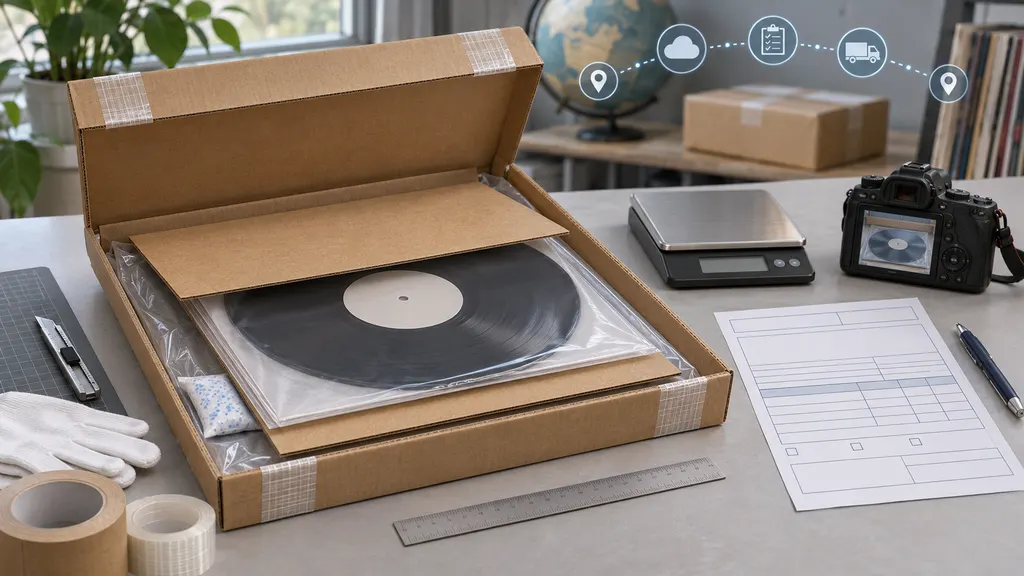
A record mailer should be rigid enough to resist bending and large enough to avoid putting pressure on the jacket. A purpose-made LP mailer is usually more suitable than a thin cardboard envelope. Select a box or mailer that leaves room for stiffeners and cushioning without allowing the record to slide from one side to the other.
- Record mailer: Use a strong corrugated mailer designed for records or similarly rigid contents.
- Stiffeners: Place stiff cardboard inserts on both sides of the protected record. The inserts should be larger than the jacket so that external pressure is distributed away from the corners.
- Cushioning: Add enough material to prevent movement, but do not compress the jacket so tightly that it bends or develops corner damage.
- Moisture protection: Put the record and jacket in a sealed plastic sleeve or water-resistant inner wrap before placing them in the carton. This protects against rain and handling moisture but should not be treated as a substitute for a durable outer package.
- Sealing: Use strong packing tape on the main seams and reinforce areas that may be exposed to conveyor handling. Do not rely on household tape or a single strip across the opening.
For a box set, multiple records, or an unusually valuable item, test the packed parcel before shipping. Gently move it in several directions. If the contents shift, add internal protection. If the parcel flexes when held by its edges, use a stronger box or additional stiffeners. Avoid adding so much loose padding that the record can move after the package is closed.
3. Pack the Record Step by Step
- Place the record in a clean inner sleeve. If the original jacket is fragile, protect it with a separate outer sleeve.
- Put the record and jacket together in a protective sleeve or wrap. For an original jacket, consider positioning the disc outside the jacket to reduce seam pressure.
- Sandwich the protected contents between two rigid inserts that extend beyond the vulnerable edges.
- Place the sandwich in a purpose-made record mailer or a rigid carton with minimal empty space.
- Fill gaps with suitable cushioning so the contents cannot slide, while keeping the package flat and evenly supported.
- Close and tape every opening securely. Apply the shipping label to a flat surface and remove or cover old barcodes and addresses.
- Measure and weigh the sealed parcel, not the unpacked record. Enter the same weight and dimensions when buying the label or requesting a carrier quote.
Do not put a fragile record in a soft poly mailer without rigid protection. Do not tape directly over the jacket, inner sleeve, or record. Also avoid placing heavy objects in the same parcel unless the internal structure is designed to prevent contact and compression.
4. Complete the Customs Declaration Carefully
International shipments generally require information that allows customs authorities to identify the goods, assess any duties or taxes, and determine whether restrictions apply. The exact form and electronic process depend on the origin country, destination, carrier, service, and shipment type. Postal operators may use CN22 or CN23 forms, while express carriers commonly collect equivalent information electronically.
Use a specific description such as “used vinyl record,” “new vinyl record,” or “vinyl record box set,” rather than “gift,” “music,” or “merchandise” alone. State the quantity, net or parcel weight when requested, value, currency, and country of origin using the carrier or postal authority’s instructions. If the item was sold, the declared value should reflect the transaction and should not be reduced merely to lower the recipient’s possible charges.
“Gift” is not a universal exemption. A shipment between private individuals may still be subject to destination-specific thresholds, taxes, or documentation requirements. If a marketplace or carrier provides an electronic customs workflow, complete every required field consistently with the commercial invoice, order record, and shipping label.
Country of origin can be different from the country from which the parcel is shipped. For example, a record manufactured in one country and sold from another may require the manufacturing country as its origin. When the origin is unclear, check the item’s packaging and transaction records or ask the relevant customs authority or carrier before submitting the declaration.
5. Check Destination Rules Before You Pay
Customs treatment is determined by the destination country, not by the carrier’s marketing description. Before dispatch, check the destination customs authority or the carrier’s international shipping guidance for taxes, low-value thresholds, prohibited or restricted goods, documentation, and recipient requirements. A record is normally a physical media item, but the applicable tariff classification and tax treatment can vary by jurisdiction and by the specific product.
Do not guess a harmonized or tariff code when the code affects clearance. Postal and carrier systems may provide a searchable classification tool, but the final classification is a customs matter. If a code is required and you cannot verify it, ask the carrier or a customs professional rather than copying a code from an unrelated shipment.
Also confirm whether the recipient will need to pay import VAT, customs duty, brokerage, or a handling fee. The carrier may collect charges before delivery, on delivery, or through a billing arrangement, depending on the service and destination. These charges are separate from the postage paid by the sender.
6. Compare Carrier Options
No single carrier is the right choice for every record. Compare services using the destination, parcel dimensions, delivery urgency, declared value, available tracking, claim rules, and the recipient’s ability to handle customs charges.
| Carrier type | Often suitable when | Check before booking |
|---|---|---|
| Postal service | Cost and broad destination access matter more than a guaranteed delivery date. | Destination availability, end-to-end tracking, compensation limits, customs handling, and service suspensions. |
| Express integrator | You need faster transit, more structured tracking, or a time-sensitive delivery. | Dimensional pricing, remote-area charges, brokerage, duties, prohibited-item rules, and declared-value limits. |
| Parcel consolidator or marketplace label | You want access to multiple services through one booking workflow. | Who is contractually responsible, where claims are filed, which carrier performs final delivery, and whether tracking is retained after handoff. |
Postal services can be practical for less urgent shipments, but tracking depth and compensation may differ by destination and service level. Express carriers may provide more frequent event updates and a more structured customs process, but the total cost can include brokerage or destination charges. A shipping platform or marketplace label can simplify purchasing, but read the terms carefully: the label seller, transport carrier, and claims administrator may not be the same organization.
For a valuable record, compare the carrier’s actual liability terms with the item’s value. “Tracking included” does not necessarily mean full insurance. Some services exclude collectibles, used goods, packaging damage, or indirect losses. If protection is important, ask whether separate insurance is available and what evidence is required if the parcel arrives damaged.
7. Tracking and Delivery Management
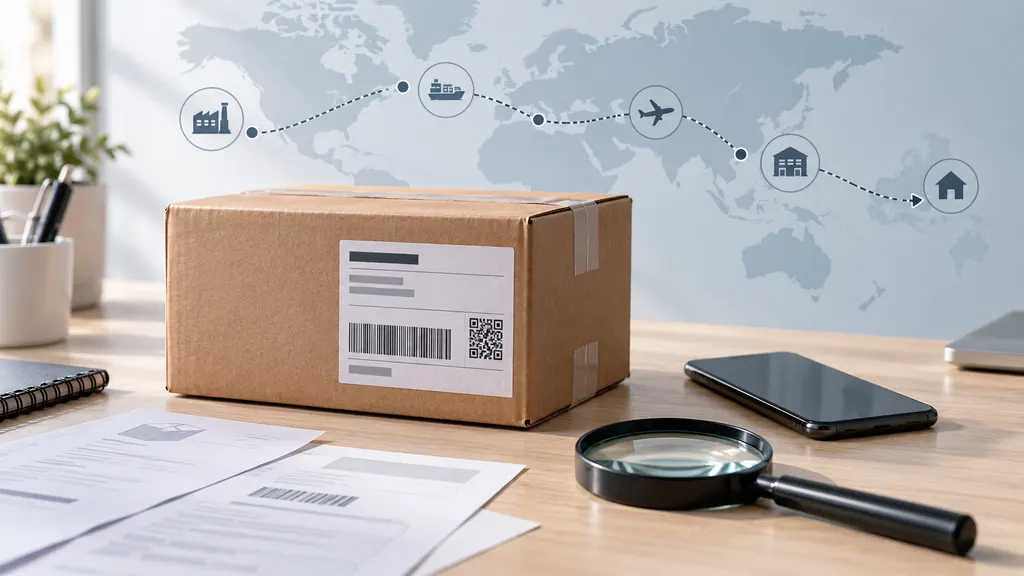
Save the tracking number, customs declaration, receipt, parcel photographs, and the final packed weight. Give the recipient the tracking number and explain that customs may request payment or additional information. A parcel can show no movement while it is waiting for clearance, so the tracking event should be interpreted together with the carrier’s service standard and destination process.
For orders sent through different carriers, a multi-carrier tracking service can provide a single place to check shipment events. 17TRACK’s tracking page allows users to enter a tracking number and check available shipment updates across supported carriers. Tracking visibility depends on the carrier and the data it makes available; a tracking platform cannot create events that the carrier has not supplied.
If a parcel is delayed, first confirm that the address, customs information, and recipient contact details are correct. Then check the carrier’s latest event and contact the carrier or postal operator responsible for the current stage. For a damaged parcel, ask the recipient to photograph the outer packaging, internal protection, and record condition before disposing of anything.
8. A Practical Pre-Dispatch Checklist
- Record, sleeve, and jacket inspected and photographed.
- Disc protected separately from a fragile jacket when appropriate.
- Rigid inserts placed on both sides of the contents.
- Parcel protected against moisture and sealed with strong tape.
- No movement inside the finished package.
- Final weight and dimensions recorded accurately.
- Item description, quantity, value, currency, and origin entered truthfully.
- Destination customs and import-charge requirements checked.
- Tracking and compensation terms reviewed for the selected service.
- Receipt, label, declaration, and photographs saved until delivery is confirmed.
The best international shipping decision is not simply the lowest quoted rate. For an inexpensive record, a tracked postal service may be sufficient if the delivery window is flexible. For a valuable pressing, a box set, or a time-sensitive order, stronger packaging, clearer liability terms, and more detailed tracking may justify a higher transport cost. When the destination rules or carrier terms are unclear, delay dispatch long enough to verify them; an incorrect declaration is harder to fix after the parcel enters the international network.
FAQ
Can I ship a vinyl record in a padded envelope?
A padded envelope alone is usually not adequate for an LP because it does not provide enough resistance to bending or crushing. Use a rigid record mailer or a strong carton with stiff inserts, then add moisture protection and cushioning.
Should the record stay inside its jacket?
For many shipments, placing the disc in a separate inner sleeve beside the jacket reduces pressure on the jacket seams. The exact arrangement depends on the condition of the sleeve and the internal design of the mailer. The record should always be secured so it cannot move during transit.
What should I write on the customs form?
Use a clear description such as “used vinyl record” or “vinyl record box set,” and provide the required quantity, value, currency, weight, and origin. Do not describe merchandise as a gift or understate its value to avoid possible charges.
Is tracking the same as insurance?
No. Tracking records transport events, while insurance or carrier liability concerns compensation for loss or damage. Review the selected service’s limits, exclusions, claim deadline, and evidence requirements before shipping a valuable record.
How can I reduce the chance of customs delays?
Use a complete and truthful declaration, provide the recipient’s correct address and contact details, verify any required tariff information, and check the destination’s import rules before booking. Customs delays can still occur because clearance is controlled by the destination authorities.