How much Does It Cost to Ship a Vinyl Record? Rates by Carrier
Shipping one vinyl record within the United States can cost anywhere from a few dollars to considerably more, depending on the service, package size, destination, and protection you choose. For an eligible domestic record, USPS Media Mail is usually the first service to price because it is designed for qualifying sound recordings. USPS Ground Advantage, Priority Mail, UPS, and FedEx can also be appropriate when you need faster delivery, broader service options, or a carrier-specific account rate. There is no single nationwide price for a vinyl record: the final quote depends on the parcel’s packed weight, dimensions, origin ZIP Code, destination ZIP Code, and any added services.
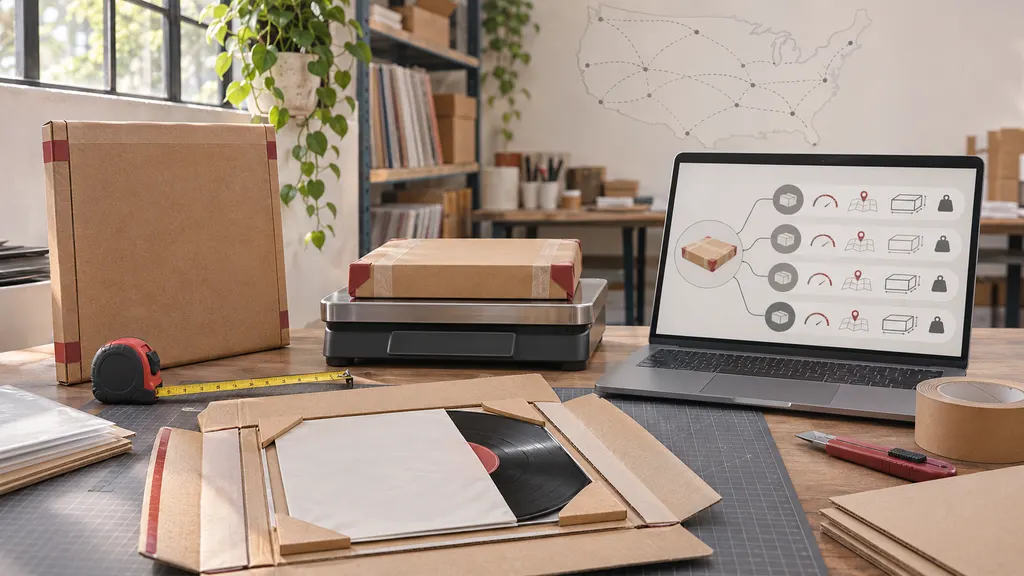
The most reliable way to obtain a current rate is to measure the finished package and enter those details into each carrier’s official calculator. Online prices can change with postal or carrier rate updates, residential delivery rules, fuel surcharges, dimensional-weight formulas, and discounts applied to a business account.
Typical Carrier Options for Vinyl Records
| Carrier or service | Best use | How the price is determined | Main caution |
|---|---|---|---|
| USPS Media Mail | Eligible domestic records where delivery speed is not the priority | Published weight-based postage, with the package meeting Media Mail rules | It is not a universal service for every item or destination, and USPS may inspect qualifying content |
| USPS Ground Advantage | Ordinary domestic shipments that do not qualify for Media Mail | Weight, zone, package dimensions, and selected options | The quote can differ materially from Media Mail, especially for heavier or distant parcels |
| USPS Priority Mail | Time-sensitive shipments or senders who prefer a faster USPS service | Package size, weight, zone, and the selected Priority Mail format | Faster service generally costs more than an economy option |
| UPS | Shippers using a UPS account, scheduled pickups, or business shipping workflows | Service level, billable weight, origin and destination, package characteristics, and applicable surcharges | The billed weight may be dimensional rather than the scale weight |
| FedEx | Shippers who need FedEx service options or have negotiated account pricing | Service, zone, package weight and dimensions, delivery address, and surcharges | A large protective box can raise the billable weight even when the record itself is light |
This table compares pricing structures rather than publishing a fixed dollar amount. A static rate can become inaccurate when a carrier changes its tariff or when two packages have different dimensions. For a purchase, sale, or shipping quote, use the actual packed parcel rather than an estimated record weight.
USPS Media Mail: Often the Lowest-Cost Starting Point
USPS lists sound recordings among the types of content that may qualify for Media Mail. That makes the service relevant to vinyl records shipped domestically in the United States. The package must satisfy the service’s eligibility and packaging requirements. Media Mail is intended for qualifying media, not as a general low-cost substitute for every merchandise shipment.
The price is primarily driven by the package’s weight and the current USPS Media Mail rate schedule. A single record in a mailer may fall into a lower weight bracket than a multiple-record order, a boxed collection, or a shipment with substantial protective material. Because the weight threshold can change the postage, weigh the sealed parcel after inserting the record, stiffeners, padding, and documentation.
Media Mail is most suitable when the buyer accepts slower delivery and the shipment qualifies under USPS rules. It is less suitable when a seller has promised a specific delivery date, is sending an item that does not meet the content rules, or needs a different service configuration. USPS may examine Media Mail packages to verify eligibility, so do not use the service solely because it appears cheaper at checkout.
USPS Ground Advantage and Priority Mail
USPS Ground Advantage is the more general option when a record does not qualify for Media Mail or when the sender wants a standard ground service. Its quote depends on the package’s weight, dimensions, zone, and destination. The service can be useful for marketplace sellers who need a normal parcel service for records, accessories, merchandise bundles, or mixed orders.
Priority Mail is worth checking when delivery speed matters or when its packaging and service structure fit the shipment. The amount is not determined by the record alone. The outer package, destination zone, selected box or mailer, and current USPS pricing all affect the quote. For a heavy order or a distant destination, compare Priority Mail with Ground Advantage rather than assuming that the faster service is always disproportionately expensive.
USPS pricing tools can produce different results depending on whether the parcel is entered as a package, whether dimensions are supplied, and whether extra services are selected. Enter the same weight and dimensions consistently when comparing services.
UPS and FedEx Rates for Vinyl Records
UPS and FedEx generally price a record as a parcel rather than using a special media category. The quote normally depends on the service level, origin and destination, package dimensions, actual weight, and the account or retail channel used to buy the label. Residential delivery, delivery-area rules, fuel-related charges, declared-value or protection options, and other surcharges may also affect the total.
Dimensional weight is particularly important for vinyl. A record is relatively flat, but it should not be shipped in a loose envelope. A rigid mailer or a box with corner protection can occupy more space than the item’s scale weight suggests. If the carrier’s dimensional calculation is higher than the actual weight, the dimensional figure may become the billable weight. Measure the outside of the completed parcel, not just the internal record mailer.
UPS or FedEx can make sense for sellers who already have a negotiated rate, arrange regular pickups, need a particular delivery service, or are consolidating several product categories under one carrier account. For a one-off domestic record, however, the retail quote may not beat USPS. The correct comparison is the final checkout price for the same parcel and delivery promise, not the carrier’s headline starting rate.
What Makes a Vinyl Record More Expensive to Ship?
- Package weight: A single LP, a double album, and a multi-record order can fall into different pricing brackets after packaging is added.
- Outer dimensions: Oversized protective packaging can trigger dimensional-weight pricing with parcel carriers.
- Shipping zone: Domestic ground services usually price differently for nearby and distant destinations.
- Delivery speed: Expedited services cost more when the buyer needs a shorter delivery window.
- Residential or remote delivery: Some carrier quotes include address-related surcharges or service limitations.
- Protection and handling: A stronger box, corner protection, and additional padding increase the parcel’s weight or size, but they can reduce the chance of transit damage.
- Order quantity: Several records may be cheaper per unit in one box, but the total shipment can move into a higher weight or dimensional tier.
- Label source: Retail counter rates, marketplace labels, postage platforms, and negotiated business rates may not be identical.
How to Calculate the Real Shipping Cost
- Pack the record as it will actually ship. Use a purpose-built record mailer or a rigid box with protection against bending and corner impact. Do not base the quote on the bare record.
- Measure the outside of the sealed parcel. Record length, width, and height in the unit requested by the carrier. Round measurements according to the carrier’s instructions rather than guessing.
- Weigh the completed package. Include the record, sleeve, inner sleeve, mailer, box, padding, tape, label, and any paperwork.
- Enter the origin and destination. A ZIP Code or postal code can change the applicable zone and service availability.
- Compare equivalent delivery promises. Do not compare Media Mail with an expedited service as though they provide the same delivery experience.
- Review the final checkout total. Check for insurance or declared-value charges, signature requirements, pickup fees, residential surcharges, and any discount already applied.
- Add packaging cost separately. Postage is only one part of the seller’s fulfillment cost. A realistic quote should include the mailer, box, padding, label, labor, and a reasonable allowance for damage or replacement handling.
How to Keep the Cost Down Without Risking Damage
Use packaging that protects the record without leaving excessive empty space. A rigid mailer with stiffeners can limit bending, while corner protection helps prevent the jacket from being crushed. Keep the record from sliding inside the package, but avoid adding so much material that the parcel crosses an important weight or dimensional threshold without improving protection.
For eligible domestic shipments, compare Media Mail with Ground Advantage for every order profile. Media Mail may be economical for qualifying records when speed is flexible, while Ground Advantage may be the better operational choice when the contents are mixed or the seller wants a standard parcel service. For urgent orders, compare Priority Mail, UPS, and FedEx using the same package measurements.
Business sellers should save the packed dimensions and weight for common products. A measured shipping profile makes checkout estimates more accurate and reduces the risk of postage adjustments. It also allows a seller to identify when a mailer change saves money or when a larger box causes dimensional pricing.
Bottom Line
For one qualifying domestic vinyl record, start with USPS Media Mail, then compare USPS Ground Advantage if the item or delivery requirement does not fit Media Mail. Check Priority Mail, UPS, and FedEx when speed, account pricing, pickup arrangements, or a particular service requirement matters. The final answer is the quote for the fully packed parcel, not a generic “record shipping” price.
If you sell records regularly, publish shipping charges by order profile rather than promising one flat rate for every destination. A single record, a double LP, and a multi-record bundle may require different packaging and carrier services. Recheck the carrier calculator when rates change and whenever the package dimensions change.
FAQ
Is USPS Media Mail allowed for vinyl records?
USPS identifies sound recordings as qualifying Media Mail content, so vinyl records can be eligible for domestic Media Mail when the shipment meets the service rules. Confirm the current USPS requirements before mailing, particularly when the parcel contains merchandise or other items in addition to the record.
What is the cheapest way to ship one vinyl record?
For an eligible domestic shipment, Media Mail is often the first low-cost option to check. It is not automatically the cheapest in every situation because eligibility, package weight, destination, packaging cost, delivery expectations, and account discounts can change the comparison.
Should I use UPS or FedEx for a single record?
Use the carrier that gives the best final quote for the required delivery service and package protection. UPS or FedEx may be practical for account holders, scheduled pickups, urgent delivery, or consolidated business shipping. For a one-off economy shipment, compare their quote with USPS using identical dimensions and weight.
Does the record’s weight determine the shipping price?
It is one factor, but not the only one. The carrier may also use the outer dimensions, destination zone, service level, address type, and surcharges. With UPS or FedEx, dimensional weight can matter when a protective package takes up more space than its actual scale weight.
How should I package a vinyl record for shipping?
Use a rigid record mailer or a sturdy box, add stiffeners and corner protection, and prevent movement inside the parcel. The final packaging should be strong enough to resist bending and impact without creating unnecessary size or weight. Measure and weigh that finished package for the shipping quote.
Sources
- USPS Media Mail — service purpose and eligible media categories.
- USPS Postage Price Calculator — current USPS quotes based on shipment details.
- USPS Ground Advantage — general domestic parcel service information.
- USPS Priority Mail — Priority Mail service information.
- UPS Shipping Dimensions and Weight — package measurement and dimensional-weight guidance.
- UPS Shipping Calculator — shipment-specific UPS rates.
- FedEx Shipping Rates — FedEx rate and surcharge information.
- FedEx Packaging Guidelines — general packaging guidance for parcel shipments.