Less-Than-Truck-Load Transportation
Definition
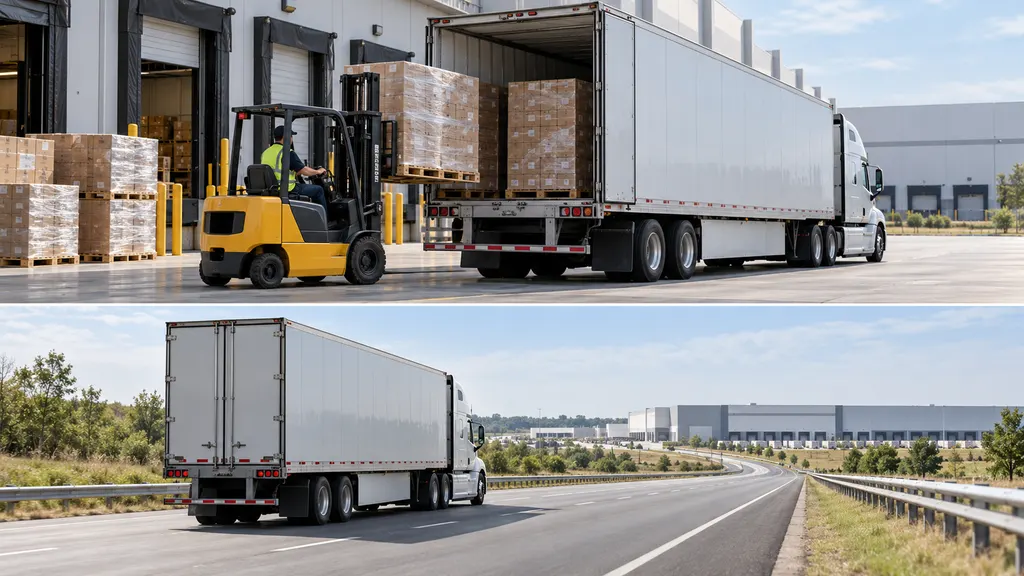
Less-than-truckload transportation, commonly abbreviated as LTL, is the movement of freight that does not require the exclusive use of an entire truck trailer. Instead, shipments from multiple shippers are combined on the same line-haul vehicle and moved through a carrier’s network of pickup points, terminals, and delivery routes. LTL is primarily used for freight that is larger, heavier, or more difficult to handle than a parcel but smaller than a full truckload.
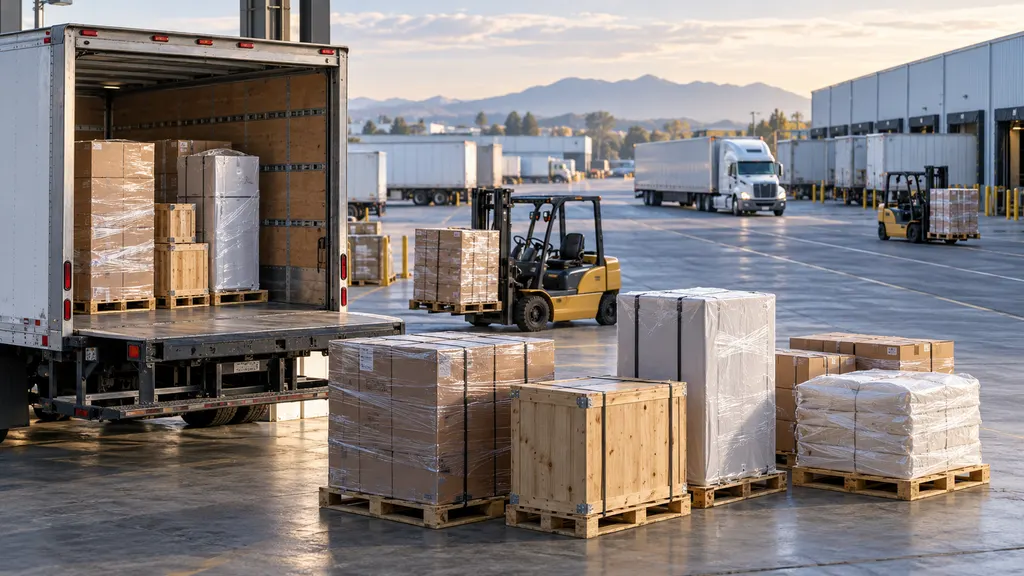
In logistics, LTL describes both a transportation service and an operating model. The carrier consolidates compatible shipments, transports them between terminals or regional facilities, and separates them for final delivery. The exact shipment-size limits, pricing rules, service areas, and handling procedures vary by carrier, country, equipment, and contract. LTL is therefore a common industry term rather than a single universal legal category.
An LTL shipment may consist of one or more pallets, crates, cartons, or other handling units. It is usually documented with transport instructions and a freight bill or bill of lading. The shipment may be measured by weight, dimensions, number of handling units, freight characteristics, origin, destination, and required services such as liftgate delivery or residential delivery.
In Logistics
LTL occupies the middle range between parcel transportation and full-truckload transportation. Parcel networks are designed for relatively small individual packages that can normally be handled through automated or manual package systems. Full truckload, or FTL, transportation generally assigns the vehicle’s usable capacity to one shipment or one customer’s freight. LTL combines freight from multiple customers, making shared capacity the central feature of the service.
In a supply chain, LTL can connect a manufacturer, importer, wholesaler, warehouse, store, business customer, or ecommerce fulfillment operation. A retailer may use LTL to replenish a store with palletized inventory. An ecommerce merchant may use it to move a bulky order from a fulfillment center to a business customer or to transfer inventory between warehouses. In cross-border shipping, an LTL carrier or freight provider may move consolidated freight to a border crossing, port, airport, customs facility, or destination terminal.
LTL does not replace customs clearance, trade documentation, or final delivery requirements. When freight crosses an international border, the parties may still need commercial invoices, packing information, transport documents, customs declarations, permits, and other documents required by the relevant authorities. The LTL service concerns the physical and operational movement of the freight; customs authorities determine whether the goods may be imported or exported and under what conditions.
How LTL Transportation Works
- Shipment preparation: The shipper packages the goods and records their dimensions, weight, quantity, handling requirements, and destination. Freight is often placed on pallets or secured in another form suitable for terminal handling.
- Rate quotation and booking: The shipper or its logistics provider requests a rate based on the shipment details, route, service level, accessorial requirements, and applicable carrier rules. In some markets, the carrier may also use a freight classification or density-based pricing method.
- Pickup: A local truck collects the freight from the shipper. The pickup may be scheduled at a warehouse, distribution center, commercial address, or another approved location.
- Origin terminal handling: The freight is received at a terminal and sorted with other shipments. It may be transferred between vehicles during the journey rather than traveling directly from origin to destination.
- Line-haul movement: Consolidated freight travels between terminals or regional hubs. The carrier plans vehicle capacity and routing so that shipments with different origins and destinations can share transportation resources.
- Destination terminal handling: The shipment is unloaded, sorted, and assigned to a local delivery route. Additional handling may occur when the shipment is transferred between equipment or prepared for a particular delivery requirement.
- Final delivery: The destination vehicle delivers the freight to the consignee. Delivery may require an appointment, a signature, a loading dock, a liftgate, inside delivery, or other services, depending on the shipment and the location.
- Proof and status updates: The carrier or logistics provider records pickup, terminal, transit, exception, and delivery events. Tracking information may show operational milestones rather than the continuous location of the freight.
The number of transfers in an LTL network can create handling and scheduling considerations that do not apply in the same way to a direct full-truckload movement. Packaging, labeling, pallet stability, accurate measurements, and clear delivery instructions help reduce avoidable exceptions. The shipper remains responsible for providing accurate shipment information and complying with the carrier’s packaging and documentation requirements.
Key Characteristics
| Characteristic | What it means | Operational consequence |
|---|---|---|
| Shared vehicle capacity | Freight from multiple shippers travels on the same vehicle or through the same network. | The carrier consolidates and separates shipments at different stages. |
| Handling units | Freight is commonly presented as pallets, crates, cartons, or other units suitable for freight handling. | Packaging must withstand loading, unloading, and possible transfers. |
| Terminal network | Shipments often move through origin, intermediate, and destination facilities. | Transit is usually network-based rather than a single direct movement. |
| Accessorial services | Special requirements may include liftgate service, appointment delivery, residential delivery, or inside delivery. | These requirements can affect eligibility, scheduling, and the total charge. |
| Freight information | Weight, dimensions, commodity description, packaging, and destination details influence the shipment record. | Incorrect information may lead to reclassification, additional charges, delays, or delivery problems. |
Pricing and Shipment Classification
LTL pricing is commonly more complex than a simple per-package rate. A quotation may consider the origin and destination, shipment weight, dimensions, number of pallets, commodity characteristics, service requirements, fuel or other applicable charges, and the carrier’s pricing agreement. The precise calculation differs among markets and carriers, so a general formula should not be treated as universal.
In the United States, some LTL pricing systems use freight classes associated with the National Motor Freight Classification framework. Freight class is not simply a synonym for product type. Factors such as density, handling, stowability, and liability may affect the applicable classification under the relevant rules. Other carriers and markets may use different approaches, including density-based rating, contracted categories, or shipment-specific quotations.
A shipper should distinguish the base transportation rate from accessorial charges. An accessorial charge may arise when the shipment needs a liftgate, requires an appointment, is collected from or delivered to a location with limited truck access, has incorrect dimensions, or needs a service not included in the original quote. Whether a particular charge applies depends on the carrier’s tariff, contract, service guide, and the facts of the shipment.
LTL Compared with Related Services
| Service or term | Primary distinction from LTL | Typical use |
|---|---|---|
| Parcel shipping | Designed for individual packages that fit the carrier’s parcel handling and size rules. | Small consumer orders, documents, and other package-level shipments. |
| Full truckload | The vehicle is generally dedicated to one shipper’s load or one shipment movement. | Freight that fills much of a trailer or requires a more direct movement. |
| Groupage or freight consolidation | A broader description of combining shipments; the exact service model varies by provider and trade lane. | Combining compatible cargo to use transport capacity more efficiently. |
| Freight forwarding | A forwarding service may arrange transportation, documentation, consolidation, and handoffs without being the same as the physical LTL carrier. | Domestic or international movements requiring coordinated transport arrangements. |
| Drayage | Short-distance movement, often between a port, rail terminal, warehouse, or transload facility. | Connecting ocean or rail transport with another stage of the supply chain. |
LTL and groupage are sometimes used in overlapping ways, especially in international logistics. However, LTL usually emphasizes a domestic or regional road-freight network, while groupage may describe consolidated freight in a broader road, ocean, or air context. The parties should confirm the service definition in the quotation or transport contract rather than relying only on the label.
Use in Ecommerce and Cross-Border Shipping
LTL is relevant to ecommerce when the product, order, or inventory movement is too large for ordinary parcel delivery. Examples include furniture, appliances, commercial equipment, construction materials, multiple cartons shipped together, or palletized replenishment stock. A merchant may also use LTL for a business-to-business order placed through an ecommerce platform, even when the order itself was created online.
For a cross-border ecommerce shipment, the operational sequence may include warehouse fulfillment, pallet preparation, export documentation, line-haul transportation, border processing, import clearance, destination delivery, and proof of receipt. The party arranging transportation should establish who is responsible for customs declarations, duties and taxes, broker instructions, delivery appointments, and any required documents. These responsibilities depend on the transaction terms, the countries involved, and the parties’ agreements.
Tracking information for an LTL shipment often consists of milestone events such as pickup, arrival at a terminal, departure from a terminal, an exception, an appointment, and delivery. Tracking and tracing are related but not identical concepts: tracking usually refers to checking recorded shipment events, while tracing may involve investigating a delay, exception, shortage, or missing shipment. The available event detail depends on the carrier and the transport system.
Practical Checks Before Booking
- Confirm the total weight, dimensions, pallet count, and number of pieces.
- Describe the commodity accurately and identify fragile, hazardous, temperature-sensitive, oversized, or otherwise restricted characteristics.
- Check whether the origin and destination are commercial or residential and whether a loading dock or forklift is available.
- Request any required accessorial services before pickup rather than assuming they are included.
- Use labels and shipping documents that clearly identify the shipper, consignee, shipment reference, handling units, and delivery instructions.
- For cross-border movements, confirm the responsible importer or exporter, customs documentation, broker arrangements, and applicable trade requirements.
- Compare the quoted service level with the required delivery date, appointment window, and consequences of a missed delivery.
- Inspect packaging and pallet stability so that the freight can tolerate normal terminal handling and movement.
Common Misunderstandings
LTL does not mean a partially empty truck owned by one shipper
The defining idea is shared transportation capacity and network consolidation. A shipment may occupy only part of a trailer, but the important distinction is that the carrier is managing freight from multiple customers rather than providing an exclusive full-truckload movement.
LTL is not simply a large parcel
Parcel and LTL services use different handling networks, pricing structures, packaging expectations, and delivery procedures. A shipment that exceeds parcel limits may be suitable for LTL, but eligibility depends on the carrier’s rules and the shipment’s characteristics.
LTL does not automatically mean door-to-door service without conditions
The carrier may offer pickup and delivery, but the exact service can depend on access, appointment requirements, equipment, location type, and the services selected. A consignee should not assume that a liftgate, inside delivery, or residential service is included.
LTL is not the same as customs clearance
LTL describes transportation and handling. Customs clearance is a separate regulatory process involving the authorities and documents applicable to an international movement. The same shipment can use LTL transportation while being subject to customs procedures.
Related Terms
Important related terms include full truckload, parcel shipping, freight forwarding, groupage, consolidation, line-haul transportation, accessorial charges, bill of lading, consignee, and proof of delivery. These terms describe different parts of the movement, documentation, or service arrangement and should not be treated as interchangeable with LTL.
QA
What does LTL mean in logistics?
LTL means less-than-truckload. It is a transportation service in which freight from multiple shippers is combined in a shared truck or carrier network instead of using an entire truck exclusively.
What is the difference between LTL and full truckload?
LTL consolidates multiple shipments, while full truckload generally dedicates the vehicle’s capacity to one shipper’s load or one shipment movement.
Is LTL suitable for ecommerce?
It can be suitable for bulky, heavy, palletized, or business-to-business orders that do not fit ordinary parcel services. The carrier’s size, weight, packaging, and access requirements still apply.
Does LTL include customs clearance?
Not automatically. LTL concerns transportation and handling; customs clearance and related import or export responsibilities are separate and depend on the countries, parties, and transaction terms involved.
Sources
- FedEx Freight: LTL Freight — carrier-level description of less-than-truckload freight services and shipment requirements.
- UPS Supply Chain Solutions: Less-than-truckload — industry usage of the term and its relationship to shared freight transportation.
- U.S. Customs and Border Protection: Importing and Exporting Basics — customs and documentation context for international shipments.
- Wikipedia: Less-than-truckload shipping — reference overview of LTL network operations, terminology, and related transportation concepts.