Tallying Space
What Is Tallying Space?
Tallying space is a designated area where cargo or goods can be counted and checked during receipt, transfer, or dispatch. In a warehouse, transit shed, or cargo terminal, it provides room to compare the physical goods being handled with the quantities and identifying details recorded in shipment documents.
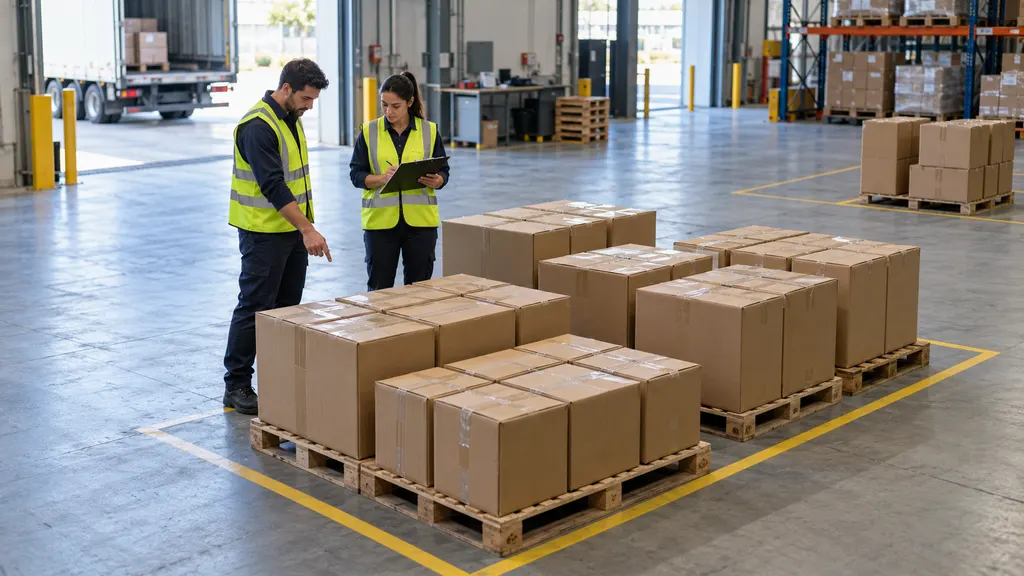
The expression is best understood as a descriptive operational term rather than a universally standardized category of logistics space. Its precise meaning depends on the facility layout, handling procedure, or document in which it appears. A site may provide a separate checking area, or it may carry out tallying within a receiving or dispatch staging area. The defining feature is the counting and reconciliation activity, not a particular building design.
In this context, tallying means making or checking a count. It does not mean calculating the floor area or cubic capacity of a warehouse. A tallying space supports the verification of goods; a space-utilization calculation measures how efficiently a facility uses its available capacity.
Role in Cargo Handling
Tallying connects physical cargo movement with the records used to control that movement. Shipment documents describe what is expected, while a physical tally records what is observed at a particular handling point. Providing an identifiable place for this work helps staff keep goods available for checking before they are mixed with other receipts, moved into storage, or released for onward transport.
At a port or cargo terminal, tallying may take place where cargo passes between a vessel-handling operation, a transit shed, and landside transport. In a warehouse, it may form part of inbound receiving or outbound dispatch. The exact position depends on how goods move through the facility and where staff can safely establish their quantity and identity.
The sources listed below support the underlying concepts of counting, cargo-handling safety, and cargo-unit checks. They should not be read as establishing a single official definition or mandatory layout for an area called “tallying space.” When the expression appears in a contract, drawing, or operating procedure, that document's definition and scope take precedence.
What Can Be Checked?
The scope of a tally should be stated before counting begins. Depending on the operation, the check may cover:
- The number of packages, cartons, bags, pallets, or other agreed handling units.
- Package marks, shipment references, or other visible identifiers.
- The relationship between goods presented and the accompanying packing list or receiving record.
- Visible packaging damage or other observable irregularities.
- Differences between expected quantities and quantities actually presented.
These checks have limits. Counting sealed cartons does not establish how many individual products are inside them. Likewise, noting an intact outer package does not prove that its contents are undamaged. A useful tally record distinguishes directly observed facts from information taken from labels or documents.
How a Tallying Space Is Used
The following sequence is an illustrative workflow, not a prescribed international procedure. It shows how a checking area can support a controlled handover of goods.
- Identify the consignment. Establish which shipment, delivery, or transfer is being checked. Keep the relevant reference available so that goods are not assigned to the wrong record.
- Define the counting unit. Decide whether the required count concerns pallets, cartons, individual items, or another unit. Where several packaging levels are involved, record them separately.
- Present goods for checking. Position the goods so authorized staff can identify and count them without entering an unsafe vehicle or equipment movement zone.
- Count and compare. Record the observed quantity and compare it with the expected quantity. Check visible identifiers where the procedure requires them.
- Investigate differences. If quantities do not agree, review the unit of measure, shipment reference, and count before treating the difference as a confirmed shortage or overage.
- Record the outcome. Document the result, including relevant exceptions and the point at which the observation was made.
- Release or segregate the goods. Move verified goods to their next authorized location. Keep unresolved goods identifiable under the facility's exception-handling procedure.
Completion of a tally does not by itself establish ownership, customs release, contractual acceptance, or liability for loss. Those matters depend on applicable documents, agreements, procedures, and law. The tally contributes evidence about the goods observed at a particular point; it does not replace every other control associated with a shipment.
Space and Operating Considerations
There is no single floor-area requirement that can be inferred from the term alone. A suitable arrangement depends on package dimensions, the amount of cargo awaiting checks, the handling equipment used, and the time needed to resolve discrepancies. An area that accommodates one shipment may become unsuitable when several deliveries arrive together.
Useful planning questions include whether packages can be counted without repeated rearrangement, whether checked and unchecked goods remain distinguishable, and whether a disputed shipment can be held without obstructing other work. These are operational assessment questions, not a formal classification system for tallying facilities.
Safety and Accessibility
A counting task should not require people to stand beneath suspended loads, cross uncontrolled vehicle routes, or enter positions where moving cargo prevents safe observation. The International Labour Organization's guidance on safety and health in ports provides a broader reference for managing cargo-handling hazards. It does not justify treating a marked counting area as safe without assessing the actual activity.
Visibility also matters. Staff need to read relevant package marks and record observations accurately. Where labels cannot be seen, a procedure may require repositioning by authorized equipment operators rather than a checker climbing onto unstable cargo. Tallying arrangements should therefore be considered together with the site's traffic, access, lighting, and handling controls.
Identification and Recordkeeping
A useful record links the count to a shipment reference, location, counting unit, and observation point. It should make clear whether a quantity was counted directly, derived from package labels, or copied from a document. If a recount changes the result, retaining a traceable correction is more informative than silently replacing the original entry.
Barcode scanning and warehouse software can assist identification and recording, but they do not eliminate the need to define what is being counted. Scanning one pallet label may identify a pallet without independently verifying every carton assigned to it. The strength of the record depends on the check performed, not simply on whether a digital system was used.
Related Terms and Boundaries
| Term | Main purpose | Relationship to tallying space |
|---|---|---|
| Receiving area | Accommodates incoming goods and receiving activities. | May include the location where an inbound tally is performed. |
| Staging area | Temporarily holds goods before their next movement. | Can also support counting, but temporary holding alone is not tallying. |
| Inspection area | Provides space for specified examinations or checks. | May overlap physically, although an inspection can address more than quantity. |
| Storage location | Holds inventory pending use, picking, or dispatch. | Has a different primary function, even if stock is occasionally counted there. |
| Tally sheet | Records quantities or observations. | Is a record used during the activity, not the physical area. |
| Inventory count | Establishes stock quantities within a defined scope. | Can occur throughout storage locations rather than at a shipment handover point. |
These functions can share floor space. The distinction is operational rather than necessarily architectural: the same bay might support receiving, temporary staging, and tallying at different times. A facility should describe the applicable activity clearly instead of assuming that an area name communicates every control.
Example in Cross-Border Ecommerce
For example, an ecommerce importer may receive a consolidated delivery containing several purchase orders. Before the cartons move into storage, receiving staff may place them in an identified checking area, separate them by shipment reference, and compare the observed carton quantities with the packing lists.
If one reference contains fewer cartons than expected, staff may recount the goods and check whether a carton was placed with another reference. If the difference remains unresolved, the record can identify the observed quantity and the discrepancy for follow-up. This example illustrates a possible process; it is not evidence that every importer uses a separate tallying area.
The carton tally does not automatically verify product-level inventory. Opening cartons and checking individual products would be an additional activity. Nor does the physical count demonstrate that customs requirements have been satisfied: cargo reconciliation and customs authorization answer different questions.
Interpreting the Term in Documents
When reviewing a facility plan, service description, or handling agreement that mentions tallying space, clarify the following points before relying on the expression:
- Location: Is the area at the receiving dock, inside a shed, beside a loading point, or elsewhere?
- Scope: Does the task cover external packages only, or does it include opening packages and checking contents?
- Responsibility: Who performs the count, records exceptions, and authorizes the next movement?
- Separation: How are unchecked, checked, and disputed goods distinguished?
- Evidence: What record is produced, and which observations does it actually substantiate?
These questions prevent an ambiguous space label from being mistaken for a complete service specification. They also help distinguish the physical provision of room from the personnel, systems, and authority needed to perform a reliable check.
QA
Is tallying space the same as a staging area?
No. A staging area temporarily holds goods before movement. Tallying space is used for counting and checking them. The same physical area can serve both purposes if the operating arrangement allows it.
Does a tally verify the contents of sealed packages?
Not unless checking those contents is part of the stated procedure. An external package count establishes the number of packages observed, not necessarily the quantity or condition of the products inside.
Is tallying space a standardized warehouse category?
The expression should be interpreted from its operational context. It should not be assumed to have a universal layout, size requirement, or scope of service without a relevant specification.
Does tallying replace customs inspection?
No. Counting goods for operational reconciliation is different from an examination or authorization performed under customs requirements. A tally alone does not establish customs release.
Sources
- Merriam-Webster: Tally — Supports the ordinary counting and recording meaning underlying the term.
- International Labour Organization: Safety and Health in Ports, revised 2016 — Supports the broader port-work safety context, including cargo handling and workplace arrangements; not a standardized definition of tallying space.
- IMO/ILO/UNECE Code of Practice for Packing of Cargo Transport Units — Provides context for cargo transport unit handling, checking, and the distinction between external observations and checks of cargo contents.