Parcel Lockers vs Home Delivery: Compare Convenience, Collection Windows, and Security
Parcel lockers are usually the better choice when you cannot reliably receive deliveries at home and can collect a package before its pickup deadline. Home delivery is usually more convenient when someone can receive the parcel, the building has a secure receiving area, or the item would be difficult to carry. The practical trade-off is between making a collection trip on your own schedule and having a carrier bring the parcel to your address, potentially while you are away.
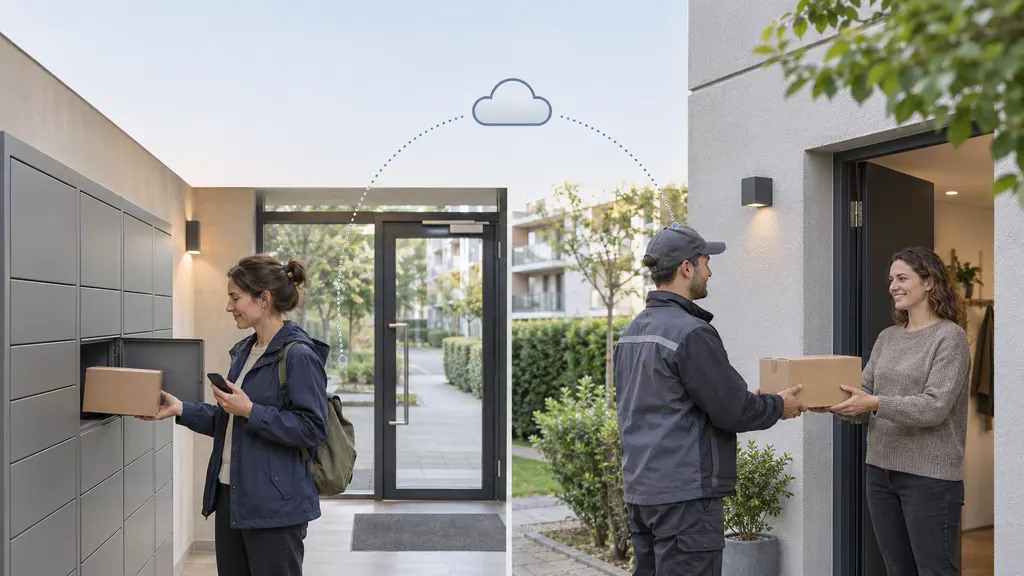
Neither option is automatically faster, cheaper, or safer in every situation. Your delivery experience depends on the location, access rules, parcel eligibility, and what happens when the first delivery or collection attempt fails. Compare those conditions before selecting an option at checkout.
Parcel lockers vs home delivery at a glance
This comparison covers deliveries to a designated parcel locker and deliveries to a residential address. A staffed collection counter is a different arrangement: its opening hours and identity checks may differ from those of a locker, even when both appear under a pickup option.
| Decision factor | Parcel lockers | Home delivery |
|---|---|---|
| Convenience | You choose when to collect within the permitted access hours and holding period. | No collection trip if delivery succeeds at your address. |
| Timing constraint | Collection starts after the parcel is ready and must happen before the deadline. | Attendance may be necessary unless an authorized alternative is available. |
| Security | An enclosed compartment avoids leaving the parcel exposed at your doorstep. | A direct handover can avoid unattended storage; doorstep delivery creates different risks. |
| Physical effort | You transport the parcel from the locker. | The carrier brings it to the service's permitted delivery point. |
| Eligibility | Depends on network compatibility, dimensions, capacity, and shipment restrictions. | Depends on address serviceability, building access, and shipment requirements. |
| If something goes wrong | An expired deadline, missing credential, or access problem may prevent collection. | A missed delivery or inaccessible address may require another delivery arrangement. |
Convenience depends on your routine, not just distance
When a locker makes daily life easier
A locker works well when it sits on a route you already use, such as the journey between home and work. Collection can replace waiting for a delivery with a short stop. This is particularly useful if your building has no reception desk, visitors cannot enter without you, or your work hours make a doorstep handover unlikely.
However, the closest locker is not necessarily the most convenient one. A locker inside a shop or station may be inaccessible when the building closes. Parking, stairs, poor lighting, or a long walk with a bulky box can turn a nearby collection point into an awkward choice. Check the actual access route rather than relying only on the map distance.
When home delivery removes more effort
Home delivery is a strong choice when you work from home, have a reliable household recipient, or use a building with an authorized receiving service. It also avoids carrying a parcel back from a locker. For someone with limited mobility, that difference may matter more than flexible collection hours.
Do not assume home delivery includes carrying an item upstairs, entering your apartment, or placing it in a particular room. Those arrangements depend on the purchased service. For a heavy or oversized item, confirm the delivery point and any handling assistance before ordering.
Collection windows: separate access hours from the pickup deadline
A parcel locker's collection window has three separate parts: when the shipment becomes ready, when you can physically access the locker, and how long the operator will hold it. Confusing those conditions can result in a wasted trip or missed collection.
- Ready for collection: Wait for a pickup notification and any required access credential. An in-transit update does not mean the compartment is ready to open.
- Access hours: Check the specific location. Around-the-clock operation should not be assumed for lockers inside restricted buildings.
- Holding deadline: Use the deadline in the operator's notification or official account. Do not apply another network's collection policy to your parcel.
Official locker services illustrate why checking the operator matters. DHL's Packstation guidance explains its own registration, addressing, and collection arrangements; these should not be treated as universal rules for every parcel locker. Consult the instructions for the network handling your shipment.
For home delivery, distinguish an estimated arrival window from a guaranteed appointment. A tracking estimate is not necessarily a promise that the driver will arrive at a specific time. If you must be present, check whether the service requires a signature and whether any supported delivery-management options would help.
If you will be away for several days, a locker may be a poor choice even if it is accessible at all hours. Flexible daily access does not mean indefinite storage. Confirm whether an extension, authorized collection by another person, or a different delivery arrangement is available before relying on it.
Security: compare the actual handover, not just the delivery label
A locker can reduce exposure to doorstep theft because the parcel is stored in a compartment rather than left visibly outside a home. That is a practical advantage over an unattended doorstep drop, not proof that lockers are universally safer than every form of home delivery.
A parcel handed directly to you has a different risk profile from one left in a shared lobby. Likewise, a locker with a well-lit, accessible location presents different collection conditions from one in an isolated area. Consider both package security and your own comfort collecting it.
The U.S. Postal Inspection Service's mail-theft prevention guidance recommends prompt collection and making arrangements when you are away. The useful principle for either delivery method is to minimize unnecessary unattended time.
- For lockers: Keep collection codes private, use the operator's official website or app, and avoid sharing screenshots that expose access credentials.
- For home delivery: Use supported delivery instructions and an authorized secure receiving location where available.
- For valuable shipments: Check signature, identification, insurance, and claim requirements. A locker or delivery notification is not itself a guarantee of reimbursement.
Be cautious with unexpected messages claiming that you must pay to release a package or correct its address. Open the carrier's official service independently rather than relying on a link in an unsolicited message.
Eligibility, costs, and failed deliveries can change the decision
Before choosing a locker, confirm that the retailer and carrier support that location. A nearby locker is not automatically available for any shipment. Use the checkout selector or the operator's official addressing instructions; entering a locker's street address as an ordinary residential address may not create a valid locker delivery.
Parcel dimensions and special handling requirements also matter. Oversized goods, age-restricted items, temperature-sensitive products, or shipments requiring a particular identity check may have different eligibility rules. Confirm the specific service rather than assuming all such items are accepted or excluded.
Neither method is inherently cheaper for the recipient. Compare the actual checkout charges and any disclosed service fees. For lockers, include your transport cost and collection effort. For home delivery, consider whether a missed attempt would require time away from work or a trip to another location.
Check the fallback arrangement too. If the intended locker cannot accept a parcel, follow the operator's notification for its next destination. If home delivery fails, do not assume the carrier will automatically try again the next day. Redelivery, collection, and return procedures depend on the shipment and service.
Use carrier tracking to plan the next action
Carrier tracking helps you understand progress, but shipment visibility and permission to collect are different things. For locker delivery, the actionable information is the confirmed pickup location, collection credential, and deadline. For home delivery, it is the latest delivery instruction, attempt notice, or proof of delivery.
- Before arrival: Confirm the selected destination and enable notifications through the official service.
- At the delivery update: Read the full event details. A general delivered status may need context about the locker, reception desk, or other authorized delivery point.
- Before collecting: Confirm that you have the correct code, app access, identification if required, and enough time before the deadline.
- If the parcel is missing: Review delivery details, preserve relevant notifications, and contact the carrier or retailer through its official support process.
If a locker opens but the parcel is absent or appears to belong to someone else, report the discrepancy promptly through the operator's support channel. Keep the tracking number, location, and collection time available. Do not publish access codes or another recipient's personal information when asking for help.
Which option should you choose?
Choose a parcel locker when you are frequently away, unattended home delivery would be exposed, and collection fits comfortably into your routine. It is less suitable when you may miss the deadline, cannot easily reach the location, or would struggle to carry the parcel.
Choose home delivery when a reliable recipient or secure receiving arrangement is available, or when avoiding a collection journey matters most. It is less suitable when the carrier cannot access your building and the only alternative is an exposed drop location.
For each order, ask three questions: Can I receive it securely at home? Can I collect it comfortably before the locker deadline? Is the shipment eligible for the option I want? Those answers are more useful than treating either delivery method as the default winner.
FAQ
Are parcel lockers always open 24 hours?
No. Access depends on the individual location. A locker inside a building may only be reachable during that building's opening hours. Check location details separately from the parcel's collection deadline.
What happens if I miss the locker collection deadline?
The operator's policy determines the next step, which may involve removal from the locker and eventual return. Check your notification and contact the operator promptly. Do not assume an extension is available or that the access code will continue to work.
Can I redirect a home delivery to a locker?
Sometimes, but eligibility depends on the carrier, sender restrictions, shipment type, and delivery stage. Check the official delivery-management service for your tracking number. A nearby locker does not by itself mean redirection is supported.
Can someone else collect my locker parcel?
Only where the operator permits it and its collection requirements can be met. Some arrangements involve app access or identity checks rather than a transferable code. Confirm the rules before sharing any credential.
Does locker delivery arrive faster than home delivery?
Not necessarily. Transit depends on the selected shipping service and route. A locker may avoid the need for an attended home handover, but you must still wait for collection readiness and make the pickup trip. Compare the order's delivery estimates rather than assuming a speed advantage.
Sources
- DHL: Receiving parcels at a Packstation — operator-specific guidance on locker use, addressing, and collection.
- USPS: Manage Your Mail — official delivery-management options, including redelivery and delivery instructions, subject to eligibility.
- U.S. Postal Inspection Service: Mail Theft — prevention guidance on prompt collection and protecting delivered mail and packages.