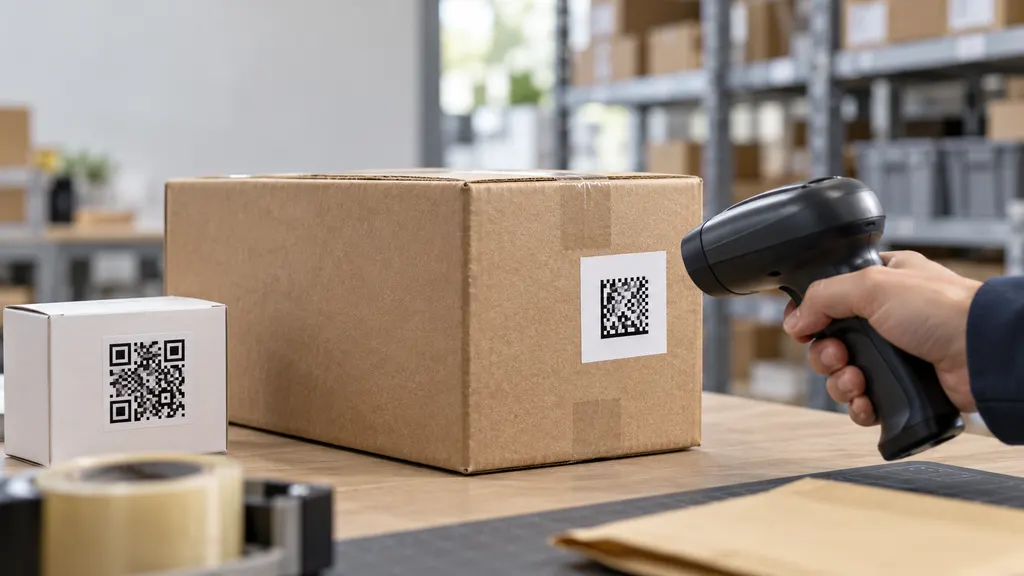
Overnight and 2-Day Shipping for Shoes: Costs, Carriers, and Cutoff Times
Overnight and 2-day shipping can get shoes to a customer quickly, but the final cost and delivery date depend on the carrier, service level, package dimensions, destination, pickup schedule, and order cutoff. For most U.S. shipments, the practical choice is between an overnight service for urgent delivery and a 2-day service for lower cost with a little more flexibility. Check the carrier’s live quote and service commitment before promising a date.
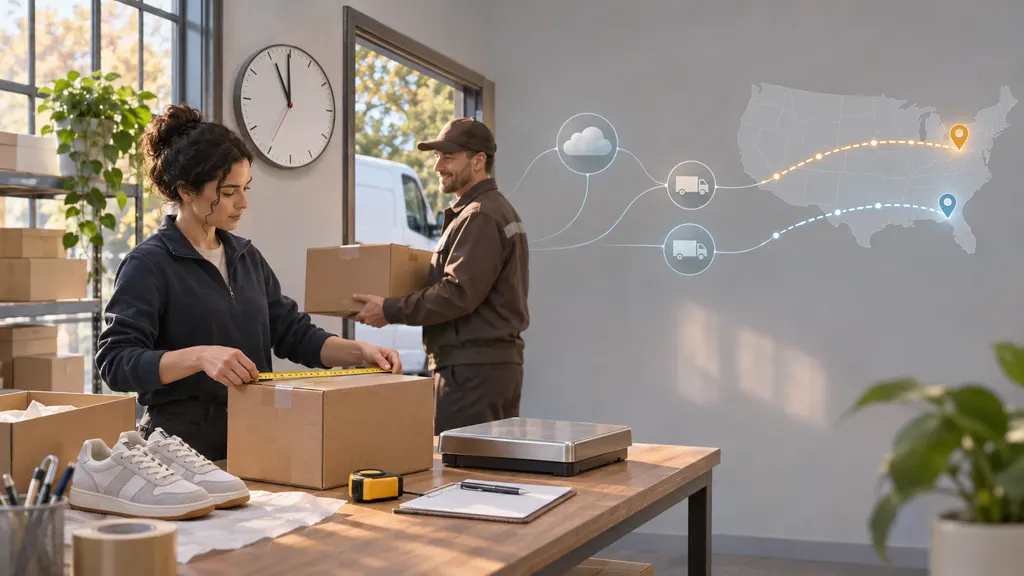
This guide explains how the main express options work, what affects the price, how cutoff times are determined, and how shoe retailers can select a service without overpaying or creating an unrealistic delivery promise.
Overnight vs. 2-day shipping for shoes
“Overnight” and “2-day” describe transit targets, not necessarily the time between checkout and delivery. A package ordered after the carrier’s pickup cutoff may not enter the network until the next business day. Weekends, holidays, address corrections, weather, and remote destinations can also affect the result.
| Service type | Best fit | Main limitation |
|---|---|---|
| Overnight | Urgent orders, replacements, events, or missed travel needs | Usually the highest shipping cost and the greatest sensitivity to cutoff time |
| 2-day | Planned purchases where speed matters but next-day delivery is unnecessary | The delivery promise may be based on business days rather than calendar days |
| Ground or economy | Routine replenishment and price-sensitive orders | Transit time varies more by distance and network conditions |
Which carriers offer overnight and 2-day shoe delivery?
The major U.S. carriers offer several expedited services, but names and delivery commitments differ. The service selected at checkout should be matched to the origin ZIP code, destination ZIP code, package weight, package dimensions, and requested delivery date.
USPS Priority Mail Express
USPS Priority Mail Express is the postal carrier’s time-sensitive domestic service. The official service page describes an overnight or 1–2 day delivery standard for eligible shipments, with a money-back guarantee for qualifying shipments and service conditions. Availability, delivery time, and guarantee eligibility should be checked for the specific route and mailing date.
USPS can be useful for residential destinations and locations already served conveniently by the postal network. However, retailers should not assume that every ZIP code has the same delivery window. The carrier’s calculator and service availability information are more reliable than a generic “overnight” label.
UPS Next Day Air and 2nd Day Air
UPS provides next-day and second-day air services for domestic shipments. The exact delivery time can vary by service version, origin, destination, pickup location, and whether the shipment is accepted on a business day. Some services provide earlier delivery windows than others, which can materially change the price.
UPS is often considered when a seller needs scheduled pickup, detailed commercial shipping tools, or a broad range of express options. The correct choice should come from a route-specific UPS quote rather than the service name alone.
FedEx overnight and 2Day services
FedEx offers multiple overnight services with different delivery commitments, including options designed for earlier or later arrival. FedEx 2Day services are intended for delivery within the carrier’s stated two-day service window, subject to applicable terms and eligible destinations.
The difference between an early-morning overnight product and a later-day product can be more important than the difference between carriers. If the customer needs shoes before a specific event, compare the committed delivery time and the latest tender time, not only the word “overnight.”
DHL Express for international or cross-border orders
DHL Express is commonly relevant to international shipments rather than ordinary domestic U.S. shoe delivery. Cross-border delivery estimates depend on the origin and destination countries, customs processing, documentation, duties, taxes, and the selected service. A delivery estimate for an international order should therefore be treated differently from a domestic overnight promise.
What does overnight or 2-day shoe shipping cost?
There is no dependable universal price for shipping a pair of shoes. Carriers calculate a live rate using shipment details and service conditions. Two packages containing similar shoes can have different prices if one uses a larger box, travels farther, requires Saturday delivery, or is sent to a residential or remote address.
The factors that usually change the quote
- Billable weight: The carrier may charge according to actual weight or dimensional weight, whichever is greater. A lightweight shoe box with excess empty space can therefore cost more than expected.
- Package dimensions: Length, width, and height affect dimensional-weight calculations. Reducing the carton size can be more effective than removing a small amount of product weight.
- Distance and zones: A shipment traveling across several carrier zones generally costs more than one moving a shorter distance.
- Delivery location: Residential, rural, remote, and certain extended-area addresses may involve different rates or surcharges.
- Delivery time: Earlier delivery commitments, Saturday delivery, and holiday-period handling can affect the total charge or availability.
- Account terms and surcharges: Contract rates, fuel charges, demand-related fees, additional handling, and address corrections may change the final amount.
- Packaging and insurance choices: Packaging materials, declared value options, and shipping protection can add to the order’s landed cost.
For an accurate quote, enter the actual packed weight and outside dimensions into the carrier’s rate calculator. Do not quote a customer using the product weight alone. A shoe retailer should measure the shipping-ready package, including the footwear box, outer carton, inserts, and protective materials.
How cutoff times work
A cutoff is the latest time a shipment must be tendered to the carrier or accepted at a designated facility for the expected transit calculation to begin. It is not automatically the same as an ecommerce store’s order cutoff. A store may stop accepting overnight orders at 1 p.m. even when a carrier pickup occurs later, allowing time to verify inventory, pack the order, print the label, and hand it over.
Carrier cutoff times can vary by:
- Pickup location and local time zone
- Whether the parcel is collected or taken to a staffed facility
- The selected service and delivery commitment
- Weekday, weekend, and holiday operating schedules
- The distance from the drop-off point to the carrier’s processing hub
- The carrier’s acceptance scan and shipment tender requirements
For customer-facing promises, use the earliest reliable internal cutoff rather than the latest theoretical carrier cutoff. If warehouse staff need 45 minutes to pick and pack shoes, the store cutoff should be earlier than the carrier pickup. During holiday shipping periods, confirm the carrier’s published schedule and build a buffer for volume, weather, and limited weekend operations.
How to choose the right service for a shoe order
- Define the actual deadline. Ask whether the customer needs delivery by a date, by a time, or before an event. “Tomorrow” is ambiguous if the customer needs the shoes before noon.
- Confirm inventory and fulfillment location. A fast carrier service cannot compensate for a product that is stored at another warehouse or requires manual stock verification.
- Measure the packed shipment. Use the final carton dimensions and weight, not a catalog estimate.
- Compare committed delivery windows. Review whether the quote is based on business days, calendar days, or a specific delivery time.
- Check the pickup schedule. Confirm the local tender deadline and whether the selected location accepts the required service after that time.
- Review exceptions. Check Saturday service, holiday schedules, remote-area rules, weather notices, and any money-back guarantee conditions.
- Communicate the promise carefully. If the carrier estimate is not guaranteed or the route has exceptions, use language such as “estimated delivery” rather than presenting it as certain.
Operational tips for shoe retailers
Shoes are relatively compact, but their boxes can create avoidable dimensional-weight costs. Standardizing a few carton sizes, removing unnecessary outer volume, and recording packed dimensions can improve rate accuracy. The packaging must still protect the shoe box from crushing, moisture, and scuffing; the smallest possible carton is not automatically the best carton.
Keep separate rules for ordinary orders and urgent replacement orders. A replacement may justify overnight delivery when the original shipment was damaged or delayed, but the business should define who approves the added cost. For high-value footwear, document the condition before dispatch and retain the carrier acceptance record.
Tracking also affects the delivery experience. Send the customer the carrier, tracking number, service level, and expected delivery date as soon as the shipment is handed over. A tracking page can clarify whether a label was created, the parcel was accepted, or the shipment is moving through the network. That distinction helps support teams avoid promising that a package is already in transit before the first carrier scan.
A practical decision rule
Choose overnight shipping when the customer has a genuine next-day requirement and the route has a verified service commitment. Choose 2-day shipping when the deadline allows two business days and the lower cost is more valuable than the earliest possible delivery. If neither service has a reliable route-specific commitment, offer an estimated date and explain the limitation instead of selling speed that the network cannot consistently provide.
For ecommerce operations, the best shipping policy is usually not one universal carrier rule. It is a combination of destination-based service mapping, accurate package data, local cutoff controls, and clear customer communication. Review actual delivery performance by ZIP code and service after launch, but keep those observations separate from the carrier’s published service commitment.
FAQ
Is overnight shipping guaranteed for shoes?
Not always. Some services include a money-back guarantee for qualifying shipments, while others provide an estimate or exclude certain destinations, dates, and disruptions. Read the carrier’s terms and check the specific route before using “guaranteed” in customer messaging.
Does 2-day shipping include weekends?
Usually, the phrase refers to the carrier’s stated transit schedule, which may be expressed in business days. Weekend delivery may require a specific service, may not be available in every location, and can change the quoted price. Confirm the delivery date in the live quote.
What is the latest time to ship shoes overnight?
There is no single national cutoff. The latest time depends on the carrier, service, pickup point, local time zone, and destination. A retailer should set its own order cutoff earlier than the carrier’s tender deadline to allow time for fulfillment and handoff.
Are shoe shipping rates based on weight or box size?
They can be based on either actual weight or dimensional weight, depending on which produces the higher billable weight under the carrier’s rules. Enter both the packed weight and the outside dimensions when requesting a quote.
Should a retailer offer every overnight carrier?
No. Offer the services that have dependable pickup access, acceptable route coverage, manageable costs, and a delivery promise the fulfillment team can support. Testing a small set of routes is safer than publishing every available express option without operational controls.
Sources
- USPS Priority Mail Express — official service information and delivery terms.
- USPS Postal Calculator — route-specific postage and service estimates.
- UPS shipping tools — official rate, service, and shipment-planning resources.
- FedEx overnight shipping — official overnight service information.
- FedEx 2Day shipping — official two-day service information.
- DHL Express — official international express service information.