How much to Ship Shoes with USPS? Rates, Shoe Box, and Service Options
Shipping shoes with USPS usually costs less when the package is compact, lightweight, and matched to the right service. There is no single USPS shoe-shipping price: the final rate depends on the package’s weight, dimensions, origin and destination ZIP Codes, mailing date, service, and whether you buy postage at the retail or commercial rate. For an accurate quote, weigh and measure the packed parcel, then check the USPS postage calculator before buying a label.
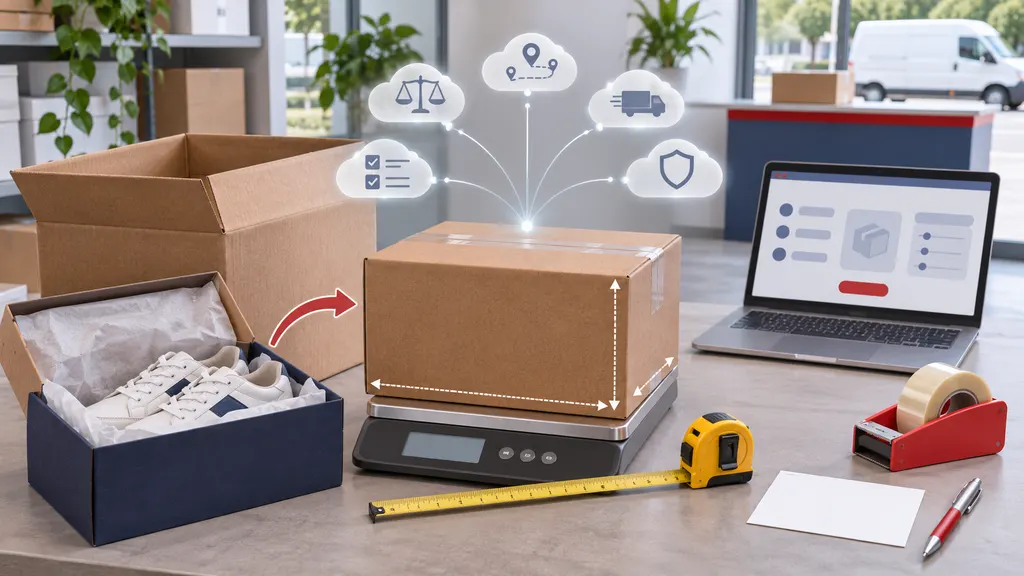
For most individual pairs, the practical choice is between USPS Ground Advantage and Priority Mail. Ground Advantage is generally the starting point for non-urgent shipments. Priority Mail can make sense when the quoted price is close and the faster service or included features justify the difference.
What determines the cost to ship shoes?
USPS does not price a shoe shipment by the product alone. It prices the mailing package. That means the shoebox, protective material, outer carton, label, and any additional packaging all affect the quote.
- Weight: A pair of lightweight sneakers can fall into a different price tier from boots or safety shoes. Weigh the parcel after packing, not just the shoes.
- Package size: Measure the outside of the finished box. A large box can cost more even when the shoes themselves are light.
- Distance: Many USPS services use destination zones, so the same parcel may receive different quotes for different ZIP Codes.
- Service level: Ground Advantage and Priority Mail have different prices, delivery targets, and included features.
- Postage channel: Retail counter rates and online or commercial rates may differ. Eligibility for commercial pricing depends on the postage platform and mailing arrangement.
- Extra services: Insurance, signature confirmation, special handling, or other add-ons can increase the total.
USPS prices and service conditions can change. Avoid relying on an old rate chart or a quote for an unboxed pair of shoes. The most reliable workflow is to prepare the parcel first and request a current quote using the actual shipment details.
Which USPS service is best for shoes?
| Service | Typical use | What to check |
|---|---|---|
| USPS Ground Advantage | Cost-conscious domestic shipments that do not need the fastest available service | Current quote, package weight and dimensions, delivery estimate, tracking, and included liability terms |
| Priority Mail | Shipments where a faster service target or Priority Mail packaging is useful | Current price, zone, package size, delivery estimate, and whether the selected packaging is permitted |
| Priority Mail Flat Rate | Dense or heavier shoes that fit securely in an eligible Flat Rate package | The exact Flat Rate package, internal fit, maximum weight, and current price |
| USPS Ground or Priority Mail international options | Cross-border orders where destination rules and customs documentation must be considered | Destination restrictions, service availability, customs form requirements, duties, taxes, and prohibited materials |
The USPS Ground Advantage service page describes the service as a ground option for packages and lists a delivery estimate rather than a guaranteed delivery date. That makes it a reasonable first quote for routine footwear orders, but the seller should still communicate an estimated window instead of promising a specific arrival date.
Priority Mail is worth pricing when the customer has a deadline, when the package fits an eligible Priority Mail format, or when the difference from Ground Advantage is small. Its delivery target is also an estimate unless the specific USPS service includes a guarantee under its stated terms. Always verify the current conditions on the USPS Priority Mail page.
How to choose a shoe box
The best shipping box is not necessarily the original retail shoebox. The original box may be suitable for storage and presentation but can be too weak for direct transit, especially if it has thin walls, a loose lid, or little protection around the shoes.
Option 1: Ship the original shoebox inside an outer carton
This is often the safest presentation for new footwear. Place the retail box in a sturdy corrugated carton with enough cushioning to limit movement. The outer carton protects the retail packaging from abrasion, moisture, and compression. It also gives the shipping label a flat surface.
Option 2: Use a strong single shipping carton
For used shoes, returns, or orders where presentation is less important, a properly sized corrugated carton can be more efficient. Avoid excessive empty space because it increases both material use and package dimensions. Do not make the box so tight that the shoes deform or the seams pull apart.
Option 3: Use a USPS-provided package
USPS offers service-specific packaging and supplies, but availability, eligibility, and terms depend on the packaging item. Before using a branded box, confirm that it matches the service purchased. The USPS Postal Store is the appropriate place to check current packaging products. Do not assume that every USPS box is free for every service or that a Priority Mail box may be used with a different postage class.
A shoe box should leave enough room for cushioning but not so much that the shoes can move freely. If the parcel is reused, remove old barcodes, addresses, hazmat markings, and service labels. Covering an old label with a new one is less reliable than removing or fully obscuring it.
How to pack shoes for USPS shipping
- Clean and inspect the shoes. Confirm that the pair, size, color, accessories, and condition match the order. Photograph high-value or collectible footwear before packing.
- Protect the shape. Use the manufacturer’s inserts when available. Otherwise, use clean paper or suitable packing material. Avoid materials that can transfer ink, stain leather, or trap moisture.
- Prevent rubbing. Wrap delicate surfaces separately and keep buckles, soles, or metal components from pressing directly against the other shoe.
- Secure the inner box. Close the retail shoebox so the lid cannot open during handling. If there is no inner box, place the shoes in a bag or wrap before adding them to the shipping carton.
- Fill empty space. Add cushioning around the shoes, especially at the corners and top of the carton. A simple shake test should reveal little or no movement.
- Seal all seams. Use packaging tape designed for shipping. Do not rely on string, thin gift tape, or a single strip over a heavy carton seam.
- Measure and weigh the finished parcel. Record the longest side, the widest side, the height, and the total weight after the label and all packaging are included.
- Apply one readable label. Place it on the largest flat surface and keep it away from seams and edges. Remove or cover every old address and barcode.
A practical way to estimate USPS shoe-shipping cost
Use this five-step process before quoting a customer or setting an ecommerce shipping rule:
- Pack the shoes in the intended customer-facing configuration.
- Measure the outside dimensions and weigh the parcel.
- Enter the origin ZIP Code, destination ZIP Code, package size, weight, and mailing date into the USPS calculator.
- Compare Ground Advantage with Priority Mail, including any packaging or extra-service charges.
- Repeat the quote for several realistic destinations if you sell nationally. A single local quote is not a reliable nationwide shipping rate.
For ecommerce sellers, a flat shipping fee should be based on representative orders rather than the lightest pair in inventory. Consider separate rules for sandals, sneakers, boots, and multi-pair orders. If the store uses a free-shipping threshold, build packaging materials, expected label cost, and a reasonable allowance for destination variation into the product margin. For larger order volumes, compare the postage available through the seller’s shipping platform with retail counter rates and confirm how refunds, voided labels, and claims are handled.
Common mistakes that increase shoe-shipping cost
- Quoting before packing: The final carton may be heavier or larger than the product listing suggests.
- Using an oversized box: Extra space adds material cost and may affect the postage calculation.
- Ignoring dimensional thresholds: Some large parcels are evaluated using dimensional rules. Check the current USPS terms when a package is unusually bulky.
- Using the wrong branded packaging: A service-specific box can create postage or acceptance problems if the postage class does not match.
- Promising a guaranteed date: Standard delivery estimates are not automatically guarantees.
- Under-protecting high-value footwear: Saving a small amount on packaging can create a much larger customer-service and claims problem.
Bottom line
For most domestic shoe shipments, start by quoting USPS Ground Advantage using the packed weight and dimensions. Check Priority Mail as a second option when speed, packaging convenience, or the shipment’s density makes it competitive. Use the original shoebox only when it can withstand transit, and add an outer carton when presentation or protection matters. The correct USPS price is the current quote for the actual parcel, not a universal price for “one pair of shoes.”
FAQ
Is it cheaper to ship shoes in a shoebox or a poly mailer?
A poly mailer may use less material and have smaller dimensions, but it provides less structural protection. It may be suitable for soft, low-risk footwear when the shoes are individually protected and the package will not be crushed easily. A box is generally the safer choice for leather shoes, boots, structured footwear, retail packaging, or customer orders where presentation matters. Compare the packed dimensions and weight rather than assuming one format is always cheaper.
Can I ship shoes in the original shoebox?
Yes, if the box is strong enough, securely closed, and properly labeled. For new or expensive shoes, placing the original shoebox inside a protective outer carton usually reduces damage to the retail packaging. Remove old labels and make sure the final package meets the selected USPS service requirements.
What is the cheapest USPS service for shoes?
There is no universal cheapest service because the result changes with weight, dimensions, distance, packaging, and postage channel. Ground Advantage is the first service many sellers should quote for routine domestic shipments, but the USPS calculator should determine the actual price for the parcel.
Does USPS offer free shoe boxes?
USPS provides service-related packaging products, but availability and eligibility vary by item. Check the Postal Store and the packaging terms for the exact box. Do not assume that a box labeled for one service can be used with another service at no additional charge.
How should an online store calculate a shoe-shipping fee?
Create packed profiles for the main footwear categories, quote several representative destinations, and include packaging and handling costs. Review the rule periodically because USPS prices and service conditions can change. For high-volume orders, validate the rule against actual label purchases rather than relying only on product weight.
Sources
- USPS Postage Calculator — current shipment-specific postage estimates.
- USPS Ground Advantage — service description and delivery information.
- USPS Priority Mail — service details, packaging guidance, and terms.
- USPS Preparing a Package — general preparation, labeling, and packaging guidance.
- USPS Postal Store — current USPS packaging products and supplies.