Military Logistics
What Is Military Logistics?
Military logistics is the planning, coordination, movement, maintenance, and control of personnel, equipment, supplies, and related services needed to support military operations. It is used primarily in defense planning and operations, but it also provides useful concepts for understanding transportation, inventory management, warehousing, maintenance, infrastructure, and supply-chain risk. In practical terms, military logistics connects operational requirements with the resources and support activities required to meet them.
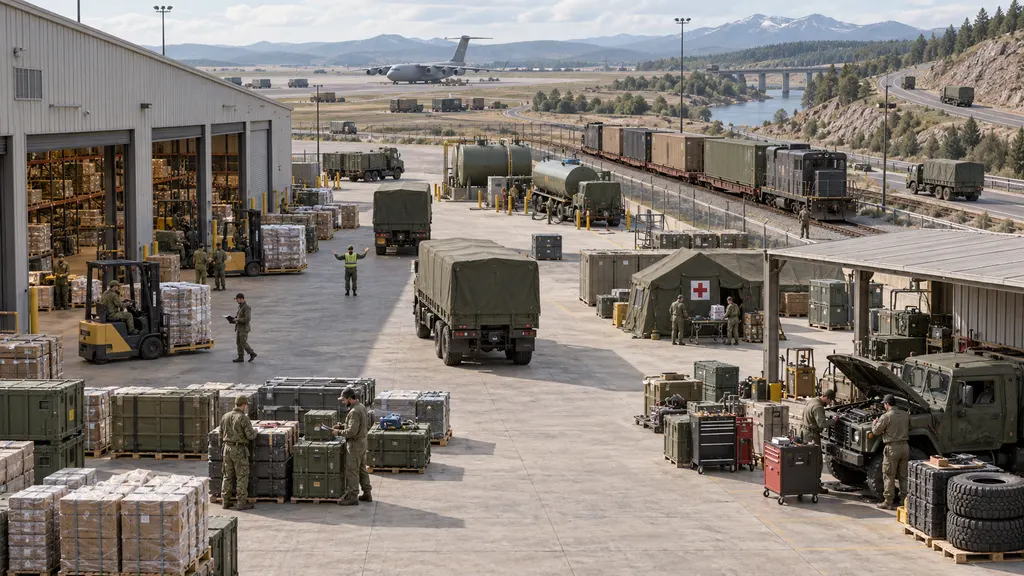
Unlike a commercial logistics operation, which is usually organized around customer orders, commercial service levels, and financial efficiency, military logistics is organized around mission requirements, operational readiness, survivability, and continuity under uncertain or hostile conditions. The term can cover activities before, during, and after an operation. It may include procurement, contracting, storage, transportation, distribution, maintenance, medical support, fuel management, infrastructure support, and the recovery or disposal of equipment and materials.
Military logistics should not be confused with military strategy or tactics. Strategy concerns broad objectives and the allocation of national or organizational resources. Tactics concern how forces conduct specific engagements or actions. Logistics provides much of the material and service support that makes strategic plans and tactical activities possible.
Military Logistics in the Supply Chain
Military logistics is a specialized form of supply-chain management. Its supply chain may begin with production or procurement and continue through storage, transportation, distribution, use, maintenance, recovery, and final disposition. The flow is not limited to physical goods. Information, financial resources, technical expertise, medical services, fuel, energy, and maintenance capacity may also be essential parts of the logistics system.
A military supply chain may involve national authorities, defense agencies, manufacturers, commercial carriers, ports, airports, warehouses, maintenance facilities, allied organizations, and units operating in the field. The exact structure varies by country, service, mission, geography, and legal framework. For this reason, military logistics is better understood as a coordinated support system than as a single transportation function.
| Logistics activity | Purpose | Related commercial concept |
|---|---|---|
| Procurement and contracting | Obtaining goods, services, equipment, or support capacity | Sourcing and purchasing |
| Inventory management | Recording, positioning, protecting, and replenishing stocks | Inventory control |
| Transportation and distribution | Moving resources to the locations where they are required | Freight transportation and fulfillment |
| Maintenance | Keeping equipment and systems operational or restoring them to service | Asset maintenance and repair |
| Medical support | Providing treatment, evacuation, supplies, and health services | Healthcare logistics |
| Recovery and disposition | Returning, repairing, recycling, storing, or disposing of assets | Reverse logistics and asset recovery |
Core Characteristics
Mission-oriented planning
Military logistics begins with an operational requirement rather than with a normal customer order. Planners must estimate what resources are needed, where they will be needed, when they must arrive, and what conditions may affect delivery. Requirements can change because of weather, terrain, operational tempo, infrastructure damage, security conditions, or changes in the mission.
Readiness and availability
Readiness refers broadly to the ability of a force, unit, system, or organization to perform its assigned function. Logistics contributes to readiness by ensuring that personnel, equipment, spare parts, fuel, ammunition where applicable, medical resources, communications support, and other necessary materials are available in usable condition. Readiness is not identical to inventory volume. A large stock is not automatically useful if it is in the wrong location, incompatible with the equipment, inaccessible, damaged, or unavailable when required.
Resilience under disruption
Military supply chains may have to operate despite damaged infrastructure, limited transportation capacity, cyber incidents, adverse weather, contested routes, export controls, or interruptions in production. Logistics planning therefore considers alternative routes, substitute sources, reserve stocks, repair capability, security measures, and the consequences of delay. These practices are relevant to commercial supply-chain risk management, although military and commercial risk environments are not identical.
Integration of multiple support functions
Transportation alone does not constitute military logistics. A shipment may require packaging, documentation, storage, customs processing, handling equipment, security arrangements, receiving personnel, inspection, and onward distribution. Maintenance, medical support, engineering, fuel services, and infrastructure can also affect whether an operation can continue. Effective logistics depends on coordinating these functions rather than optimizing each one in isolation.
Visibility and accountability
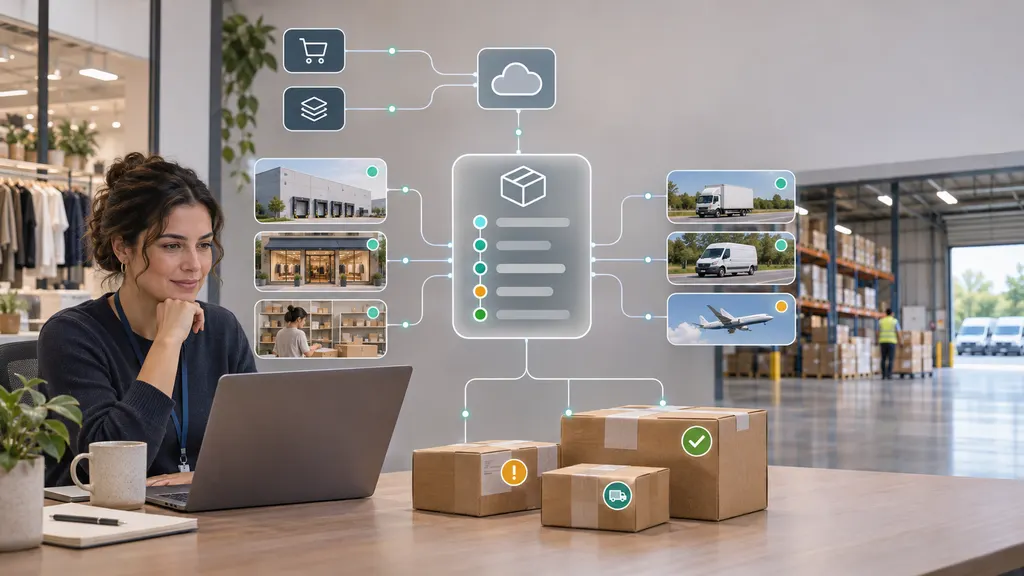
Logistics organizations generally need records showing what was requested, sourced, stored, moved, issued, consumed, repaired, returned, or disposed of. Visibility supports planning and accountability, while accurate status information helps decision-makers identify shortages, delays, excess stocks, and bottlenecks. In a commercial context, similar information may appear as purchase-order status, inventory records, shipment tracking, proof of delivery, return status, or asset history. The systems and reporting rules may differ, but the need for reliable information is shared.
How Military Logistics Works
There is no single universal process for every military organization, but a simplified logistics cycle can be described as follows:
- Requirement identification: An organization defines the personnel, equipment, supplies, services, and support capacity needed for a mission or planned activity.
- Planning and prioritization: Planners assess urgency, quantity, location, timing, transportation capacity, storage conditions, legal requirements, and operational constraints.
- Sourcing: Resources may be obtained through government production, procurement, contracts, existing stocks, allied arrangements, or other authorized channels.
- Preparation: Items are inspected, packaged, labeled, documented, consolidated, and prepared for storage or movement. Special handling may be required for hazardous, temperature-sensitive, fragile, or controlled materials.
- Movement: Resources move through one or more transportation modes and nodes, such as roads, railways, ports, airports, distribution centers, or field locations.
- Receipt and distribution: The receiving organization verifies the delivery, records the transaction, stores or issues the material, and sends it to the point of use when necessary.
- Use, maintenance, and replenishment: Supplies are consumed, equipment is operated and maintained, and stocks or spare parts are replenished according to requirements and available capacity.
- Recovery and disposition: Unneeded, damaged, repairable, reusable, or end-of-life items may be returned, repaired, transferred, recycled, stored, or disposed of under applicable rules.
This cycle is not always linear. Maintenance can create an urgent demand for spare parts, a change in mission can redirect shipments, and a transportation disruption can require a new route or a different distribution plan. Logistics is therefore a continuing process of coordination and adjustment.
Types of Military Logistics Support
Military organizations may classify logistics in different ways. The following categories are descriptive rather than a universal formal classification. They represent common functional areas that help explain the scope of the term.
| Functional area | Typical focus | Example question |
|---|---|---|
| Supply logistics | Acquiring, storing, issuing, and replenishing materials | What stock is needed, where is it located, and when must it be replenished? |
| Transportation logistics | Moving personnel, equipment, and supplies | Which route, mode, and handling resources can support the requirement? |
| Maintenance logistics | Repairing, servicing, recovering, and returning equipment to use | Can the asset be repaired at its current location or must it be evacuated? |
| Medical logistics | Supporting medical treatment, evacuation, personnel, and supplies | Are treatment capacity and medical materials available at the required locations? |
| Infrastructure logistics | Supporting facilities, utilities, construction, energy, and environmental services | What physical facilities and services are required to sustain operations? |
| Information logistics | Managing requirements, status data, records, and coordination | Can decision-makers obtain accurate information about resources and constraints? |
These areas overlap. For example, a maintenance activity may depend on spare-parts inventory, transportation, technical personnel, power, tools, and accurate asset records. Treating each function as completely separate can obscure the dependencies that determine actual support capacity.
Military Logistics and Cross-Border Trade
When military equipment or supplies cross national borders, the movement may involve customs declarations, import or export controls, security requirements, documentation, transport agreements, and rules governing the status of personnel or cargo. The exact requirements depend on the countries, organizations, goods, agreements, and legal circumstances involved. It is therefore unsafe to assume that a military shipment follows the same process as an ordinary commercial parcel.
For logistics and cross-border ecommerce professionals, the main transferable lesson is that international movement depends on more than physical transportation. Classification, documentation, licensing, packaging, security, handover procedures, and destination requirements can all affect whether a shipment moves successfully. Military logistics may operate under specialized arrangements, but it still illustrates the general relationship between cargo, transport, customs, infrastructure, and operational control.
Military Logistics Compared with Commercial Logistics
| Aspect | Military logistics | Commercial logistics |
|---|---|---|
| Primary objective | Support an authorized mission and maintain operational capability | Serve customers and meet business objectives |
| Demand pattern | May be planned, urgent, uncertain, or affected by operational changes | Usually linked to orders, forecasts, contracts, and market demand |
| Performance concerns | Availability, readiness, continuity, survivability, and mission impact | Cost, service level, speed, accuracy, capacity, and customer experience |
| Operating environment | May include damaged infrastructure, security constraints, and restricted information | Usually operates within commercial, regulatory, and infrastructure conditions |
| Ownership and funding | Often involves public authorities and defense organizations | Usually involves private firms, public carriers, or mixed networks |
| Reverse flow | Recovery, repair, reuse, transfer, or controlled disposition of assets | Returns, refurbishment, recycling, resale, or disposal |
The comparison does not mean that one system is simply a version of the other. Military logistics has requirements and constraints that may not exist in ordinary commerce. Conversely, commercial logistics often uses customer-facing order systems, automated fulfillment, parcel networks, and cost models that are not the central organizing principles of military support.
Common Misunderstandings
- Military logistics means only moving supplies. Transportation is important, but the term also includes procurement, inventory, maintenance, medical support, infrastructure, information, and recovery.
- More inventory always means better logistics. Excess inventory can create storage, maintenance, security, obsolescence, and transportation burdens. Usability, location, timing, and condition also matter.
- Military logistics and military supply are identical. Supply is one major logistics function. Logistics has a wider scope that includes movement, services, maintenance, facilities, and coordination.
- Military logistics follows one global standard process. Organizations may use different doctrines, systems, authorities, and procedures. A general description should not be treated as a country-specific legal or operational rule.
- Military logistics is unrelated to ecommerce logistics. The environments differ, but both involve demand planning, inventory, transportation, traceability, warehousing, delivery, returns or recovery, and coordination among multiple parties.
Related Terms
| Term | Relationship to military logistics |
|---|---|
| Supply chain management | The broader coordination of sourcing, transformation, movement, information, and related flows. |
| Logistics | The planning and control of the movement and support of resources; military logistics is a specialized application. |
| Inventory management | The control of stock quantity, location, condition, ownership, and replenishment. |
| Reverse logistics | The management of return, recovery, repair, reuse, recycling, or disposal flows. |
| Freight transportation | The movement of goods by road, rail, air, sea, or multimodal networks. |
| Operational readiness | The ability of a unit, system, or organization to perform its assigned function; logistics is one contributor to readiness. |
QA
What does military logistics include?
It can include procurement, supply, warehousing, transportation, distribution, maintenance, medical support, infrastructure, information management, recovery, and disposition.
How is military logistics different from commercial logistics?
Military logistics is primarily organized around mission support, readiness, and continuity under operational constraints. Commercial logistics is usually organized around customers, orders, service levels, cost, and business objectives.
Is military logistics the same as military supply?
No. Supply is a major part of military logistics, but logistics also covers transportation, maintenance, medical and infrastructure support, information, and recovery activities.
Why is military logistics relevant to ecommerce logistics?
It illustrates the importance of demand planning, inventory visibility, transportation coordination, contingency planning, asset maintenance, and reverse flows, although military and commercial operating environments are different.
Sources
- U.S. Joint Chiefs of Staff, Joint Logistics — used for the general scope and role of logistics in military operations.
- U.S. Army, What Is Logistics? — used for the relationship between logistics, supply, maintenance, transportation, and operational support.
- NATO, Logistics — used for the multinational and operational context of military logistics.
- World Customs Organization, Customs Transit — used for the general cross-border relationship among transit, customs procedures, and the movement of goods.