Logistics Alliance
Definition
A logistics alliance is a cooperative arrangement in which two or more independent organizations coordinate selected logistics activities, resources, information, or capabilities while remaining separate businesses. The participating organizations may include carriers, freight forwarders, warehouse operators, technology providers, manufacturers, retailers, or other supply chain partners. The term is used mainly in logistics, supply chain management, shipping, warehousing, and cross-border commerce.

A logistics alliance is not a single legally defined contract type. It is a broad business description for cooperation that can take different legal and operational forms, including a service agreement, capacity-sharing arrangement, joint operating program, information-sharing relationship, or joint venture. The exact meaning depends on the activities covered, the degree of integration, and the responsibilities retained by each participant.
In practical terms, an alliance allows organizations to work together on a defined logistics objective without necessarily merging their companies. For example, several carriers may coordinate line-haul capacity, or a retailer and a logistics provider may integrate inventory and shipment information. Cooperation can involve physical operations, digital systems, planning, purchasing, or customer-facing services.
In Logistics
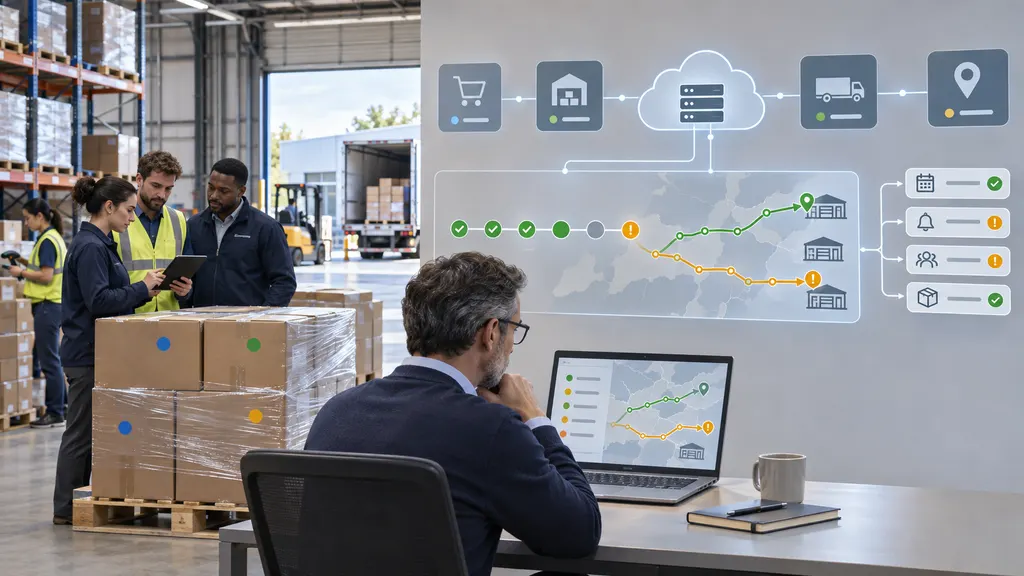
Within a supply chain, a logistics alliance usually connects organizations that perform related or complementary activities. One participant may provide transportation capacity, another may operate a warehouse, and a third may supply software or customs expertise. The alliance is intended to improve coordination between these activities rather than treat each activity as an isolated transaction.
The alliance may affect several stages of an order journey:
- Planning: Participants may exchange forecasts, schedules, routing information, or expected volumes.
- Fulfillment: A warehouse operator and a retailer may coordinate inventory allocation, picking, packing, and handover.
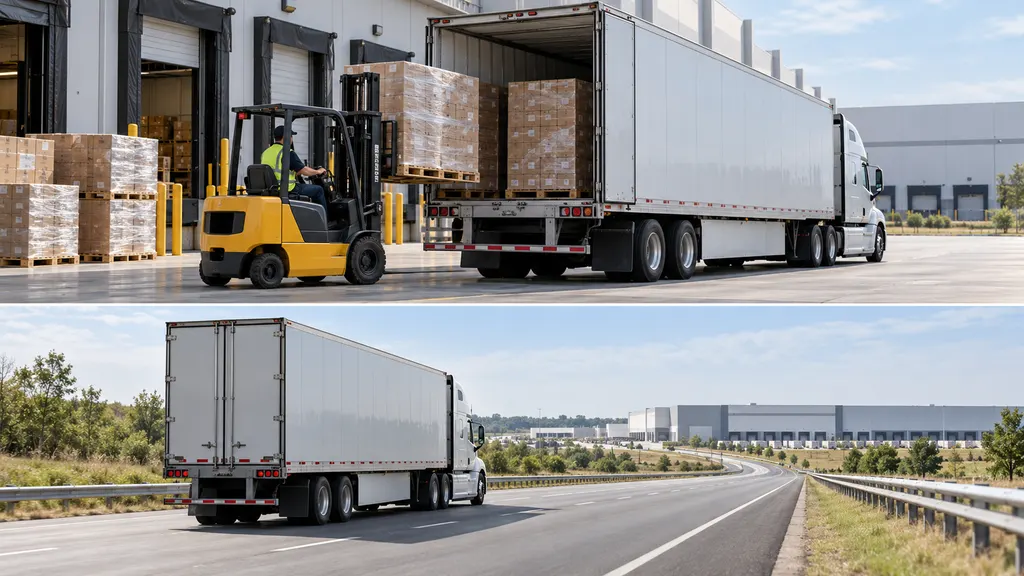
- Transportation: Carriers or freight intermediaries may coordinate routes, equipment, consolidation, or selected capacity.
- Cross-border processing: Participants may coordinate commercial documents, customs data, handoffs, and exception management. This does not transfer legal customs responsibility automatically.
- Delivery: A delivery provider and an ecommerce business may coordinate tracking events, delivery instructions, and customer notifications.
- Returns: A retailer, carrier, and returns processor may cooperate on reverse logistics, inspection, disposition, or replacement shipments.
An alliance can therefore influence an order, but it is not the same thing as an order. An order is a commercial request for goods or services. A shipment is the movement of goods associated with a delivery or transport process. A logistics alliance is the relationship between organizations that may support one or more orders or shipments.
How a Logistics Alliance Works
Most alliances begin with a defined operational purpose. The participants identify a problem or opportunity, such as limited transport capacity, fragmented regional coverage, duplicated handling, inconsistent tracking data, or the need to support a new market. They then decide which activities will be coordinated and which will remain under each participant's control.
- Define the scope: The parties specify the routes, facilities, services, products, markets, or customer processes covered by the cooperation.
- Assign responsibilities: The arrangement identifies who plans the movement, handles the goods, provides systems, manages exceptions, communicates with the customer, and bears particular operational risks.
- Set information rules: Participants determine what data may be shared, how it will be transmitted, who may access it, and how data quality will be managed.
- Coordinate operating processes: The parties align schedules, handoff procedures, labeling requirements, documentation, service rules, and escalation paths.
- Measure performance: They may monitor indicators such as successful handoffs, data completeness, damage or loss incidents, transit reliability, inventory accuracy, and response to exceptions.
- Review and adjust: The alliance is periodically assessed to determine whether its scope, governance, or operating procedures should change.
The practical design varies considerably. Some alliances involve only a limited exchange of information. Others coordinate physical networks and use shared planning processes. A higher degree of integration does not necessarily mean that the organizations become one company; it means that more activities, decisions, or systems are jointly managed.
Common Forms of Logistics Alliance
There is no single universally accepted classification of logistics alliances. The following groups are descriptive categories used to explain common operating patterns. They are not a formal regulatory taxonomy, and one alliance may fit more than one group.
| Descriptive form | Primary area of cooperation | Illustrative use |
|---|---|---|
| Capacity-sharing alliance | Transport space, equipment, routes, or operating capacity | Independent transport operators coordinate selected movements when one participant has unused capacity or limited coverage. |
| Network alliance | Geographic reach and handoffs | Partners combine regional capabilities so a shipment can move through connected service areas. |
| Information alliance | Data exchange and visibility | Participants exchange order, inventory, shipment, or delivery-event information through agreed interfaces. |
| Service alliance | Integrated customer or fulfillment services | A retailer, warehouse provider, and carrier coordinate fulfillment and delivery responsibilities under a shared operating model. |
| Procurement or asset alliance | Purchasing or use of physical resources | Organizations cooperate on selected sourcing, facilities, equipment, or support services while retaining separate operations. |
| Strategic joint venture | A separately organized business activity | Participants create a jointly governed entity for a defined logistics operation, subject to applicable corporate and competition rules. |
These forms should not be confused with a simple outsourcing relationship. In outsourcing, one party generally appoints another provider to perform specified services. An alliance may include outsourcing, but it usually emphasizes mutual coordination, shared planning, reciprocal capabilities, or joint development rather than a one-directional buyer-provider relationship.
Use in Ecommerce and Cross-Border Commerce
In ecommerce, a logistics alliance may connect a merchant with fulfillment, transportation, technology, and returns partners. The purpose can be to coordinate the movement of an order from inventory storage to final delivery while maintaining consistent information across different systems. A merchant may still own the customer relationship even when another participant stores the inventory or performs delivery.
For example, a retailer may hold inventory with a fulfillment provider, use a carrier for domestic delivery, and rely on a regional partner for the final delivery leg in another country. If these organizations agree on handoff data, shipment status events, exception procedures, and responsibility boundaries, their relationship may be described as a logistics alliance. This example describes a possible operating arrangement, not a claim about a particular company or market.
Cross-border alliances often require additional coordination because a shipment may pass through different transport networks, legal jurisdictions, customs processes, and delivery providers. Participants may need to agree on the format and timing of commercial information, the transfer of custody, the handling of undeliverable goods, and the communication of customs or delivery exceptions. An alliance does not by itself determine which party is the importer of record, exporter, declarant, or party responsible for duties and taxes. Those responsibilities depend on the transaction structure, applicable law, contracts, and shipping terms.
Alliance participants may also need to distinguish between operational visibility and legal control. A platform can display a tracking event without being the carrier that physically moved the parcel. Similarly, a warehouse may prepare a shipment without being the seller or the owner of the goods. Clear terminology helps prevent operational coordination from being mistaken for ownership, agency, or regulatory responsibility.
Potential Benefits and Limitations
The possible benefits of a logistics alliance depend on its design and execution. Cooperation may help participants connect complementary geographic coverage, reduce duplicated processes, use selected assets more efficiently, or provide a more continuous flow of information. In ecommerce, coordinated data can also make it easier to link order status, inventory activity, shipment events, delivery exceptions, and returns records.
These potential benefits are not automatic. An alliance can introduce additional coordination costs and operational dependencies. The participants may use different systems, service definitions, labels, data formats, or escalation procedures. A delay or data error at one handoff can affect several organizations. Participants may also disagree about service priorities, investment, liability, customer communication, or the allocation of costs.
Common limitations and risks include:
- Governance risk: Decision rights may be unclear when several independent organizations participate.
- Data risk: Shared information may be incomplete, delayed, incompatible, or subject to access restrictions.
- Service inconsistency: Customers may experience different procedures or standards across regions and partners.
- Operational dependency: A participant may become reliant on another organization's facilities, systems, or capacity.
- Accountability gaps: Responsibility for loss, damage, delays, customs information, or customer communication may be disputed if contracts are unclear.
- Competition and confidentiality concerns: Information exchange and cooperation between competitors may require careful legal review.
Competition law is particularly relevant when independent competitors share commercially sensitive information, coordinate prices or output, divide markets, or jointly restrict access to services. A logistics alliance should therefore be designed with appropriate legal advice and clear limits on information sharing. Operational cooperation is not automatically unlawful, but its legality cannot be determined from the label “alliance” alone.
Logistics Alliance Compared with Related Terms
| Term | Meaning | Key distinction from a logistics alliance |
|---|---|---|
| Outsourcing | Using an external organization to perform a defined activity or service. | An alliance may involve outsourcing, but it can also involve reciprocal coordination or joint planning between the parties. |
| Partnership | A broad term for a cooperative business relationship. | Partnership is wider and may have legal meanings that vary by jurisdiction; logistics alliance emphasizes coordinated logistics activities. |
| 3PL relationship | An arrangement in which a third-party logistics provider performs logistics services for a customer. | A 3PL relationship can be one component of an alliance, but not every 3PL contract is an alliance. |
| Carrier network | A group or operating system through which transport services are connected. | A network describes connected service capability; an alliance describes cooperation between organizations and may support a network. |
| Joint venture | A jointly governed business arrangement or entity created by two or more parties. | A joint venture is one possible legal or organizational structure, while an alliance may exist without creating a new entity. |
| Consortium | A group of organizations cooperating for a particular project or purpose. | The terms may overlap, but “consortium” often emphasizes the group or project, whereas “logistics alliance” emphasizes coordinated logistics activity. |
Common Misunderstandings
A logistics alliance is not necessarily a merger. The participants normally remain separate organizations with their own assets, management, contracts, and commercial interests.
An alliance is not automatically a shared carrier. Participants may coordinate transport without becoming a single carrier. The carrier responsible for a movement should be identified through the applicable contract, transport document, and law.
Shared tracking does not prove shared custody. A common tracking interface may combine events from several systems. It does not, by itself, establish who physically possesses the goods or who is legally responsible for them.
An alliance does not eliminate the need for contracts. Scope, service levels, data use, liability, security, termination, dispute resolution, and regulatory responsibilities should be addressed in appropriate agreements.
QA
What is a logistics alliance?
A logistics alliance is cooperation between independent organizations that coordinate selected logistics activities, resources, information, or capabilities.
Is a logistics alliance the same as outsourcing?
No. Outsourcing usually assigns a defined activity to an external provider. An alliance may include outsourcing but can also involve mutual coordination, shared planning, or complementary capabilities.
How is a logistics alliance used in cross-border ecommerce?
It may connect fulfillment providers, carriers, technology systems, and regional delivery partners so that shipment handoffs, information, exceptions, and returns are coordinated across borders.
Does a logistics alliance determine customs responsibility?
No. Customs responsibility depends on the transaction structure, applicable law, contracts, and relevant shipping terms. The existence of an alliance alone does not decide who is responsible.
Sources
- ASCM Supply Chain Glossary — reference terminology for supply chain and logistics activities.
- European Commission, Guidelines on the applicability of Article 101 of the Treaty on the Functioning of the European Union to horizontal co-operation agreements — legal context for cooperation and information exchange between independent organizations.
- World Bank Logistics Performance Indicators — background on logistics systems, connectivity, shipment movement, and supply chain performance.
- World Customs Organization, Trade Facilitation Recommendations — background for customs-related coordination and information requirements in international trade.