Distribution-Mode Support
Definition
Distribution-mode support is the ability of a logistics, order-management, fulfillment, or ecommerce system to handle the operational requirements of different distribution modes. A distribution mode is the way an order or product moves from a seller or supplier to the intended recipient, such as direct shipment, warehouse fulfillment, drop shipping, marketplace fulfillment, store fulfillment, or a business-to-business delivery arrangement.
The expression is used mainly in ecommerce logistics and supply chain operations, but it is not a universally standardized technical term with one official definition. In practice, it usually describes system functionality, operational processes, or service capabilities that vary according to how inventory is sourced, where an order is fulfilled, which party ships it, and how delivery information is exchanged. Distribution-mode support therefore concerns the relationship between an order’s fulfillment method and the workflows needed to process it.
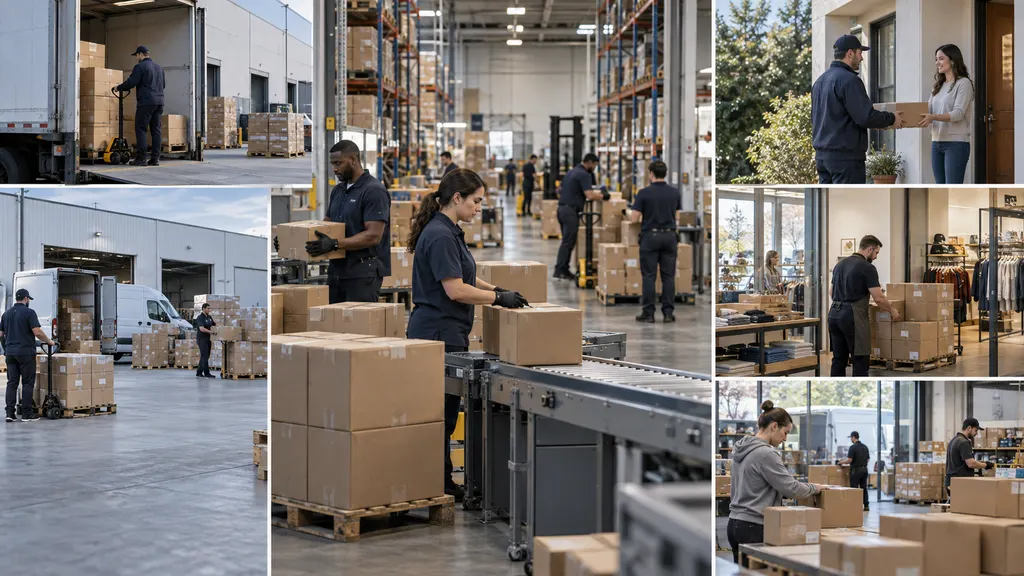
For example, an order fulfilled from a retailer’s own warehouse may require inventory allocation, pick-and-pack instructions, carrier selection, and parcel tracking. An order shipped directly by a supplier may require supplier confirmation, a different shipping-label process, separate tracking updates, and rules for communicating the shipment status to the customer. Both orders may be placed through the same ecommerce storefront, but they require different operational support.
In Logistics and Ecommerce
Distribution-mode support sits between order management and physical fulfillment. It connects the commercial decision to accept an order with the operational decision about how the goods will be sourced, handled, transported, and delivered. The term may refer to software features, warehouse procedures, carrier integrations, partner processes, or a combination of these elements.
A system with distribution-mode support may identify a mode when an order is created, or it may determine the mode later after considering inventory availability, destination, product restrictions, service commitments, and seller rules. The selected mode can affect several downstream activities:
- Inventory allocation: the system may reserve stock in a warehouse, store, supplier location, or fulfillment partner.
- Order routing: the order may be sent to a warehouse, supplier, marketplace fulfillment service, or another distribution point.
- Documentation: packing slips, commercial invoices, customs information, and shipping labels may differ by mode.
- Carrier and service selection: the responsible shipping party may use its own carrier account or a designated logistics provider.
- Tracking and status management: shipment events may arrive from a warehouse system, supplier, carrier, or marketplace.
- Customer communication: the seller may need to present a consistent order status even when different parties perform fulfillment.
- Returns handling: return authorization, return location, inspection, and reimbursement procedures may vary by mode.
Distribution-mode support does not necessarily mean that one organization performs every distribution activity. It may instead mean that the organization can coordinate several operating models while keeping order records and customer communications connected.
Common Distribution Modes
There is no single universal classification of distribution modes for all industries. The following table uses a descriptive ecommerce and logistics classification. It is intended to explain common operating arrangements, not to establish a formal industry standard.
| Distribution mode | Operational meaning | Typical inventory location | Important support requirements |
|---|---|---|---|
| Direct shipment | The seller or producer ships the order directly to the buyer. | Seller or producer location | Order transmission, label creation, tracking, and delivery-status synchronization |
| Warehouse fulfillment | A warehouse stores inventory and prepares orders for shipment. | Retailer, 3PL, or fulfillment warehouse | Inventory control, pick-and-pack instructions, warehouse messages, and carrier handoff |
| Drop shipping | A supplier ships goods to the buyer after receiving order information from the seller or intermediary. | Supplier location | Supplier integration, availability confirmation, neutral or seller-branded documents, and tracking exchange |
| Store fulfillment | A retail store prepares an order for delivery or customer collection. | Physical retail store | Store-level inventory accuracy, picking tasks, collection status, and local delivery coordination |
| Marketplace or platform fulfillment | A platform or contracted fulfillment network stores or processes the order under an agreed operating model. | Platform or contracted facility | Order-status interfaces, service rules, inventory synchronization, and responsibility boundaries |
| Business-to-business distribution | Goods move to a business, distributor, branch, or other commercial recipient. | Supplier, distribution center, or shared network | Purchase-order matching, delivery appointments, freight documentation, and receiving confirmation |
These modes can overlap. For example, a business may use warehouse fulfillment for domestic orders, direct shipment for oversized products, and supplier fulfillment for selected items. A single customer order may also be split across more than one mode if its items are held in different locations or supplied by different parties.
How Distribution-Mode Support Works
1. Mode identification
The process begins by identifying the applicable distribution mode. This information may come from a product record, seller rule, warehouse assignment, supplier agreement, marketplace instruction, or order-routing decision. A mode should be explicit enough for the system to apply the correct workflow. Terms such as “standard shipping” or “express delivery” describe transportation service levels, but they do not necessarily identify who fulfills the order or where the inventory comes from.
2. Order routing and allocation
After the mode is identified, the order is routed to the party or location responsible for fulfillment. Routing may involve a warehouse-management system, supplier portal, electronic data interchange, application programming interface, or manual operational process. The routing record should distinguish the order from the shipment because one order can result in multiple shipments.
3. Fulfillment execution
The responsible party performs the relevant tasks. In a warehouse, this may include stock reservation, picking, packing, and handoff to a carrier. In a supplier-fulfilled model, the supplier may confirm availability and ship directly to the buyer. In store fulfillment, staff may pick the product and prepare it for collection or local delivery. The same customer-facing order process can therefore contain different operational steps.
4. Status and tracking exchange
Distribution-mode support normally requires status synchronization. A seller may need to receive events such as order accepted, fulfillment started, shipped, out for delivery, delivered, delayed, or cancelled. The exact status vocabulary can differ between systems, so mapping is often needed. A tracking number identifies a shipment or transport record; it does not by itself prove that all items in an order have been fulfilled.
5. Exception management
Each mode creates different exception conditions. A warehouse may report a stock discrepancy, a supplier may reject an order, a store may be unable to locate an item, or a carrier may report a delivery problem. Effective support should identify the responsible party, preserve the order history, and provide a defined next action. It should not assume that an exception in one shipment automatically applies to the entire order.
6. Returns and post-delivery handling
Returns are also affected by distribution mode. A product shipped by a supplier may require a return to that supplier, while a product fulfilled by a retailer may be sent to a central returns facility. The party that shipped the item, the party that owns the inventory, and the party that authorizes a refund may be different. Distribution-mode support should keep these responsibilities distinguishable rather than treating a return and a refund as the same event.
Distribution Mode and Cross-Border Ecommerce
In cross-border ecommerce, distribution-mode support has additional importance because the mode may influence customs documentation, importer or exporter responsibilities, tax handling, delivery partners, and the location where goods enter the destination market. These obligations depend on the transaction structure, jurisdiction, product, and applicable trade rules; they cannot be inferred from the mode name alone.
For example, an international order may be shipped from the seller’s country directly to the buyer, or inventory may be placed in a destination-country warehouse before the customer orders. The physical path, commercial documents, customs declaration, and party responsible for the shipment may differ. A system should therefore distinguish distribution mode from the transport service. “Express” describes a delivery service category, whereas “supplier direct shipment” describes an operational fulfillment arrangement. A shipment can be supplier-fulfilled and express at the same time.
Cross-border operations also require careful treatment of address data, item descriptions, quantities, values, country-of-origin information, and shipment-level documents. Distribution-mode support may help determine which data must be passed to a fulfillment party or carrier, but the system feature itself does not replace legal or customs advice.
Key Distinctions
| Term | What it describes | Relationship to distribution-mode support |
|---|---|---|
| Distribution mode | The operational arrangement through which goods are sourced and fulfilled. | Determines which workflows and responsibilities may apply. |
| Fulfillment method | The practical way an order is picked, packed, or otherwise prepared. | Often forms part of the distribution mode, but may describe a narrower activity. |
| Shipping service | The transport service selected for movement, such as a stated speed or service level. | Can be used within several different distribution modes. |
| Delivery method | The way the recipient receives the goods, such as home delivery, pickup, or collection. | Describes the final receipt arrangement, not necessarily the full supply chain. |
| Order routing | The decision about which location or party should process an order. | Is a process used to implement distribution-mode rules. |
| Shipment | A physical consignment or transport movement created for delivery. | May be one result of a distribution mode; one order can create multiple shipments. |
Common Misunderstandings
Distribution mode is not the same as shipping speed
A distribution mode identifies an operating arrangement, while shipping speed identifies a transport service characteristic. A supplier, warehouse, or store may use standard, expedited, or other carrier services depending on the order.
Distribution mode is not always a formal industry category
Some organizations use the phrase in software specifications or internal procedures without relying on a common external taxonomy. Its exact meaning should therefore be checked in the relevant platform documentation, contract, or process map.
One order does not always equal one shipment
An order may be split by inventory location, product type, supplier, or operational rule. Each resulting shipment may have its own tracking record and delivery event.
Distribution-mode support does not guarantee compliance
A system may provide fields, integrations, or workflows for a cross-border mode, but compliance depends on the transaction facts and applicable laws, regulations, customs requirements, and contractual responsibilities.
Related Terms
- Order management: The processes and systems used to capture, validate, monitor, and update customer orders.
- Ecommerce fulfillment: The activities involved in preparing and dispatching ecommerce orders.
- Drop shipping: A fulfillment arrangement in which a supplier ships goods directly to the buyer on behalf of a seller or intermediary.
- Third-party logistics: The use of an external provider for logistics activities such as warehousing, fulfillment, or transportation coordination.
- Order routing: The allocation of an order or order line to a suitable fulfillment location or party.
- Last-mile delivery: The final transport stage to the recipient or designated collection point.
QA
What does distribution-mode support mean in logistics?
It means the ability to manage the workflows and information requirements associated with different ways of sourcing, fulfilling, shipping, and delivering goods.
Is distribution-mode support the same as fulfillment?
No. Fulfillment is one part of the operation. Distribution-mode support is broader and may include routing, inventory allocation, partner coordination, documents, tracking, exceptions, and returns.
Can one ecommerce order use more than one distribution mode?
Yes. An order may be split so that different items are fulfilled by different warehouses, suppliers, stores, or other operating parties.
Why does distribution-mode support matter in cross-border ecommerce?
The mode can affect the physical movement of goods, information exchange, customs documentation, delivery responsibility, and return arrangements. The exact legal consequences depend on the transaction and applicable rules.
Sources
- Shopify, “Order Fulfillment” — industry reference for ecommerce fulfillment activities and fulfillment arrangements.
- United Nations Economic Commission for Europe, “Buy-Ship-Pay Model” — reference for the relationship between commercial orders, shipping processes, and trade information flows.
- World Customs Organization, SAFE Framework of Standards — reference for customs and supply-chain information considerations relevant to international goods movements.
- GS1, Electronic Data Interchange — reference for standardized business-to-business order and logistics information exchange.