Logistics Enterprise'S Liability Insurance
Definition
Logistics enterprise's liability insurance is insurance that may respond when a logistics company becomes legally liable for loss, damage, delay, or other covered harm connected with services such as transportation, warehousing, freight forwarding, handling, or delivery. It is primarily a liability product: it addresses the enterprise's responsibility to another party, subject to the policy wording, exclusions, limits, deductibles, and applicable law.

The term is used in logistics and commercial insurance rather than as the name of one universally standardized policy. Coverage differs according to the company's role, the services it provides, the jurisdiction, the contract, and the relevant transport convention or other legal framework.
In Logistics
A logistics enterprise may handle goods without owning them. Its potential liability can arise from its own acts or omissions, or from the acts of employees, subcontractors, warehouse operators, or contracted carriers, depending on the contract and applicable law. The insurance is therefore connected with the company's operational responsibilities, not simply with the value of the goods in transit.
For example, a logistics company may face a claim alleging that goods were damaged while in its custody, were released to the wrong recipient, were lost during a contracted transport service, or were affected by an error in documentation or handling. Whether the policy responds is determined by the facts, the policy terms, and the legal basis of the claim.
Liability Insurance and Cargo Insurance
Liability insurance and cargo insurance address different risks, although the same shipment may involve both. Liability insurance generally depends on the insured party's legal responsibility for a covered loss. Cargo insurance generally protects the insured interest in the goods against covered physical loss or damage, subject to its own terms. The existence of cargo damage does not automatically establish a logistics enterprise's liability.
| Type of cover | Primary question | Typical insured interest | Important limitation |
|---|---|---|---|
| Logistics enterprise's liability insurance | Is the logistics enterprise legally liable for a covered loss? | The company's potential liability to a customer, cargo owner, or other claimant | Coverage may depend on contractual duties, negligence, exclusions, limits, and applicable law |
| Cargo insurance | Has covered loss or damage occurred to the goods? | The financial interest in the cargo | It does not necessarily determine who caused the loss or who is legally liable |
| Commercial general liability insurance | Has the business caused a covered type of third-party injury or property damage? | Broad business liability, depending on the policy | It may exclude or limit risks that require specialist transport, warehouse, or cargo coverage |
Potentially Covered Activities
The scope of a policy may be written around particular logistics activities. Common areas for review include:
- Freight forwarding: arranging transport and related logistics services, where the enterprise's legal role may differ from that of a carrier.
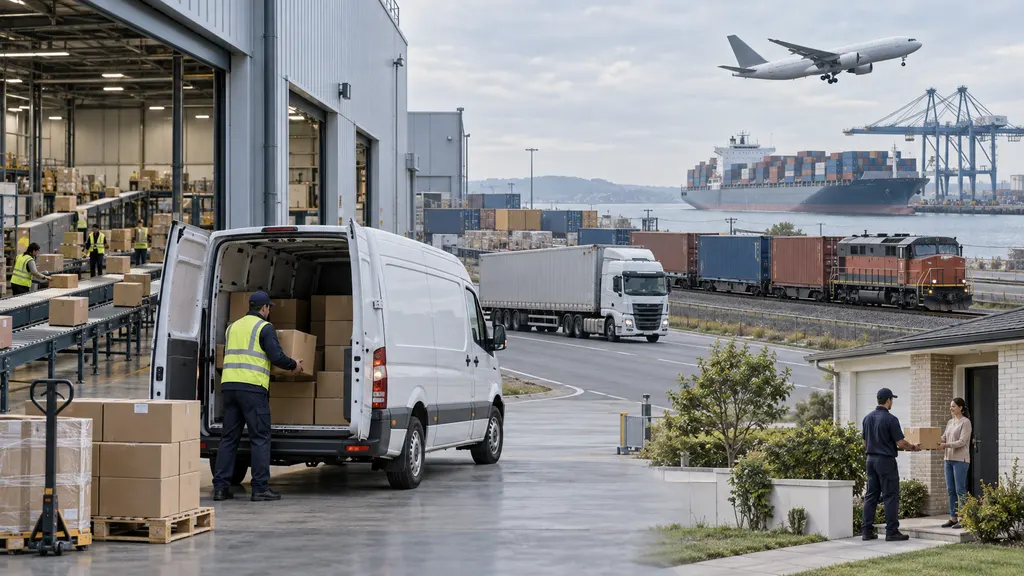
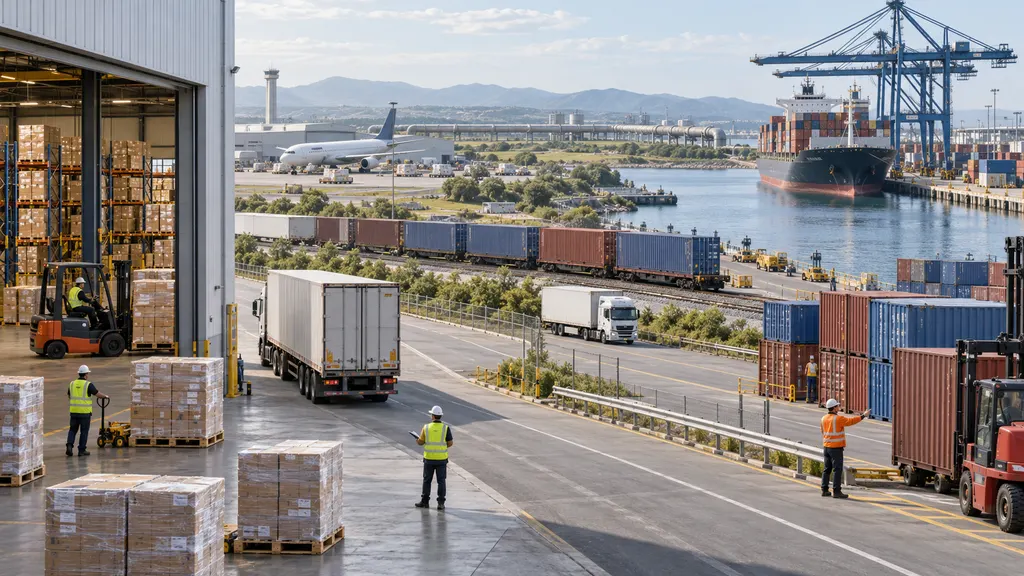
- Transportation: operating or arranging the movement of shipments by road, rail, air, sea, or multimodal transport.
- Warehousing: storing, receiving, picking, packing, or releasing goods.
- Handling and fulfillment: preparing orders or transferring goods between supply-chain stages.
- Documentation and coordination: performing administrative or operational tasks that may create a claim if an error causes a covered loss.
These descriptions are operational categories, not a universal insurance classification. A policy may combine them, exclude some of them, or define them differently.
How Liability Is Determined
A claim normally requires more than proof that a shipment was lost or damaged. The parties may need to establish the logistics enterprise's contractual duty, the applicable legal standard, the relevant event, the amount of loss, and any limitation of liability or defense available under the contract or law.
International carriage can be subject to mandatory or supplementary legal regimes. For example, the Convention on the Contract for the International Carriage of Goods by Road, commonly known as the CMR Convention, contains rules concerning the rights and obligations of parties to certain international road-carriage contracts. Other modes and jurisdictions may be governed by different conventions, national laws, or contract terms. Insurance cannot be assessed independently from those rules.
Factors commonly reviewed in a claim
- The logistics enterprise's contractual role and promised services.
- Where and when the loss occurred, including whether the goods were in transit, storage, or handling.
- The condition, packaging, documentation, and declared value of the shipment.
- Whether a carrier, warehouse operator, subcontractor, customer, or another party contributed to the event.
- Policy definitions, exclusions, deductibles, limits, notification requirements, and defense provisions.
- Any statutory or contractual limitation of liability that applies to the transaction.
Cross-Border Logistics Considerations
In cross-border logistics, the same movement may involve several contracts and legal systems. The logistics enterprise may act as a carrier in one transaction, an intermediary or freight forwarder in another, and a warehouse or fulfillment operator in a separate service. Its liability insurance should therefore be reviewed against the actual services and contractual roles rather than against the shipment route alone.
International trade terms may allocate transport responsibilities between a buyer and seller, but they do not by themselves provide insurance coverage or settle every question about a logistics provider's liability. The applicable policy, service contract, transport document, and governing law must be considered together.
Common Misunderstandings
- It is not automatically the same as cargo insurance. Liability cover focuses on the insured enterprise's legal responsibility, while cargo cover focuses on the insured interest in the goods and the risks specified in that policy.
- It does not guarantee payment for every shipment loss. A claim may fall outside the policy, may be subject to an exclusion or limit, or may not establish the enterprise's legal liability.
- Using a subcontractor does not by itself resolve liability. The result depends on the contract, applicable law, the policy wording, and the facts of the incident.
- “All risks” is not a synonym for unlimited liability. Any insurance label must be read with its definitions, exclusions, conditions, limits, and applicable law.
Related Terms
| Term | Relationship to logistics enterprise's liability insurance |
|---|---|
| Carrier liability | The legal responsibility that may apply to a carrier for loss, damage, or delay under a contract, statute, or transport convention. |
| Freight forwarder | An intermediary or logistics provider whose legal role may vary by contract and transaction. |
| Cargo insurance | Insurance for a financial interest in goods against covered risks; it is not automatically liability insurance. |
| Warehouse liability | Potential responsibility connected with the custody and storage of goods. |
| General liability insurance | A broader commercial liability category that may not cover specialist transport or cargo risks unless the policy provides for them. |
QA
What does logistics enterprise's liability insurance cover?
It may cover the logistics company's legal liability for specified losses or damage connected with covered logistics services, subject to the policy and applicable law.
Is logistics liability insurance the same as cargo insurance?
No. Liability insurance generally depends on the logistics enterprise being legally responsible, while cargo insurance generally protects an insured interest in the goods against covered risks.
Does liability insurance cover delays in delivery?
Not necessarily. Delay-related claims depend on the policy wording, exclusions, contract, governing law, and any applicable transport rules.
Sources
- Cornell Law School Legal Information Institute: Liability Insurance — general explanation of liability insurance as coverage for legal responsibility to others.
- United Nations Treaty Collection: Convention on the Contract for the International Carriage of Goods by Road (CMR) — international road-carriage framework relevant to carrier responsibilities and claims.
- International Civil Aviation Organization: Air Transport — institutional context for international air transport, where separate legal and contractual frameworks may apply.