How to Track a Package Shipped from the Us to Canada (Customs, Carrier Handoffs & Delays)
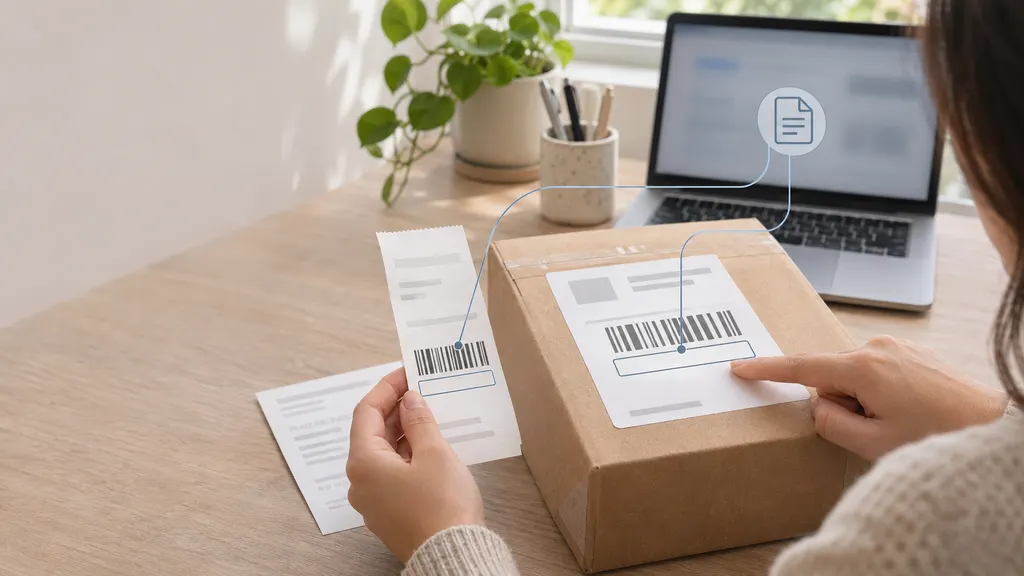
To track a package shipped from the US to Canada, enter the shipping tracking number on the originating carrier’s website, then check the Canadian delivery carrier once the shipment reaches its network. For a USPS postal shipment, that generally means checking USPS first and Canada Post next, where tracking is available for the service used. If updates stop, use the last physical scan to distinguish a transportation gap, a carrier handoff, a customs review, or a delivery problem before deciding whom to contact.
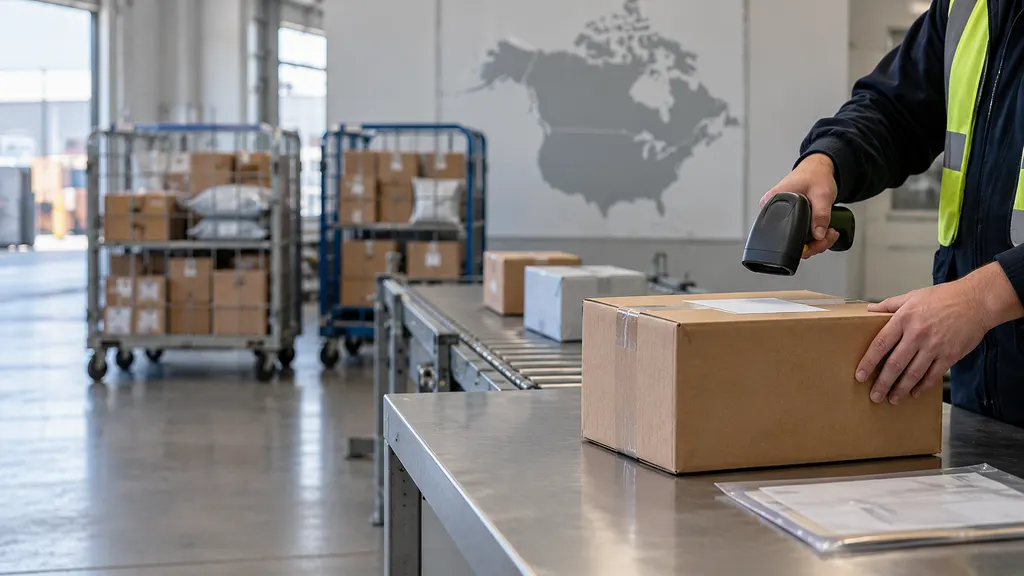
The most useful question is not simply whether the parcel has crossed the border. It is which organization currently has responsibility for moving it, clearing it, or delivering it. A tracking page can help identify that stage, but it cannot always show the parcel’s exact location.
Start with the shipping number, not the order number
- Find the carrier tracking number. Look in the shipping confirmation, retailer account, or dispatch email. An order number identifies the purchase and usually will not work on a carrier’s tracking page.
- Confirm the shipping carrier and service. The retailer’s shipping method may describe only a delivery speed, not the company handling the parcel. Ask the seller if that information is missing.
- Check the originating carrier’s official tracking page. Read the full event history rather than relying only on the headline status or estimated arrival date.
- Look for a Canadian delivery partner or secondary tracking number. These may appear in shipment details, a carrier handoff event, or the seller’s shipping records.
- Check the receiving carrier after the handoff. A Canadian carrier may not recognize the number until shipment information or the parcel enters its system.
For a consolidated view, you can also track the shipment through 17TRACK. This can be useful when a cross-border journey involves more than one carrier. Treat it as a visibility tool, not a customs authority or a replacement for the carrier’s investigation process. If information differs, check the underlying carrier record and contact the organization responsible for the shipment.
Before troubleshooting a missing update, make sure you have entered the number exactly as supplied. Remove accidental spaces, and do not substitute a purchase reference, customs reference, or payment transaction number.
Understand which route your package is taking
USPS shipments entering the Canadian postal network
For USPS international postal shipments delivered through Canada’s postal network, Canada Post handles the Canadian delivery leg. Where the selected service supports tracking, try the original tracking number on both the USPS tracking page and the Canada Post tracking page.
Do not assume that every USPS international product provides the same tracking detail. Visibility depends on the service purchased. A number may provide only limited events, and the absence of a Canadian scan does not by itself establish that the parcel is lost.
Courier and shipping-partner shipments
A courier shipment may remain within the courier’s network or move to a delivery partner. Other shipping services consolidate parcels in the US before transferring them into a Canadian network. These arrangements can produce a different tracking history from a postal shipment.
Do not automatically switch to Canada Post simply because the destination is in Canada. First look for a named delivery partner. If the original tracking page shows a separate last-mile number, save both numbers: the original carrier may need one for a cross-border inquiry, while the delivery partner may use the other for local delivery support.
What common tracking messages actually tell you
Carriers use different wording, so the messages below describe common meanings rather than universal status definitions. Read each event together with its location, timestamp, and surrounding scans.
| Tracking message | What it usually indicates | What to do |
|---|---|---|
| Label created or shipment information received | Electronic shipping information exists, but this event alone does not confirm physical acceptance. | Ask the seller for the dispatch date and evidence of carrier acceptance if no acceptance scan follows. |
| Departed facility or in transit | The shipment is moving through the network or between processing points. | Check the last physical location and compare progress with the service’s delivery estimate. |
| Presented to customs or under customs review | The shipment has entered a customs assessment stage. | Watch for a specific document, payment, or admissibility request. This status alone does not mean seizure. |
| Released by customs | Customs processing has reached a release stage, but transport and delivery may remain. | Look for the next carrier processing scan rather than expecting immediate delivery. |
| Transferred to delivery partner | Another organization is taking over part of the journey. | Find the partner’s name and any linked tracking number. |
| Available for pickup or delivery attempted | Delivery requires a local action rather than further cross-border movement. | Check the official notice for the pickup location, identification requirements, and collection deadline. |
Customs: what tracking can and cannot explain
Goods entering Canada by mail are subject to customs review. The Canada Border Services Agency’s postal import guidance explains the process for mailed goods, including assessment of applicable duties and taxes. A parcel being sent from the US does not automatically make it exempt from Canadian import requirements.
A customs event is not a complete explanation of what is happening inside the review process. Tracking may show that a parcel was presented for assessment without explaining whether it is awaiting routine processing, inspection, or additional information. Do not infer a specific problem from a generic customs message.
If customs tracking stops updating
- Read the exact message. “Presented to customs” is different from an explicit request for an invoice or proof of value.
- Check communications from the carrier or broker. Look in the shipment account and email inbox, including spam folders.
- Have supporting information ready. A purchase receipt, accurate item description, and seller contact details can help if information is requested.
- Confirm who must respond. Some requests concern the recipient, while others require the seller or shipper to correct shipment information.
For mailed parcels, CBSA does not provide the same parcel-tracking service as the postal operator. Begin location and delivery inquiries with the carrier. For courier shipments, the courier or its customs broker is generally the practical starting point for questions about clearance paperwork.
There is no reliable universal customs-clearance deadline for every US-to-Canada parcel. Contents, documentation, inspection requirements, and operating conditions can affect processing. A carrier’s delivery estimate should not be treated as a guarantee of when customs will release an item.
If you receive a payment request
Duties, taxes, and carrier or brokerage charges are not interchangeable. Whether an amount is payable depends on the shipment and its shipping arrangements. Before paying, open the carrier’s official website independently and confirm that the request matches your tracking number. Ask for a breakdown if the charge is unclear. Do not rely on an unsolicited text message or payment link alone.
Why tracking can go quiet at a carrier handoff
A cross-border handoff involves both physical movement and information exchange. The first carrier may record departure before the receiving carrier records acceptance. During that interval, one page can appear inactive while another has not yet recognized the parcel.
Tracking events are also not continuous location signals. A departure scan does not show every stop afterward, and the last displayed facility may not be the parcel’s present location. For example, a parcel last scanned in a US export facility might be awaiting onward transport, moving toward Canada, or waiting for its next recorded processing event. That scan alone cannot distinguish those possibilities.
Check both carriers when a handoff is identified. Compare the underlying event times rather than simply choosing whichever page displays the more reassuring headline. If a partner number is missing, ask the seller or originating carrier to identify the Canadian delivery provider.
When a delay needs action
Use the purchased service’s delivery estimate and inquiry rules, not an arbitrary rule such as contacting support after a fixed number of days. International services have different delivery expectations and investigation requirements.
- Establish the last confirmed stage. Separate label creation, physical acceptance, export movement, customs processing, Canadian carrier acceptance, and local delivery.
- Check for an action-required exception. An address problem, document request, pickup notice, or verified payment request calls for action even if the delivery estimate has not passed.
- Review official service alerts. Look for disruptions affecting the route, processing network, or destination rather than assuming every delay is caused by customs.
- Compare progress with the shipping commitment. Distinguish the retailer’s order-processing time from the carrier’s transport estimate.
- Contact the responsible party. Use the last confirmed stage and any explicit instruction to choose whom to approach.
Contact the seller when tracking never progresses beyond label creation, the service is unclear, or shipping documents need correction. Contact the originating carrier for questions about its network and international inquiry options. Contact the Canadian delivery carrier for local delivery exceptions, pickup instructions, or a delivered-but-missing report after it has accepted the parcel. Contact the courier or broker for an explicit clearance request.
An inquiry, a missing-item investigation, and a compensation claim are different processes. Eligibility, filing windows, and who may initiate them depend on the service. For a USPS shipment, consult the official international claims guidance and involve the US sender rather than assuming the Canadian recipient can complete every step.
Prepare a useful support request
Provide the original tracking number, any Canadian partner number, service name, dispatch date, destination postal code, and exact last event. Include screenshots if the two carrier pages disagree. A focused request is easier to investigate than “Where is my package?”
For example: “The shipment shows departure from the US export facility, but the named Canadian delivery partner has no acceptance event. Can you confirm the handoff carrier, whether another tracking number applies, and whether this service is eligible for an inquiry?”
FAQ
Will my USPS tracking number work in Canada?
For trackable USPS shipments delivered through Canada Post, try the original number on Canada Post’s tracking page. Recognition and event detail depend on the service and shipment stage. A failed lookup before Canadian processing is not proof that the number is invalid.
Does “departed the US” mean my package has arrived in Canada?
Not necessarily. Read the full event wording: departure from a facility is not the same as confirmed arrival in Canada. A Canadian arrival, customs, or receiving-carrier event provides stronger evidence of the next stage.
Can I speed up a package held in customs?
You generally cannot bypass customs review by refreshing tracking or contacting a tracking platform. The useful action is to respond promptly to a verified request for information or payment. If no request exists, ask the carrier whether there is an actionable clearance issue.
Why does the delivery date disappear?
A carrier may revise or remove an estimate when it cannot confidently predict delivery. The missing date alone does not establish loss. Check the event history for a delay, customs stage, or delivery exception.
What if tracking says delivered but I have nothing?
Check the delivery location, mailbox or parcel locker, building reception, and household members. Then contact the final-mile carrier promptly and notify the seller. Ask about the recorded delivery details and available investigation process. A delivered scan should be handled as a local delivery issue, not automatically as a customs problem.
Sources
- USPS: Official shipment tracking — originating-carrier tracking records.
- Canada Post: Track a package — Canadian postal tracking records.
- Canada Border Services Agency: Importing by mail — customs processing and postal import requirements.
- USPS: International claims — international inquiry and claims procedures.
- 17TRACK: Package tracking — an additional tracking interface for checking shipment progress.