How to Track a Package from the Us to Australia: Carriers, Customs & Delivery Times
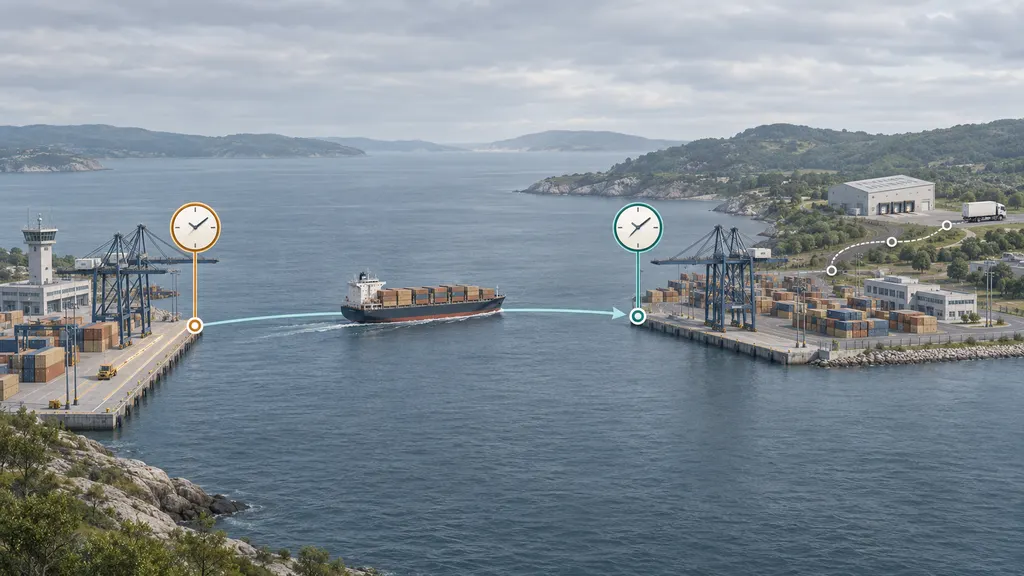
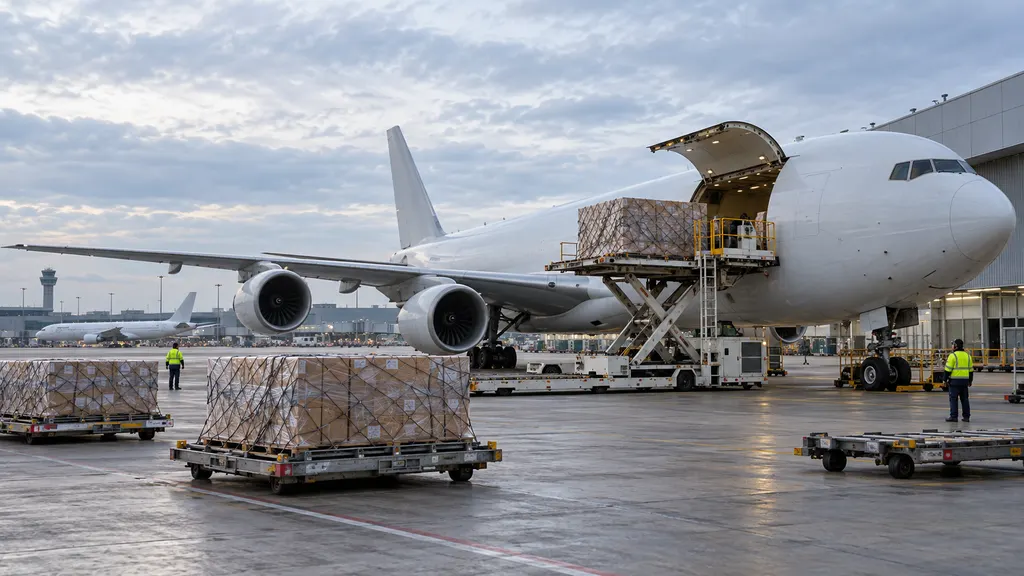
To track a package from the US to Australia, enter the shipment’s tracking number on the sending carrier’s website or a multi-carrier tracking page. For USPS shipments, also check Australia Post once the parcel reaches the Australian delivery network. Delivery time depends on the service purchased, customs and biosecurity clearance, and the destination—not simply the date the seller created the shipping label.
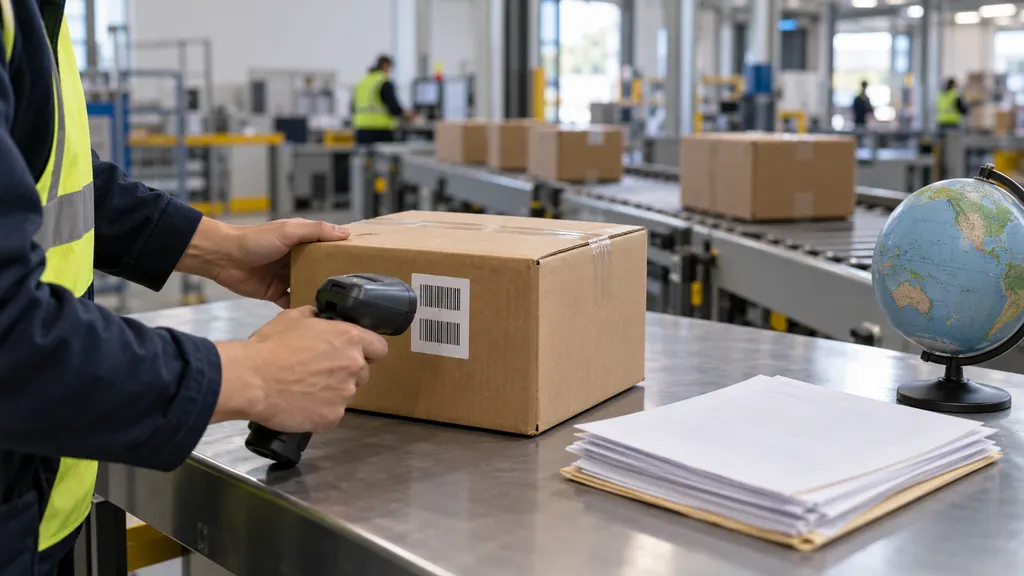
If your parcel appears stuck, the most useful next step is to identify its last physical scan, confirm who currently handles it, and check whether anyone has requested payment or documents. A tracking gap during an international handover does not, by itself, mean the package is lost.
How to find the right tracking information
- Find the carrier tracking number. Look in the seller’s dispatch email, your order account, or the shipping receipt. An order number identifies your purchase; it is not necessarily a number a carrier can track.
- Check the original carrier. Start with the carrier named in the shipment confirmation. Read the detailed tracking history rather than relying only on the headline status.
- Check the Australian delivery carrier when identified. For USPS postal shipments, Australia Post is the relevant destination postal operator. Other shipping arrangements may use a courier or a separate local delivery partner.
- Look for an additional tracking number. A seller or shipping partner may provide a separate number for the Australian leg. Do not assume the original number always works across every network.
- Use a multi-carrier view if the handover is unclear. You can track a shipment through 17TRACK to check tracking information across supported carriers. For delivery changes, clearance requests, or investigations, contact the responsible carrier or seller directly.
A tracking number that returns no result may have been entered incorrectly, created before the parcel was handed over, or issued by a shipping partner rather than the carrier you selected. Ask the seller to confirm both the number and the actual shipping service before treating it as invalid.
Which carrier should you check?
The company that accepts a parcel in the United States is not always the company that delivers it in Australia. This distinction matters because the original carrier may have the clearest export information, while the destination carrier may have the most useful delivery instructions.
| Shipping arrangement | Where to start | What to check next |
|---|---|---|
| USPS international postal shipment | USPS tracking | Australia Post tracking after the shipment enters its network; tracking detail depends on the service. |
| International express courier | The courier named on the shipping confirmation | Clearance messages, delivery exceptions, and any local delivery instructions shown by that courier. |
| Economy or consolidated shipping | The seller’s nominated shipping partner | Whether a destination carrier or replacement tracking number has been assigned. |
For a postal shipment, try the original international tracking number on Australia Post’s website. If it is not recognized, that alone does not prove the package has not reached Australia: the service may have limited tracking, the handover may not yet be recorded, or a different delivery arrangement may apply.
Do not select Australia Post solely because the delivery address is Australian. Follow the carrier information attached to the shipment.
How long does shipping from the US to Australia take?
The best estimate is the one for the exact service, dispatch date, and destination postcode. A seller’s processing time, an international transit estimate, and the carrier’s expected delivery date describe different parts of the journey.
For context, USPS publishes general delivery ranges of 3–5 business days for Priority Mail Express International and 6–10 business days for Priority Mail International. These are service-level reference ranges, not a verified quote for every US-to-Australia shipment. USPS notes that actual timing can vary by origin, destination, and customs delays. Check the service’s current Australian availability and destination-specific conditions before relying on a range.
Economy and consolidated services need their own estimates. Do not apply a priority-service range to a parcel simply because it leaves from the United States. Express couriers likewise calculate delivery estimates using the shipment’s route, service, and acceptance details.
Separate these three timing stages
- Order processing: The seller prepares and packs the purchase. A label may exist before the carrier receives the parcel.
- International transportation and clearance: The parcel moves through export handling, international transport, and Australian entry checks.
- Domestic delivery: After release and handover, the Australian delivery network routes it to the recipient, collection point, or delivery facility.
Weekends, public holidays, transport disruptions, and remote delivery locations can affect the overall timeline. Customs and biosecurity checks can add time that is not predictable from the original dispatch date. An estimated delivery date is useful for planning, but it is not necessarily a money-back delivery guarantee.
If you are deciding whether a parcel is late, compare its progress with the purchased service and its latest carrier estimate—not with another customer’s shipment using a different service.
What Australian customs and biosecurity checks mean for tracking
A parcel arriving in Australia may need customs assessment, biosecurity assessment, or both. The Australian Border Force handles customs requirements, while the Department of Agriculture, Fisheries and Forestry administers biosecurity controls. These are separate responsibilities, even when tracking compresses them into a short message such as “clearance delay.”
Customs assessment and possible charges
Clearance can require information about the contents, value, purchase, or importer. Depending on the shipment, duties, taxes, processing charges, or carrier-related clearance fees may apply. A tracking status alone does not establish what you owe, and GST may already have been collected at purchase under applicable arrangements.
For parcels bought online, use the Australian Border Force’s buying-online guidance to understand the relevant requirements. If the carrier requests an invoice or payment, verify the request through its official website or a known contact channel before submitting documents or money.
Biosecurity assessment
Food, plant material, animal products, seeds, and some other goods can be subject to Australian biosecurity conditions. An item being sold legally in the United States does not establish that it can enter Australia without restrictions.
If a parcel contains goods subject to biosecurity conditions, check the Department of Agriculture’s guidance and the Biosecurity Import Conditions system, known as BICON. Depending on the item and assessment, additional information, inspection, treatment, or another outcome may be required. Do not assume that a carrier can override a government decision or release the parcel immediately.
What to do during a clearance delay
- Read the full tracking event for a document request, payment instruction, or clearance contact.
- Check email and messages associated with the order, including the spam folder.
- Have the purchase invoice, description of the goods, and proof of payment ready if requested.
- Ask the carrier or its clearance representative whether action is required from you or the sender.
- Avoid paying through an unsolicited text-message link; verify the request independently.
There is no universal customs-release deadline for all packages. A generic promise that every parcel clears within a fixed number of hours would be misleading.
How to interpret common tracking statuses
Carriers use different wording, but the practical distinctions below help you decide whether to wait or act.
- Label created or shipping information received: Electronic shipment details exist. This does not confirm that the carrier physically has the package. If the seller says it has shipped, ask for confirmation of handover.
- Accepted or received by carrier: A physical acceptance event has been recorded. This is a more useful starting point for assessing transit progress than the label date.
- Departed export facility or dispatched internationally: The parcel has reached an export movement stage. It is not proof that Australian customs has received or released it.
- Arrived in destination country: An arrival event is recorded, but clearance and domestic processing may still be outstanding.
- Held for clearance or awaiting information: Check for a specific request. The next action may belong to the recipient, sender, carrier, or government agency.
- Released from customs: Customs release has been recorded. It does not necessarily mean the parcel is already with the delivery driver.
- Awaiting collection or delivery attempted: Check the collection location, identification requirements, and holding deadline with the delivery carrier.
- Delivered: Review the delivery details, safe-place information, or proof of delivery before reporting the parcel missing.
A location in the tracking history usually identifies a processing event, not a live position. Time-zone differences and delayed data exchange can also make events appear out of sequence.
What to do when tracking stops updating
Base your response on the last meaningful event and the promised delivery window. Repeatedly refreshing a tracking page will not establish who needs to act.
- If there is only a label event, contact the seller. Ask whether the parcel was physically handed over and which service was purchased.
- If the last scan is in the US, check the original carrier. Review its service alerts and international inquiry requirements. The sender may need to initiate an inquiry.
- If tracking identifies an Australian delivery partner, check that partner directly. Look for a collection instruction, delivery attempt, address issue, or updated delivery estimate.
- If the parcel is in clearance, follow the stated request. Ask what is missing rather than assuming the shipment is lost.
- If the expected delivery window has passed, contact the seller and carrier. Provide the tracking number, acceptance date, service name, last scan, and destination postcode. Ask whether the shipment qualifies for an investigation.
- Protect your purchase rights separately. Check the retailer’s and payment provider’s deadlines. Do not let a prolonged shipping inquiry cause you to miss a dispute deadline.
Keep screenshots of tracking events and copies of correspondence. Inquiry and compensation rules differ by service, so avoid relying on a universal “lost after this many days” rule. The recipient may be able to request delivery help, while a formal postal claim may require action from the sender.
FAQ
Can I use my USPS tracking number with Australia Post?
Try the same international tracking number on Australia Post’s tracking page. Whether it returns events depends on the postal product and the information available in the destination network. If it does not work, confirm the service and any destination tracking number with the sender.
Why does tracking say the parcel left the US but show nothing in Australia?
Departure and arrival are separate events, and tracking does not record every movement between them. International transportation, handover, and data exchange can create a gap. Check both relevant carrier pages and compare the elapsed time with the shipment’s service estimate before escalating.
Does “in transit” mean the package has cleared customs?
No. “In transit” is a broad status and does not establish customs release. Look for a specific clearance event, or ask the carrier whether government clearance or further documentation is still outstanding.
Can 17TRACK speed up delivery or release a package from customs?
No. A tracking service helps you view shipment information; it does not transport the parcel or make customs decisions. Contact the carrier, seller, or designated clearance representative to resolve an operational problem.
What should I do if tracking says delivered but I cannot find the parcel?
Check the delivery details, mailbox, safe places, household members, building reception, and any collection notification. Then contact the delivery carrier promptly and notify the seller. Ask for available delivery evidence and an investigation reference rather than assuming the package is still in international transit.
Sources
- USPS: Priority Mail Express International — general service delivery range and qualifications.
- USPS: Priority Mail International — general service delivery range and service information.
- Australia Post: Track your item — destination-network tracking.
- Australian Border Force: Buying online — customs requirements for online purchases entering Australia.
- Department of Agriculture, Fisheries and Forestry: Online shopping — biosecurity considerations for goods purchased overseas.
- BICON: Australian Biosecurity Import Conditions — item-specific biosecurity requirements.
- 17TRACK: Package tracking — multi-carrier shipment lookup.