How to Ship Shoes on Ebay: Labels, Packing, and Authenticity Guarantee Rules
To ship shoes on eBay, choose the correct service and delivery address shown in the order, buy and upload a trackable label, protect the shoes from crushing and moisture, and follow the order-specific instructions for eBay’s Authenticity Guarantee when the listing is eligible. The safest process is to treat ordinary orders and authenticity-eligible orders differently: an ordinary order generally goes to the buyer, while an eligible order may need to go first to an authentication facility.
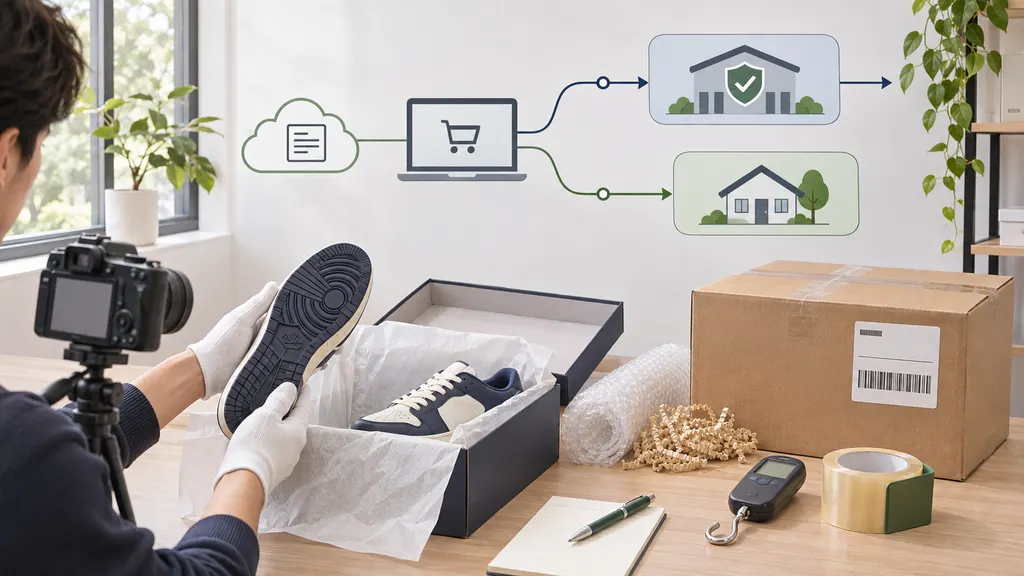
Small mistakes can create delivery disputes even when the shoes arrive in good condition. Before packing, confirm the item, size, destination, handling time, shipping service, and any authenticity instructions in eBay Seller Hub or the order details. Do not reuse a label from another order, alter the destination printed on the label, or send an authenticity-eligible pair directly to the buyer when eBay directs you to use a different route.
1. Confirm the order before buying a label
Open the sold order and compare the details with the pair you are holding. Check the brand, model, color, size, quantity, and any accessories promised in the listing. For shoes, the box and accessories can matter to the buyer’s expectations, particularly when the listing describes an original box, spare laces, tags, or special packaging.
- Confirm the destination: Use the address and routing information displayed for that order. Do not rely on a saved address, a message from a buyer, or an address copied from a previous sale.
- Check the deadline: Make sure the label and carrier service support the handling time shown in the listing. A label created on time does not replace the need to hand the parcel to the carrier promptly.
- Review the order status: An order with an authenticity-related instruction may display different shipping directions from a standard order.
- Inspect payment and cancellation details: If the order is not ready for fulfillment or the buyer asks you to change the address, use eBay’s official order and support procedures rather than making an informal change.
For an ecommerce operation, this check is worth making part of a pick-and-pack checklist. Record the order number, SKU, shoe size, box condition, and label tracking number. That simple record helps separate a packing mistake from a carrier delay or a buyer-side issue.
2. How to buy and use an eBay shipping label
eBay’s shipping-label workflow can use information already attached to the order. Sellers can generally select a carrier service, package details, and insurance or other available options from the order or shipping area. The exact services and options depend on the shipment’s origin, destination, package measurements, and the carrier choices available to the seller.
- Open the sold order in eBay Seller Hub or the applicable selling interface.
- Verify the delivery address and the package weight and dimensions.
- Select a service that meets the promised handling and delivery expectations.
- Purchase and download or print the label.
- Attach the label to the largest flat surface of the outer package.
- Remove or fully cover old barcodes and address labels.
- Hand the package to the carrier or an accepted drop-off location and keep the receipt when one is provided.
Enter realistic weight and dimensions. Understating either can lead to postage adjustments, a rejected parcel, or a billing issue. Measure the sealed package, not only the shoe box. If the parcel is unusually large, heavy, or valuable, compare the available services before purchasing the label rather than selecting the cheapest option automatically.
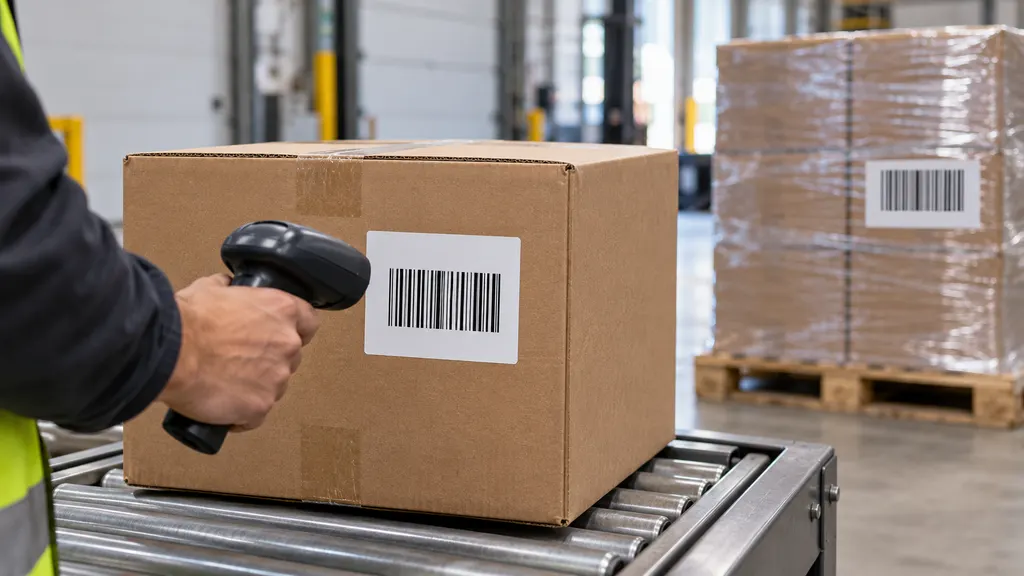
Tracking should begin with a carrier acceptance scan. A label that only shows “created” or “pre-transit” does not prove that the carrier has received the parcel. If the first scan is missing, keep the drop-off receipt and contact the carrier or the drop-off location. Uploading or confirming the tracking number in eBay helps connect carrier events to the order, but tracking cannot correct a wrong address or an incorrectly packed item.
3. How to pack shoes safely
Shoes are vulnerable to scuffs, crushed heels, bent uppers, moisture, and movement inside a box. The right packing method depends on the shoe type and whether the original retail box is part of the sale.
Prepare the pair
Clean the shoes according to the material and the condition promised in the listing. Do not apply a treatment that changes the color, finish, or smell. Remove loose dirt from soles, check that both shoes are present, and document any pre-existing marks with photographs. Photographing the pair, size label, accessories, and packed box is useful for internal records; it is not a substitute for an accurate listing.
Protect the shoes and the retail box
- Use clean paper or another non-abrasive material to support the shoe shape without overstuffing it.
- Wrap each shoe separately when surfaces could rub against each other.
- Protect buckles, ornaments, molded details, and sharp edges so they do not scratch the other shoe.
- Place the pair in its retail box when that box is included in the sale and is suitable for shipment.
- Use cushioning around the retail box if it is being shipped inside an outer carton.
If the retail box is not included, use a sturdy carton that fits the pair and leaves room for cushioning. Avoid relying on a thin poly mailer for structured, delicate, or high-value footwear. A mailer may be reasonable for some soft, low-risk items when the chosen service permits it, but it offers little protection against crushing or puncture.
Choose and seal the outer carton
The carton should be strong enough for the parcel’s weight and large enough to allow cushioning on all sides. Fill empty space so the shoes do not slide, but do not compress them so tightly that the uppers or soles deform. Shake the sealed carton gently. The contents should not move noticeably.
Use quality packing tape across the main seams and reinforce weak points. Keep the label flat and readable. Do not place tape over a barcode in a way that creates glare or prevents scanning. If the shipment is exposed to wet weather during handling, an inner bag can add protection, but it should not replace a durable outer carton.
4. eBay Authenticity Guarantee: what changes for shoe sellers
eBay’s Authenticity Guarantee is not a blanket inspection for every pair of shoes. Eligibility can depend on the category, listing details, sale price, brand or product type, destination, and the program rules in effect when the order is placed. The listing or sold-order workflow is the practical place to confirm whether a specific transaction is enrolled.
When an order is enrolled, the seller normally follows eBay’s instructions to send the item to an authentication facility before it reaches the buyer. The order page should identify the required destination, label process, and any timing instructions. Follow those instructions exactly. Do not substitute a buyer-provided address, ship directly to the buyer because it appears faster, or assume that a normal buyer return address is the correct authentication destination.
Authentication is performed by eBay’s designated process, not by the seller’s description alone. The pair may be checked against the listing and program requirements. If the item does not pass, the transaction may not proceed in the same way as a standard delivery. The exact outcome and return process depend on the program rules and order status, so sellers should consult the order record and eBay’s current Authenticity Guarantee terms.
Authenticity packing checklist
- Send the exact pair shown and described in the listing.
- Include promised accessories, such as the original box, extra laces, dust bags, or tags, when they are part of the sale.
- Do not add unrelated items or personal notes that could be mistaken for part of the product.
- Use clean, protective packaging that allows the authenticator to inspect the item without unnecessary damage to the retail box.
- Use the label and destination displayed in the order, even if they differ from a standard eBay shipment.
- Keep photographs and the carrier acceptance record until the transaction and any applicable return period are complete.
A seller should also avoid making authenticity claims that cannot be supported. If the listing says “authentic,” the item should match the description and any required identifiers. If the seller is uncertain about a pair’s provenance, condition, or components, it is better to resolve that uncertainty before listing than to depend on the authentication stage to correct an inaccurate listing.
5. Choosing the package and carrier service
For most shoe shipments, the decision is a balance between protection, delivery commitment, tracking quality, cost, and the value of the item. A low-cost service may be adequate for ordinary footwear when its transit estimate meets the listing promise. A higher service level may be reasonable for an expensive pair, a time-sensitive order, or a shipment that needs stronger handling and tracking options. The correct choice depends on the services offered for the specific origin and destination.
| Shipment situation | Practical approach |
|---|---|
| Standard shoes, ordinary value | Use a protective carton, a service with tracking, and a delivery estimate consistent with the listing. |
| High-value or authenticity-eligible shoes | Follow the order’s authentication route and label instructions; consider available protection and signature options where appropriate. |
| International shipment | Use the required customs information and describe the goods accurately. Do not guess tariff, tax, or import requirements. |
| Oversized or unusually heavy package | Measure the sealed parcel and check service limits before buying the label. |
Insurance, declared value, signature requirements, and carrier claims rules are not interchangeable. Confirm what the selected service and eBay workflow actually provide. Keep the receipt, label record, photographs, and tracking history together. These records can be important if a parcel is delayed, damaged, or reported as not received.
6. Common shipping mistakes to avoid
- Shipping to a changed address: Do not manually edit the label because a buyer sends a new address in messages.
- Using the wrong pair: Separate inventory by order and verify size and color before sealing the carton.
- Ignoring the original box: If the listing includes it, protect it as part of the sold item rather than treating it as disposable packaging.
- Choosing a service without checking dimensions: A shoe box inside an outer carton can be materially larger than the item itself.
- Leaving the parcel unscanned: A printed label is not the same as carrier possession.
- Bypassing authenticity instructions: An eligible order can require a different destination and process from an ordinary sale.
- Overpromising delivery: Carrier estimates can change. Set handling time accurately and use a service that fits the stated commitment.
7. A repeatable seller workflow
For occasional sellers, the process can be completed order by order. For a larger operation, standardization reduces preventable errors. Store common carton sizes, cushioning, tape, and label supplies near the packing area. Use a scan-based handoff so the person packing the shoes confirms the order number, while the person dispatching the parcel confirms the carrier acceptance.
- Pick the exact pair and compare it with the listing.
- Check whether the order has an authenticity instruction.
- Record the condition and included accessories.
- Pack the shoes and measure the sealed parcel.
- Buy the label using the order’s current shipping information.
- Apply the label and remove old barcodes.
- Obtain a carrier acceptance scan or receipt.
- Monitor tracking until the shipment reaches the required destination.
- Save fulfillment records until the transaction is fully closed.
This workflow does not guarantee a claim outcome, because eBay policies and carrier terms apply to the individual transaction. It does, however, create a clear chain from the listed item to the packed parcel and the carrier handoff.
FAQ
Do I ship authenticity-eligible shoes directly to the buyer?
Not necessarily. If the order is enrolled in eBay’s Authenticity Guarantee, follow the destination and label instructions shown in the order. Eligible items may be routed to an authentication facility before delivery to the buyer. The order record takes priority over a general shipping habit.
Can I use a poly mailer to ship shoes?
It depends on the shoe and the packaging risk. A poly mailer provides limited protection against crushing, punctures, and deformation. A sturdy carton with cushioning is the safer choice for structured shoes, original retail boxes, delicate finishes, and higher-value orders.
Does printing an eBay label count as proof of shipment?
A printed label shows that postage was purchased, but it does not by itself prove carrier possession. Keep the drop-off receipt or obtain an acceptance scan, then monitor the tracking record.
What should I do if the buyer sends a different address?
Do not manually redirect the package or alter the label. Use eBay’s official cancellation and repurchase process, or contact eBay support for the appropriate transaction-specific instruction.
What if the shoe box is damaged before shipping?
Document the condition and compare it with the listing description. If the box was promised and its condition has materially changed, update the buyer through eBay before dispatch or follow the platform’s resolution process. Pack the item so the damage does not worsen in transit.