How to Ship Shoes on Poshmark: Prepaid Label, Weight Limit, and Packing
To ship shoes on Poshmark, pack the pair securely, weigh the complete parcel, and use the prepaid shipping label generated for the order. The label—not the shoe size or the original box—determines where and how the package should enter the carrier network. For most standard U.S. Poshmark orders, the practical weight checkpoint is 5 pounds; if the packed shipment exceeds the limit shown on the label, arrange a heavier label through Poshmark before mailing it.
A good shipment protects the shoes, stays within the label’s weight allowance, and gives the buyer a parcel that matches the listing. The process is straightforward, but footwear creates a few problems that ordinary apparel does not: rigid soles can damage packaging, shoeboxes add weight, and boots or high-top sneakers may need more space than the seller expects.
How the Poshmark prepaid label works
After a buyer purchases an item, Poshmark provides a prepaid shipping label associated with that order. The seller normally downloads or prints the label, attaches it to the completed parcel, and hands the package to the designated carrier or requests an eligible pickup. Follow the instructions displayed with the order because label availability, carrier instructions, and service details can change.
Do not reuse a label from another sale. Each label is tied to a specific transaction and recipient. Sending the wrong order under the wrong label can create delivery and support problems even when the parcel eventually reaches a carrier facility.
Before packing, check four details on the order:
- The recipient and order information match the sale you are fulfilling.
- The label is readable, complete, and printed at its intended size.
- The parcel’s final weight does not exceed the limit stated or implied by the label instructions.
- Any old barcodes, addresses, and tracking labels have been covered or removed.
If you cannot print at home, use the alternatives offered by Poshmark for that order, if available. A screenshot of a barcode is not automatically a substitute for a printed shipping label; confirm the current order instructions before taking the package to a carrier location.
What is the Poshmark shoe weight limit?
For the standard U.S. Poshmark label commonly used for marketplace orders, the key threshold is 5 pounds for the complete package. That means the shoes, shoebox, outer carton or mailer, cushioning, tape, and label all count. A pair that weighs less than 5 pounds by itself can still exceed the threshold after protective packaging is added.
Treat 5 pounds as a planning limit rather than a reason to guess. Weigh the sealed parcel on a household scale, shipping scale, or another reliable scale. If the display is close to the limit, leave a small margin for scale variation and packaging differences. Carrier measurements can be used when postage or service eligibility is checked, so a parcel that is barely under the threshold at home may not be a sensible target.
Heavy boots, steel-toe footwear, platform shoes, and pairs shipped with substantial retail packaging deserve special attention. If the final parcel is over the label’s allowance, do not simply attach the standard label and hope it will be accepted. Use Poshmark’s process for upgrading or replacing the label, if that option is offered for the order. The applicable charge and handling instructions should be confirmed in the current Poshmark order interface rather than assumed from an older sale.
The label’s carrier and service information also control the handoff. Poshmark shipping arrangements can be updated over time, and different marketplaces or countries may use different procedures. This guide focuses on standard U.S. marketplace shipments; sellers outside that workflow should follow the instructions attached to their own order.
How to pack shoes for Poshmark
Packing should prevent three types of damage: movement inside the parcel, crushing from outside pressure, and moisture or abrasion during handling. The right method depends on the footwear and whether the original shoebox is part of the sale.
1. Inspect and prepare the pair
Before boxing, compare the shoes with the listing photos and description. Check the soles, uppers, laces, hardware, insoles, and accessories. Remove loose dirt and let damp footwear dry fully before sealing it. Buyers generally expect used footwear to arrive in the condition represented online, so packing is the last opportunity to prevent avoidable scuffs or transferred dirt.
Place removable accessories in a small bag so they do not disappear inside the parcel. Tie or secure loose laces without compressing delicate uppers. For tall boots, support the shafts with clean paper or a soft insert rather than folding them sharply.
2. Protect each shoe
Wrap each shoe separately with clean packing paper, tissue, or another non-abrasive material. This is especially useful when buckles, zippers, embellishments, or textured soles could rub against the other shoe. Avoid using loose newspaper directly against light-colored leather, suede, fabric, or other materials that could be marked by ink or residue.
Do not fill the shoes with heavy material. Light, clean paper can help them retain shape, but excessive filler increases weight and may put pressure on the toe box. Keep cushioning away from delicate finishes if the material can transfer color or moisture.
3. Choose the box or mailer
A sturdy corrugated box is the safer choice for most shoes, particularly boots, heels, leather footwear, and pairs with rigid soles. A padded mailer may work for lightweight, flexible shoes when the contents cannot puncture the packaging, but a thin mailer offers less protection against crushing and sharp edges.
Use the original shoebox when the listing includes it and the box is strong enough for transit. Place that shoebox inside an outer shipping box when possible; shipping a retail shoebox by itself can lead to crushed corners, torn labels, and exposed contents. If the original box is not included, do not represent it as part of the shipment.
4. Stop movement without overpacking
Add enough paper or cushioning to prevent the shoes from sliding around. The parcel should not rattle when gently moved, but the box should not bulge or require excessive force to close. Bulging can stress seams and make the package vulnerable to damage on conveyors.
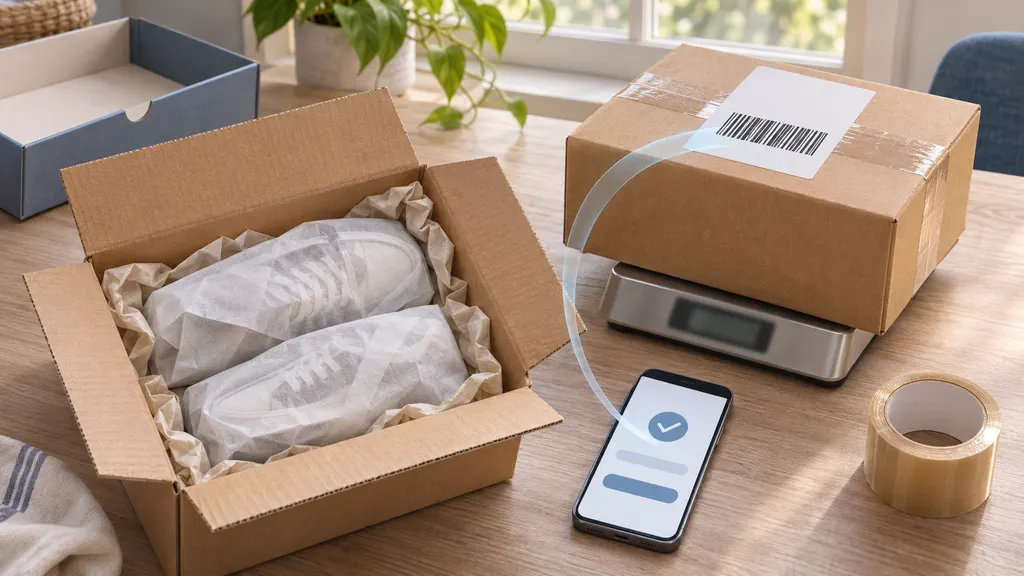
Keep the label on a flat exterior surface. Do not place tape over the barcode in a way that creates glare or wrinkles, and do not wrap the entire parcel in a material that hides the label from scanning. Seal all openings with shipping tape, then check that no part of the old label remains visible.
A practical shoe-shipping workflow
- Open the sold order: Confirm the item, buyer information, and the current Poshmark label.
- Prepare the footwear: Clean loose debris, dry the pair, secure accessories, and wrap each shoe separately.
- Select packaging: Choose a box or protective mailer that fits without crushing the contents.
- Pack and seal: Fill empty space, close the parcel, and apply the label to a clear, flat surface.
- Weigh the finished parcel: Include every component and compare the result with the label’s allowance.
- Resolve exceptions before mailing: If the parcel is overweight, the label is damaged, or the box is too large for the selected service, contact Poshmark or follow the order’s current label instructions.
- Hand it over properly: Use the carrier or drop-off method identified for the label and keep the acceptance receipt when one is available.
For sellers managing multiple orders, separate packed parcels by order before printing or applying labels. A simple two-step check—read the order number before packing and again before sealing—reduces the risk of swapping similar shoe boxes.
Common mistakes to avoid
- Using a box that is too large: Empty space increases movement, requires more filler, and can push the finished package over the expected weight.
- Shipping without checking the final weight: The weight of shoes alone is not the shipping weight.
- Leaving old labels visible: Automated sorting equipment and human handlers may read the wrong barcode or address.
- Wrapping wet or dirty shoes: Moisture and debris can create odors, stains, or friction damage during transit.
- Assuming the seller can change the label independently: Marketplace labels are connected to the transaction. Resolve label changes through the applicable Poshmark workflow.
- Using fragile retail packaging as the only protection: A shoebox is product packaging, not always a sufficient outer shipping container.
When shoe packaging needs extra care
High-value footwear, suede, patent finishes, metallic details, and shoes with fragile ornaments benefit from individual wrapping and a rigid outer box. Keep hard accessories from pressing against the uppers, and use dividers or separate bags when a pair includes detachable parts.
Large boots may need a longer box rather than aggressive folding. If the only suitable package is too heavy or too large for the prepaid label, pause before dispatch. A lighter package is not better if it allows the shoes to be crushed, and a cheaper packaging choice is not useful if it creates a label or delivery exception.
For sellers operating at higher volume, consistent ecommerce fulfillment habits help: keep several box sizes available, record the typical packed weight of common shoe types, and use a repeatable inspection checklist. These practices reduce packing time without turning every order into an oversized shipment.
Final checklist before drop-off
- The correct shoes and accessories are inside.
- Each shoe is protected from rubbing and the pair cannot move freely.
- The outer package is intact, sealed, and appropriate for the footwear.
- The final parcel weight has been checked, with a margin if it is near the limit.
- The current prepaid label is flat, readable, and attached to the correct order.
- Old labels and barcodes are covered or removed.
- The parcel is being handed to the carrier or drop-off channel specified by the order.
The safest rule is simple: verify the label, weigh the sealed parcel, and protect the shoes as an item that may be handled many times. When the weight or label does not fit the shipment, resolve that issue before the package enters transit.
FAQ
Does Poshmark provide a prepaid label for shoes?
For standard U.S. marketplace orders, Poshmark provides a prepaid label connected to the sale. Check the completed order for the current label and shipping instructions. Do not substitute a label from another transaction.
Does the 5-pound limit include the shoebox?
Yes. The relevant shipment weight includes the shoes and all packaging, including the shoebox, outer carton, cushioning, tape, and label. Weigh the complete sealed parcel rather than only the footwear.
What should I do if my shoe package is over 5 pounds?
Do not mail it under a label that does not cover the shipment. Check the order for Poshmark’s available label-upgrade or replacement process and follow the current instructions. The exact handling and any applicable charge should be confirmed through the order rather than inferred from another sale.
Can I ship shoes in the original shoebox?
You can use the original box when it is included in the listing and remains suitable for the shipment, but an outer shipping box provides better protection. Shipping a retail shoebox alone can expose it to crushing, tearing, and label damage.
Can I use a polymailer for shoes?
A padded mailer may be suitable for lightweight, flexible footwear that cannot puncture the packaging. A rigid box is generally safer for boots, heels, hard soles, structured shoes, and pairs that need protection from crushing.
Sources
- Poshmark: How to Ship — official shipping guidance and seller workflow.
- Poshmark Terms of Service — marketplace terms and transaction conditions.
- USPS Ground Advantage — official carrier information for the service commonly used for qualifying U.S. parcels.
- USPS Packaging Materials — general carrier guidance on selecting and preparing shipping packaging.